
Buy anything from 5,000+ international stores. One checkout price. No surprise fees. Join 2M+ shoppers on Desertcart.
Desertcart purchases this item on your behalf and handles shipping, customs, and support to Tunisia.
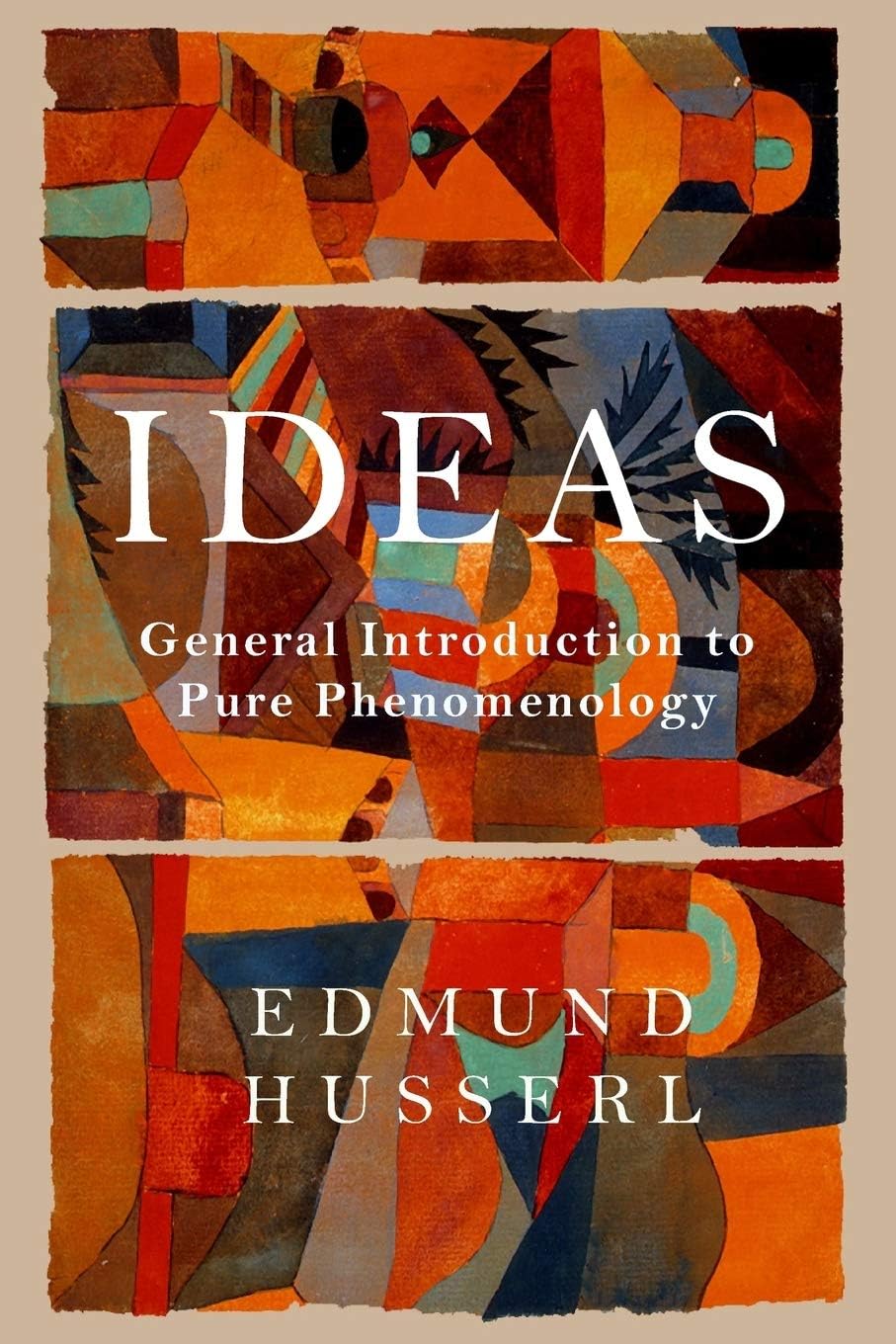
2017 Reprint of 1931 Edition. Full facsimile of the original edition, not reproduced with Optical Recognition software. Widely regarded as the principal founder of phenomenology, one of the most important movements in twentieth century philosophy, Edmund Husserl's Ideas is one of his most important works and a classic of twentieth century thought. Husserl's early thought conceived of phenomenology - the general study of what appears to conscious experience - in a relatively narrow way, mainly in relation to problems in logic and the theory of knowledge. The publication of Ideas in 1913 witnessed a significant and controversial widening of Husserl's thought, changing the course of phenomenology decisively. Husserl argued that phenomenology was the study of the very nature of what it is to think, "the science of the essence of consciousness" itself. Husserl's arguments ignited a heated debate regarding the nature of consciousness and experience that has endured throughout the twentieth and continues in the present day. No understanding of twentieth century philosophy is complete without some understanding of Husserl, and his work influenced some of the great philosophers of the twentieth century, such as Martin Heidegger and Jean-Paul Sartre. Review: Phenomenology from the Source - Ideas is the first, and probably the clearest, introduction that Husserl gave of phenomenology. In it he provides a rather sweeping vision of his creation as a new science which would serve as the foundation for all knowledge. Essentially, Husserl thought that one could turn to what is present in the ego, the phenomena gained from conscious experience, and derive a philosophical account of both how the mind naturally works as well as how external phenomena appear to it. In all of this heโs clear that he doesnโt believe that the phenomena are necessarily accurate descriptions of the world. Instead, theyโre merely how the mind naturally encounters it: the eponymous ideas are no realer than the ideal triangles and right angles of geometry. Husserl then saw the twentieth century as the era which would develop this science of the mind and its objects. He would certainly be disappointed to find that phenomenology is now only another school of philosophy. But while it may seem easy to mock the hubris of a man who thought he was regrounding all human knowledge, itโs fair to point out that the power of the mind to understand the universe continues to be a mystery. As far as I know, there is no comprehensive account of how one branch of the hominid family evolved a distinctive brain that enables it to penetrate into the secrets of galaxies formed billions of years ago. Perhaps then there is more of a place for phenomenology than it might seem at first. At least, it continues to be an alternative to a scientism that leaves many underlying assumptions unexamined. For those who are interested in reading contemporary phenomenologists, Ideas is arguably the best source to introduce this line of thought. If you do have such inclinations, highly recommended. Review: HUSSERL, PONTY, AND BEAUFRET: THE THREE GIANTS OF POST-MODERN ERA - HUSSERL, PONTY, AND BEAUFRET: THE THREE GIANTS OF POST-MODERN ERA: Edmund Husserl is considered the father of phenomenology, and also as a major contributor to the substrate of post- modern philosophy. Without a doubt, his thought in โIdeasโ is profoundly evident as the structure for much of Heideggerโs, Pontyโs, and Beaufretโs thought. Therefore, any student of post-modern thought will find this manuscript absolutely essential to read and assimilate. Assimilating the material may take some doing. Husserl is difficult; but not impossible. He is just extremely detailed, and you must carefully track his concepts and their use. Husserl tells us that the study of โBeingโ cannot begin until after the pure-experience work of describing โmodalities-of-beingโ. Then the self may transition to the study of โbeingโ. To assist the reader, I will give you the โ4โ modalities of his procedure. Keep these in mind as you read: 1. the โprimordial-modalityโ of โepocheโ (suspension of conceptualization); 2. The remembrance-modality of the โnoeticโ; 3. The imaginative-modality of the โeideticโ; and 4. The signifying-modality of the โdoxicโ. The self must work โdescriptivelyโ through the first three modalities, and then work through a transformation in the fourth modality of the โdoxicโ. The doxa-modality asks the self to work through โrecollection and subtractingโ in order to arrive at the โproto-doxaโ that have been present all along. These โproto-doxaโ consist of the core-noema resulting from the on-going interrogation of the self from an existential stand-point. Through a process of negating the modality-content in previous moments, the self can arrive at the pure doxa content. The noematic-object passes through negation of modality-content to become pure-noema-character. And this characterโ, in turn is copied as a doxa-sign by consciousness. The self โstands-inโ to consider the relational aspects of this new modified domain in order to form the ideological structure. Like I said; it is there, and understandable, but requires slow and careful reading. I consider this manuscript โmandatoryโ for anyone studying post-modern thought, but Husserl is certainly not limited to just that interest. 5 stars and โgood luckโ
| Best Sellers Rank | #491,153 in Books ( See Top 100 in Books ) #18 in Phenomenological Philosophy #318 in Philosophy of Logic & Language #337 in Epistemology Philosophy |
| Customer Reviews | 4.6 out of 5 stars 196 Reviews |
A**S
Phenomenology from the Source
Ideas is the first, and probably the clearest, introduction that Husserl gave of phenomenology. In it he provides a rather sweeping vision of his creation as a new science which would serve as the foundation for all knowledge. Essentially, Husserl thought that one could turn to what is present in the ego, the phenomena gained from conscious experience, and derive a philosophical account of both how the mind naturally works as well as how external phenomena appear to it. In all of this heโs clear that he doesnโt believe that the phenomena are necessarily accurate descriptions of the world. Instead, theyโre merely how the mind naturally encounters it: the eponymous ideas are no realer than the ideal triangles and right angles of geometry. Husserl then saw the twentieth century as the era which would develop this science of the mind and its objects. He would certainly be disappointed to find that phenomenology is now only another school of philosophy. But while it may seem easy to mock the hubris of a man who thought he was regrounding all human knowledge, itโs fair to point out that the power of the mind to understand the universe continues to be a mystery. As far as I know, there is no comprehensive account of how one branch of the hominid family evolved a distinctive brain that enables it to penetrate into the secrets of galaxies formed billions of years ago. Perhaps then there is more of a place for phenomenology than it might seem at first. At least, it continues to be an alternative to a scientism that leaves many underlying assumptions unexamined. For those who are interested in reading contemporary phenomenologists, Ideas is arguably the best source to introduce this line of thought. If you do have such inclinations, highly recommended.
B**B
HUSSERL, PONTY, AND BEAUFRET: THE THREE GIANTS OF POST-MODERN ERA
HUSSERL, PONTY, AND BEAUFRET: THE THREE GIANTS OF POST-MODERN ERA: Edmund Husserl is considered the father of phenomenology, and also as a major contributor to the substrate of post- modern philosophy. Without a doubt, his thought in โIdeasโ is profoundly evident as the structure for much of Heideggerโs, Pontyโs, and Beaufretโs thought. Therefore, any student of post-modern thought will find this manuscript absolutely essential to read and assimilate. Assimilating the material may take some doing. Husserl is difficult; but not impossible. He is just extremely detailed, and you must carefully track his concepts and their use. Husserl tells us that the study of โBeingโ cannot begin until after the pure-experience work of describing โmodalities-of-beingโ. Then the self may transition to the study of โbeingโ. To assist the reader, I will give you the โ4โ modalities of his procedure. Keep these in mind as you read: 1. the โprimordial-modalityโ of โepocheโ (suspension of conceptualization); 2. The remembrance-modality of the โnoeticโ; 3. The imaginative-modality of the โeideticโ; and 4. The signifying-modality of the โdoxicโ. The self must work โdescriptivelyโ through the first three modalities, and then work through a transformation in the fourth modality of the โdoxicโ. The doxa-modality asks the self to work through โrecollection and subtractingโ in order to arrive at the โproto-doxaโ that have been present all along. These โproto-doxaโ consist of the core-noema resulting from the on-going interrogation of the self from an existential stand-point. Through a process of negating the modality-content in previous moments, the self can arrive at the pure doxa content. The noematic-object passes through negation of modality-content to become pure-noema-character. And this characterโ, in turn is copied as a doxa-sign by consciousness. The self โstands-inโ to consider the relational aspects of this new modified domain in order to form the ideological structure. Like I said; it is there, and understandable, but requires slow and careful reading. I consider this manuscript โmandatoryโ for anyone studying post-modern thought, but Husserl is certainly not limited to just that interest. 5 stars and โgood luckโ
J**K
Intentional consciousness is the absolute and transcendent medium governing cognition
I had a serious thirst for understanding Husserl, Heidegger's historical influence, and I'm extremely glad I have this chance to understand the unique and foundational perspective he contributed to 20th century philosophy and human self-understanding. One gets the impression from the debate that existed that there was a foundational difference, but reading this book has made it clear to me that Husserl was only disappointed in Heidegger because he viewed his "anthropological" dissertation as a distraction from his own unique psychological attitude and perspective. Husserl's "idealist" point of view is not only important for its own value, but for the light it shines on topics like dualism, empiricism, Descartes, Kant, and the history of modern philosophy.
M**A
I fully recommend to anyone who is writing a phenomenology or just ...
Interesting read, although I found I had to read it in small doses. It was a lot to digest. However, I fully recommend to anyone who is writing a phenomenology or just plain interested in making sense of human experience.
A**Z
proofreaders are a thing of the past
very nice edition of this book. helpful intro by moran. funny that the translator's intro, preserved from the original 1931 edition, so much praises and thanks his proofreader. this edition appears to be a scan of that original publication which was not thoroughly proofread (or even spellchecked!) for scanning errors before being converted to the new publication. they didn't even correct the page number references in husserl's footnotes (when he refers to earlier sections) to this repaginated edition! understandable - who has time to read such a book now? precisely why (and other reasons) it should be read now.
M**F
Edmund Husserl's classic is a must read.
Edmund Husserl's classic is a must read for everyone interested in Mind in Life, phenomenology and/or modern philosophy. The translation by Boyce Gibson is very good and very readable. The inclusion of the original German terminology does help a lot to distinguish between intentions that are hard to translate into English.
A**R
Good copy of "Ideas."
The texture of the cover is a new type to me, very sturdy and good grip. The text is exactly that of 1913 English edition.
J**R
Just fabulous! Thanks for the care that went into ...
Just fabulous! Thanks for the care that went into sending the book. It was evident. Jim
P**L
Too much.
A person trying to explain to the readers what he wants to build as a subject. Lays down the groundwork. IMO, Not for people unfamiliar with phenomelological/philosophical terms.
J**T
For the deep thinkers of phenomenology
Highly recommend - not for the faint of heart. I believe this is the English conversion of the original German transcript so some concepts are harder to conceptualize or understand given the translation. Or at least that was my experience. Great book for anyone wanting to deep dive into phenomenology.
D**N
A must for philosophy.
Great condition and should prove useful in my studies.
A**T
Five Stars
An interesting investigation into the realm of being.
A**R
Phenomobology understood
As a student researching phenomonology, it has given me Husserel's understanding and reseasons for this great qualitative approach.
Trustpilot
3 weeks ago
1 week ago