
Buy anything from 5,000+ international stores. One checkout price. No surprise fees. Join 2M+ shoppers on Desertcart.
Desertcart purchases this item on your behalf and handles shipping, customs, and support to Tunisia.
๐ Unlock the ultimate atheist anthologyโbecause your worldview deserves the best arguments.
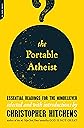
The Portable Atheist is a bestselling curated collection of essential atheist writings compiled by Christopher Hitchens, featuring a broad historical and cultural spectrum of secular thought. It offers readers a rich blend of classic and contemporary critiques of religion, blending intellectual rigor with accessible commentary. Highly rated and ranked among top atheist and religious criticism books, itโs a must-have for anyone seeking to understand or challenge religious ideas with clarity and depth.
| Best Sellers Rank | #32,529 in Books ( See Top 100 in Books ) #5 in Religious Literature Criticism #7 in Atheism (Books) #42 in Science & Religion (Books) |
| Customer Reviews | 4.6 out of 5 stars 1,424 Reviews |
L**D
These collected works go together very well.
I'm about 3/4 of the way through and I am very happy I bought this. I don't own any of christopher Hitchen's actual books, I have, however, watched his debates and speeches on Youtube, so I have a fairly good understanding of his arguments. This is not a book by Hitchens, but rather a selection of writings by other atheists. What I wanted from this book was a broad reading of atheistic literature through the ages, and this is exactly that. It is not thorough, but it does go through many of the well known atheists, and also through some lesser known ones. He touches briefly upon Marx, just show people the actual "religion is opium for the masses" quote in context. Apparently that was a pet peeve of Hitchen's, so he added a chapter of Marx's work for clarification. Not only are these selections from arguments, but he also has a chapter from a narrative novel, that highlights a common argument of the "apparent design of the universe" and "something cannot come from nothing", which made it interesting to read the argument in narrative form during a dinner party. There is also a memoir from a man who knew Billy Graham and was close to him; this was one of my favorite parts to read, because it got inside (second hand) the head of Graham and how one decision effected this man's life; a life of education vs a life of preaching to the masses. It was a poignant reflection and probably could've happened to anyone in those circumstances. There is plenty of arguments against the various notions of a god, which mostly focuses on christianity; so if you want the book for that it's definitely a good buy. Although, if you're familiar with all the arguments it won't really show you anything different or new. What it does do is give you the cream of the crop of the writing abilities of various atheists. The arguments may be old now, but their words give them such clarity that it's hard to put down. On the same point, there is this one selected work that had me going for the dictionary every paragraph, it was quite thick, not necessarily pompous, but if english is your second language or your vocabulary is just alright, then it might give you problems. Most the work in here is not difficult to understand, so one could skip over the hard parts and not miss out that much.
S**X
Fantastic, Great, Outstanding, Commentary on many different religions, background and history
Fantastic, Great, Outstanding, Commentary on many different religions, background and history. This book was recommended to me by a friend and at first I was hesitant to get it. I do consider my self a Christian but don't agree with the concept of a Christian theocracy which the ultraconservative Christian Right as tried to push on the United States citizens for the last 30 years in spite of the separation of church and state guaranteed by the constitution. I found this book to be really inspiring in the way it has helped me understand the foundations of many different world religions as well as Christianity. This book confirmed what I have long suspected. Religion has its roots, in superstition, magic and lack of science which over time, has progressed into a political system or theocracy. Some people have called religion the biggest business in the world and I have to agree. This book kinds of grows on you. I was a religion minor in college and thought I knew a lot but boy did I have a lot to learn. I left this book with a feeling that if I want to believe in superstition and magic I still have that choice but it is not anything I would want to base a government on. All the progress we have made in social equality and scientific understanding could be easily wiped away, not just by religions from outside the United States but also from our own Abrahamic religious roots. I consider this book an excellent primer on the origins of world religions as well as showing how religion and politics go hand in hand. I now agree entirely with the founders of our constitution in supporting the separation of church and state. If believing in the spiritual nature of life is comforting to you this book will not take away that feeling. What it may do is strengthen your ability to feel safe and secure in your belief set with out giving into supporting the religion others in power seem to insist on you accepting as authentic. Im happy to say I don't think we have any "God Given Rights" to guns or that we should hate birth control or gays. I also don't want to see us go back to the "good old days" before we knew the Earth was round and not the center of the universe or didn't know germs and viruses caused disease. I feel my sense of the spiritual nature of life most strongly when I am out in nature enjoying the trees and life that surrounds me, but funny, so called "primitive peoples" wiccans and pagans have been feeling the same for generations before the Catholic Church or Islam came into power. I think this is a very liberating collection of work from many diverse experts in all the primary religions of the world and is VERY HIGHLY RECOMMENDED.
B**K
A Great Intro and a Mixture of Great to Below Avg Essays
The Portable Atheist: Essential Readings for the Nonbeliever edited by Christopher Hitchens "The Portable Atheist" is the philosophical journey of atheist thought through time. The late great Christopher Hitchens selects forty seven essays by some of the most influential atheist/agnostic minds. This 528-page book is composed of forty seven essays by some of the most influential atheists/agnostics including heavyweights like: Einstein, Sagan, Russell, Darwin, Twain, Hume, Spinoza, Mill, Dawkins, Harris and many others. Positives: 1. Great and diverse selection of atheist/agnostic essays. 2. Thought-provoking and fascinating views on religion. 3. One of the best introductions, I've ever read. It alone is worth the price of this book the rest is a bonus. 4. Hitchens provides a few introductory words for each essay. 5. The recurring theme of dismissing superstitions and myths. 6. David Hume provides great perspective on miracles and an interesting interview. 7. Quotes, quotes, quotes...great quotes throughout. "Questions of fact can only be solved by examining facts". Here is another one of my favorites, "All logical arguments can defeated by the simple refusal to reason logically". 8. Great lucid minds providing much needed wisdom. 9. Deism refuted. 10. The problem of evil. Many examples. "If evil predominates here, we have no reason to suppose that good predominates elsewhere". 11. Cosmological argument put under the scrutiny of great minds. 12. Religious history was never more interesting. Luther's impact is duly noted. 13. The argument from design and Darwin's view of it. You get Carl Sagan's view of this as well. 14. The clearly stated position of an agnostic. 15. The great mind of Spinoza taking Hume's position of miracles to another level. 16. The evil of slavery and its link to Christianity...oh my. Fascinating stuff. 17. "Thou shalt suffer no witch to live..." it's amazing the impact a few words has on humanity. 18. The philosophy of atheism...a very good essay. 19. Great insight on morality. "There is no moral obligation to believe what is unbelievable any more than there is moral obligation to do what is undoable". 20. The concept of revelation and concise arguments against it. 21. The great thing about reading is that you are bound to learn something new. This book provided me the best understanding of why the concept of an afterlife diminishes our one and only real life. Thank you. 22. The great Einstein and his "religious" beliefs. 23. Supernatural births of gods. So many gods so little reason. 24. Bertrand Russell's essay is an intellectual treat. Science versus faith. The absurdities of Aristotle. 25. The Anselm's ontological argument discussed. 26. The purpose of life...the big philosophical questions. The moral consequence of atheism. 27. Nothing fails more than prayers. 28. Richard Dawkin's essay a great refresher. Evolution it does a specie good. 29. Victor Stenger advances the argument that we know enough to discard the god hypothesis. Great use of physics and cosmology to base his arguments. 30. Elizabeth Anderson provides one of the strongest essays of this book. It's an essay about how humans can possibly conduct themselves without a belief in the gods. Excellent! 31. The moral inconsistencies of the Bible and the lack of archaeological evidence. 32. Eschatology...always a fascinating topic. 33. The advantages of atheism are recurring throughout book, "to choose unbelief is to choose mind over dogma, to trust in our humanity instead of all these dangerous divinities". 34. Ibn Warraq provides an excellent albeit long essay on why he is not a Muslim. The essay is actually from his book. 35. Sam Harris provides a hard hitting essay about some of the evils of religious dogma. "Whenever a man imagines that he need only believe the truth of a proposition, without evidence - that believers will go to hell, that Jews drink the blood of infants - he becomes capable of anything." 36. A horrifying look at witchhunts and anti-Semitism. 37. Ayaan Hirsi Ali's emotional and insightful essay on why she became an infidel. Negatives: 1. The book is clearly uneven. Some essays are very long while others way too short. 2. Some of the essays are poems and well some of the messages and thoughts are lost on me. 3. At over 500 pages, it does require an investment of time. 4. As is always is the case with essays and in particular this book, some essays are of more interest than others. Some essays are more accessible than others. 5. Very few essays from women but I'm happy to report that the few provided are very good. 6. This book is anything but portable. 7. Hitchens introduction was so good that very few essays were able to live up to those standards. 8. Some essays just didn't belong. The essay on Hegel and Germany by Karl Marx comes to mind. In summary, a great set of thought-provoking essays. You are guaranteed to learn something new and fascinating. Some essays like the poem-based ones didn't really work for me and some others didn't feel like they belong. The great thing about a book about essays is that you can skip over the ones you don't like. The introduction of this book is one of the wittiest and thought-provoking writings and many other provided plenty of food for thought. The intro and some of the essays are five-star material but others drag it down the book to a four. That being said, you can cherry pick and go through your favorites. A recommended buy! Further suggestions: "Why I Became an Atheist", "The Christian Delusion" and "The End of Christianity" by John Loftus, "Sense and Goodness Without God " and "Why I'm Not a Christian" by Richard Carrier, "Man Made God" by Barbara G. Walker, ""The Invention of the Jewish People" by Shlomo Sand, "Godless" by Dan Barker, "Christian No More" by Jeffrey Mark, "A Universe from Nothing" by Lawrence M. Krauss, "Faith No More: Why People Reject Religion" by Phil Zuckerman and "The Invention of God" by Bill Lauritzen.
G**A
Complete range of solid thought
Admittedly I have not taken the opportunities in life to read and understand the full works of free thinkers, agnostics of the ages and atheists. Nor have I had the concentration, intellect or skill to wade through them in detail to glean the essence of their ideas. I have, however, enjoyed the to the point, focused works of Christopher Hitchens. Using his very perceptive nature and exceptional education and vocabulary cuts through erudition to speak plainly in his works of critical review and analysis of life events of public and historical figures. He makes big words and ideas understandable. His most recent popular works on humanity and god(s) are much easier to read than personally going to the sources of these thought, But these works leave the reader with a sense of guilt for not verifying withthe original, or reading it in depth. Now, Hitchens culls his favored sources and anthologizes many of them here, adds a dash of new thinkers and presents a hulking challenge. Read these condensations -- if you would assuage your guilt and bridge the holes in your understanding. But do not take fright! The oieces gathered are not ponderous-- just direct, many in the language of the times when they were written. The Portable Atheist (Unabridged) This all starts with a poetic translation of Lucretius. I had to get out a narrative text literal translation to decipher and compare the way this one piece is presented, but this short exercise warmed parts of my brain I have not used in 40 or more years, The presentations of Spinoza, Hume and later thinkers are much easier to comprehend but are probably best taken one chapter at a time -- leaving time for cogitation and pondering. Through these pages you learn not only the development of critical thought and free thinking vis-a-vis god, religion and inquiry -- but the seem to find the base for Hitchens very rational approach to life, the universe and everything -- through doubt and discovery though the last 2000 years. These works seem to offer a compendium of how Hitchens "got that way." I strongly recommend this volume to anyone who would take their investigations of spirituality, thought, religion and the supernatural into perspective of the growth of mans thought through the ages.
D**S
Absolute Must-Have Book for Rational Thinkers
Atheism is a relatively new state of mind for me, and so far it's all good! On nearly a weekly basis fears, superstitions, anger, hopelessness, confusion, absurdity, senselessness and more fall away from me like ice sheets from a glacier. "The Portable Atheist" is helping to hasten that process and repair the cruel and vile scars of lifelong fundamentalist christianity with a new meaning, a new outlook, a sense of happy well being, an actual (god forbid!) enjoyment of life! I'd read another of Hitchens' books, "God is not Great," which so impressed me it made me eager to discover which free thinkers and realists he had included in his anthology "for the Nonbeliever." The book is a banquet. Just browsing through the Table of Contents, seeing who is featured, makes one eager to turn to that page and read their rationales and opinions. Most of the writing, much of it by some of my favorite authors, has been similar to discovering a diamond in the mud. I've been so overwhelmed and excited to realize that many literary giants were also nonbelievers, and backed their beliefs with firm, impeccably logical, startlingly rational, highly intelligent, iron-clad arguments for their mindset. And the pattern that emerges from a collection of writing about many religions, which are different, yet share so many of the same hateful, negative, mind-numbing qualities, is a real eye-opener, a safety net for those who may think that because their own religion sucks, another might be better. Perhaps my favorite entry is by an Elizabeth Anderson, whose chapter so succinctly and masterfully calls into question much of what I was taught throughout my life, then liberally peppers her insights with biblical citations, chapters and verses, using the very methods of the "diabolical" dispensers of "gods word" to negate and undercut the pathetic preaching of the devout. In my opinion, this book would be a major asset to any class in religion, forcing people to confront and justify the contradictions and absurdities of their religious beliefs. Furthermore, it would be just as effective for people like myself, searchers for truth and believers in science and the potential of mankind when unfettered by Bronze Age mythology.
J**K
The best anthology of atheism I've come across
The Portable Atheist, edited by Christopher Hitchens, is a great selection of how atheism has transformed into what it is today. Hitchens' introduction itself is an astounding tour de force that should not be skipped. In his introduction alone, Hitchen's lays out the foundation and positive attributes of atheism. This is crucial as many people have the common misunderstanding that atheists are pessimists or discontented. He also makes the genuinely important point that in order to believe in one of the three major monotheisms, you have to believe that the heavens watched our species for at least one hundred and fifty thousand years with "indifference, and then- and only in the last six thousand years at the very least - decided that it was time to intervene as well as redeem." He concedes that it is preposterous to believe such a heinous thing - for it would be cruel if true. His introduction is intelligent, convincing and witty - and it doesn't stop there. The selections in this book show the evolution of atheism (or at least nontheism) from early critics of religion such as: Benedict De Spinoza, Thomas Hobbes and David Hume to more of a middle stage (Darwin, George Eliot, Mark Twain and Bertrand Russell) and then to modern-day critics like: Richard Dawkins, Sam Harris, Steven Weinberg, Daniel Dennett, Carl Sagan, Victor Stenger, Ayaan Hirsi Ali, and many more. Another great thing is the book is helpfully arranged in chronological order. All beliefs aside, the selections in this book are powerfully argued and well written. I'd recommend it to anyone with a hunger for the truth and an open mind.
P**R
Hatemongering
In view of my preceding title it may be wondered why I marked the book for three stars. I did it in recognition of the author's writing skill and erudition, of his somewhat justified criticism of dogma--especially today's violent expressions of it--and a little because of pity for his evidently sincerely misguided hatreds. It seems for me unnecessary to go into the body of the book, which I haven't read and is featuring other authors, the reasonably long Introduction sufficing, in addition to comments on the Acknowledgments and the dedication, at which I start (unmarked page v). The dedication is to a now deceased Holocaust survivor, and as a survivor myself I am thoroughly appalled by the twisting by Mr. Hitchens into "moral fortitude" some unfortunately very dismaying remarks by that survivor. That survivor, an atheist, complained for his own reasons about an old fellow-prisoner in Auschwitz because of the latter's praying ("thanking God because he has not been chosen [for] the gas-chamber" at the time), the survivor concluding with: "If I was God, I would spit at [the man's] prayer." Thank God he wasn't God. He also wrote, on being tempted to pray when perceiving the imminence of death (there is something to the saying there are no atheists in foxholes): "A prayer...would have been...blasphemous, obscene, laden with the greatest impiety of which a nonbeliever is capable". Nonbelieving seems itself quite a religion. As seen, we find a variety of views even among the same people in the same predicament, my concern here being the upside-down morality of such as Hitchens, who thinks that what is meritorious is spitting at the praying man, rather than comforting him. Turning to other parts of the book, the author's attitude can in a nutshell be found in the Acknowledgements (p.xi) and at the end of the Introduction (p.xxvi). In the first he notes his indebtedness to a group that rejects "the absurd and wicked claims of the religious", and in the second he speaks of "resistance to...faith [in the] combat with humanity's oldest enemy". What an extreme of one-sidedness and vilification. Regarding God himself, whom he consistently spells with a small "g" although the names of even the worst villains are accorded a capital, he attributes to him (p.xvi) "an unalterable and unchallengeable celestial dictatorship" and again (p.xxii) "a permanent, unalterable celestial despotism that subjected us to continual surveillance and could convict us of thought-crime, and regarded us as its private property even after we died...How happy we ought to be, at the reflection that there exists not a shred of respectable evidence to support such a horrible hypothesis. And how grateful we should be to those...who repudiated this utter negation of human freedom." The author should consider "reflection" on the laws of nature, by which he must abide unconditionally. God is conceived as the source of these laws and of any other he deems requisite as creator of Mr. Hitchens and everything else. The freedom Mr. Hitchens mentions was also granted, not negated, by God. Otherwise Mr. Hitchens's every action would be forced by inexorable physical laws, making him unable to as much as feed himself. The nonexistence of a "shred of respectable evidence" he speaks about is likewise false. The evidence may not be "respectable" to those he bows to, but they, too, are fallible. Mr. Hitchens talks as if he were a scientist and logician but is an authority in neither. He continually depends on natural selection as fact, and on absence of demonstration as refutation of God. Both can be disconfirmed, as I explained in other reviews here and more fully in On Proof for Existence of God, and Other Reflective Inquiries . Mr. Hitchens expectably argues for a moral and beautiful atheist life, exceeding yet one under God. He says (pp.xvi-xvii) "I derive...satisfactions...from being of assistance to a fellow creature" or that the "Golden Rule is innate in us", condemning doing "a right action or avoid[ing] a wrong one [merely] for the hope of a divine reward or the fear of a divine retribution". Who do you think gave you the "innate" satisfaction in helping others? It wasn't Darwin. Notwithstanding your self-satisfaction of being moral, there is countless evidence that not only "sociopaths" and "psychopaths" act immorally left to themselves. As you say, "societies [don't] tolerate" various crimes, and that is why we have governments with laws applying to all. Similarly, concerning the beautiful you say (pp.xxii-xxiii) "there may be found a sense of awe and magnificence that does not depend at all on any invocation of the supernatural. Indeed, nobody armed by art and culture and literature and philosophy is likely to be anything but bored and sickened by", giving unlikely tales ending with, "babblings from the beyond". Again, your elitist pleasures are not likely to be shared by most, but more pertinently, whatever beauty is perceived in the world, it appears hollow without promise, and is more convincing as a gift of God than as accidental result of aimless forces. Most objectionable in this book, however, may be its utmost besmirching of opponents, recognized even in its mild forms as the ad hominem fallacy, of wanting to win an argument by personal attack instead of reasoned presentation.
N**O
Corroboration
"The Portable Atheist" by Christopher Hitchens is as thick and heavy as some Bibles. Hitchens obviously avoided giving entirely the wrong impression by calling his book "The Portable Atheist Bible," although when I saw and felt the heft of it, "Bible" is what came to my mind. Perhaps far in the future, some readers, students, and followers might wish to see chapter and verse, or page and line numbers in his compilation. His "Contents" lets one find any of the 47 authors he excerpts. His "Index" is rather extensive but could use greater depth of detail within selections. I would have liked the type font to be at least 10 point, but then we're talking a really mammoth tome. The 48th author is actually Hitchens himself. His "Introduction" is well worth the entire book, as are his brief introductions to all the pieces. Hitchens is an outstanding intellect, and has applied himself to the whole library of relevant thinkers. No one book could include them all. Hitchens' brilliance and erudition make us hope that his illness can be overcome, and his voice and message continue for many years. The selections in "The Portable Atheist" cover the usual basic points: God made no holy books, tablets, or writings. All holy books were made by man. God was never a man. No man was ever a god. The earth, the universe, is some 13 billion years old, not 6,000 years old. Miracles, so-called, are not any metaphysical agency operating outside the laws of nature; they are only as yet unexplained. All man's problems are solved only by mutual cooperation and not divine intervention. There is no eternal life. When a man dies, his existence is simply over. There is no heaven or hell. Eternal punishment would not fit the crime or failings of man's finite life. Man therefore need not fear death. As the earth, sun, and our galaxy are not the center of the universe, so neither is man the center of personal attention of any infinite being.
V**R
A Book with many content
I liked very much this Book, has many pages and I read when I drink coffee, It s very good and has many essays, articles
R**H
not that portable but a joy to carry...
For someone like myself who isn't great at reading whole novels in my busy life, this is a perfect book. An anthology of texts spanning over 2000 years by folks of sound mind and rigorous intellect writing on the irrational reality of religion and it false promises that condition subsequent generations to this day (sadly). As many text remind us, the only sense of reality and the cause and consequence of our actions is now and if the book preaches anything then it is we have the power to shape our own life through our humanity to each other and to believe in people over false gods. Atheists simply believe in the beauty and potential of the human race as this life is all we have and it is simply not true that faith has any monopoly on you being a good person. Packed with beautiful writing and points of view it's a great book to dip into when the TV is showing more acts of intolerance and reminding you we should fingers crossed evolved out of living through imaginary creatures to see we have, what is important the human race on this planet collectivity and how it is must be defined by our respect for each other.
K**T
Incredible ! For all the non-believers out there.
All our non-believer (literary) ancestors are included. Nice essays for short reads. Wake up and read one for the day. Book came in a decent condition(although had to replace the one before for poor quality ). The replaced one was nice. Donโt but from the seller called amazing books.
C**F
please cancel the second order sent today for the portable ...
please cancel the second order sent today for the portable Atheist Thanks for alerting me to my doubling of the order This book is already now on my Kindle library Columb Frize 02 94196898
B**H
Daily Atheism in bite size chunks.
Does what it says. A wonderful book to dip into to find essays and reflections on the philosophy of living atheism. I regularly refer to this book after all this time.
Trustpilot
1 month ago
1 week ago