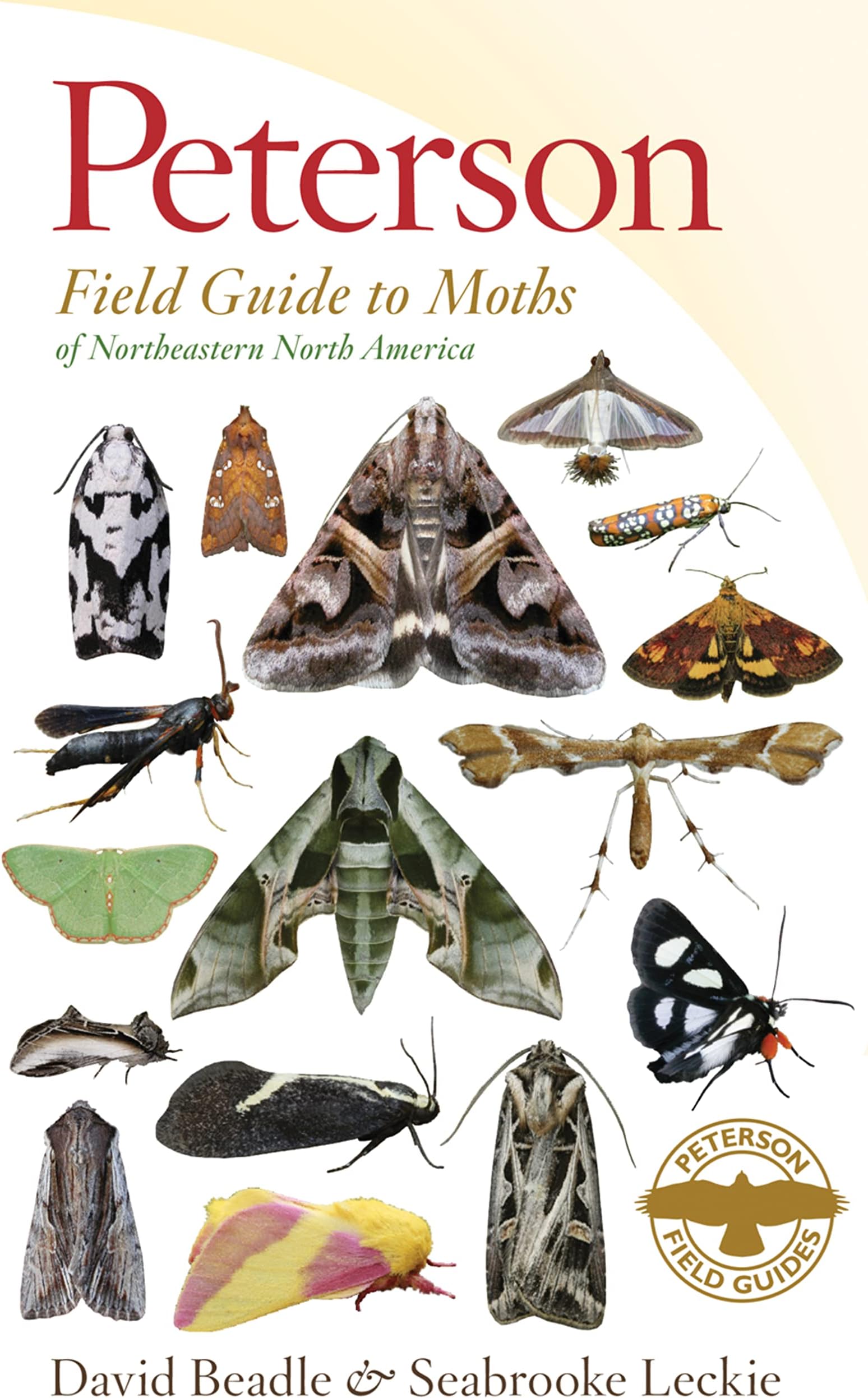
Peterson Field Guide To Moths Of Northeastern North America: An Essential Illustrated Guide to Thousands of Species with the Peterson Arrow System
Product ID: 1741909
Desertcart purchases this item on your behalf and handles shipping, customs, and support to Tunisia.
There are thousands of moth species in the northeast of North America, and while it might seem that they are all drab grays and browns, there is actually a startling variety. They come in a rainbow of colors, from brilliant oranges and pinks to soft greens and violets. There are moths with colorful leopard-like spots, and ones that look more like B-movie aliens; some that are as large as your hand, and others the size of a grain of rice. With helpful tips on how to attract and identify moths, range maps and season graphs showing when and where to find each species, and clear photographs that use the unique Peterson arrow system for easy identification, this guide provides everything an amateur or experienced moth-watcher needs. Sponsored by the National Wildlife Federation and the Roger Tory Peterson Institute. Review: A masterpiece - comprehensive and beautiful - This is the most amazing field guide I've ever seen. The work that must have gone into this book is astounding. The species descriptions are helpful, but it's the photos that are stunning. They are all perfectly lit, cropped, and arranged to make identification easy and accurate. My only issue is that a few of the photos are a little on the small side, so it's hard to see all the detail. But most of the photos are displayed perfectly, so I'm not complaining. I stumbled across this book when I was doing some insect identification with my kids, and it has opened up a whole new world for me. If you're into other forms of nature-watching (particularly birds), beware - you may feel compelled to take up a new hobby. The diversity and beauty of these little guys are every bit as enthralling as birds, and what's more, they come to your porch light at night to visit you! I already have 80+ species on my moth "life list" and I'm looking forward to ID'ing many more. I want to thank the authors for all their hard work, and for revealing a world I never knew existed. Review: Hey Peterson! Might you consider publishing a field guide to moths of the Western United States? - I bought this to help with my understanding of moths and with making ID's on inaturalist, (Although this is for the Northeastern United States and I live in the Western United States). I really like this book although I have just received it and barely used it so far. Some things I like is clear, good sized drawings of the moths with lines pointing to the identifying features featured in the text and the nice pithy overview paragraph on each family covered. Its really helpful having the anatomy of a moth on the first two pages of the book, instead of having to search the middle of it somewhere for it, as well as the silhouettes on the last pages. I finally ended up biting the bullet and buying the "Moths of Western United States as well". which is NOT a field guide and cost about $100 and goes more in depth to species level, has a large number of understandably smaller photographs, and with great diagrams of taxonomic features I'll never ID in the field but that will help me understand the taxonomic level. The two books seem symbiotic for my needs; I"m hoping the Peterson guide will help me key in on the family, and then to use the MWNA for more precise ID. It would be really nice to have a Peterson's field guide to the moths of (the western United States or the pacific states).
| Best Sellers Rank | #53,129 in Books ( See Top 100 in Books ) #6 in Biology of Butterflies #70 in Biology of Wildlife #75 in Natural History (Books) |
| Customer Reviews | 4.8 out of 5 stars 452 Reviews |
M**K
A masterpiece - comprehensive and beautiful
This is the most amazing field guide I've ever seen. The work that must have gone into this book is astounding. The species descriptions are helpful, but it's the photos that are stunning. They are all perfectly lit, cropped, and arranged to make identification easy and accurate. My only issue is that a few of the photos are a little on the small side, so it's hard to see all the detail. But most of the photos are displayed perfectly, so I'm not complaining. I stumbled across this book when I was doing some insect identification with my kids, and it has opened up a whole new world for me. If you're into other forms of nature-watching (particularly birds), beware - you may feel compelled to take up a new hobby. The diversity and beauty of these little guys are every bit as enthralling as birds, and what's more, they come to your porch light at night to visit you! I already have 80+ species on my moth "life list" and I'm looking forward to ID'ing many more. I want to thank the authors for all their hard work, and for revealing a world I never knew existed.
F**W
Hey Peterson! Might you consider publishing a field guide to moths of the Western United States?
I bought this to help with my understanding of moths and with making ID's on inaturalist, (Although this is for the Northeastern United States and I live in the Western United States). I really like this book although I have just received it and barely used it so far. Some things I like is clear, good sized drawings of the moths with lines pointing to the identifying features featured in the text and the nice pithy overview paragraph on each family covered. Its really helpful having the anatomy of a moth on the first two pages of the book, instead of having to search the middle of it somewhere for it, as well as the silhouettes on the last pages. I finally ended up biting the bullet and buying the "Moths of Western United States as well". which is NOT a field guide and cost about $100 and goes more in depth to species level, has a large number of understandably smaller photographs, and with great diagrams of taxonomic features I'll never ID in the field but that will help me understand the taxonomic level. The two books seem symbiotic for my needs; I"m hoping the Peterson guide will help me key in on the family, and then to use the MWNA for more precise ID. It would be really nice to have a Peterson's field guide to the moths of (the western United States or the pacific states).
D**W
Best guide to moth ID.
The absolute best guide to moth identification that I have found and used.
D**T
It's about time!!!!
I found a copy of the older version of this book on the internet, and after reading the reviews that accompanied it, was convinced it was THE book to have-people were raving about it. Well, I was really disappointed in it, and consider it almost unusable-maybe the reviews were just raving mad, not happy? The pictures of the moths were all processed in such an unnatural position, and the quality of the photos was very poor, that trying to ID a live specimen using this book was impossible! Then I found this edition, and after seeing some of the pictures Amazon presented, I was thrilled--at last! A book that was practical!!! No, it may not have all the species of moth you'd find in your area, but it'll have most of them! AND the pictures of each moth are superb! Each moth is photographed in the position you'd likely find the moth in, plus it scale drawings so you know how large the moth might be compared to it's picture! This is an invaluable resource for the person who loves researching the life outside their windows. Really--this book is great!!! I have never been more impressed by a Peterson Field Guide than I have with this one. It's really outstanding, and worth the money.
B**E
Great book, don't expect every single possible species to be here
Awesome book with a great many species (though obviously not all of em, that's near impossible with the diversity of moths alone). I have spotted a couple species that are not in the book, but again, that really isn't the fault of the book. Otherwise, it's got clear guides in color and range maps, with some species approximate size printed on the page. I'd like it if there were visuals of every moth at their actual size, but I also recognize that that wouldn't be a very helpful or readable book on some pages lmao
H**N
THE BEST Moth Book!
My 11-year-old daughter and I love to try to identify bugs and especially moths in the summer, and the 'general' bug book we had, although it was Peterson, didn't have enough, so we looked for and found this book, ordering it immediately. It's been a terrific help in identifying moths and their larvae, plus it's got SO much more in it than the regular Field Guides. (I guess a book with ALL the moths of Northwestern PA along with all other bugs would be terribly big, though, wouldn't it?) My daughter started reading more, too, because she spent so much time looking for matching moths we saw. It really is a beautifully pictured book as well. I found moths I WANTED to see and it became a challenge to try and find moths we hadn't seen in real life because we saw them so beautifully pictured in the book! And we got to, too! It's a terrific book and a great way to spend time with your kids, too.
H**K
Superb photographs of 1500 species of moths
The many excellent color plates in this book should facilitate the identification of numerous species of northeastern U.S. moths, as well as give the reader an appreciation of the wide range of colors and forms exhibited by these intertesting insects. The book begins with some general comments about moths including methods of attracting them for study, photography, identification, taxonomy and conservation. The color plates are accompanied by information about the range and food plants of each species. Because of their mostly nocturnal habits most moths with the exception of the spectacular giant silkworm moths such as: the Cecropia, Polyphemus, Luna and Promethea, as well as some of the large Sphinx moths tend not to be noticed by the average person. This book brought back memories of my childhood. I grew up in the country on the outskirts of a small town near the Mississippi River. On a good night hundreds of moths of every size and color would come to the porch light, and I became interested in insects at a very young age. Now, after more than a half century of "development" the moths seem to have gone the way of the bees. All of the sandhills, wood lots and prairies have been bulldozed flat and replaced with shopping centers, housing developments, roads and parking lots. Now, I rarely see more than a few small, drab colored species at the light.
L**R
The gang's all here.
When you need to ID all the cool moths you shoot at Moth Night, like this beautiful wood nymph moth, this is the best resource. It's also fun to daydream about seeing as many of these beauties as possible.
I**A
My most recent top book purchase
I did think that book would be bigger size but photos are just as I expected you can enjoy all different types of moths each one of them has small description bar with mini map have to admit mini map is the only small disadvantage because I find it difficult to understand what part of world it is because map so tiny.After reading I thought I could never remember names of moths I really like because they too difficult to remember also it has divided moths into different sections with their scientific category.I liked that the book itself is made for people who try to make homemade traps for moths to recognize them from book and learn moths.It is a nice treat for everyone loving moths!
A**R
Diversity of species.
How do I start. My mind was overwhelmed as I was going through this book. Looking forward to going in the field and forest with the knowledge I have gained. Excellent pictures and where to locate each variety. Keep in mind that there will be overlap of most insects and their range may extend further than the book allows. It would depend on that insects food source and it's local. A great book to have for anyone interested in the outdoors. You can not have one without the other ( trees and insects ). This book is very helpful when determining what insects are within your forest. If you have a opportunity to check washrooms exterior lights in the morning while camping this will be very helpful with identifying what's in your area. Again a great book for your library. Have fun and good luck. Respectfully Robert MacDonald Wildlife control service Canada
M**E
Fabulous Book
This is a great book. So much information
B**N
Muy bonito y útil
Esta muy ilustrado y con medidas en gran parte a escala del tamaño real. En general, estas guías de Peterson son geniales.
L**A
Five Stars
Beautifull illustrations
Trustpilot
2 months ago
1 month ago