⚡ Stay Connected, Stay Protected!
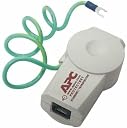
The APC Surge Protector for Ethernet Data Port (PNET1GB) is designed to safeguard your network equipment with advanced surge protection technology. It supports 10/100/1000 Base-T Ethernet lines and is compatible with Power over Ethernet (PoE), ensuring seamless connectivity while providing fail-safe mechanisms to protect against power spikes and surges.
| ASIN | B000BKUSS8 |
| Amperage | 15 Amps |
| Best Sellers Rank | #220,175 in Electronics ( See Top 100 in Electronics ) #1,232 in Surge Protectors |
| Brand | APC |
| Color | Beige |
| Compatible Devices | Devices with 10/100/1000 Base-T Ethernet lines |
| Customer Reviews | 4.5 4.5 out of 5 stars (464) |
| Enclosure Material | Polycarbonate |
| Global Trade Identification Number | 00112840328128, 00731304226734 |
| Item Dimensions L x W | 5.2"L x 5"W |
| Item Part Number | PNET1GB |
| Item Weight | 0.11 Kilograms |
| Manufacturer | APC |
| Mfr Part Number | PNET1GB |
| Model Number | PNET1GB |
| Number of Outlets | 10 |
| Number of Ports | 10 |
| Other Special Features of the Product | Surge Protection |
| Plug Type | Type B |
| Power Plug Type | Type B - 3 pin (North American) |
| Recommended Uses For Product | Apartment, Hotel, Office, Restaurant, TV |
| Shape | Rectangle |
| UPC | 112840328128 803982823021 731304000754 731304226734 777786418113 778888350530 |
| Unit Count | 1.0 Count |
| Voltage | 240 Volts |
J**N
These things really work!
We have a lot of electrical storms here, and because we have devices outside connected with CAT6 cable (generator, 5Ghz dish for our internet etc.) I wanted those incoming connections to go through a surge suppressor before plugging into my network switch, even though they are also fully shielded and grounded connections. It never hurts to be save with all the electrical storms we have around here. I bought a couple of these things back in 2015 and took the time to mount and properly ground them well. Then in 2017 I bought a couple more for additional devices, trusting that they still do the job but never really knowing since despite all the electrical storms we've had, nothing has been struck and nothing has gone out. Perhaps that in itself is a testament to these things... but I still wasn't sure if these had capability to absorb multiple hits, or if they are single use. That changed this past weekend. We had a killer electrical storm right above our house and at the same moment we saw a massive lightning strike, the power went out for a few seconds and our internet went out and stayed out. (We get our internet from the 5Ghz dish outside from a nearby mountain since there is nothing else available in our area.) The dish seemed okay. The POE injector was still sending power, the radio on the back still had activity and RX lights, the link on my switch port was still showing 100Mbps full duplex, but no internet. I tried everything... replacing the POE injector, rebooting the dish and even leaving the dish's radio unplugged for 24h to drain it completely. I was about to go order a new radio and then thought, "hey, why not remove the surge suppressor" even though network and power seemed to be passing through it just fine. That was it! the lightning must have caused enough of a surge to trigger it. Once I removed it and replaced it with a new one, my dish was back online. So, here's some proof that these things actually work. Happy to buy a replacement for $23 vs. a new switch for hundreds (assuming it would have gone through to my switch... and if that's true, where would it go from there!)
T**U
IT WORKS. TRUE EXPERIENCE. REAL WORLD
I always wondered if this item would truly do it's job. Some of the reviews have not been favorable and some are. Now I have real world experience with this Surge Protector. My signal comes in via coaxial to the modem which is connected to old Asus router I was using as my wi-fi access point. This Asus Router was connected, via an Ethernet cable, to an expensive Cisco Commercial Router. I parked the APC Surge Protector at the end of that Ethernet Cable and then plugged the other end of the APC into my commercial router's WAN. It sat there for quite a while and I had no idea if it was actually going to work. Sometime in the last week the coaxial cable coming into my home experienced some type of surge (probably lightning) that ran up the line to the modem, then through the Ethernet Cable connected to the Asus Router, through the outgoing Ethernet cable connected to the APC Surge Protector. That surge evidenced itself as follows: Burnt connections in the outside coaxial cable as well as my inside coaxial cable running to the alcove where my equipment is installed. It then proceeded to fry the modem (owned by the ISP, so no harm no foul) thru the Ethernet Cable (which was also burnt out) connected to the Asus Router. It fried the Asus Router then and ran down the Ethernet cable with the APC Surge Protector at the end which was connected to the Commercial Router. Bottom line is the lightning strike took out everything (including Ethernet Cables) all the way up to the APC Surge Protector. It protected that router as well as my expensive CAT 6 cabling throughout the residence. In other words, the APC Surge Protector DID IT'S JOB.
E**N
ABSOLUTELY WORKS!
I bought one of these a few months ago, upgrading from the old 10mbs version I have. I usually unplug my cable modem from the coax when leaving for a long stretch of time and thunderstorms are forecast. This time my daughter decided to hop on the network and reconnect the modem that afternoon before one of the worst thunderstorms we've had here in 10+ years. Long story short - cable modem FRIED from near-direct lightning strike, but my router, voip ata, and computer (which all sits on another APC surge strip) went completely unscathed. Not only do I own this product, but can vouch that it works - like it SHOULD. Many other products out there really don't have what it takes under the hood to repel surges and strikes, instead relying on inconvenient insurance policies "stickered" onto cheap products. The point is to PROTECT, not INSURE. If you want an insurance policy, go to your local big-box store and get a regular $3 power strip then go to your insurance agent and schedule out a insurance policy. If you want to PROTECT your equipment... buy this.
N**L
実際に落雷に遭わないと評価できないので ネームバリューのある製品を選んだ。
S**E
This simple to use device offers a good level of protection against the potential damage caused by induced currents on ethernet cables. They just plug in-line with your existing ethernet cables, and have a 30cm bonding cable that has to be linked to a good Earth point. After extending my home network 30metres to an out building, using a roof-roof Cat6 cable, I started to think about the impact of lightning induced currents passing up and down the cable into my router and switches. I wanted something that could be easily installed into the existing set up and a search came up with these. APC have lots of industry qualified products suitable for a large range of equipments and scenarios, all aimed at surge current and over-voltage protection. So they appear well spec'd. Following the instructions I put one at each end of my exposed link cable adjacent to the Netgear switches; as an earth bonding point I used a mains inlet earth. I chose this approach rather than running a dedicated bonding cable back to the consumer units in the two buildings as it would have been a bit of a routing challenge. Can I tell if they are working? no, but then I've not noticed any impact on my 1Gb inter-building speed. They are cleared to 1000BaseT the Amazon description is incorrect. Hopefully I'll never notice them working when the next lightning storm passes by.
B**R
Upload reduziert sich um ~1 Mbit. Download unverändert. DSLAM ist aber direkt vor dem Haus. Leitungskapazität reduziert sich um 12 Mbit im Download und 4 Mbit im Upload. Da diese in meinem Fall bei 139 Mbit liegt werden die 100 Mbit des VDSL Anschlusses jedoch immer noch problemlos erreicht. Im Upload machen sich die 4 Mbit verlust auf der Leitungskapazität als 1 Mbit Verlust bei der effektiven Uploadrate bemerkbar. Wer also eine hohe Leitungskapazität, sprich eine gute Anbindung an den DSLAM hat, wird eher durch den Provider begrenzt als durch den Überspannungsschutz. In meinem Fall bin ich daher sehr zufrieden. Wenn die Leitungskapazität jedoch in etwa der gebuchten Leistung entspricht, muss man mit einem spürbaren Geschwindigkeitsverlust rechnen.
V**.
So far working OK>
F**L
This worked great, protecting my ethernet now and in addition can handle my gigabit connection without limiting bandwidth (I can use full gigabit down/up)
Trustpilot
2 weeks ago
2 weeks ago