
Buy anything from 5,000+ international stores. One checkout price. No surprise fees. Join 2M+ shoppers on Desertcart.
Desertcart purchases this item on your behalf and handles shipping, customs, and support to Tunisia.
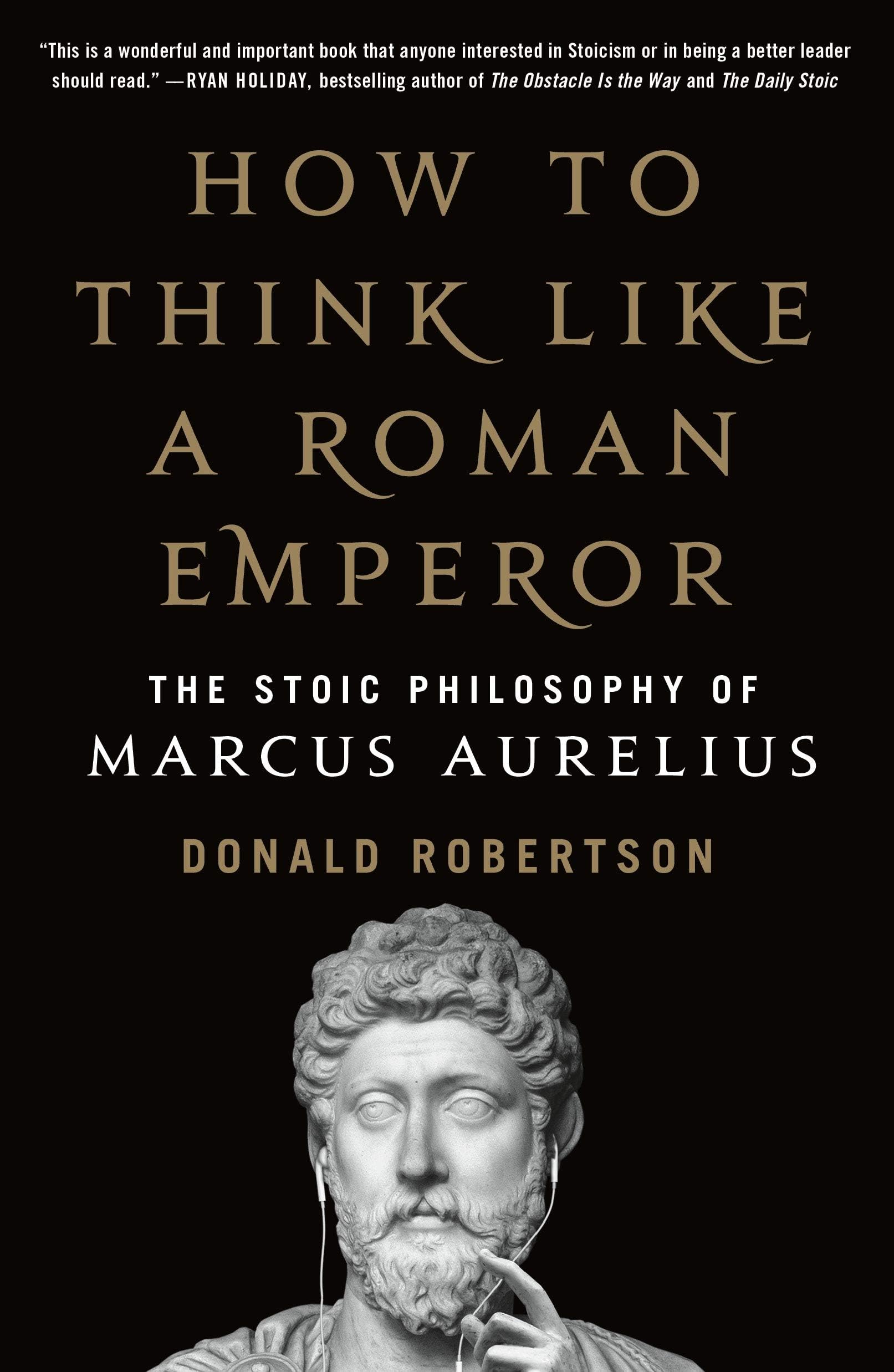
"This is a wonderful and important book that anyone interested in Stoicism or in being a better leader should read." โRyan Holiday Roman emperor Marcus Aurelius was the final famous Stoic philosopher of the ancient world. The Meditations , his personal journal, survives to this day as one of the most loved self-help and spiritual classics of all time. In How to Think Like a Roman Emperor , cognitive psychotherapist Donald Robertson weaves the life and philosophy of Marcus Aurelius together seamlessly to provide a compelling modern-day guide to the Stoic wisdom followed by countless individuals throughout the centuries as a path to achieving greater fulfillment and emotional resilience. How to Think Like a Roman Emperor takes readers on a transformative journey along with Marcus, following his progress from a young noble at the court of Hadrianโtaken under the wing of some of the finest philosophers of his dayโthrough to his reign as emperor of Rome at the height of its power. Robertson shows how Marcus used philosophical doctrines and therapeutic practices to build emotional resilience and endure tremendous adversity, and guides readers through applying the same methods to their own lives. Combining remarkable stories from Marcusโs life with insights from modern psychology and the enduring wisdom of his philosophy, How to Think Like a Roman Emperor puts a human face on Stoicism and offers a timeless and essential guide to handling the ethical and psychological challenges we face today. Review: An excellent book that links stoicism to modern life and cognitive behavioral therapy - When I was 19, I got a copy of Marcus Aureliusโ Meditations from the Walter J. Black Classics Club. I still have that volume. Iโve been dipping into the Meditations several times a week for more than 50 years. The original volume traveled with me in my seabag. It was my companion on trips as a young man. Itโs still on my shelf, though I use an updated translation today. I bought several recent books on stoicism. How to Think Like A Roman Emperor: The Stoic Philosophy of Marcus Aurelius by Donald Robertson was one of them. I buy two versions of books I plan to take notes in. I buy the Kindle version so I can take notes and create flashcards. And I buy the audio version, which I use as my main โreadingโ copy. I like the slower pace of the reading that allows me to ponder the meaning of passages. And I can highlight the passages themselves in my Kindle version. Thatโs what I did with this book. As I went through the audiobook, I realized the author linked stoicism to cognitive behavioral therapy (CBT). โOkay,โ I thought, โthatโs an additional insight.โ In the version of the audiobook I used, the introduction was at the end of the book. It cleared up many things about the book I had wondered about. It inspired me to go back through the book with the introduction in mind. The introduction does what an introduction should do. It gives you a frame for understanding the book and how itโs organized. It also gives you the authorโs intent. Here is that intent, from the introduction. "This entire book is designed to help you follow Marcus in acquiring Stoic strength of mind and eventually a more profound sense of fulfillment. Youโll find that Iโve combined Stoicism with elements of CBT in many places, which as weโve seen is only natural because CBT was inspired by Stoicism and they have some fundamental things in common." If you have an audiobook laid out the same way mine was, skip to the end and listen the introduction before you listen to the rest of the book. Youโll get more from the book. How to Think Like A Roman Emperor was a great book for me. I was already familiar with stoicism and I worked to apply it throughout my life. Iโd read other books about stoicism and about Marcus Aurelius. This is the best of those. There are two reasons. Stoic teachers taught Marcus and others to identify people they admire and then learn from their example. Robertson does the same thing, with Marcus Aurelius as the prime example. Robertson ties stoic practice to cognitive behavioral therapy. That provides a modern context and some scientific support for some stoic practices. In A Nutshell If youโre already familiar with stoicism, buy this book and read it. Youโll learn new thing about Marcus Aurelius and how to apply stoic principles. Robertson puts stoicism in a modern context. He gives you helpful ways to connect stoic philosophy with everyday life. If youโre relatively new to stoicism, read Ryan Holidayโs The Obstacle Is the Way first. It will give you a good practical overview of stoicism before you go a little deeper with Robertsonโs book. Review: Excellent Book on Marcus Aureliusโ Life - Thoroughly researched and fascinating look at Marcus Aureliusโ life and influence on Stoic philosophy and cognitive behavioral therapy and its applications.
| Best Sellers Rank | #12,903 in Books ( See Top 100 in Books ) #13 in Ancient Greek & Roman Philosophy #164 in Motivational Self-Help (Books) #384 in Personal Transformation Self-Help |
| Customer Reviews | 4.7 out of 5 stars 4,224 Reviews |
W**K
An excellent book that links stoicism to modern life and cognitive behavioral therapy
When I was 19, I got a copy of Marcus Aureliusโ Meditations from the Walter J. Black Classics Club. I still have that volume. Iโve been dipping into the Meditations several times a week for more than 50 years. The original volume traveled with me in my seabag. It was my companion on trips as a young man. Itโs still on my shelf, though I use an updated translation today. I bought several recent books on stoicism. How to Think Like A Roman Emperor: The Stoic Philosophy of Marcus Aurelius by Donald Robertson was one of them. I buy two versions of books I plan to take notes in. I buy the Kindle version so I can take notes and create flashcards. And I buy the audio version, which I use as my main โreadingโ copy. I like the slower pace of the reading that allows me to ponder the meaning of passages. And I can highlight the passages themselves in my Kindle version. Thatโs what I did with this book. As I went through the audiobook, I realized the author linked stoicism to cognitive behavioral therapy (CBT). โOkay,โ I thought, โthatโs an additional insight.โ In the version of the audiobook I used, the introduction was at the end of the book. It cleared up many things about the book I had wondered about. It inspired me to go back through the book with the introduction in mind. The introduction does what an introduction should do. It gives you a frame for understanding the book and how itโs organized. It also gives you the authorโs intent. Here is that intent, from the introduction. "This entire book is designed to help you follow Marcus in acquiring Stoic strength of mind and eventually a more profound sense of fulfillment. Youโll find that Iโve combined Stoicism with elements of CBT in many places, which as weโve seen is only natural because CBT was inspired by Stoicism and they have some fundamental things in common." If you have an audiobook laid out the same way mine was, skip to the end and listen the introduction before you listen to the rest of the book. Youโll get more from the book. How to Think Like A Roman Emperor was a great book for me. I was already familiar with stoicism and I worked to apply it throughout my life. Iโd read other books about stoicism and about Marcus Aurelius. This is the best of those. There are two reasons. Stoic teachers taught Marcus and others to identify people they admire and then learn from their example. Robertson does the same thing, with Marcus Aurelius as the prime example. Robertson ties stoic practice to cognitive behavioral therapy. That provides a modern context and some scientific support for some stoic practices. In A Nutshell If youโre already familiar with stoicism, buy this book and read it. Youโll learn new thing about Marcus Aurelius and how to apply stoic principles. Robertson puts stoicism in a modern context. He gives you helpful ways to connect stoic philosophy with everyday life. If youโre relatively new to stoicism, read Ryan Holidayโs The Obstacle Is the Way first. It will give you a good practical overview of stoicism before you go a little deeper with Robertsonโs book.
A**R
Excellent Book on Marcus Aureliusโ Life
Thoroughly researched and fascinating look at Marcus Aureliusโ life and influence on Stoic philosophy and cognitive behavioral therapy and its applications.
W**.
Excellent intro to actionable Stoic principles.
Me at the New Year's Party: "In 2020, my resolution is to Duolingo Italian everyday and to start approaching things/conducting myself more stoically!" 2020: "Hold my corona..." Yeah...So, there's a lot to like about this book: it is part history book, part Stoicism-101, part self-help do-it-yourself psychotherapy (CBT) manual. It recounts the life of the famous Roman Emperor and Stoic par-excellence Marcus Aurelius. Why was he so famous? Because as the author explains, before philosophy went all ivory-towery manifestoey and theoretical, people used philosophy as a practical guide to live a fulfilling life. Sure, there were still philosophy bros here and there called "Sophists" that used philosophy to construct clever arguments to impress baes and such, but for the most part, you practiced what you preached. Few exemplified this more than Marcus Aurelius himself, who fortunately for us was also into journaling and scrapbooking, so we get a glimpse into his thought process and guiding principles as he carried out his daily affairs in what was perhaps the most powerful empire of the ancient world. Zeus knows he had plenty of opportunity to practice it and develop it into something close to a religion, since as we find out he suffered many a tragic event in his life, plus his son and successor Commodus (played by Joaquin Phoenix in the movie "Gladiator") turned out to be quite the tool; a bit Ericky Trumpey if I'm being honest ok? The author does a great job contextualizing Marcus Aurelius' life and actions through the vehicle of the four Stoic ideals: wisdom, justice, courage, and moderation. He further expands upon each lesson by introducing modern Cognitive Behavioral Theory techniques and guidelines that can help the readers implement them in their daily lives. It is done very well and the whole thing is quite readable without being pedantic or patronizing. It does get a bit repetitive at times which causes it to lose steam towards the last chapter and get bogged down, but this is perhaps due to the simplicity of the philosophical approach. Highly recommended!
I**O
The writing style is serene, and well-paced. He channels wisdom through words with clarity
The book is about the infamous roman emperor Marcus Aurelius, a Stoic at heart, who ruled Rome during a time of multiple foreign wars, and a couple civil wars. The way he ruled was unconventional even to the standard of the Romans. Donald Robertson focused on specific times of Marcus Aureliusโ life, in other words in the defining moments that could break or make a man. He uses these moments to give us examples of what it is like to live a life according to the Stoics, and how Marcusโ ruling was clearly influence by the philosophy of the Stoics. The book is not a biography, and its not a historical book either. Although, there is a bit of both in here, the main focus is on the character of Marcus Aurelius and how we can embody his characteristicsโ the author does an excellent job of telling us this is within hands reach. There is one quote that a reader comes across repeatedly the whole book and it could also serve as the theme of the book; a simple and yet powerful quote by Epictetus โWe suffer not from the events in our lives but from our judgement about them.โ He repeats this quote through the chapters with different words, but the main idea is there; detach yourself from things, events, and emotions to people, and peace is within reach. My favorite chapters are 4: The Choice of Hercules, and 7: Temporary Madness. The first one deals with the fact that choices we make have repercussions for life, and the road less taken is usually the one where we meet the best version of ourselves at the end of the road. The latter chapter deals with anger, and goes to an extensive length to warn us to stay away from a volatile, and violent life by controlling our emotions. Both chapters offer methods the Stoics created and used for themselves and for their patients, methods that have withstood the test of time. Yes, even modern therapist are using the Stoic methods to treat their patients with tremendous results. The writing style is serene, and well-paced. But the most important factor to take into account when reading a book on this scale is how clear the authorโs ideas are put onto paper. It is one thing to write about ways to improve your life and the benefits of it, but another to understand it, embody it, and to have the ability to communicate it in a way the reader feels inspired to believe it can actually be done. This is what I called "clarity." Donald Robertson speaks in such a way that reminds you of the father we all need to have in our lives. As a side note; Iโd refer to the current God of War video game character Kratos. He is powerful but lives a humble life, he is a barbarian but chooses to be gentle with those close to him. He is calm but volatile when needed. He shows self-control and wisdom to his only son, and uses his unlimited strength to guide him. In a way, Iโd say Donald Robertson does the exact same thing in this book; He speaks with meekness to his adopted children.
B**N
1 of 4 things that has helped with my depression immensely
โHow to Think like a Roman Emperorโฆโ has literally changed my life in giving me a deeper dive into Stoicism, helping me actually apply it to my life and retrain my thoughts that led me to be depressed. Iโve struggled with depression since 2005, and Stoicism, plus exercise (specifically running outside), plus talking with a therapist and taking medication have helped me immensely and possibly โcuredโ my depression (itโs only been 3 weeks since doing all 4 things simultaneously). I recommend starting off with Donald Robertsons book โHow to Think like a Roman Emperorโฆโ and then reading the Gregory Hayes translation of Marcus Aurelius' Meditations. The free translations (e.g.: George Long) are written in "ye olde English" and hence less accessible. My notes after reading each chapter: Chapter 1. The dead emperor. There are four virtues: wisdom, justice, courage and moderation. These virtues should take priority above worldly things. Our ability to reason is what makes us human. Marcus Aurelius was not afraid of death. Chapter 2. The most truthful child in Rome. Summary Marcus didnโt concern himself with sounding smart but practical wisdom for everyday use. Conciseness and objectivity should be applied to our speech and describing a situation. Our initial feelings are natural, what matters is how we apply reason to the feelings and situation. Itโs not things that upset us but our judgements about things that upset us. The things that we donโt have control over are neither good nor bad. Ask, what would [virtuous person] do? Chapter 3. Contemplating the sage. To communicate wisely, we must phrase things appropriately. To be pure of heart, we must never crave anything that requires walls or curtains around our thoughts. Imagine if a role model followed you around and knew your thoughts. Ask yourself โwhat would [role model] do?โ Model a role models behavior and attitude. Start each day preparing yourself for what you will face and think how your role model will face the situation. Review your day and ask how you could improve and what you did well. Create a list of things desired and admired qualities. Chapter 4. The choice of Hercules. The life of pleasure doesnโt lead to greatness. Pleasure doesnโt equal happiness. Purpose and fulfillment bring great satisfaction, not the pursuit of earthly pleasures. Joy should be active rather than passive. Itโs comes from perceiving the virtuous quality of our actions. Contemplate virtue in ourselves and others. Appreciate the things you already have and contemplate how you would miss them if you didnโt have them. Whatโre the long terms pros and cons of a habit? Spot early warning signs so you can nip problematic desires in the bud. Gain cognitive distance: view thoughts as if they arenโt your own. โDepreciation by analysisโ: Break down things in smaller chunks, or into their basic elements. Donโt fall into the double standard of admiring another personโs virtue and downplay yourself pursuing or having that same virtue. Chapter 5. Grasping the nettle. Pain is ephemeral. Think of pain in a detached manner. Physical disabilities do not impede our ability to pursue virtue. Our preconceived judgement about pain affects how we perceive it. Chapter 6. The inner citadel and war of many nations. โThe obstacle standing in the way becomes the wayโ and can become an advantage. Do things with a reserve clause (Fate permitting, God willing). Be indifferent to the results, the pursuit of virtue itself is the reward. Premeditate adversity to make adversity less daunting and to make facing it easier. Exposure therapy, playing through an event in our mind like a short film, where it has a beginning, middle and end, can help with reducing anxiety over time. True inner peace comes from the nature of our own thoughts rather than pleasant natural surroundings. The universe is change. Life is opinion. Contemplate impermanence. External things cannot touch the soul, but our disturbances all arise from within. Things donโt upset us, but our values judgements about them do. Cognitive distancing enables us to do this. When anxious about something, ask โwhatโs nextโ. Helps with de-catastrophiz-ing. Eg: if you lose your job, eventually youโll get a new job. Practice time projection, how will you view X event in 20 years? Why should you be anxious about the event if it wonโt concern you in 20 years? Chapter 7. Temporary madness. No one does evil or makes mistakes willingly. Be ready to accept the errors of people. We still share a common humanity with those who oppose us and should treat our enemies with kindness. Even though someone may try to harm us, they cannot damage our true character. Anger is a form of desire, desire for revenge, desire for punishment. Can stem from a rule that is important to us that has been broken. Before weโre angry (in the moment, itโs hard to remember these strategies): practice and remember to self-monitor, cognitive distancing (our judgement about events concern us, not the event itself), postponement, what would X do, functional analysis (eg: what will happen if we let anger guide us). Interacting with troublesome people is an opportunity to practice virtue. Anger does harm to the person harboring anger. Bad people do bad things, we canโt expect bad people to do good things. We should not be surprised by the events of the world and peopleโs actions. Chapter 8. Death and view from above. All things change and before long they are gone. You cannot step into the same river twice, Heraclitus once said, because new waters are constantly flowing through it. In a sense, death is returning to the state of non-existence before we were born. We were dead centuries before we were born. Philosophy is a lifelong meditation on our own mortality.
J**E
The most important book I've ever read
A true masterpiece, Donald's book strikes a rarefied and highly accomplished balance of: presenting clear and practical information on - and exercises for - harnessing greater control over your life, the philosophical origin of the information, and modern therapeutic justifications for why this all works (Donald is an accomplished psychologist with over twenty years of experience in the field), all encapsulated in the very compelling story of the Roman emperor touted the last of the "Five Good Emperors," Marcus Aurelius. This might seem like a lot to take in and truth be told, if you're an absolute newcomer with no exposure to philosophy, meditation, therapy, or religion, then you may struggle a little, however, the language is clear, the ideas well-explained, and like many other Stoic texts, it's succinct at only 269 pages so I invite you to give this a read no matter what your background - you have only wisdom to gain and nothing to lose. The author also recorded an audiobook version that's very good, too, if an audio format is more to your liking. For those who may be reading this review and are - like me a couple of years ago - wondering what value there is, if any, in reading a book on Greek and Roman philosophy (as primarily categorized on Amazon), know that this is not a boring, academic text, but rather an engaging story and manual for how to become the best version of yourself possible while also minimizing negative emotions from your life such as anxiety, depression, fear, greed, etc. and the corresponding consequences that result from them. You should also know that you'd be in good company - Stoicism as a philosophy has been studied and used as a toolkit by political and business leaders as well as other important historical figures the world over like Frederick the Great, George Washington, Thomas Jefferson, Ralph Waldo Emerson, Walt Whitman, Theodore Roosevelt, Bill Clinton, James Stockdale and countless more (in addition to popular sports franchises like the New England Patriots and Seattle Seahawks). I can't extol the virtues of this book enough. You should read it. You should internalize it. And with some effort, you'll become a much, much better version of yourself.
S**J
Great introduction to Stoicism
I greatly enjoyed reading this book for my own personal enjoyment and I recommend it to my patients as an excellent introduction to Stoicism, mindfulness, and CBT. I appreciate how the author presents the different concepts and their interconnectedness, like how Aaron Beck was influenced by Stoic concepts in creating CBT, namely his understanding "that it was a meaning of events rather than the events themselves that affected people." Both Stoicism and CBT aim to help individuals manage their emotional responses through rational thinking and self-awareness. In Stoicism one is taught the importance of distinguishing between what we can control (our thoughts and actions) and what we cannot (external events), which is a principle CBT also adopts. I often use this book with individuals that are wary of psychiatry and 'mental health.' This is an excellent book whether you have some mental health challenges like depression or anxiety. Every person can learn something from this book to improve their lives. I also have the audio version read by the author and it is excellent.
L**S
Great read for seekers of wisdom and virtue
Itโs definitely an easy read. This is stoicism 101 handbook for dummies kinda thing. Itโs the book that lead me towards alchemy, and literally reshaped my whole life. Marcus Aurelius is definitely one of the greatest examples of a well governed mind. Read it, learn it - apply it!
S**Z
Marcus Aurelious
Great book. Highly recommended. Arrived right on time as scheduled.
S**)
A life-changer!
I am certain this one of those rare books that changes your life and your worldview. I couldn't put it down until the end. You can tell Mr Robertson had poured his heart and soul into this work. Brilliantly written and erudite, yet still highly readable, compelling, actually. The author has a considered and very mature conception of Stoicism and this book expounds it in great detail but in a very digestible way. In my view it has no major flaws and it makes Salzgeber's "The Little Book of Stoicism" seem trivial and childish. Mr Robertson also often compares Stoic thinking with modern CBT and other therapies, which clearly echo a deal of thought of the Stoic school, and he skilfully comes up with an excellent account of how the reader can apply Stoic principles in his own life in practical terms. If you truly wish to appreciate Stoic thinking at a deep level, especially the thinking of Marcus Aurelius, and apply it in your life, this book is for you.
M**N
As described
As described
A**C
Wonderful introduction to Stoicism
I thoroughly enjoyed this book, which is a great starting point for anyone wishing to know more about the life and philosophy of Marcus-Aurelius, as well as the world of Stoicism. Not only does Robertson's work offer precious insights into the mind of one of the world's most brilliant thinkers, but it also bridges the gap with modern cognitive-behavioural psychotherapy. In a world shaped by perceptions and where emotions often take the upper hand, Marcus-Aurelius remains as relevant as ever.
D**H
great book
very great book, life changing
Trustpilot
1 month ago
2 weeks ago