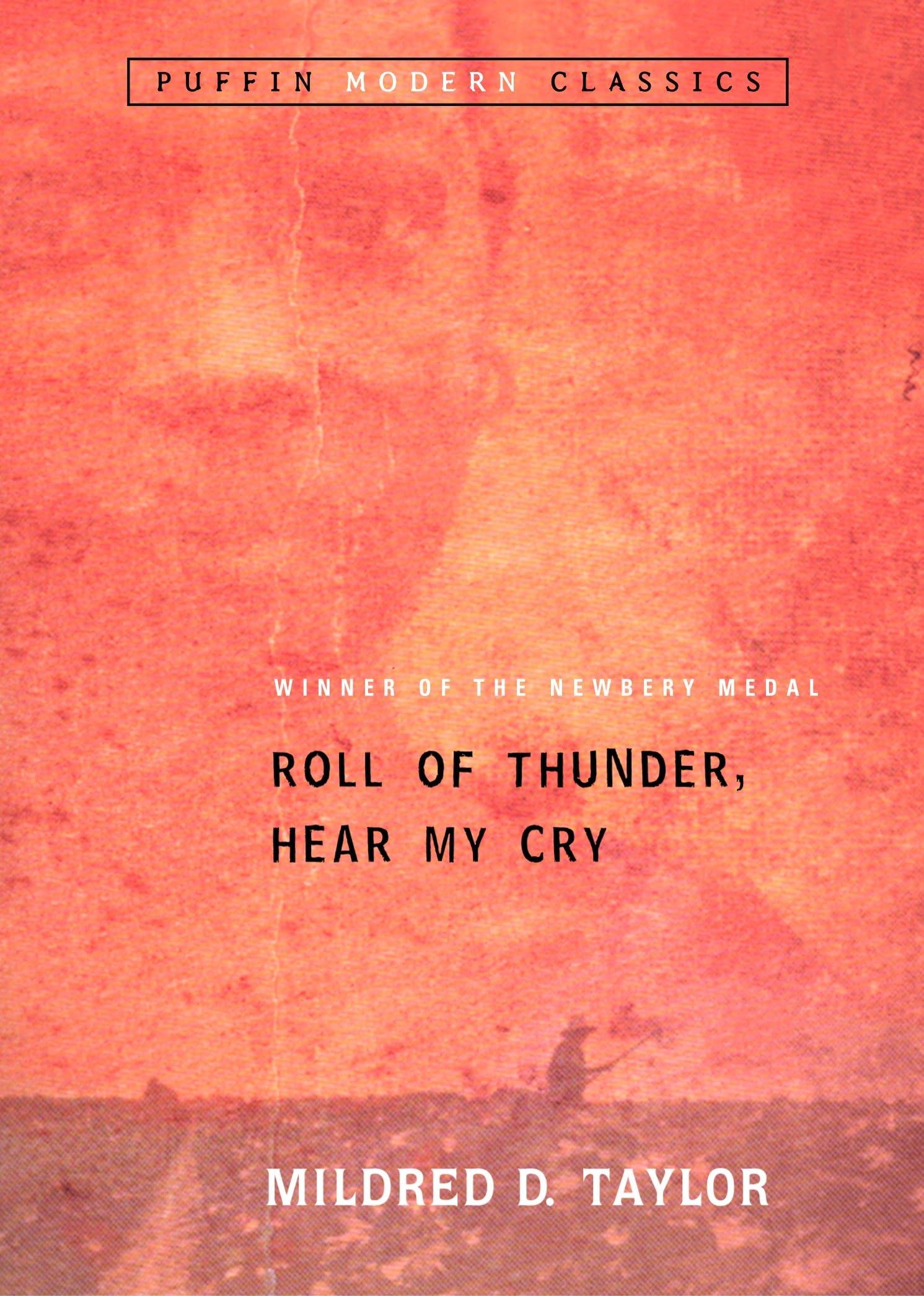
Roll of Thunder, Hear My Cry
Product ID: 2334706
🏆Newbery Medal-winning classic
📅Published 2004, timeless relevance
📚288 pages of immersive storytelling
Desertcart purchases this item on your behalf and handles shipping, customs, and support to Tunisia.
🏆 Dive into a timeless story of courage, pride, and change — don’t miss the book everyone’s talking about!
Roll of Thunder, Hear My Cry is a 288-page illustrated paperback by Mildred D. Taylor, winner of the Newbery Medal. Set during the Great Depression in Mississippi, it follows Cassie Logan and her family as they confront racism and fight to protect their land and dignity. Praised for its vivid storytelling and rich characters, this classic American historical fiction remains a must-read for those seeking powerful narratives on social justice and resilience.

| Best Sellers Rank | #5,413 in Books ( See Top 100 in Books ) #11 in Children's 1900s American Historical Fiction #222 in Children's Classics |
| Customer Reviews | 4.7 out of 5 stars 5,177 Reviews |
L**L
Fighting racism one family at a time
In her Newbery Award acceptance speech, Taylor said that one of her goals as a writer was to "paint a truer picture of Black people. I wanted to show the endurance of the Black world, with strong fathers and concerned mothers; I wanted to show happy, loved children about whom other children, both black and white, could say, `Hey, I really like them! I feel what they feel.' I wanted to show a Black family united in love and pride, of which the reader would like to be a part." I think if you read Roll of Thunder, you will agree with me that Ms. Taylor achieved her goal. Roll of Thunder, Hear My Cry deals with the cruel and unjust treatment of black people by the Southern white society they live in during the Depression era (1933). The story is told from the perspective of a black girl whose family must deal with the injustices and hatred they experience. One of my favorite things about Taylor's stories about the Logan family is the characters. It may be true that many of the characters in the book clearly fall under the category of either "good" or "bad." Most of the white people are depicted as hateful, and these characters never really change their ways. On the other hand, for the most part, the black people are portrayed as being honest, fair, and hardworking; most are religious and moral. However, a few characters are caught somewhere in the middle, seemingly pulled in both directions. Throughout the story several characters struggle with their identity, their role in society, and their sense of duty and loyalty. In a society that resents the first generation of black people who are free from slavery, a few white people risk their own reputations and relationships, and even their safety by treating the black people as equals. For instance, the lawyer Mr. Jamison not only makes it clear that he disapproves of the way blacks are treated, but goes to the point of risking his career and possibly even his life when he backs up the credit of the black people who choose not to buy from Wallace. Another white man, Mr. Granger, at times shows some tolerance for the black people, but not because it is right to do so, but because it is in his own best interest.More interesting is Jeremy Simms. Although his family despises the blacks, this white boy has made up his mind not to adopt their attitude. He and the Logan children know that it is not acceptable for them to be friends. Mr. Logan warns Stacey, "Maybe one day whites and blacks can be real friends, but right now the country ain't built that way. Now you could be right 'bout Jeremy making a much finer friend that T.J. ever will be. The trouble is, down here in Mississippi, it costs too much to find out." Jeremy takes a risk when he associates with the Logans, and Mr. and Mrs. Logan are uncomfortable with their children spending time with him. And the Logan children find it hard to understand how a person can go against his own kin. Likewise, several of the black characters are caught between doing what is right and what is in their best interest. For instance, while Hammer is willing to risk his own life in order to stand up for justice, Big Ma is willing to tolerate injustice in order to preserve her family's life and land. While Mr. Morrison is willing to take some risk himself, he tries to convince the other men that, as he has learned, fighting will not solve the problem. It seems particularly difficult for Mr. Logan to restrain himself from reacting with violence. Mr. and Mrs. Logan do not accept things to be "just the way they are" as Big Ma has. They take a stand against injustice and take steps to change things, like when Mrs. Logan pastes over the inside cover of the readers, and when they promote the boycott against Wallace. The most dynamic characters in the story are the children. They are in the process of learning from their parents and society what their place is. They are trying to figure out for themselves when it's the proper time to speak out or to fight. Stacey has a better understanding of the dangers involved in standing up for oneself than the others. Cassie, however, is torn between wanting revenge against the whites and seeing them punished, and being afraid of what could happen to her father or uncle. When confronted with injustice, Cassie's conscience persuades her to take action against it as she has seen her parents do. But will she be just as strong in her stand when she is older and has more at risk? The reader may also wonder if Jeremy will still have respect for the black people after he is a grown man. The most pathetic character in the story is T.J. Although he himself is a victim of racial hatred and injustice, he buys into the idea that in order to be successful you have to be white. He is willing to lie, cheat, or steal in order to get what he wants. Since he cannot become white, he "crosses over" by allowing the white boys to use him against his own people. He ignorantly believes they accept him as an equal, when in reality he has sold himself into slavery to them in the hope of benefiting himself. He shows he has no respect for himself and that he has accepted that "white is better than black". In the end, T.J. learns the hard way that it's important to remain true to oneself. I believe one idea the story demonstrates is that children learn either hatred or love from what they are taught and modeled by their parents. To put it another way: "you reap what you sow." For the most part, children who are taught self-respect and love will grow up to respect and be tolerant of others. Mama tells Cassie, "We have no choice of what color we're born or who our parents are or whether we're rich or poor. What we do have is some choice over what we make of our lives once we're here." On the other hand, children who witness hate and prejudice, especially by their parents, may grow up to be racist without even knowing why. The children in this story are challenged to decide for themselves which way they will choose. The contemptible Wallaces and Simmses in Roll of Thunder, Hear My Cry never show signs of changing, which shouldn't be a big surprise. Hatred that is so deeply imbedded takes a long time to weed out. Taylor uses the character of Jeremy as a foreshadowing of the hope that the next generation may bring change.
K**.
Roll of Thunder, Hear My Cry Review
(This review was written by my daughter as part of a homeschool writing assignment. We hope you find it helpful!) Roll of Thunder, Hear My Cry by Mildred D. Taylor came in good condition to our house. The package and the book were not ripped or dented. The book is about a black girl named Cassie Logan and her three siblings. It is set after World War II and told from Cassie’s point of view. Their parents make a living off of the cotton that they grow on their land, but Mr. Granger, a white plantation owner, wants the Logan land and will do anything to get it. Another important character is T.J., who is friends with Cassie’s older brother, Stacy. T.J. gets into a lot of trouble, mostly with some white boys. There are some other exiting characters, but you’ll just have to read the story to find out who they are. Roll of Thunder, Hear My Cry is loosely based on the author’s own family and some of their history. I love the book immensely. When I read the book, I almost felt like I was Cassie and that I was going on her adventures. There are some grim scenes in the book, so it probably wouldn’t be good for young children to read it. I would recommend this story for readers 10 years and up. Since this book is coming from Cassie’s perspective, it might be more fitting for girls. However, boys might find this novel interesting, too. I hope you enjoy Roll of Thunder, Hear My Cry as much as I do! Happy reading!
C**Y
Book
Great book for all teens ( and Adults) to read. My grandkids are reading it now.
I**V
Still vital
Great book depicting the life of a Southern black family struggling to keep their land, their dignity and their lives in the middle of the Great Depression. This is the first Logans novel, but I picked it after I'd read The Land, the latest entry in the series. Fortunately for me, The Land is also the prequel to the whole series, so there is nice continuity between two books. Roll of Thunder is a children's book and the narrator, Cassie Logan, is a smart, bold and resourceful 9-year-old girl. Cassie is aware of racism to some extent (she and her brothers go to a blacks-only school, after all), but her parents try their best to shield their children from it. As the plot unfolds, however, Cassie is faced with scorn, intimidation and bullying from white people; she also learns from adults about much scarier stuff like beatings and night riders. Both Cassie and the gentle reader are spared the most horrific details, but if you know a bit about this period of US history, you can easily fill the missing blanks. Despite its bleak subject and target audience, the book never indulges in black-and-white (ahem) morality, and its portrayal of characters is far from simplistic. Even the most vile racists in the book are portrayed realistically, with plenty of attention to detail; you can tell they were not born monsters, but became monsters of their own free will. Even the ending is ambiguous, a hard-won victory that feels more like a minor respite and may yet prove futile in the long battle for equality. For a children's book, this is a surprisingly grown-up outlook. I like it and if I ever have kids I'm looking forward to reading this book with them.
R**Z
Some of the incidents are disturbing.
My daughter (7th grade), had to choose a book from a list for her first Language Arts project. When we Googled information about a couple of them and noticed how people wanted it banned for language, what do you think she’d pick? I read it along with her reading aloud some of the southern talk she wasn’t “getting.” The book is set in 1930s Mississippi and does have gratuitous use of the N word, which bothered the two of us more than the F word. Probably because of all the racial injustice going on at the same time. Some of the incidents were disturbing. We are dealing with it still today. Schools may not be segregated anymore, but in this book, white kids had a bus to school and black kids walked and were taunted as their bus passed by. White kids got new textbooks and black kids got their throwaways and the teacher was trying to pass them off as new. Cassie, the 10-yr old protagonist would speak up and found it got her in trouble. We enjoyed the adventures of the children in this book and how respectful and polite they were. We followed it up with a very old (1978)made for TV movie with a very young Morgan Freeman.
P**S
Growing Up Requires Some Hard Lessons
Growing up can be hard, with almost impossible lessons to learn. Children growing up in the South needed to learn some survival lessons, such as when to speak up, and when to remain silent. The prejudice was so real it could become deadly quickly. Mildred Taylor takes us through a culture of violence and prejudice, and some tools in how to survive these atrocities in strength and grace. The night riders were real. But there were also others who refused to take part in such activities. Tawdry drinking establishments were just as real, but there were some who learned to avoid those traps. There were traps of vengeance, of easy money, of false friendships. The children in this family also learned to stand for what was right, even when it cost them dearly. We could all learn these lessons, no matter the color of our skin. These are transferrable values, how to stand for righteousness and justice, what makes up a true friendship, even how to make honorable living work when everything seems to lean the other way. I would recommend this book, not only for this historical value in the black-vs-white issues that still plague our nation, but in how to be honorable when all those about you seem dead set against you. I have heard that one elementary school has chosen to remove this award-winning book from its library. That is a shameful decision. As a result of that decision, I chose to buy the book and review it. It is a book well worth reading, one that still speaks to our time.
A**R
Excellent book! A must read series!
I remember reading this book and the others In the series in junior high, and couldn’t put them down until I had finished. As an adult revisiting these books, they are every bit as captivating as I remember them to be. These stories area part of history, and stories that should continue to be on the reading lists of our children. Written from the perspective of a child makes them relatable and our children need to know the history of our country and how it affected the lives of real people. It needs to be shared in a way that is relatable to them, and these books do that beautifully. History forgotten is history repeated. It seems as though it already is being repeated, in front of our very eyes. My hope is that our children will learn what many of our generation failed, and create a better world than was left to them and simply see human beings worthy of respect and equality rather than the differences that our generation and those before used as an excuse to hate and divide and dehumanize anyone different.
S**R
HIGHLY RECOMMEND TO ALL AGES
I first read this book in 2009, as a 6th grader. As a young adult, I read this book once a year. I love the views of Cassie as she takes us on the Logan family’s journey growing up in the Deep South during extreme segregation. This book has taught me many ways and values and I hope to see more people learn about this hidden gem.
C**M
A spellbinding story of equality
Roll of Thunder, Hear My Cry is a novel written by Mildred Taylor, an African-American. It is an award-winning bestseller and it is the third book in the Logan family series. The book was published in 1976. The book is about the prejudice between black and white people during the 1930s in Mississippi. Cassie Logan, a fiery nine-year-old who can't bear racism, is telling the story. The Logan family is one of the richest black families that have their own land, so they become targets for the white people who want to take it away. After a tragic murder of a black man, the Logans are determined to stop other blacks from shopping at the murderer's shop. The Logans want to put an end to the dependence of the black people on the white people's land. By the end of the book, the black and white people work together to stop a fire, which is a start. I think the book was very enthralling and enjoyable. I enjoyed the part about Cassie successfully tricking Lillian Jean, a cocky and mean white girl, and the other trick about breaking down the white children's school bus, which splashed them every morning on the way to school. My favorite character was Kaleb Wallace because I found the way he was a coward when he saw Mr. Morrison, a tall and strong black man, very funny. I also liked Uncle Hammer because he was very loyal to Cassie when she told him that Mr. Simms knocked her off the sidewalk. I liked it a lot when Uncle Hammer bought a silver Packard just to spite Mr. Granger, a powerful and rich white man who also owned a silver Packard. Although there were many good things about this book, I thought there were some parts that could be improved. For example, the language was very difficult to understand because the dialogue was written in a Mississippi accent. Overall, I think Roll of Thunder, Hear My Cry was very well-written with a gripping and mesmerizing plot. I recommend this book for teenagers who are prejudice against black people, because it teaches you that everyone is equal.
A**R
Condition
The book arrived brand new, still sealed in plastic with no marks, folds, or damage. And on time. Perfectly happy with the purchase
E**C
Lovely book
Lovely book. A great read for adults and teens.
J**H
Buy
Very nice
M**A
Best
Da best thingy i have read, it was very emotional and nice it was very good, i enjoyed it very much :D
Trustpilot
3 weeks ago
1 week ago