
Buy anything from 5,000+ international stores. One checkout price. No surprise fees. Join 2M+ shoppers on Desertcart.
Desertcart purchases this item on your behalf and handles shipping, customs, and support to Tunisia.
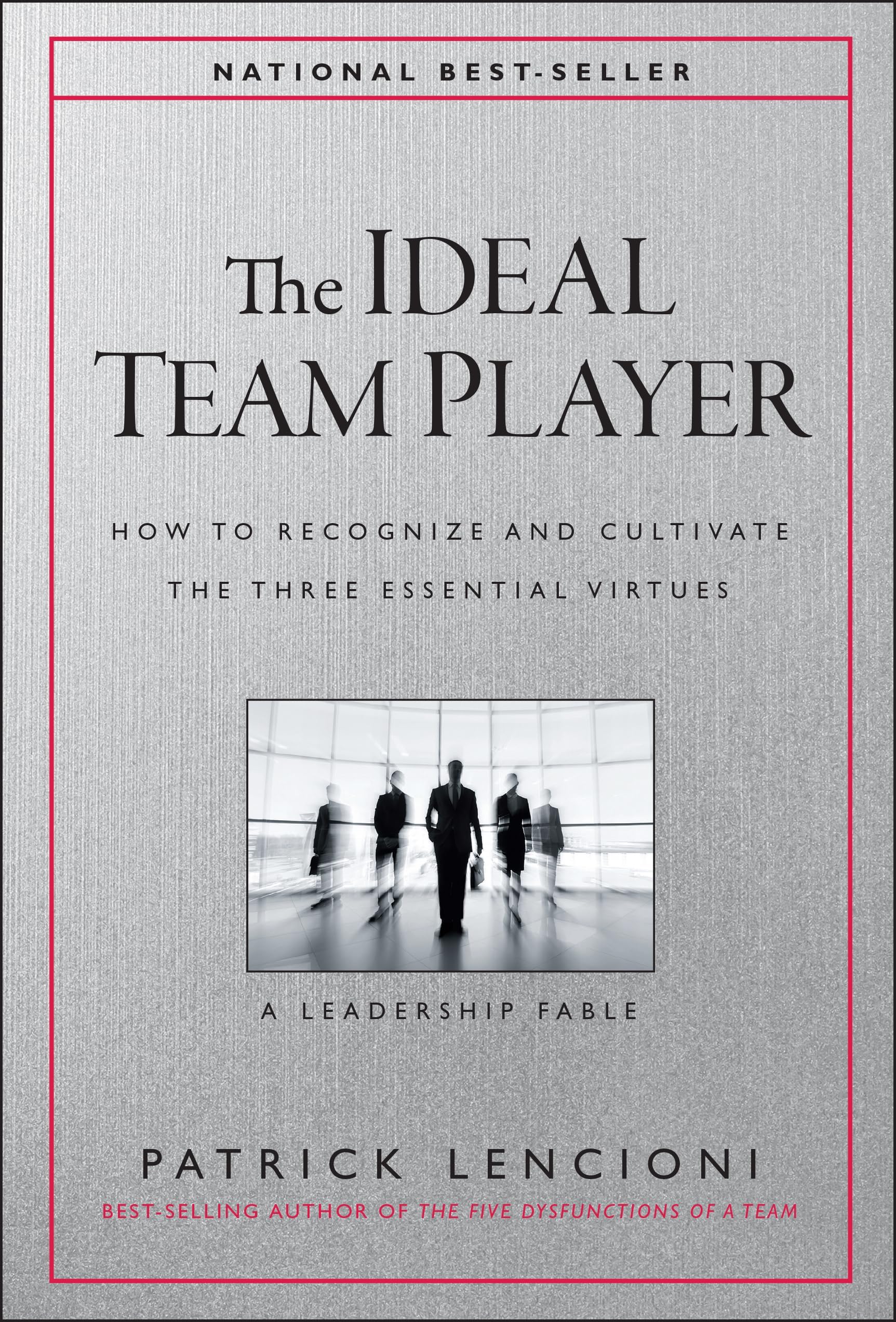
In his classic book, The Five Dysfunctions of a Team , Patrick Lencioni laid out a groundbreaking approach for tackling the perilous group behaviors that destroy teamwork. Here he turns his focus to the individual, revealing the three indispensable virtues of an ideal team player. In The Ideal Team Player , Lencioni tells the story of Jeff Shanley, a leader desperate to save his uncleโs company by restoring its cultural commitment to teamwork. Jeff must crack the code on the virtues that real team players possess, and then build a culture of hiring and development around those virtues. Beyond the fable, Lencioni presents a practical framework and actionable tools for identifying, hiring, and developing ideal team players. Whether youโre a leader trying to create a culture around teamwork, a staffing professional looking to hire real team players, or a team player wanting to improve yourself, this book will prove to be as useful as it is compelling. Review: Great Read - Good Information - The Ideal Team Player starts as a fable and makes the beginning very real and insightful. After the fable, Lencioni dives into the details that make up the ideal team player - hungry, humble and smart. For any organization to have a successful culture, their important virtues need to be clearly defined and of upmost importance in the hiring process and in the refining process of their current employees. Lencioni argues that hungry, humble and smart are the three keys for building a successful team and that each member MUST possess these three traits. 1. Hungry - these are people who always look for more and rarely have to be pushed to work harder. Healthy hunger is a manageable and sustainable commitment to doing a job well and going above and beyond when it is truly required. These employees finish their tasks and look for ways to support the rest of the team or look for ways to grow. *Be aware - in an interview - candidates can project a false hunger 2. Humility - this is the single greatest and most indispensable attribute of being a team player. Too many leaders, who value teamwork, tolerate arrogant employees - not understanding the effect it has on the rest of the team. There are Two types of People who Lack Humility: 1. Overtly arrogant - they boast and soak up attention - these are easy to spot 2. Those who lack self confidence - they are generous and positive with others but they discount their own talents and contributions. They are mistakenly seen as humble - their lack of understanding of their own worth is a violation of humility. They hurt teams by not advocating for their opinion or not calling out issues. *Insecurity is what both types have in common* C.S. Lewis "Humilty isn't thinking less of yourself, but thinking of yourself less" 3. Smart - NOT intelligence - this is common sense about people. They ask good questions, listen to others, stay engaged in conversations intently pg. 166-173 warns us of the different types of people. DO NOT hire or keep someone who lacks all of these characteristics or only has 1 of them. IF they have 2 of the 3, having humble and hungry is the least dangerous to a team as they can take feedback well and often want to improve *Be careful of what he calls the "skillful politician" who has hungry and smart - they can ruin a team and we have all worked with someone who speaks a good game but is only in it for themselves *Be careful how you label people as well. These traits don't have to be equally strong, but they all need to be relatively strong to be an ideal team player. If they are severely lacking in one area, that is of concern pg. 174-186 discusses how to apply this to the interview process and offers good questions to use to assess the humble, hungry, smart. *Key point - BEFORE making an offer to a candidate assure them how absolutely committed you are to these virtues and anyone who does not share them would be miserable working here but if they do share them, it will be a fantastic fit. As he says "many people will try to get a job even if they don't fit the company's stated values, but very few will do so if they know they're going to be held accountable, day in and day out, for behavior that violates the values". pg. 187-191 is assessing your current team to either make corrections or let people go. "Too often, leaders know that an employee really doesn't belong and would be better elsewhere, and they fail to act because they lack courage pg. 195-206 discusses how to develop these attributes. 1. Humility - A leader should always model humility, even if the manager struggles, admit it and continue to work on it. This will encourage the others to do the same. A lack of humility is always related to an insecurity and for most, is rooted in a childhood or family issue that took place well before their first day on the job. So, helping an employee IDENTIFY the root cause and then putting them through EXPOSURE by requiring them to "act" humble (complimenting others, admitting mistakes, etc...) can have a major impact 2. Hunger - this is often hard to change. First and most important step is finding a way to connect them to the importance of the work they are doing. Then set clear behavioral expectations for them and hold them accountable to it. MORE THAN THAT - tell them that you expect them to help their colleagues do what needs to be done once their work is completed, including taking on additional responsibilities, working more hours (if possible), or doing additional research until problems are solved 3. Smart - the key to developing people smarts is to make it clear, to everyone involved, that a deficiency in this area is not about intention. Then, if someone is rude or insensitive, QUICKLY and LOVINGLY correct and encourage them. Remember, their intentions are not bad they are often just unaware pg. 207-211 discusses how to embed these into a culture. 1. Be Explicit and Bold - if you believe it is important, come right out and say so 2. Catch and Revere - constantly be on the lookout for any displays of these virtues and when you see them, hold them up as examples for everyone to see. *"What we are failing to realize is that the point of praise is not only to reinforce the behavior in that employee, but also to reinforce it in everyone else" 3. Detect and Address - When you see a behavior that violates the values, take the time to let the violator know he is out of line, and not just in egregious behaviors Overall, this book offers an incredible and thorough explanation of the importance of having ideal team players and the ways to find, train and refine them. This is a great read for anyone who is hiring, has employees, is an employee, or just about anyone Review: A Secular Business Book That Has Obvious Implications for Church Ministry Too - Effective organizationsโwhether theyโre multinational corporations, professional sports franchises, or local churchesโpractice teamwork. When people work together on a common goal, they achieve more than they could do individually and experience a measure of personal satisfaction. When people work against one another, however, the result is organizational ineffectiveness and personal frustration. In his 2002 bestseller, The Five Dysfunctions of a Team, Patrick Lencioni outlined five ways teamwork goes awry: absence of trust, fear of conflict, lack of commitment, avoidance of accountability, and inattention to results. While that book identified the interpersonal dynamics of effective teams, it did not identify the personal qualities of effective team members. Lencioniโs new book, The Ideal Team Member, picks up where Five Dysfunctions left off and outlines three essential โvirtuesโ: An ideal team member is humble, hungry, and smart. Humility comes first because it is โthe single greatest and most indispensable attribute of being a team player.โ Humble team players are not โovertly arrogant,โ of course, but they do not โlack self-confidenceโ either. Rather, quoting C. S. Lewis, Lencioni writes, โHumility isnโt thinking less of yourself, but thinking of yourself less.โ Humility makes collective action possible. Without it, teams donโt work effectively, because each member is either out for themselves ( due to overt arrogance) or unable to propose solutions (because of lack of self-confidence). โHungry people are always looking for more,โ writes Lencioni. They are โself-motivated and diligent.โ For a team to work effectively, each team member must proactively contribute to the overall effort. No slackers are allowed. Smart doesnโt pertain to โintellectual capacity,โ though itโs similar to emotional intelligence. Lencioni defines it as โa personโs common sense about peopleโฆthe ability to be interpersonally appropriate and aware.โ Ideal team members are people-smart. After defining these three virtues, Lencioni outlines why and how they must work together. โIf even one is missing in a team member, teamwork becomes significantly more difficult and sometimes not possible.โ A team member who is only humble and hungry, for example, becomes an โaccidental mess-makerโ because they are constantlyโalbeit unintentionallyโstepping on othersโ toes. One who is only humble and smart is a โlovable slacker,โ liked by all, but only willing to exert minimum necessary effort. Someone who is only hungry and smart is a โskillful politician,โ which Lencioni describes as being โcleverly ambitious and willing to work extremely hard, but only in as much as it will benefit them personally.โ Although Lencioni wrote The Ideal Team Member for the secular business world, my description of its contents should convince ministers that it has application to the work of local churches as well. (Indeed, Lencioniโa devout Catholicโnotes that Jesus Christ is the โmost compelling example of humility in the history of mankind.โ) The humble-hungry-smart model gives senior pastors and ministers who lead volunteers valuable insights into who to hire, how to assess their performance, what can be done to develop them when they lack one or more of the virtues, and how to embed those virtues in a churchโs organizational culture. Consequently, I highly recommend this book to ministers and ministry leaders. One final note: As with The Five Dysfunctions of a Team, The Ideal Team Player begins with what Lencioni calls โa leadership fable.โ He tells the story of the CEO of a family-owned building company who discovers these three virtues in the course of taking over the reins of the company from his uncle. Only after telling the fable does Lencioni describe the humble-hungry-smart model in propositional terms. This narrative way of approaching the subject shows before it tells. This makes Lencioniโs points concrete and easy to understand. The show-then-tell approach is also, it seems to me, a great way to preachโฆthough that is a subject for another time.


| Best Sellers Rank | #2,811 in Books ( See Top 100 in Books ) #4 in Human Resources & Personnel Management (Books) #15 in Business Management (Books) #25 in Leadership & Motivation |
| Customer Reviews | 4.6 out of 5 stars 6,061 Reviews |
G**N
Great Read - Good Information
The Ideal Team Player starts as a fable and makes the beginning very real and insightful. After the fable, Lencioni dives into the details that make up the ideal team player - hungry, humble and smart. For any organization to have a successful culture, their important virtues need to be clearly defined and of upmost importance in the hiring process and in the refining process of their current employees. Lencioni argues that hungry, humble and smart are the three keys for building a successful team and that each member MUST possess these three traits. 1. Hungry - these are people who always look for more and rarely have to be pushed to work harder. Healthy hunger is a manageable and sustainable commitment to doing a job well and going above and beyond when it is truly required. These employees finish their tasks and look for ways to support the rest of the team or look for ways to grow. *Be aware - in an interview - candidates can project a false hunger 2. Humility - this is the single greatest and most indispensable attribute of being a team player. Too many leaders, who value teamwork, tolerate arrogant employees - not understanding the effect it has on the rest of the team. There are Two types of People who Lack Humility: 1. Overtly arrogant - they boast and soak up attention - these are easy to spot 2. Those who lack self confidence - they are generous and positive with others but they discount their own talents and contributions. They are mistakenly seen as humble - their lack of understanding of their own worth is a violation of humility. They hurt teams by not advocating for their opinion or not calling out issues. *Insecurity is what both types have in common* C.S. Lewis "Humilty isn't thinking less of yourself, but thinking of yourself less" 3. Smart - NOT intelligence - this is common sense about people. They ask good questions, listen to others, stay engaged in conversations intently pg. 166-173 warns us of the different types of people. DO NOT hire or keep someone who lacks all of these characteristics or only has 1 of them. IF they have 2 of the 3, having humble and hungry is the least dangerous to a team as they can take feedback well and often want to improve *Be careful of what he calls the "skillful politician" who has hungry and smart - they can ruin a team and we have all worked with someone who speaks a good game but is only in it for themselves *Be careful how you label people as well. These traits don't have to be equally strong, but they all need to be relatively strong to be an ideal team player. If they are severely lacking in one area, that is of concern pg. 174-186 discusses how to apply this to the interview process and offers good questions to use to assess the humble, hungry, smart. *Key point - BEFORE making an offer to a candidate assure them how absolutely committed you are to these virtues and anyone who does not share them would be miserable working here but if they do share them, it will be a fantastic fit. As he says "many people will try to get a job even if they don't fit the company's stated values, but very few will do so if they know they're going to be held accountable, day in and day out, for behavior that violates the values". pg. 187-191 is assessing your current team to either make corrections or let people go. "Too often, leaders know that an employee really doesn't belong and would be better elsewhere, and they fail to act because they lack courage pg. 195-206 discusses how to develop these attributes. 1. Humility - A leader should always model humility, even if the manager struggles, admit it and continue to work on it. This will encourage the others to do the same. A lack of humility is always related to an insecurity and for most, is rooted in a childhood or family issue that took place well before their first day on the job. So, helping an employee IDENTIFY the root cause and then putting them through EXPOSURE by requiring them to "act" humble (complimenting others, admitting mistakes, etc...) can have a major impact 2. Hunger - this is often hard to change. First and most important step is finding a way to connect them to the importance of the work they are doing. Then set clear behavioral expectations for them and hold them accountable to it. MORE THAN THAT - tell them that you expect them to help their colleagues do what needs to be done once their work is completed, including taking on additional responsibilities, working more hours (if possible), or doing additional research until problems are solved 3. Smart - the key to developing people smarts is to make it clear, to everyone involved, that a deficiency in this area is not about intention. Then, if someone is rude or insensitive, QUICKLY and LOVINGLY correct and encourage them. Remember, their intentions are not bad they are often just unaware pg. 207-211 discusses how to embed these into a culture. 1. Be Explicit and Bold - if you believe it is important, come right out and say so 2. Catch and Revere - constantly be on the lookout for any displays of these virtues and when you see them, hold them up as examples for everyone to see. *"What we are failing to realize is that the point of praise is not only to reinforce the behavior in that employee, but also to reinforce it in everyone else" 3. Detect and Address - When you see a behavior that violates the values, take the time to let the violator know he is out of line, and not just in egregious behaviors Overall, this book offers an incredible and thorough explanation of the importance of having ideal team players and the ways to find, train and refine them. This is a great read for anyone who is hiring, has employees, is an employee, or just about anyone
G**D
A Secular Business Book That Has Obvious Implications for Church Ministry Too
Effective organizationsโwhether theyโre multinational corporations, professional sports franchises, or local churchesโpractice teamwork. When people work together on a common goal, they achieve more than they could do individually and experience a measure of personal satisfaction. When people work against one another, however, the result is organizational ineffectiveness and personal frustration. In his 2002 bestseller, The Five Dysfunctions of a Team, Patrick Lencioni outlined five ways teamwork goes awry: absence of trust, fear of conflict, lack of commitment, avoidance of accountability, and inattention to results. While that book identified the interpersonal dynamics of effective teams, it did not identify the personal qualities of effective team members. Lencioniโs new book, The Ideal Team Member, picks up where Five Dysfunctions left off and outlines three essential โvirtuesโ: An ideal team member is humble, hungry, and smart. Humility comes first because it is โthe single greatest and most indispensable attribute of being a team player.โ Humble team players are not โovertly arrogant,โ of course, but they do not โlack self-confidenceโ either. Rather, quoting C. S. Lewis, Lencioni writes, โHumility isnโt thinking less of yourself, but thinking of yourself less.โ Humility makes collective action possible. Without it, teams donโt work effectively, because each member is either out for themselves ( due to overt arrogance) or unable to propose solutions (because of lack of self-confidence). โHungry people are always looking for more,โ writes Lencioni. They are โself-motivated and diligent.โ For a team to work effectively, each team member must proactively contribute to the overall effort. No slackers are allowed. Smart doesnโt pertain to โintellectual capacity,โ though itโs similar to emotional intelligence. Lencioni defines it as โa personโs common sense about peopleโฆthe ability to be interpersonally appropriate and aware.โ Ideal team members are people-smart. After defining these three virtues, Lencioni outlines why and how they must work together. โIf even one is missing in a team member, teamwork becomes significantly more difficult and sometimes not possible.โ A team member who is only humble and hungry, for example, becomes an โaccidental mess-makerโ because they are constantlyโalbeit unintentionallyโstepping on othersโ toes. One who is only humble and smart is a โlovable slacker,โ liked by all, but only willing to exert minimum necessary effort. Someone who is only hungry and smart is a โskillful politician,โ which Lencioni describes as being โcleverly ambitious and willing to work extremely hard, but only in as much as it will benefit them personally.โ Although Lencioni wrote The Ideal Team Member for the secular business world, my description of its contents should convince ministers that it has application to the work of local churches as well. (Indeed, Lencioniโa devout Catholicโnotes that Jesus Christ is the โmost compelling example of humility in the history of mankind.โ) The humble-hungry-smart model gives senior pastors and ministers who lead volunteers valuable insights into who to hire, how to assess their performance, what can be done to develop them when they lack one or more of the virtues, and how to embed those virtues in a churchโs organizational culture. Consequently, I highly recommend this book to ministers and ministry leaders. One final note: As with The Five Dysfunctions of a Team, The Ideal Team Player begins with what Lencioni calls โa leadership fable.โ He tells the story of the CEO of a family-owned building company who discovers these three virtues in the course of taking over the reins of the company from his uncle. Only after telling the fable does Lencioni describe the humble-hungry-smart model in propositional terms. This narrative way of approaching the subject shows before it tells. This makes Lencioniโs points concrete and easy to understand. The show-then-tell approach is also, it seems to me, a great way to preachโฆthough that is a subject for another time.
M**E
Another Strong Book from Patrick
Lencioni struggles with matching "Five Dysfunctions of a Team." This book was so good, that every other book is a disappointment. Not that the books are bad, rather, they just do not match that great text on teams. This book attempts to continue that conversation about developing a strong team, and how to be part of a strong team. The book is a good read, always engaging, and practical and helpful. When you read one of the author's text, you are always left with some actionable thoughts and behaviors. He does not overwhelm you with information, but creates a framework so that you can understand easily. The major focus of the book is finding and being people who are hungry (passionate about the goal), smart (people who are good with people), and humble (willing to learn and open to feedback). What I like about this model is that it does work. When you look for people to work with, look for these qualities. Since it is a simple process, you are more likely to find success within it. Instead of some of the complex ways we look for talent, this process is so easy that you will get it right more often. It is a good leadership book, and perhaps one that leadership should study together.
M**E
Cultivating Teamwork in the Ideal Player
In The Ideal Team Player, Patrick M. Lencioni shifts the focus from group dynamics to the individual qualities that contribute to effective teamwork. Following the success of his previous work, The Five Dysfunctions of a Team, Lencioni explores the three essential virtues that define an ideal team player: humility, hunger, and people smarts. The story follows Jeff Shanley, a leader determined to save his uncle's struggling company by fostering an atmosphere of teamwork. As he navigates the challenges within his organization, Jeff must decipher what truly makes a team player effective and how to build a culture that nurtures these qualities. Through his journey, Lencioni offers valuable insights into hiring and developing individuals who embody these virtues. Beyond the engaging narrative, Lencioni provides practical frameworks and actionable strategies that leaders and staffing professionals can implement to identify and cultivate ideal team players. Whether you're looking to enhance your organizationโs culture of teamwork or seeking personal growth as a team member, The Ideal Team Player offers compelling guidance that will resonate with anyone invested in creating cohesive and high-performing teams.
S**A
The Ideal Team Player: How to Recognize and Cultivate The Three Essential Virtues
I recently finished reading "The Ideal Team Player," and I have to say, it's a game-changer for anyone looking to understand what truly makes a successful team tick. Lencioni's insights into the three essential virtues - humility, hunger, and people smarts - are both profound and practical. What I appreciated most about the book is how relatable and applicable the concepts are. Lencioni uses real-world examples and anecdotes to illustrate his points, making it easy to grasp the importance of each virtue and how they interplay within a team dynamic. Moreover, the actionable advice provided for recognizing and cultivating these virtues in oneself and others is invaluable. Whether you're a team leader striving to build a cohesive and high-performing team or an individual looking to excel in a collaborative environment, this book offers actionable strategies to help you succeed. One minor critique I have is that some sections felt a bit repetitive, but overall, the clarity and simplicity of Lencioni's writing style make it a compelling read.
@**N
How to be an ideal team player and what to look for in others you hire!
With all the information available today and teams, most likely everyone has an idea of what the ideal team player may look like characteristically. And most likely if you were to take a survey of opinions you could possibly collect a list of 20 or more said qualities. However our culture works against us in this area. So the gap between team members that embody the values of an ideal team player as opposed to those who do not is increasing. We have a culture that values isolation over true relational connections; self-centered as opposed to others centered; prideful in themselves and their abilities; entitled vs hungry for more. I just finished reading Patrick Lencioniโs latest leadership fable called The Ideal Team Player. If you are interested in this topic and want something to read this summer, I highly recommend it. The story is a fun read; with some insightful lessons on both leadership and being a team player. Based on his many years of corporate and consulting experience, Lencioni has boiled the characteristics of an ideal team player down to three virtues as he calls them. Lencioni makes it clear that these are skills that can be learned and cultivated in everyoneโs life. Humble: Ideal team players are humble. They lack excessive ego or concerns about status. Humble people are quick to point out the contributions of others and slow to seek attention for their own. They share credit, emphasize team over self and define success collectively rather than individually. Hungry: Ideal team players are hungry. They are always looking for more. More things to do. More to learn. More responsibility to take on. Hungry people almost never have to be pushed by a manager to work harder because they are self-motivated and diligent. They are constantly thinking about the next step and the next opportunity. (People) Smart: Ideal team players are smart. They have common sense about people. Smart people tend to know what is happening in a group situation and how to deal with others in the most effective way. They have good judgment and intuition around the subtleties of group dynamics and the impact of their words and actions.
V**S
EFFECTIVE AND SIMPLE
I believe that the principles of being a Humble, Hungry, and Smart team player results in being the IDEAL TEAM PLAYER! In the context of Church Ministry I believe that this can be a great way to establish a culture for leaders within the ministry. As the book points out at the end of the book, the ultimate example of Humble, Hungry and Smart was Christ Jesus. Humbling himself upon the cross for the sake of the lost, compelled by love for the Father Christ gave EVERYTHING to restore all of creation from the curse of sin, Christ was HUNGRY! And SMART! OPnly God knows the hearts of man, and Christ ministers to a world that he created and knows intimately and well.
M**A
Simple and Elucidating
Mr. Lencioni writes simple, but with the depth of his experience. Connecting the dots of our human nature, flaws and abilities to grow and develop, he leads us through a story that teaches basic principles of sociability and communal living. Great for work, excellent for personal life.
C**N
Numerosi spunti
Questo libro รจ scritto molto bene, partendo da una storia vera propone spunti di riflessione nella gestione e nell'essere parte di un team
B**R
Der beste Ratgeber - unterhaltsam und hilfreich
Der Ratgeber war ein Tipp eines Freundes aus dem Management. Mittlerweile verschenke ich das Buch ebenfalls und besetze meine Stellen danach. In dem Buch sind viele spannende Tipps enthalten, die jedem Arbeitgeber, aber auch Arbeitnehmer in Verantwortung die Augen รถffnen. Zudem ist das Buch dank der Praxis-Beispiele unterhaltsam zu Lesen.
F**R
๐๐ผ
Book club with my company, you should try it itโs great.
V**O
Perspective !!
Excellent ! More relevant to my line of work. Inspired me and released in me a Fresh perspective, outlook and new energy towards my work
J**J
What make an ideal team player - clearly written!
This is a very well-written book and communicates clearly, via an engaging fable, on what makes an ideal team player and why this is so powerful.
Trustpilot
1 month ago
2 weeks ago