
Buy anything from 5,000+ international stores. One checkout price. No surprise fees. Join 2M+ shoppers on Desertcart.
Desertcart purchases this item on your behalf and handles shipping, customs, and support to Tunisia.
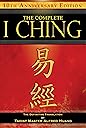
A revised edition of the definitive translation of the world’s most important book of divination • The first English translation from within the tradition by a Chinese Taoist Master • Includes translations of the Ten Wings--the commentaries by Confucius essential to the I Ching’s insights Translated by the eminent Taoist Master Alfred Huang, The Complete I Ching has been praised by scholars and new students of the I Ching since its first edition. A native Chinese speaker, Master Huang first translated the original ideograms of the I Ching into contemporary Chinese and then into English, bringing forth the intuitive meanings embodied in the images of the I Ching and imbuing his translation with an accuracy and authenticity not possible in other English translations. However, what makes his translation truly definitive is his return to prominence of the Ten Wings, the commentaries by Confucius that are essential to the I Ching’s insights. This 10th anniversary edition offers a thorough introduction to the history of the I Ching, how to use it, and several new divination methods; in-depth and easy-to-reference translations of each hexagram name, description, and pictogram; and discussions of the interrelations between the hexagrams and the spiritual meaning of their sequence. Review: If you are serious about the I Ching - this is it! - I 'tripped' over the Wilhelm version (translation of Chinese to German to English) of the Ching when I was 16 years old and was entranced - that was almost 40 years ago. It takes half an hour to learn to throw coins/yarrow sticks, but it took (for me) a subsequent 15 years to penetrate the I Ching. I have read/perused almost every English translation of the Ching since (excluding the New Age fringe nonsense) and found that the Wilhelm translation (with its poetry) and Karcher's (with its adaption to more Western thinking) were the best in combination ... until Huang's translation/interpretation. This is the definitive work for the serious English reader. The Ching does not even adequately translate into modern Chinese - so unless you understand pre-Bronze or Zhou Dynasty classical Chinese you are left with translations/interpretations of your particular native tongue. Huang sagely points out that the Ching - to be adequately mastered - needs to be taught by a master. (No wonder it took me 15 years to penetrate and the learning is still ongoing; it is learning of yourSelf, the human world within which you interact, a meditation, and a means for Confucian Enlightenment). I make the Ching a daily exercise/meditation, simply asking it to read the current energies. It is an oracle of wisdom, not a psychic tool. To consult the Ching is not simply a matter of throwing coins/yarrow sticks and reading the commentaries and moving lines; it takes great patience to penetrate the wisdom of a given gua (hexagram), its moving lines, the yin and yang tensions, positions of the same, and subsequent changes are transfering to the person who appoaches the Ching. Often, the (open ended) question posed is not answering what you think it is; often it is revealing your state of mind/attitude in asking the question; sometimes it is describing the state of mind/intentions of the person who is a second or third party to the question - one must approach cautiously and with a pure heart (see the Initial Six in the 64th gua). Huang is aware of all this (read intro sections) and has taken great pains to accurately as possible present the INTIMATIONS OF IMAGARY that the original text presents. He states that the original text has approx only 4,900 characters - and if anyone has a passing knowledge of Chinese, they will know that these 4,900 characters are the sum total of a WRITTEN/TEXT BASED explanation of all divine and human knowledge available on earth - in what would be tantamount in English to a child's reader. IT IS IN THE IMAGERY - not the explanation/interpretation - WHICH TRANSFERS THE WISDOM TO S/HE WHO CONSULTS. An impossible job to translate - but Huang has done a brilliant piece of intuitive scholarship by transfering as best as ANYONE would be able the ancient imagary into a foreign language on every level. Meaning: not only text, but a completely different way of thinking as we are conditioned to as Westerners. If you have some decades to spare, wish to be enlightened, and have an affinity to Neo-Confucian/Daoist thought - this is the book! Review: Quite Good, but Not Just a Translation - Many years ago, having been attracted to the I Ching through the Wilhelm translation with a bit of Blofeld thrown in, I had a chance to do a semester tutorial in the first two hexagrams, reading the original under a Chinese scholar of classical Chinese. It was quite wrenching to realize that my "understanding" of the work had been entirely colored by Western thought and cultural concerns. Wilhelm sticks very closely to the original, including the many layers of commentary, but he makes it easy to read our own cultural meaning into it. For example, calling the first hexagram, "The Creative," can make it seem like some sort of Platonist or neo-Platonist, mystical Form, principle or archetype, but it sounds quite a lot more practical, descriptive, and straightforward with a Chinese explanation. There is still a lot of complexity and depth, but it isn't like what one finds in Western philosophy, psychology or metaphysics. Huang warns against this problem in his introduction, describing his own dissatisfaction with previous translations, and his explanations of the hexagrams sound very much like those of my former professor in their character. It's a Chinese book that's not that easy to understand without help, and unless one has grown up in a traditional Chinese culture, it's extremely useful to have it explained by someone who has received a traditional grounding in it. Huang's explanations of the challenges in approaching the original without this help, even for educated Chinese people in a Chinese culture that still reveres the I Ching, match my own experience in this and other Eastern traditions. Huang helps us get past inadvertently Westernizing our understanding of the work extremely well, and he does it by interspersing his explanations with the text. You can tell easily enough what is the original and what is Huang's commentary, but that means that it's not a "pure" translation like Wilhelm, where apart from the introductory materials, footnotes and so on, you see only the translated original. That makes this version very useful in divination, since everything for the hexagram is in one place and Huang's comments are very helpful in relating the text to your specific inquiry, but if you want only the "real" I Ching and no modern interpretation, then this isn't the version for you. For that, Wilhelm is still the gold standard.
| Best Sellers Rank | #35,515 in Books ( See Top 100 in Books ) #4 in I Ching (Books) #38 in Philosophy Movements (Books) #117 in Eastern Philosophy (Books) |
| Customer Reviews | 4.7 out of 5 stars 1,322 Reviews |
C**3
If you are serious about the I Ching - this is it!
I 'tripped' over the Wilhelm version (translation of Chinese to German to English) of the Ching when I was 16 years old and was entranced - that was almost 40 years ago. It takes half an hour to learn to throw coins/yarrow sticks, but it took (for me) a subsequent 15 years to penetrate the I Ching. I have read/perused almost every English translation of the Ching since (excluding the New Age fringe nonsense) and found that the Wilhelm translation (with its poetry) and Karcher's (with its adaption to more Western thinking) were the best in combination ... until Huang's translation/interpretation. This is the definitive work for the serious English reader. The Ching does not even adequately translate into modern Chinese - so unless you understand pre-Bronze or Zhou Dynasty classical Chinese you are left with translations/interpretations of your particular native tongue. Huang sagely points out that the Ching - to be adequately mastered - needs to be taught by a master. (No wonder it took me 15 years to penetrate and the learning is still ongoing; it is learning of yourSelf, the human world within which you interact, a meditation, and a means for Confucian Enlightenment). I make the Ching a daily exercise/meditation, simply asking it to read the current energies. It is an oracle of wisdom, not a psychic tool. To consult the Ching is not simply a matter of throwing coins/yarrow sticks and reading the commentaries and moving lines; it takes great patience to penetrate the wisdom of a given gua (hexagram), its moving lines, the yin and yang tensions, positions of the same, and subsequent changes are transfering to the person who appoaches the Ching. Often, the (open ended) question posed is not answering what you think it is; often it is revealing your state of mind/attitude in asking the question; sometimes it is describing the state of mind/intentions of the person who is a second or third party to the question - one must approach cautiously and with a pure heart (see the Initial Six in the 64th gua). Huang is aware of all this (read intro sections) and has taken great pains to accurately as possible present the INTIMATIONS OF IMAGARY that the original text presents. He states that the original text has approx only 4,900 characters - and if anyone has a passing knowledge of Chinese, they will know that these 4,900 characters are the sum total of a WRITTEN/TEXT BASED explanation of all divine and human knowledge available on earth - in what would be tantamount in English to a child's reader. IT IS IN THE IMAGERY - not the explanation/interpretation - WHICH TRANSFERS THE WISDOM TO S/HE WHO CONSULTS. An impossible job to translate - but Huang has done a brilliant piece of intuitive scholarship by transfering as best as ANYONE would be able the ancient imagary into a foreign language on every level. Meaning: not only text, but a completely different way of thinking as we are conditioned to as Westerners. If you have some decades to spare, wish to be enlightened, and have an affinity to Neo-Confucian/Daoist thought - this is the book!
A**R
Quite Good, but Not Just a Translation
Many years ago, having been attracted to the I Ching through the Wilhelm translation with a bit of Blofeld thrown in, I had a chance to do a semester tutorial in the first two hexagrams, reading the original under a Chinese scholar of classical Chinese. It was quite wrenching to realize that my "understanding" of the work had been entirely colored by Western thought and cultural concerns. Wilhelm sticks very closely to the original, including the many layers of commentary, but he makes it easy to read our own cultural meaning into it. For example, calling the first hexagram, "The Creative," can make it seem like some sort of Platonist or neo-Platonist, mystical Form, principle or archetype, but it sounds quite a lot more practical, descriptive, and straightforward with a Chinese explanation. There is still a lot of complexity and depth, but it isn't like what one finds in Western philosophy, psychology or metaphysics. Huang warns against this problem in his introduction, describing his own dissatisfaction with previous translations, and his explanations of the hexagrams sound very much like those of my former professor in their character. It's a Chinese book that's not that easy to understand without help, and unless one has grown up in a traditional Chinese culture, it's extremely useful to have it explained by someone who has received a traditional grounding in it. Huang's explanations of the challenges in approaching the original without this help, even for educated Chinese people in a Chinese culture that still reveres the I Ching, match my own experience in this and other Eastern traditions. Huang helps us get past inadvertently Westernizing our understanding of the work extremely well, and he does it by interspersing his explanations with the text. You can tell easily enough what is the original and what is Huang's commentary, but that means that it's not a "pure" translation like Wilhelm, where apart from the introductory materials, footnotes and so on, you see only the translated original. That makes this version very useful in divination, since everything for the hexagram is in one place and Huang's comments are very helpful in relating the text to your specific inquiry, but if you want only the "real" I Ching and no modern interpretation, then this isn't the version for you. For that, Wilhelm is still the gold standard.
E**S
Better leadership advice than the Art of War
I love the way this translation and interpretation confuses and sometimes nettles me, or rather my Western, cause-and-effect driven mind. I even love the ideographs, which I can rarely make any sense of. Master Huang seems to be reaching through the pages to tell me something important about Chinese philosophy and right action, the cyclic, constant nature of change, and the certainty that things alternate to their opposites in the great unity of the Tao. I love the way certain words or phrases leap out of the text and fit my situation exactly. This book gently nudges me into synchronistic rather than causal thinking, prying my control-freak fingers off a situation, connecting me to something greater, and filling me with peace. It's full of fabulous leadership advice, which I won't go into here. Suffice it to say that if this were the textbook of Silicon Valley tech whizzes and wannabes rather thanI The Art of War, we could be in a golden age of harmony. When I'm facing a tricky situation, it's never let me down. I drum the I Ching gua rhythms as meditation, and the meanings of my readings unfold over the next day or two. To me the I Ching is a manual of practical character development, helping me to see what right action is in the current situation. This translation, interpretation and historical-philosphical treatise is the perfect complement to my drumming practice. I have several other translations, but this is the one I use.
J**Y
For those who are sincere and earnest students of this oracle
I've used the Bollinger's publication of the I Ching as an oracle many years ago. In beginning to read this publication, the author provides instructions and guidance for the use of this publication with reverence and a devotional attitude towards its use, considering it a sacred text similar to the Christian's Holy Bible. He also says it should only be used for "important decisions" so as not to diminish the value of reverence and devotion for the oracle. If used as he prescribes, I'd say it will be a useful tool as a guide where life decisions are involved, but the learning curve will be extended due to using it only for "important decisions" which for me certainly limits my interactions with it. You will only come to truly understand the value of this oracle by repeated use of it, and reflection upon its information as it applies to your own life experiences. Therefore, as a student, I'd recommend using it daily and even multiple times a day to become familiar with its use and how the information applies to your day-to-day life experiences.
R**R
Different than the other ones
I'm giving this four stars because it is obviously a masterful work and I would not want in any way to denigrate it. For my personal value it was a three and I returned it. This is my completely subjective opinion, from a brief trial reading the book. It's a comparative view between this and the Wilhelm & Baynes edition and the R.L. Wing edition, and others may have taken more time and come to a different view. This edition seems comparable to an expansion of the Commentary in the back of the Wilhelm & Baynes edition, with more detailed and annotated explanations about the relationships of the lines. It's like it says, "This is the situation, here are the elements and how they relate to each other." However, it doesn't draw a moral, tell a story, come to a conclusion, or provide much direction compared to the Wilhelm & Baynes edition. So, something about different modes of thought? Like, here's the ideogram, here are the relationships, so, given general knowledge of the workings of society at large, the story of action here is obvious. Versus here's the noun, here's the verb, in this particular situation, here's the story. I have no idea (or ideograms). The R.L. Wing edition, on the other hand, is much more contemporary in its language, and much more moralizing and prescriptive than the Wilhelm & Baynes edition. It may be worth noting that R.L. Wing is a pseudonym. If you look at the front matter on the original 1970'ish Doubleday edition, it lists about a dozen people in the acknowledgements. In the latest edition is just says "many people contributed; you know who you are." My spouse reads the R.L. Wing edition; I read Wilhelm & Baynes, and we both interpret each others casts. I find that the R.L. Wing edition pretty much follows the thought of the Wilhelm & Baynes edition. One thing that the R.L. Wing edition does is provide three different contexts for each hexagram: social/civic, business, and interpersonal relationship. Over time I've come to accept the R.L. Wing edition as valid and useful. However, the Wilhelm & Baynes edition for me strikes the right balance between situation/implication/image/metaphor and overt direction. I would really like to know how the R.L. Wing edition was synthesized. I'm thinking houseboats in Sausalito harbor, with Alan Watts and Steward Brand drifting in and out like the fog and smoke. Not to say that there isn't a full on scholarly effort there. For the book in review here, I guess it would be valuable for people who wanted more of the pure situation/implication approach, as well as detailed insight into the amazing inner workings and movements of the lines.
I**S
Authentic and inspired interpretation from true Tao Master
I think I collected and used most of the Yi Jing translations to English and German, and have been also studying the Chinese original. This work is one of my favorites, along with Wilhelm's, Blofeld's and Shaughnessy's bilingual edition, and of course, the Chinese text. It's unique values are authenticity of translation, the perspective of one Tao Master, the pictures of the ancient ideographs of Gua and a in-depth explanation of some important symbois that could not be found anywhere else. Today there are many interpretations of the classic works and while I appreciate the value-add of the inspired new commentaries, I find the modern interpretations meaningful only if they build upon the actual, AUTHENTIC foundation and do not lose, dummy down or distort the original information. Unfortunately, majority of Westernized adaptations do exactly that. I saw many books that try to cut out the mystery and deep objective roots from the ancient "Jing" (Heavenly Scriptures) and present them in a socially biased context (e.g. treating inner and outer primordial spirit and their connection as the elements of an old superstition) thus misleading the readers. Master Huang has much different and deeper approach, that could be probably best summarized in his sentence: "Truth of Heaven is also the Truth of Humanity". His work respects and honors the roots of Yi Jing and his detailed and informative commentaries naturally grow from there. While any individual interpretation only shows a limited angle of view to a real thing, rather than its actuality (as in Dao Da Jing: "The name that can be named is not an Eternal Name"), this work powerfully supports the inner understanding of the open-minded reader. Highly recommended to the serious seekers of Truth.
A**A
Elite I Ching translation
This is the best possible I Ching English translation. Very good edition and wonderful format with the black hardcover. This takes the I Ching understanding to the next level.
R**A
Interesting
Got what I paid for
I**.
Excelente
Edição primorosa.
A**M
Gute Erklärungen
Im Vergleich zum Buch von Richard Willhelm, finde ich die Erklärung der einzelnen Zeichen deutlich hilfreicher.
J**.
Amazingly Detailed, Beginners Beware
Excellent book, but not for the faint of heart... this book is huge, and detailed, and the language is a bit much to take at times. It is however; an amazing amount of information about the I Ching. For those who like to dive in, head first, no holds barred... this is the book for you. I, on the other hand, need a bit of a gentle understanding before I can start to apply the basics to the huge and vast amount of information in this book. I can't give this book any less than 5 stars though, because it truly is a great book on the subject.
J**N
Accuracy
Authentic and best book I have ever purchased. I use the I Ching 40 years ago with some school friends. It was so accurate I was banned from going to my friend's place forever again. I never knew I was clairvoyant at the time. My intuition has led me to seek out the iChing recently for guidance as I know this is a tool that can be trusted.
M**O
El libro es excelente, la paquetería pésima
Otro libro que llega mal por culpa del mal embalaje... Parece usado
Trustpilot
2 weeks ago
1 month ago