


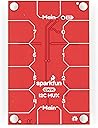
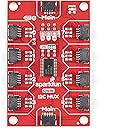


SparkFun Qwiic Mux Breakout - 8 Channel (TCA9548A)
Product ID: 456773685
🔀8-channel I2C multiplexer
🔌Compact 1mm pitch Qwiic JST connector
⚙️8 configurable I2C addresses
Desertcart purchases this item on your behalf and handles shipping, customs, and support to Tunisia.
🔗 Unlock Infinite I2C Possibilities — Because Your Sensors Deserve to Talk!
The SparkFun Qwiic Mux Breakout (TCA9548A) is an 8-channel I2C multiplexer designed to eliminate address conflicts by allowing multiple sensors with identical I2C addresses to share a single bus. Featuring eight configurable addresses and jumper-selectable options, it supports up to 64 I2C buses on one connection. Its compact 1mm pitch Qwiic JST connectors ensure easy, error-proof integration, while its wide operating voltage and temperature ranges guarantee reliable performance in diverse environments. Ideal for complex sensor arrays, this breakout is a must-have for professional developers seeking scalable, clean, and efficient I2C management.









| ASIN | B08CHMCSX8 |
| Batteries Required? | No |
| Batteries included? | No |
| Best Sellers Rank | 343,305 in Business, Industry & Science ( See Top 100 in Business, Industry & Science ) 492 in IO Modules |
| Customer Reviews | 4.6 4.6 out of 5 stars (21) |
| Date First Available | 7 July 2020 |
| Item Weight | 18 g |
| Item model number | BOB-16784 |
| Manufacturer | SparkFun Electronics |
| Part number | BOB-16784 |
| Product Dimensions | 3.7 x 5.6 x 0.5 cm; 18 g |
P**S
If you want to use more than one or two I2C devices, get this!
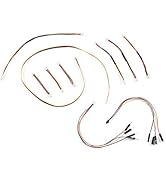
SparkFun's Qwicc circuits might be a little more expensive, but they are well designed and work reliably. The TCA9548A bus expander is a must for integrating a large number of I2C devices, especially if you are using the random unknown quality off brand devices on here or other store fronts. The address is adjustable from severable solder jumpers. It has integrated pullup resistors for each channel. It works well with EspHome. I have each device on it's own bus, to avoid having bus contention issues and calculating pullup values. This doesn't come with cables, so you'll need a Qwiic cable set to work with it. I purchased a crimper and some female socket pins and removed the male pins from the cables to give myself some extra breakout cables.
T**R
Works great
With a Qwiic cable assortment the whole project was plug&play.
R**N
Plug the wired ends in by holding the board connector, not just the board
The female end (mounted on the board) seems a little fragile and may have lacked enough solder. If the board connector was held against the board, it would work, otherwise it was a ghost problem (comes and go without any noticeable or visual reason) Otherwise, 5 stars. I do with they would improve the Arduino example for this board, seems unnecessarily confusing initially when it is really quit simple. Also, the example would not run on my DUE board, what the....!
Trustpilot
1 week ago
2 weeks ago