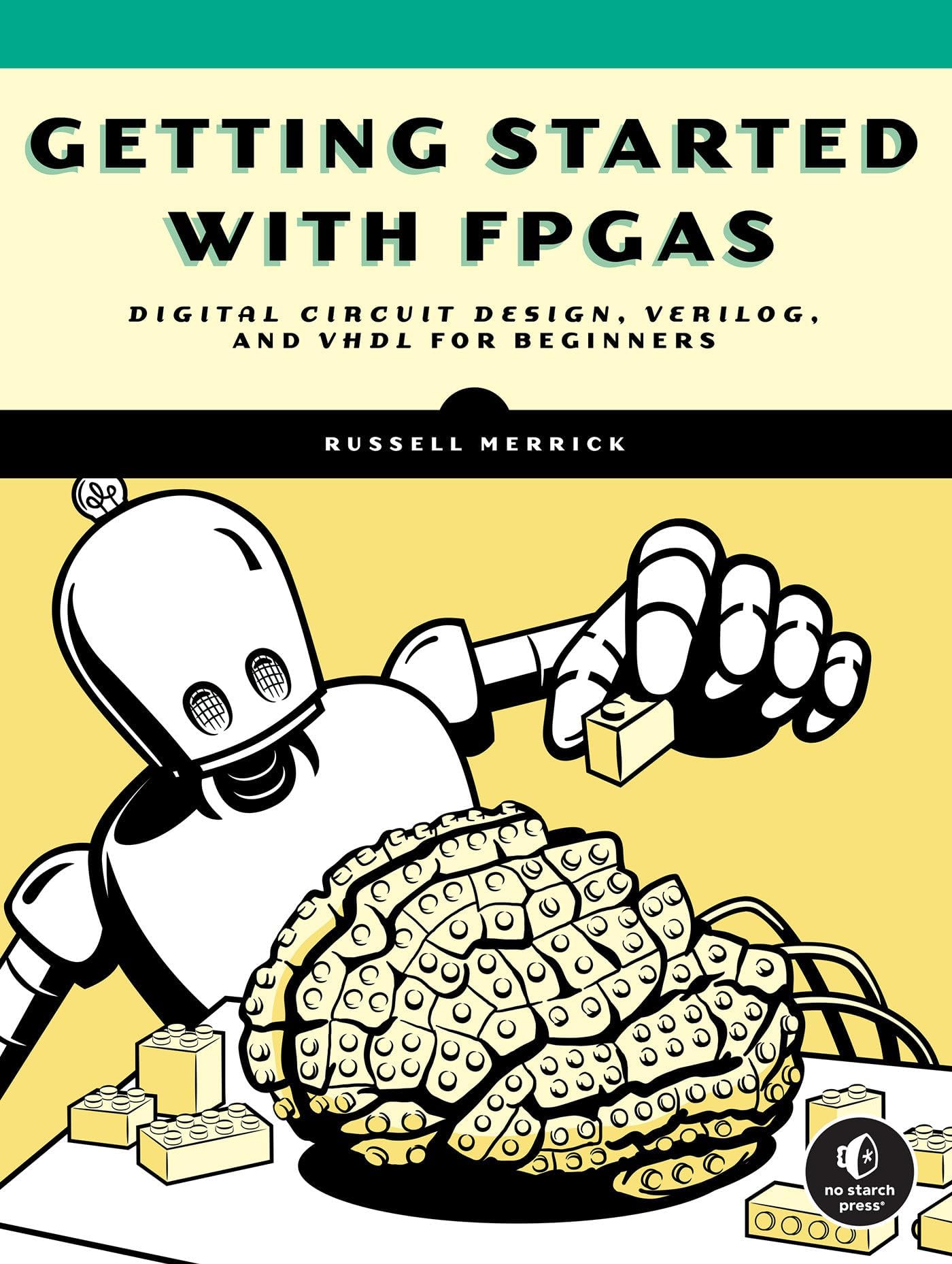

Getting Started with FPGAs: Digital Circuit Design, Verilog, and VHDL for Beginners
Product ID: 473796240
💻Hands-on FPGA programming
📊Step-by-step digital circuit design
⚙️Verilog & VHDL dual-language code
310.94 DT
1
Sold byAmazon TunisiaDelivered byDesertcartCustomer service byDesertcartReturns14 days · 30 with PRO
Buyer Protection · Full refund if your order doesn't arrive as described.
Desertcart purchases this item on your behalf and handles shipping, customs, and support to Tunisia.
Secure transaction
Description
🚀 Unlock your FPGA potential — design smarter, code faster, and join the next-gen hardware innovators!
- AVOID COMMON PITFALLS - Navigate tricky timing errors and metastability with expert tips to build reliable, high-performance circuits.
- MASTER FPGA FUNDAMENTALS - From logic gates to state machines, build a solid foundation with clear, beginner-friendly explanations.
- HANDS ON PROJECTS INCLUDED - Apply concepts immediately with practical exercises that turn theory into real-world FPGA designs.
- COMPREHENSIVE BUILD PROCESS - Understand simulation, synthesis, place & route, and key FPGA primitives like DSP blocks and PLLs.
- DUAL LANGUAGE CODE EXAMPLES - Learn with both Verilog and VHDL, ensuring versatility and broad applicability in your projects.
Getting Started with FPGAs is a beginner-friendly guide that demystifies digital circuit design using Verilog and VHDL. Authored by FPGA expert Russell Merrick, this book offers hands-on projects, detailed code examples, and clear explanations of core concepts like state machines, timing, and FPGA build processes. Perfect for aspiring FPGA engineers, it equips readers to confidently create reliable, high-speed hardware designs.



Specifications
| Best Sellers Rank | 360,032 in Books ( See Top 100 in Books ) 168 in Electronics & Telecommunications Engineering 174 in Computer Architecture & Microprocessors 468 in Computer Hardware (Books) |
| Customer reviews | 4.6 4.6 out of 5 stars (91) |
| Dimensions | 17.93 x 1.93 x 23.5 cm |
| ISBN-10 | 171850294X |
| ISBN-13 | 978-1718502949 |
| Item weight | 1.05 kg |
| Language | English |
| Print length | 240 pages |
| Publication date | 15 Aug. 2023 |
| Publisher | No Starch Press |
Common Questions
Yes, all products are sourced directly from authorized retailers in the US, UK, UAE and India. We maintain strict quality control processes and verify each product before shipping. All items come with applicable manufacturer warranties and are covered by our standard return policy.
Delivery times vary by destination country, typically ranging from 3-9 business days. Each order is fully trackable through our system. We handle all customs clearance and use reliable courier partners for last-mile delivery. You'll receive regular updates about your order status via email and our app.
Desertcart is an international e-commerce platform operating since 2014. We securely process thousands of orders globally each day. Every product goes through our quality verification process before delivery, and we provide end-to-end order tracking, 24/7 customer support, and a comprehensive returns policy to ensure a safe shopping experience.
Our prices include the product cost, international shipping, import duties, customs clearance, and local delivery charges. We handle all customs and import procedures, ensuring there are no hidden fees upon delivery. PRO members receive additional benefits including free shipping.
Trustpilot
TrustScore 4.5 | 7,300+ reviews
Shop Global, Save with Desertcart
Value for Money
Competitive prices on a vast range of products
Shop Globally
Serving millions of shoppers across more than 100 countries
Enhanced Protection
Trusted payment options loved by worldwide shoppers
Customer Assurance
Trusted payment options loved by worldwide shoppers.
Desertcart App
Shop on the go, anytime, anywhere.