
Buy anything from 5,000+ international stores. One checkout price. No surprise fees. Join 2M+ shoppers on Desertcart.
Desertcart purchases this item on your behalf and handles shipping, customs, and support to Tunisia.
🧀 Elevate your kitchen game—craft legendary cheeses that spark envy and conversation!
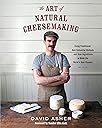
David Asher’s 'The Art of Natural Cheesemaking' is a top-rated guide (4.7⭐, 748 reviews) that revives traditional, natural cheesemaking techniques using accessible ingredients like Kefir. It offers detailed recipes from fresh to aged cheeses, empowering home chefs to create gourmet-quality products affordably while embracing authentic, non-industrial methods.
| Best Sellers Rank | 49,323 in Books ( See Top 100 in Books ) 64 in Food & Drink Encyclopaedias & Dictionaries 80 in Cheese & Dairy 292 in Food & Farming |
| Customer Reviews | 4.7 out of 5 stars 757 Reviews |
V**R
The art of natural cheese making
I have bought this book to help me making cheeese very interesting book
P**N
A fantastic read, worth the time investment!
I bought this book over a year ago and there it sat, on my shelf, looking interesting for 12 months. It was a fascinating read and I love the *idea* of making my own cheese using Kefir rather than expensive freeze dried cultures. Yet I baulked at the time investment and apparent unsanitary nature of the whole process (David Asher is not a believer in hyper-sterilised environments). One day a few weeks ago I was clearing out some old cookbooks and got around to looking at this book again. I pondered giving it away, "You haven't used it in a year..." said my significant other. She was right. Yet something about the book held my attention. "I have to at least try one recipe," I said, smiling guiltily. She rolled her eyes. I made a list. A few days later (we had to wait for the Kefir to mature) we were both enjoying fresh Mozzarella. This was a turning point for me. I had always assumed it was a complicated, expensive process. Now, much the wry amusement of those around me, I am ageing a Camembert and Elderflower Wine-washed rind cheese in my dining room. Made only for the cost of 4 pints of milk from the supermarket (About £1.40 where I am) and some Kefir (Negligible cost once it gets going). If you can find a handmade cheese for that price let me know, for comparison a nearby farm shop sells small batch cheeses and their small brie (about the size of the one I am making) is £5. So... take that however you want. The book contains recipes for goats cheese, blue cheese, hard cheeses, soft cheeses, and some other interesting ones which I won't spoil. There is a master "cheese curd" recipe that makes up the foundation of almost all the cheeses and I have found that the instructions are very accurate and easy to follow. To the fellow moaning about the need for "unpasteurised milk", have you not read the clear section highlighting the use of Kefir in place of raw milk? The only fault I have is that the book simply isn't big enough to satisfy my appetite! I want to see a follow up to this book perhaps covering some rare and usual cheeses. Overall I highly recommend this book to anyone interested in a little side hobby or making impressive (and cheap) gifts. 5/5
F**S
One of a kind - the only cheese book you will ever need!!!
The review above is misleading as it focuses on readability problems on the Kindle version, not on the content. I have the printed version of this book and it is simply WONDERFUL. Where other cheese books would have you rely on powders of cultures and moulds, David Asher goes back to the way cheese used to be made and allows us to connect with thousands-years-old natural processes. Everything is explained in detail (from the basics of biology to equipment and recipes from the simplest fresh cheeses to the most complicated alpine cheeses), with beautiful photos, clear instructions, a no-nonsense approach, making cheese a CRAFT again, instead of a science with direct vat inoculation magic powders and the like. This book will give you a deep understanding of the what happens in raw milk and how to control the variables in order to get the desired effect on the finished product. Look at his score and reviews on Amazon.com if you are not yet convinced. To me, this book is a revelation, and the only one in its kind.
T**M
Helped us make a cheese unique to our farm
My partner gave me this book after he saw how much I was starting to tare my hair out over the fact that it seemed like the only way possible to make cheese was to buy in a specific culture. I always had a feeling is must be possible to culture your own local/signature cheese and not rely on shop bought 'real' cheese cultures. Reading this booked proved that it is possible to be truly self sufficient with cheese making and gave me the encouragement and mind set to start experimenting. We have a small herd of dairy goats on our permaculture designed homestead and it was great that the author discusses goats and many styles of goats cheese throughout the book. I have since made several cheeses, built a cheese cave and bonded with my goats even more knowing how valuable their milk is. You can watch our experiments with natural cheese making over at the Tap o' Noth Farm Youtube Channel. Can't recommend this book enough.
V**Y
A cheese read!
I ordered this book to post to spain, so worked out expensive but I didn't want a kindle version, I wanted to book to refer to when necessary I would say this book is more suited to a beginner cheese maker. I have used a couple of the recipes but I mainly bought this book hoping to find out more of working with natural rennet and that section is quite brief. It is about natural cheesemakkng and as registered cheesemakers these are methods we can't practise due to health and hygiene laws. It's a lovely book to keep for reference recipes and an interesting to read for anyone interested in cheese
R**A
Great book for anyone trying to learn the art of cheesemaking.
The book is ver comprehensive, it has everything from milk to the final aspects of cheese. It has measurements in both metric and imperial units, the same goes for temperature, it has Celsius and Fahrenheit. The autor doesn't rely on store bought items, which is great for those of us who prefer to use the traditional way, he uses his own, home bred, fungus cultures to make the different cheeses, and teaches how to safely create those cultures too. It's a very simple to follow book, with plenty of recipes and very easy terminology. Great for both the beginners and the more advanced cheesemakers.
T**C
Very informative
The book has only arrived a couple of days and I have been glued to it already. Looking forward to trying out cheese making from our goats milk in the coming months, the natural way, the way cheese was made for thousands of years. Great book.
J**E
Very good
Excellent for not using chemicals.
C**E
Dairy goat owners - get this book!
Truly as advertised, the bible of home cheesemaking. The explanations, clear and concise instructions, and simplicity all advertise the fact that the author has a person living a real life in mind as the intended audience. A standard, almost memorizable formula, easy to maintain temperatures, clear concise instructions, and no need to sterilize - these make cheesemaking something easy to fit into a busy schedule. No more wondering if I have the correct culture or if that packet in the freezer is out of date, and waiting for some day when I can make sure the kitchen is super sanitary and sterilized, and trying to make my way through mind-numbing instructions that seem to have subtly or vastly different times and temperatures. Thank goodness - with spring time, the goat milk comes in faster than I can handle it. I had already figured out that farmers used cheese as a way to preserve all of it, and knew that they surely didn't buy all of their cultures on line, use fancy equipment, and sterilize everything. Now I know how. After religiously putting my excess fresh milk in the freezer because, " You must cool it to 40 degrees," I just put out a quart of milk to clabber a over 24 hours ago in relatively warm weather - and it still tastes like ... fresh milk. I shouldn't have been surprised now that this book has explained the natural biome of raw milk. Although it is a bit sad, I am feeling a little better about capretta - especially now that I can try making my own rennet.
D**S
Super! Sehr anschaulich
Super Buch! Ausführlich, trotzdem leicht verständlich, interessant und anschaulich! Macht sehr Spaß, Käse selber zu machen! Unbedingt zu empfehlen
E**A
Buy this book and succeed!!
I saw this book talked about on Permies(dot)com. it is an amazing book containing all the knowledge you'll need to start making your own natural cheeses. I am now using Milk Kefir as my starter culture which saves me buying separate cultures for each type of chess, plus it's safer (buy the book and find out why!) What I particularly like about this book is that it is not simply a collection of recipes, it's a full course on what why and how. David Asher is passionate about his cheeses and he explains in a very readable way what to do and why to do it so you gain a deeper understanding of how to achieve success. The proof is in the pudding(or the cheese) in the past month I've made clabber, ricotta, basic rennet cheeses and am currently raging some camembert and a 4lb Cheddar. This book demystifies the process, dispels a lot of myths and gives you the confidence to make wholesome, tasty high nutrient no additive cheeses. What more could you want. Oh, and my cheese loving husband thinks I'm wonderful!
R**N
excellent book :: must have
K**R
You’ll know it all after this book!
So very informative, even fun to read! I learnt so much about raw milk, yoghurts and cheeses culturally, traditionally and functionally. All recipes are easy to follow and laid out from easiest to more challenging. I don’t tend toward recipe books as most recipes I won’t use but this will be a staple to go to on my shelf.
Trustpilot
1 day ago
2 weeks ago