Buy anything from 5,000+ international stores. One checkout price. No surprise fees. Join 2M+ shoppers on Desertcart.
Desertcart purchases this item on your behalf and handles shipping, customs, and support to Tunisia.
๐จ Crackle, craft, and conquer with Sodium Silicate โ your studioโs secret weapon!
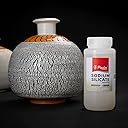
Sodium Silicate is a pure, non-toxic, lead-free solution that creates distinctive crackle textures on ceramics, improves clay workability, and even seals engine leaks. Certified to ASTM D4236 standards, itโs a versatile, long-lasting essential for artists and professionals seeking reliable, high-performance results.

| Best Sellers Rank | #74,397 in Arts, Crafts & Sewing ( See Top 100 in Arts, Crafts & Sewing ) #413 in Ceramic & Pottery Tools |
| Customer Reviews | 4.6 out of 5 stars 47 Reviews |
C**B
Works like a charm for Magic Water
I have not used this Sodium Silicate for crackle, but I've used it to deflocculate my clay for I purchased Pasler Ceramic Crackle Agent for a completely different purpose than the label suggests, and it has worked beautifully. Instead of using it to create crackle textures, I added it to my Potterโs Magic Water recipe, where sodium silicate helps deflocculate the clay and makes it wonderfully cooperative. The amount needed is almost comically small. I use about a teaspoon per gallon of water, which means this bottle is less of a supply and more of a long-term studio companion. At this rate, I suspect it may one day be listed in my estate inventory. It mixed easily and performed exactly as expected. My clay joins became stronger and smoother, and the slurry behaved like it had finally had a good cup of coffee and decided to be helpful. If you make your own Magic Water, this is an excellent and economical source of sodium silicate. Even though I havenโt used it for crackle finishes, it has earned a permanent place on my studio shelf. It is colorless and basically just breaks down the clay to create better joins. Five stars for versatility, value, and the strong likelihood that I will never need to buy it again.
B**E
Best head leak sealant available
What you should know about this product. Sodium Silicate is ONLY Sodium Silicate. Some are diluted more than others but at the end of the day the product remains the same. The reason I point this out is because this solution isn't just for pottery. For many years Sodium Silicate had been used to repair cracked heads and engine block leaks. AND IT WORKS! BUT to use it you must remember first that it works best on aluminum heads and blocks. It doesn't mix with antifreeze. Water is the only solution that causes it to seal leaks and it must be added to the engine while the engine is cold with the thermostat removed. Most high priced head and block sealants use this chemical as their base ingredient but Sodium Silicate works best when not mixed with other additives.
C**W
Cracked clay effect, a nice rustic look for new pieces.
Works as advertised. The more you stretch, the bigger the cracks. Tearing a hole in the clay is very likely if you go to far. Make sure to dry before stretching the clay with the solution. Experiment and have fun.
A**.
Works for gluing rocks onto wood for slabbing
I used this to glue large agates onto wood chunks for running through the slab saw. It was super easy to use and held the rocks in place well. I had to soak the wood/rocks overnight to get the adhesive to release.
G**A
It crackles
Tastes Great, Less Filling, More Crack ling
R**I
Magical product! Great results!
This product allows for interesting crackle effects on clay pots, results can vary with interesting outcomes depending on the glaze, slip and firing technique, highly recommend ๐ป
L**3
great for slip work
It worked great to deflocculate the clay slip.
G**R
Clean, clear solution...
This is a nice clean, clear solution of sodium silicate specifically for use with pottery with instructions included for creating a cracked, textured effect. Also known as waterglass solution, my first encounter with it was back in the 1950's with a little jar that came in my chemistry set. I don't remember where I heard it at the time, whether from my father of the manual that came with the set, but it was used to coat eggs to help preserve them. The fun part, however, was using it to grow what the lab manual called "Colorful Silicates". By adding some sodium silicate solution to water then placing certain chemical salts carefully into it, you could get colorful silicates growing up from the bottom of a jar much like stalagmites from the floor of a cave. I won't be using this to preserve any eggs, but some kids might be fascinated by watching some silicates grow. I will have to look up that old chemistry set manual to see what salts they recommend for doing this.
F**H
Does what itโs meant to.
Bought to use with pottery. Gave excellent result with slip application. Very easy to use and does what itโs meant too. Would recommend.
Trustpilot
3 days ago
1 week ago