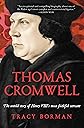
Thomas Cromwell: The Untold Story of Henry VIII's Most Faithful Servant
Product ID: 132096057
Desertcart purchases this item on your behalf and handles shipping, customs, and support to Tunisia.
"An exceptional and compelling biography about one of the Tudor Age's most complex and controversial figures." —Alison Weir Thomas Cromwell has long been reviled as a Machiavellian schemer who stopped at nothing in his quest for power. As King Henry VIII's right-hand man, Cromwell was the architect of the English Reformation; secured Henry's divorce from Catherine of Aragon and plotted the downfall of his second wife, Anne Boleyn; and was fatally accused of trying to usurp the king himself. In this engrossing biography, acclaimed British historian Tracy Borman reveals a different side to one of history's most notorious characters: that of a caring husband and father, a fiercely loyal servant and friend, and a revolutionary who was key in transforming medieval England into a modern state. Thomas Cromwell was at the heart of the most momentous events of his time—from funding the translation and dissemination of the first vernacular Bible to legitimizing Anne Boleyn as queen—and wielded immense power over both church and state. The impact of his seismic political, religious, and social reforms can still be felt today. Grounded in excellent primary source research, Thomas Cromwell gives an inside look at a monarchy that has captured the Western imagination for centuries and tells the story of a controversial and enigmatic man who forever changed the shape of his country. "An intelligent, sympathetic, and well researched biography." — The Wall Street Journal "Borman unravels the story of Cromwell's rise to power skillfully . . . If you want the inside story of Thomas Cromwell . . . this is the book for you." — The Weekly Standard "An engrossing biography. . . . A fine rags-to-riches-to-executioner's-block story of a major figure of the English Reformation." — Kirkus Reviews "An insightful biography of a much-maligned historical figure." — Booklist Review: A villainous henchman, Thomas Cromwell, and the blood-stained court of Henry VIII, brought center stage. - Writing a compelling biography is a high art form. This is why I value the works of able authors, such as David McCullough (“John Adams”), Richard Ellmann (“Oscar Wilde”), and Jean Edward Smith (“John Marshall: Definer of a Nation”). Their tasks can become even more daunting, when their subject lived hundreds of years ago and research material is scant at best. That’s why a new first-rate historical biography: “Thomas Cromwell: The Untold Story of Henry VIII’s most Faithful Servant” by British author, Tracy Borman, is such a treasure. Her tale is set in mid-15th Century in England, in the age of the Tudors, and before the British launched their massive global and imperial empire. It’s full of riveting narratives of heroes and villains, reminding me of Will Durant’s classic - “Story of Civilization.” In one sentence, Borman’s book, is about the political intrigues of the Court of Henry VIII. Its star player, the Henry Kissinger of his era, is Thomas Cromwell, the son of a blacksmith. Like Kissinger, Richard Nixon’s Secretary of State, the brainy Cromwell knew how to exercise the levers of state power in a cutthroat setting, on behalf of his often demented King. Life, limb and property were at risk if you ended up in the gunsight of Master Cromwell. Cromwell was born in the village of Putney, near London, in 1485. His father had a rough edge to his character. In addition to being a blacksmith, he was also into brewing ale. He got caught for “watering down the beer,” on forty-eight different occasions! Cromwell, later in his amazing career, admitted that he, too, was a “ruffian in his younger days.” Putney was way too small for the ambitious, self-educated Cromwell. When he was about 18 years of age, he made his way to Italy and joined an expedition to serve a short stint in the French army. After that mostly dreary experience, he ended up working in Italy for a Florentine’s merchant banker, Francesco Frescobaldi. He then moved on to the Netherlands, where he became a successful “cloth merchant.” The next important venue for the daring Cromwell was England’s capital city - London. Cromwell’s rise from the underclass is close to unprecedented. Europe had been “an extraordinary training ground for him.” In his mid-30s, he became a lawyer in London and a later, a member of the Parliament. His legal and mercantile skills, political savvy, and international connections, brought him over time to the attention of a quintessential Court insider - Cardinal Thomas Wolsey. Like Cromwell, Wolsey, was a commoner. He had battled his way to the top of the clerical ladder to become the King’s “closest confidante,” in a court dominated by landed gentry, blue bloods and wannabe aristocrats. When he couldn’t, however, obtain a divorce for the monarch from his then wife, Queen Catherine of Aragon, he fell out of favor. Cromwell, not only replaced his mentor, in 1532, but he got the King’s marriage annulled, so that he could marry his conniving mistress - Anne Boleyn. For nearly a decade afterwards, the wily Cromwell was literally “second only to the King” in power in the realm. He became very rich and had all kinds of titles bestowed on him. Cromwell married and had three children as he began his climb to fame and fortune. Sadly, his wife, Elizabeth, and two of his children had died in 1528, in an “epidemic of sweating sickness…which decimated London.” Cromwell knew the impetuous King, becoming more obese everyday, lusted after not only women, but fortune. He promised “to make him wealthy,” and indeed he did. The duo conspired successfully to target the immense riches of the Roman Catholic Church in the UK. It was estimated that its “600 or so monasteries,” then held “two-third of the nation in land and estates.” It was a huge robbery pulled off under the cover of naming the King the supreme head of the English Church and supposedly “reforming” the institution. There is much more lethal chicanery in this book. As Cromwell, daily growing more ruthless, moved to do away with Sir Thomas More, (a future saint) and Anne Boleyn. Hundreds of Catholics, who opposed the emerging Protestant church, were also executed at his instigation. Borman has done a masterful job bringing a villainous henchman, Thomas Cromwell, and the blood-stained court of Henry VIII, center stage. -30- Note: Bill Hughes is a photojournalist and author. His book, “Saying ‘No’ to the War Party,” can be found at http://bookstore.iuniverse.com/Products/SKU-000079633/Saying-No-to-the-War-Party.aspx Review: Recommended! (but with an asterisk) - The author must have a streak of dogged desire to delve into ancient documents. She succeeds in bringing to our 21st century environment what it might have been like to live during the eventful times of the Tudors insofar as the nobility and educated classes were involved. She succeeds in bringing to life her subject matter. We get to know Thomas Cromwell - but - (is there always a but?) we get to know him too well. For the lay reader, her reproducing countless exact quotations of the old English words with their old English spellings is distracting and frustrating. I finished the masterful work and applaud the efforts that brought it to me but I admit without shame that I began freely to skip over the reproduced spellings and non essential addendum without guilt and without feeling I missed anything of importance.


| Best Sellers Rank | #85,425 in Kindle Store ( See Top 100 in Kindle Store ) #10 in 16th Century World History #15 in 1485-1603 History of UK #41 in Christian Church History (Kindle Store) |
B**S
A villainous henchman, Thomas Cromwell, and the blood-stained court of Henry VIII, brought center stage.
Writing a compelling biography is a high art form. This is why I value the works of able authors, such as David McCullough (“John Adams”), Richard Ellmann (“Oscar Wilde”), and Jean Edward Smith (“John Marshall: Definer of a Nation”). Their tasks can become even more daunting, when their subject lived hundreds of years ago and research material is scant at best. That’s why a new first-rate historical biography: “Thomas Cromwell: The Untold Story of Henry VIII’s most Faithful Servant” by British author, Tracy Borman, is such a treasure. Her tale is set in mid-15th Century in England, in the age of the Tudors, and before the British launched their massive global and imperial empire. It’s full of riveting narratives of heroes and villains, reminding me of Will Durant’s classic - “Story of Civilization.” In one sentence, Borman’s book, is about the political intrigues of the Court of Henry VIII. Its star player, the Henry Kissinger of his era, is Thomas Cromwell, the son of a blacksmith. Like Kissinger, Richard Nixon’s Secretary of State, the brainy Cromwell knew how to exercise the levers of state power in a cutthroat setting, on behalf of his often demented King. Life, limb and property were at risk if you ended up in the gunsight of Master Cromwell. Cromwell was born in the village of Putney, near London, in 1485. His father had a rough edge to his character. In addition to being a blacksmith, he was also into brewing ale. He got caught for “watering down the beer,” on forty-eight different occasions! Cromwell, later in his amazing career, admitted that he, too, was a “ruffian in his younger days.” Putney was way too small for the ambitious, self-educated Cromwell. When he was about 18 years of age, he made his way to Italy and joined an expedition to serve a short stint in the French army. After that mostly dreary experience, he ended up working in Italy for a Florentine’s merchant banker, Francesco Frescobaldi. He then moved on to the Netherlands, where he became a successful “cloth merchant.” The next important venue for the daring Cromwell was England’s capital city - London. Cromwell’s rise from the underclass is close to unprecedented. Europe had been “an extraordinary training ground for him.” In his mid-30s, he became a lawyer in London and a later, a member of the Parliament. His legal and mercantile skills, political savvy, and international connections, brought him over time to the attention of a quintessential Court insider - Cardinal Thomas Wolsey. Like Cromwell, Wolsey, was a commoner. He had battled his way to the top of the clerical ladder to become the King’s “closest confidante,” in a court dominated by landed gentry, blue bloods and wannabe aristocrats. When he couldn’t, however, obtain a divorce for the monarch from his then wife, Queen Catherine of Aragon, he fell out of favor. Cromwell, not only replaced his mentor, in 1532, but he got the King’s marriage annulled, so that he could marry his conniving mistress - Anne Boleyn. For nearly a decade afterwards, the wily Cromwell was literally “second only to the King” in power in the realm. He became very rich and had all kinds of titles bestowed on him. Cromwell married and had three children as he began his climb to fame and fortune. Sadly, his wife, Elizabeth, and two of his children had died in 1528, in an “epidemic of sweating sickness…which decimated London.” Cromwell knew the impetuous King, becoming more obese everyday, lusted after not only women, but fortune. He promised “to make him wealthy,” and indeed he did. The duo conspired successfully to target the immense riches of the Roman Catholic Church in the UK. It was estimated that its “600 or so monasteries,” then held “two-third of the nation in land and estates.” It was a huge robbery pulled off under the cover of naming the King the supreme head of the English Church and supposedly “reforming” the institution. There is much more lethal chicanery in this book. As Cromwell, daily growing more ruthless, moved to do away with Sir Thomas More, (a future saint) and Anne Boleyn. Hundreds of Catholics, who opposed the emerging Protestant church, were also executed at his instigation. Borman has done a masterful job bringing a villainous henchman, Thomas Cromwell, and the blood-stained court of Henry VIII, center stage. -30- Note: Bill Hughes is a photojournalist and author. His book, “Saying ‘No’ to the War Party,” can be found at http://bookstore.iuniverse.com/Products/SKU-000079633/Saying-No-to-the-War-Party.aspx
J**L
Recommended! (but with an asterisk)
The author must have a streak of dogged desire to delve into ancient documents. She succeeds in bringing to our 21st century environment what it might have been like to live during the eventful times of the Tudors insofar as the nobility and educated classes were involved. She succeeds in bringing to life her subject matter. We get to know Thomas Cromwell - but - (is there always a but?) we get to know him too well. For the lay reader, her reproducing countless exact quotations of the old English words with their old English spellings is distracting and frustrating. I finished the masterful work and applaud the efforts that brought it to me but I admit without shame that I began freely to skip over the reproduced spellings and non essential addendum without guilt and without feeling I missed anything of importance.
T**3
Another excellent biography by Ms. Borman
4 and 1 / 2 stars This is a very good book about the life and times of Thomas Cromwell. It chronicles the period of time from his birth through his death. Contrary to historical opinion, Thomas Cromwell was not wholly bad, but had many good qualities as well. He was generous, kind and funny to his friends. He loved his family and was caring and very loyal to his friends. He was pious and abstemious and did not buy into the fanciful clothes or possessions of the day. While the public part of his house was decorated and very nice, his private quarters were ordinary. But he was also ambitious, driven and could be ruthless. This was especially true where matters of dissolving the monasteries and religious houses were concerned. Cromwell was both brilliant and determined to achieve his aims. Those were ones of making Henry VIII the richest king in all the land and achieving prominence at court. He was a very astute lawyer, accountant and moneylender. He also had a rather cruel side, especially when dealing with the dissolution of the monasteries and abbeys. He rose in the eyes of Henry and his court very quickly. He brought about the divorce from Queen Catherine and engineered both Anne Boleyn’s rise and her downfall. During his tenure in office, Cromwell created the first bureaucratic state. This made the country run far more efficiently than ever before. England had become a modern state. The book outlines in detail the power behind the scenes of the English throne. His relationship with Cardinal Thomas Wolsey, his relationship with King Henry VIII, Queen Catherine, Anne Boleyn, Jane Seymour, Anne of Cleves and their friends and relatives and various nobles and courtiers are discussed in depth and with clear detail. The book is written linearly and in easy (with the exception of the olde English quotations), English. It is an easy and enjoyable read. This is not my first Tracy Borman book, and I was just as pleased with the level of competence and depth of scholarship with which she approached her subject.
S**Y
Cromwell in all his complexity
This is biography at its best. It is tightly written, well focused and full of documentation. I always enjoy a biography which stays with the person's life who is being described and does not range out into other areas and loose its way. Europe, at this time was convulsed with the effects of The Reformation, yet the author assumes the type of reader of her book is aware of this and doesn't feel the need to describe it outside of The British Isles. She focuses on Cromwell and the effects of his actions. What you learn from this biography is not a final conclusion of fixed truth about Cromwell but a nuanced exploration of a very complex individual in the midst of a complex time. Was he a religious fanatic or a scheming cynic? A shameless yes-man or a manipulator of HenryVIII? A psychopath or an egoistic careerist who advanced himself? An ideologue or a total pragmatist? The biography does not give a final answer to any of such questions but after reading it you will know arguments to support what your answers might be.
R**H
Cromwell from beginning to end
This book tells the history of Thomas Cromwell often in his own words. I had read Wolf Hall which is a fictional biography of Cromwell which was very good but this book sticks to the of his life as much as possible and covers it until his death. It is also an interesting picture of Henry VIII. It is easy to read and I enjoyed it.
J**Y
Rather dry. Lots of detail. Educational but be prepared to read ye olde english
A slog. Pages spent on unnecessary details like the contents of Cromwell's house. The inconsistent insertion of old English quotes without any translation are frankly, annoying. Yes, I can figure it out but I don't want to. I just want to take in the information, not decode it. And yet, sometimes we get quotes that are clearly translated from their original language, English or otherwise which confuses me why it's not done throughout. The book is so tedious, I would have appreciated not having to stop and get out my secret decoder ring. The material focuses almost entirely on his career with little focus on who he was as a whole person. I firmly believe this was a well researched biography which I appreciate but it reads very dry and more like a reference book. I appreciate when an author can write a factual biography without it reading like a phone book. This is such a fascinating time in history with so many interesting people involved, I don't understand how anyone could make it dull but... I did learn more detailed information on Cromwell's involvement in the reformation and the policies he set into motion to dismantle the rule of Catholicism in England. A lot of people suffered as he pushed to force compliance upon the people. I appreciate his political savvy and work ethic but I find him more and more unlikeable the more I learn about him.
N**N
A brilliant, readable
A brilliant, readable, deeply-researched book. If you have enjoyed Wolf Hall, here is the real story (not much different from World Hall!) in much greater historical detail, and perhaps the start of the rehabilitation of a much maligned, very central figure in English history. Cromwell was the first commoner who might almost be called a proto-Prime Minister, he greatly added to the weight and role of parliament, he was central to the formation of the Church of England (probably more so than Cranmer, whose rich prose defined and ornamented the Prayer Book), he convinced Henry VIII to allow the first "official" Bible in the English language - and despite his admittedly ruthless political maneuverings (nothing out of ordinary din the times he lived in, it must be said), a man deeply and faithfully loved by those close to him. We have had generations of Cromwell-the-ogre, perhaps reaching something of a peak (nadir?) in A Man for All Seasons. It is good, and valuable, to read a more measured examination of one of the most important figures in pre-modern English history. Highly recommended!
P**R
Great research and fine writing
Ms. Borman writes with clarity, ease and flair. She's a delight to read. Further, her historical research is mind-boggling. One wonders how a person could absorb such a rich understanding of the people and their times in just one life-time. One gets a sense of the personalities of the major figures in the court of Henry VIII, and of the man himself. One senses the stress of being a minister for such a man, and the allure of power that kept them there, even in the face of death. Ah, those poor wives -- divorced, beheaded, died, divorced, beheaded, survived -- what drew them on? Who said, "Absolute power corrupts absolutely"? Indeed.
A**R
On time delivery and product in perfect condition
On time delivery and product in perfect condition
J**N
factual telling of Cromwell's life
corrects some historical biases linked to Cromwell's reputation
J**E
Details in the devils
Or something, a meticulous history of The first famous Cromwell, Thomas, who was arguably the mist powerful person in England in the years before he was beheaded.
Trustpilot
3 weeks ago
5 days ago