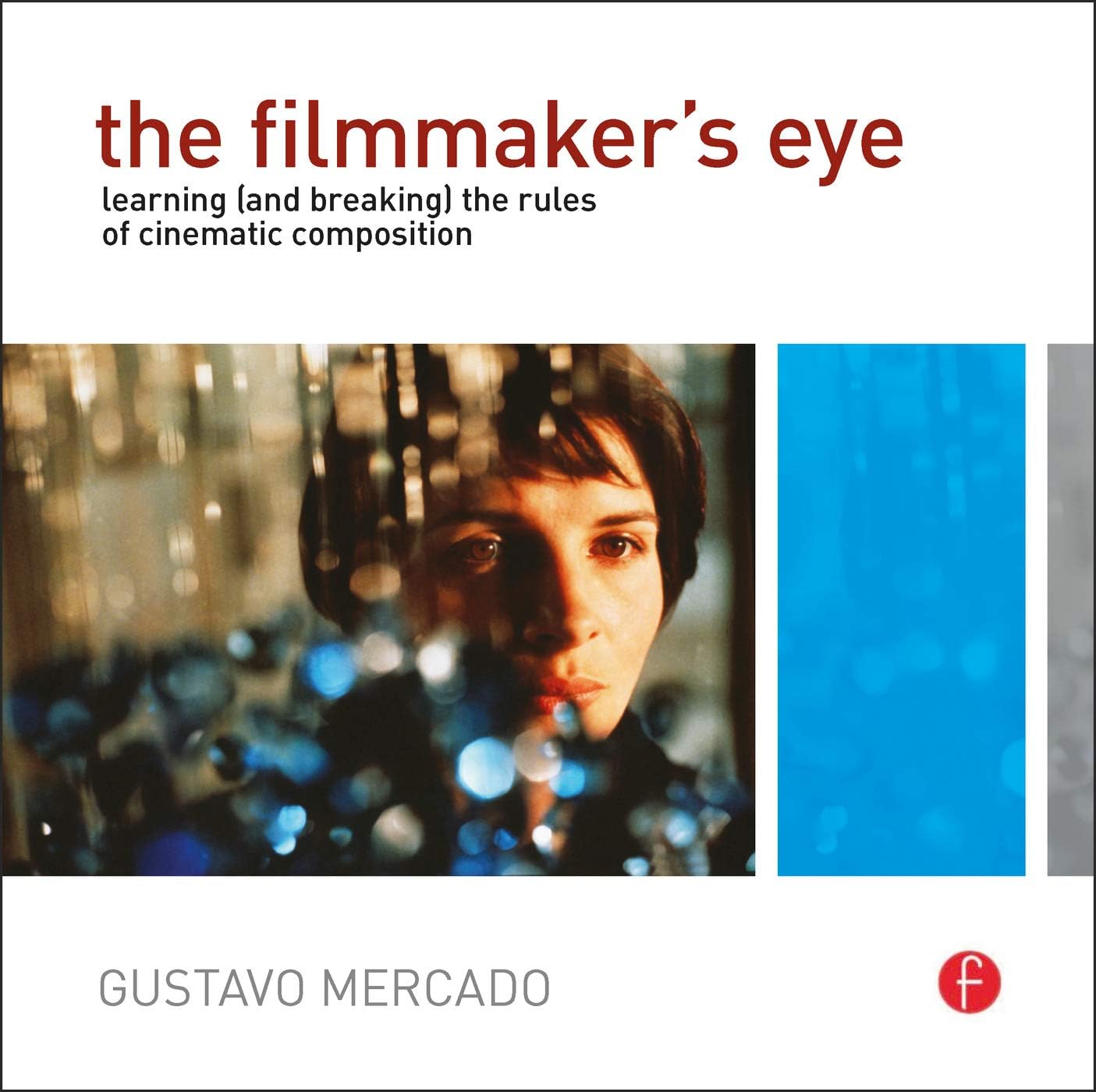
The Filmmaker's Eye: Learning (and Breaking) the Rules of Cinematic Composition
Product ID: 1609347
This is the only book that combines conceptual and practical instruction on creating polished and eloquent images for film and video with the technical know-how to achieve them. Loaded with hundreds of full-color examples, The Filmmaker's Eye is a focused, easy-to-reference guide that shows you how to become a strong visual storyteller through smart, effective choices for your shots. After a short introduction to basic principles, a variety of shots are deconstructed in the following format: Why It Works: an introduction to a particular type of shot How It Works: callouts point out exactly how the shot works the way it does--the visual rules and technical aspects in action Technical Considerations: the equipment and techniques needed to get the shot. Breaking the Rules: examples where the "rules" are brilliant subverted This book: Helps you make smart visual choices with this quick, focused, and visual guide to cinematic composition. Shows you how to master the rules, then break them. Includes examples and discussions from a range of international films. Review: extraordinary book for getting versed in the various shots that are fundamental to the vocabulary of cinematography - The Filmmaker's Eye by Gustavo Mercado is an extraordinary book for getting versed in the various shots that are fundamental to the vocabulary of cinematography. The book has a well-defined structure, dedicating six pages for each different type of film shot, ranging from close ups to dolly shots to tracking shots. Each of these subsections achieves four main functions: (1) description of the shot, (2) a full visual of an exlempary film shot with detailed pointers encapsulating the techniques used, (3) a discussion of the technical paramaters from lighting to lenses to format, and (4) a beautiful still of a clip showcasing the shot that "breaks the rules" or transcends the normal distribution for that shot type. The beginning of the book eases the reader into the subject matter by featuring a brilliant shot that showcases not only some unique cinematography tricks, but also some of the underlying story that movitated the particular tools used. The book then delves into some of the technical considerations that will be reiterated throughout the book in reference to real life film examples. These technical considerations are necessary for understanding how the shots were taken with the actual equipment and set. The rule of thirds, focal length, field of view, Hitchcock's rule, and many other topics all set the stage for some of the technical discussion that appears repeatedly throughout the book. Although I have had some background with making news clips for broadcast, much of the technical vocabulary was new to me. Without having had fully comprehended the introductory technical section, I found that the repeated discussion on concepts such as focal length and depth of view were heavily reinforced, enabling me to have a much firmer understanding of a wide breadth of technical topics by the end of the book. The ultimate highlight of the book for me was the inclusion of a gorgeous film still within almost every second or third page. Every six pages featured a film still that had several lines drawn from the points of interest to side notes explaining precisely what made the particular focal points in the still noteworthy. Oftentimes, the placement of the subject in the rule of thirds would be noted, or the breaking of this placement for visual impact would be articulated in the context of the story. Now, when I watch films, it is easier to get a sense of how the shots were framed and what visual message was achieved by the particular subject placements. I can now identify a "repoussoir" moment where an object or subject in the foreground is used to add depth to the frame and draw attention to the subject. I can see how shallow depth of field makes motion seem to go by faster with pan or tilt shots and how deep depth of field can make a building seem so much taller, a horizon so much longer that if a different depth of field had been chosen! An interesting book to follow up with is Christopher Kenworthy's "Master Shots Vol 3." It takes the cinematography perspective even further with emphasis on camera placement. The Filmmaker's Eye is not only highly recommended, but also visually stimulating. The book is a masterpiece that makes the simple act of watching a film an event that tunes into the director's mindset, allowing a subtext for interpretation of a complex story from the vantage point of the visual. Review: A must have for every filmmaker - This book is a gem for anyone serious about filmmaking whether you’re just starting out or already working on projects. The Filmmaker’s Eye breaks down individual shot types (like the close-up, over-the-shoulder, dolly shot, etc.) and explains why they work from a storytelling and emotional perspective. What I appreciated most is that it doesn’t just list shots — it shows real film examples, discusses the psychology behind the framing, and even includes technical tips for executing them. The layout is clean and visual, which makes it easy to follow and reference when planning a shoot. It really changed how I approach scene composition. I now think more about what a shot is saying, not just how it looks. Highly recommended for film students, videographers, content creators, and directors looking to level up their visual language.


| Best Sellers Rank | #193,452 in Books ( See Top 100 in Books ) #29 in Film & Television #29 in Cinematography (Books) |
| Customer Reviews | 4.6 out of 5 stars 548 Reviews |
S**C
extraordinary book for getting versed in the various shots that are fundamental to the vocabulary of cinematography
The Filmmaker's Eye by Gustavo Mercado is an extraordinary book for getting versed in the various shots that are fundamental to the vocabulary of cinematography. The book has a well-defined structure, dedicating six pages for each different type of film shot, ranging from close ups to dolly shots to tracking shots. Each of these subsections achieves four main functions: (1) description of the shot, (2) a full visual of an exlempary film shot with detailed pointers encapsulating the techniques used, (3) a discussion of the technical paramaters from lighting to lenses to format, and (4) a beautiful still of a clip showcasing the shot that "breaks the rules" or transcends the normal distribution for that shot type. The beginning of the book eases the reader into the subject matter by featuring a brilliant shot that showcases not only some unique cinematography tricks, but also some of the underlying story that movitated the particular tools used. The book then delves into some of the technical considerations that will be reiterated throughout the book in reference to real life film examples. These technical considerations are necessary for understanding how the shots were taken with the actual equipment and set. The rule of thirds, focal length, field of view, Hitchcock's rule, and many other topics all set the stage for some of the technical discussion that appears repeatedly throughout the book. Although I have had some background with making news clips for broadcast, much of the technical vocabulary was new to me. Without having had fully comprehended the introductory technical section, I found that the repeated discussion on concepts such as focal length and depth of view were heavily reinforced, enabling me to have a much firmer understanding of a wide breadth of technical topics by the end of the book. The ultimate highlight of the book for me was the inclusion of a gorgeous film still within almost every second or third page. Every six pages featured a film still that had several lines drawn from the points of interest to side notes explaining precisely what made the particular focal points in the still noteworthy. Oftentimes, the placement of the subject in the rule of thirds would be noted, or the breaking of this placement for visual impact would be articulated in the context of the story. Now, when I watch films, it is easier to get a sense of how the shots were framed and what visual message was achieved by the particular subject placements. I can now identify a "repoussoir" moment where an object or subject in the foreground is used to add depth to the frame and draw attention to the subject. I can see how shallow depth of field makes motion seem to go by faster with pan or tilt shots and how deep depth of field can make a building seem so much taller, a horizon so much longer that if a different depth of field had been chosen! An interesting book to follow up with is Christopher Kenworthy's "Master Shots Vol 3." It takes the cinematography perspective even further with emphasis on camera placement. The Filmmaker's Eye is not only highly recommended, but also visually stimulating. The book is a masterpiece that makes the simple act of watching a film an event that tunes into the director's mindset, allowing a subtext for interpretation of a complex story from the vantage point of the visual.
C**A
A must have for every filmmaker
This book is a gem for anyone serious about filmmaking whether you’re just starting out or already working on projects. The Filmmaker’s Eye breaks down individual shot types (like the close-up, over-the-shoulder, dolly shot, etc.) and explains why they work from a storytelling and emotional perspective. What I appreciated most is that it doesn’t just list shots — it shows real film examples, discusses the psychology behind the framing, and even includes technical tips for executing them. The layout is clean and visual, which makes it easy to follow and reference when planning a shoot. It really changed how I approach scene composition. I now think more about what a shot is saying, not just how it looks. Highly recommended for film students, videographers, content creators, and directors looking to level up their visual language.
S**I
Cinematography
As a professional cinematographer and camera operator I find this book to be a great reference. What differentiates it from other cinematography/framing books is the fact that it brings the reader's attention to the logic behind framing rather than just teaching the "types" of frames like other texts. Although it teaches some basic rules such as the rule of thirds, Hitchcock's rule, and the 180-degree rule, it actually goes into further detail and explains the logic of how basic cinematography framing has its own recurring visual language and conventions. In the book, there are actual frame grabs from renowned cinematographers used to exemplify and support what it teaches and how to break the conventions. The book is an absolute must have for aspiring cinematographers and filmmakers. All the technical information found in the book is a good introduction to teaching people framing for cinematography. It gets you thinking about of the art of cinematography. The only downside is probably the fact that it lacks information about raw video formats. However, that isn't the point of the book and it is the most interesting and engaging framing/cinematography book I have read in a while. It actually makes you want to go out and shoot! The book also makes reference to current movies like The Matrix, Oldboy, Amelie, The Shawshank Redemption, Sid and Nancy, etc. All in all I give it four out of five stars.
A**4
The perfect foundation for beginners.
This is a very nice book on the basics of cinematography. It discusses every type of shot (as far as I'm aware), various styles of composition, and how it all works/how it was done/why it was done. And, it uses images from really great films as examples (I found a lot of new favorites from reading it). It's a fairly easy to read book; informative, but not dense. I will say that the beginning of the book covers a lot of information very briefly. That's not a bad thing, really. It does a very good job of getting you familiar with various terms and theories. But, to truly understand how lenses work, the concepts of composition, etc. you're going to have to do your own research. That's true for most of the book, actually. It's a very concise, informative book with a lot of beautiful images (it would make a great coffee-table book). It does a brilliant job of getting you familiar with the 'language of film', providing you with a strong foundation for further study. And, it does that very nicely. This is the perfect book for beginning film-makers or anyone interested in understanding they love the movies they love. It makes a great reference book for more experienced creators/viewers, but it's probably not going to teach you things you weren't already aware of.
B**N
Great for beginners and the self-taught filmmaker.
I’m a total beginner, so this is very helpful. I’m not going to some fancy college film school. I have to research things on my own. I read books, listen to podcasts, watch videos, buy small affordable classes, and learn by doing. Anyways... This book talks about lenses, focal distance/depth of field, composition, and the different shots used in film. It also talks about how to choose lenses, composition, etc based on how those choices help tell the story. It talks about camera movement vs stagnant and steadicam vs handheld. It trains me to make every choice for a very specific reason that’s also relevant to the story. No need to copycat shots from the greats that don’t actually work for every film. I feel less anxious about camera choices as a beginner director now. I will read this book more than once.
M**Y
Love it . . .
Though the ratings and reviews for this book were great, I was a little skeptical at first - but intrigued nonetheless. As a professional filmmaker, I have come back to this book time and time again for the past year! I love the way the author lays out a scene from a well-known movie, and goes through the whole process of breaking down why it's so powerful, and uses an easy to read and understand format for doing so. This book has really helped me think more cinematically about why and how to use certain camera movements and angles powerfully, and I it offers a lot - certainly for the novice, and for the pro as well.
F**N
Wonderful reference tool for film lovers and filmmakers
Gustavo Mercado's "The Filmmaker's Eye" is a beautifully illustrated and wonderfully written look at the fundamentals of visual composition in film and why it matters. Using examples from high concept blockbusters as well as low budget art films, Mercado successfully illustrates and explains what is going on beneath the surface of the visual tools used by directors, DPs, and cinematographers. For film and video professionals, it will serve as a great reference and review tool to spark ideas. For up-and-coming filmmakers, it is a great starting point as it clearly and visually explains concepts and techniques, and for film lovers in general, it will broaden and expand your appreciation of the artform.
J**E
A Necessity for Artists/Filmmakers
My teachers recommended this book to me. I thought it was fabulous. It offers great information with lots of examples. The explanations are easy to understand and very helpful. I'm an art student and after two years of having this book (I think), I still find myself going back to this book. It's an excellent resource to have in your library if you're a seasoned storyboard artist or filmmaker, a student, or even an enthusiast that's interested in how people create films. I highly recommend this to anyone. :) It's definitely one of the best small investments I've made.
R**I
util
diferentes takes de cinema de uma forma ilustrada
Á**S
Recomendadisimo
Exlebte información.
S**K
Excellent learning resource!
Filled with examples and practical information! Quality and content presentation is stellar! Highly recommended!
C**S
Muy bueno
Muy bueno, lo recomiendo incluso para profesionales. Muy bueno, lo recomiendo incluso para profesionales. Muy bueno, lo recomiendo incluso para profesionales.
L**Y
Wonderful book for training you filmic eye.
Cannot recommend this book highly enough. I teach basic film making and I recommend it, and have lent it to many of my students. Clear, well recognisable examples of filming techniques and shot types, essential for training a film makers eye. As well as showing many examples of compositional tools, I also appreciated the examples at the end of each shot, where a film maker has made an artistic choice to subvert the "rules" and why this was effective. There really are no rules, only guidelines, but by gaining an appreciation of the conventions, you can then make artistic choices as to how you use them. Highly recommended.
Trustpilot
2 weeks ago
1 month ago