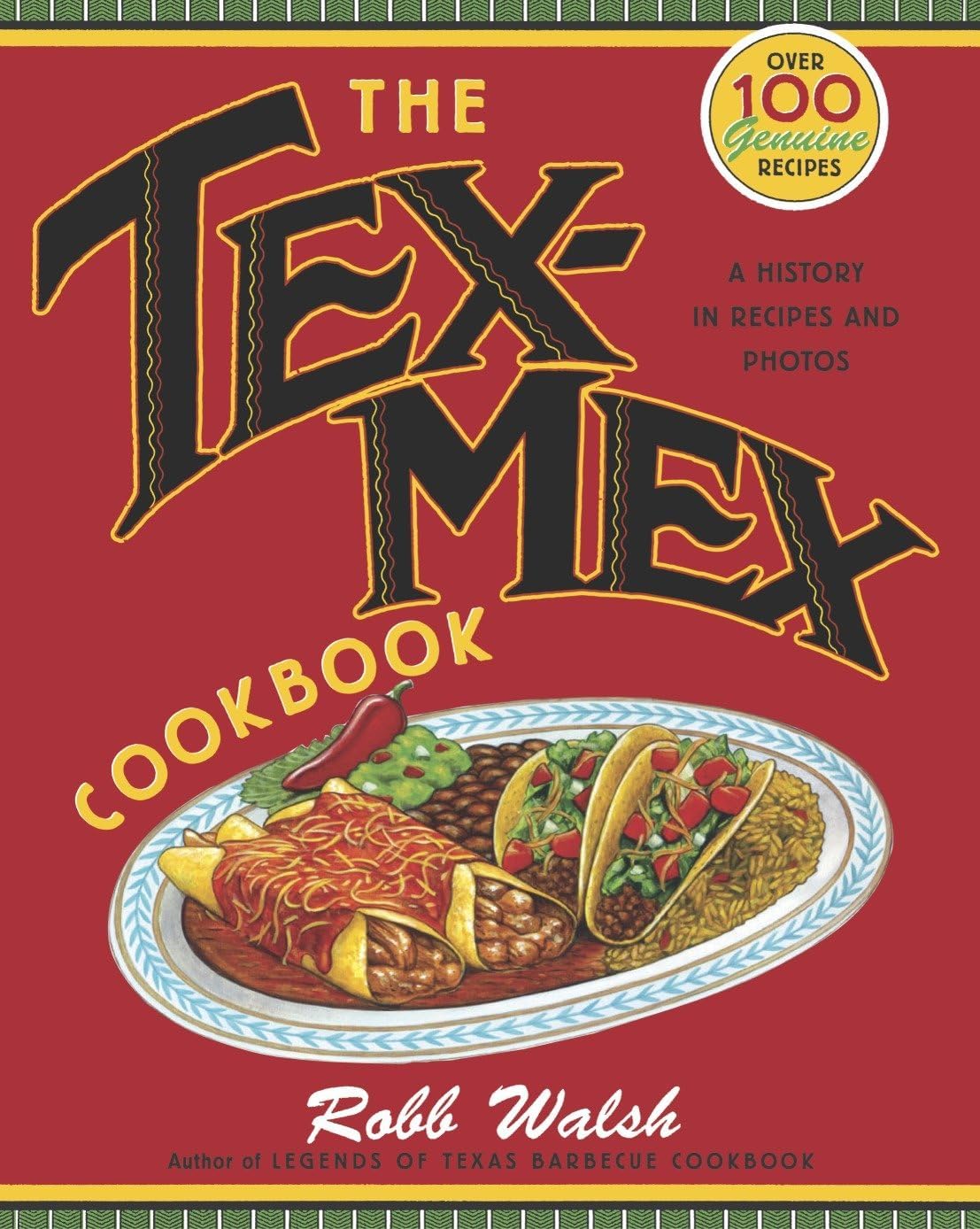
The Tex-Mex Cookbook: A History in Recipes and Photos
Product ID: 2221164
Desertcart purchases this item on your behalf and handles shipping, customs, and support to Tunisia.
Join Texas food writer Robb Walsh on a grand tour complete with larger-than-life characters, colorful yarns, rare archival photographs, and a savory assortment of crispy, crunchy Tex-Mex foods. From the Mexican pioneers of the sixteenth century, who first brought horses and cattle to Texas, to the Spanish mission era when cumin and garlic were introduced, to the 1890s when the Chile Queens of San Antonio sold their peppery stews to gringos like O. Henry and Ambrose Bierce, and through the chili gravy, combination plates, crispy tacos, and frozen margaritas of the twentieth century, all the way to the nuevo fried oyster nachos and vegetarian chorizo of today, here is the history of Tex-Mex in more than 100 recipes and 150 photos. Rolled, folded, and stacked enchiladas, old-fashioned puffy tacos, sizzling fajitas, truck-stop chili, frozen margaritas, Frito™ Pie, and much, much more, are all here in easy-to-follow recipes for home cooks. The Tex-Mex Cookbook will delight chile heads, food history buffs, Mexican food fans, and anybody who has ever woken up in the middle of the night craving cheese enchiladas. Review: Superb Evocation and Cookbook for Great American Food - `The Tex-Mex Cookbook' by Robb Walsh, the Southwest's answer to Maine's John Thorne, is a truly remarkable book, in that it presents the history from the beginning, in pictures, narrative, and recipes, of a complete cuisine. The credit for this accomplishment cannot be given to Walsh alone, as part of the ability to write such a history is based on the fact that the `Tex-Mex' cuisine is so young, with many of its defining events happening within living memory. And, no events in this history predate the colonization of Texas, New Mexico, and Arizona by the Spanish in the 1500's. One critical `defining moment' in `Tex-Mex' cuisine occurred just thirty years ago, according to the author, when Diana Kennedy, the renowned interpreter of Mexican cuisines identified the style of cooking north of the Mexican border in `The Cuisines of Mexico' as something distinctly not part of Mexican culinary heritage. Having been cut loose from Mexican cuisine by such a distinguished authority left this style of food to establish its own identity. While other writers may not take the `Tex' part of the term literally, Robb Walsh wishes to define the extent of `Tex-Mex' cuisine as truly that which is done or which originated within the boundaries of Texas, or some location very close by. This rules out several popular gringo dishes such as fish tacos so prominent in San Diego. Ground Zero for Tex-Mex cuisine appears to be San Antonio, in the shadow of the Alamo. Only fitting that the defining venue for Tex-Mex eating is the most memorable location in the battle for Texas independence from Mexico. The word `Tex-Mex' was not invented for the cuisine and may not have been applied to the cuisine until Diana Kennedy banished it from Mexican food styles. It began, however, as early as 1581, when the first European livestock arrived in El Paso, enabling the connection between Old World beef and New World corn and tomatoes. This means that `Tex-Mex' cooking style has some direct connection to Spanish influences. It did not emerge purely from Mexican styles of cooking; however, it is obvious that Tex-Mex owes most of its character to staples and basic preparations that were born in Mexico. The fact which makes the book so vibrant and alive is that many of the most interesting events in Tex-Mex cuisine history happened between 1894 and World War II, which means that so many oral and photographic sources are available for the telling. The heart of Tex-Mex cooking is probably the chile, and the soul is probably the dish, chili con carne, or, literally translated `chile with meat'. The story of the differences in spelling for these closely related things is an important part of the groundwork Walsh lays for recounting the history of Tex-Mex. He presents a simple but very useful survey of chiles which includes a careful distinction of fresh from smoked forms and red from green forms, with a clarification that the famous Hatch chile is actually a cultivar of the Anaheim variety and not a truly distinct species. He is also careful to note that the Habanero is just another name for the Scotch Bonnet, an identity ignored by some other writers who should know better. Needless to say, the book also contains many, many chili con carne recipes, most of which follow true Texas tradition and leave out the beans. There are at least two interesting discoveries regarding chili basics. The first is the fact that early chili con carne recipes included pork and the meats were stewed, as one may do in a French daube and not browned. The second tidbit is the fact that there is a special chili die for grinding meat in a hand meat grinder. Never saw that one on Martha Stewart! The book is filled with a mix of recipes, stories, and pictures, all of which lead to an extremely pleasant culinary / literary experience. It makes one with that John Thorne, Jim Villas, and Calvin Trillin would be a little more creative with using pictures to liven up their essays. Kudos to the book designers at Broadway Books, too, for their effective assembly of all the material. It is rare to find a culinary work that gives so much for its modest $18 list price. The single most important value to the book, of course, is in the recipes that never find their way into important Mexican cookbooks by Kennedy and the equally well decorated Rick Bayless. This is not to say Bayless does not endorse this work. The back cover can barely hold his praise for it. I loved the recipes for their obvious authenticity and I was truly happy to have a good source for a Tex-Mex party menu. However, the author's obvious attention to every sort of detail in telling the story of Tex-Mex food is what sells me on this book. As long as you do not grind your own flour and make your own tortillas, almost all of the recipes in this book are relatively simple. You even get the simple recipes for such basics as chile powder and the original Pace salsa. But, even if you want to jump into this cuisine with both feet, the good news is that almost all the special equipment is both simple and cheap, as long as you know the proper techniques. And, this book has them all. Highly recommended for the reader, dabbler, and the zealot. Few books make a culture and cuisine come alive quite so well. Review: The whole enchilada and then some! - Robb Walsh's "Tex-Mex Cookbook" is more than a mere collection of authentic (and excellent) Tex-Mex recipes: it's a loving tribute to the development of Tex-Mex cuisine, Tejano culture, and the pioneering restaurants (and their owners) that launched Tex-Mex into popular American culture and beyond. The book begins, appropriately enough, with a short primer on Tex-Mex in a chapter called "That Loveable Ugly Duckling." Walsh explores the exact meaning of Tex-Mex: is it Americanized Mexican food, or that hybrid blend of Mexican and Indian cooking found only in Texas? The following chapter is a wonderful collection of Tex-Mex dishes (burritos, enchiladas, chimichangas, fajitas, refried beans), ingredients (including a photo guide to fresh and dried chiles) and kitchen tools (which are easy enough to find if you live near a large Mexican (or Hispanic) community: the tortilla press, comal, and molcajete). The recipes begin in chapter two, starting with old-fashioned cowboy breakfasts: cooked pinto beans with a touch of bacon grease, fried onion and garlic, and chiles, Ox Eyes (skillet eggs in hot sauce), migas, nopalitos and eggs, and cowboy coffee (with a touch of cinnamon and orange peel). The remaining chapters explore the development and marketing of chili (including ample vintage photographs of San Antonio's legendary Chile Queens at work), the rise of the Tex-Mex restaurant in San Antonio and Houston, San Antonio puffy tacos, "junk food" Tex-Mex Frito pie, bean dip, nachos, and chile con queso. There are a few sweet desserts to round out your meal, including several praline recipes, cookies, and a decadent chocolate caramel flan cake. The recipes are clearly written and easy to follow, but it's the historical sidenotes and many rare photos that I found so intriguing about this book. There are interviews with pioneering Tex-Mex restaurant owners, tidbits of Mexican and Tejano history and lore, and snippets of WPA reports documenting food in Texas in the 1920s and 1930s, and stories about the Anglo marketing of chili powder, canned tamales, Pace salsa, and chain restaurants like Chili's (complete with vintage advertising and recipe books). The book closes with a look at Tex-Mex's global spread to France (helped along by the 1986 film BETTY BLUE (37°2 le matin) (DIRECTOR'S CUT) (IMPORT, ALL-REGION) ), South America, Thailand, Japan and the Middle East. And for those who love a good tipple, yes, there's a chapter devoted to the invention of the frozen margarita, fruit margaritas, and sangria. There's something here for everyone, but the health-conscious beware; authentic Tex-Mex is all about the flavor, which includes large amounts of rendered lard (fresh, not store-packaged, hydrogenated, and flavorless) and occasionally Velveeta (chosen for its ability to stay soft after the food cools). There's also some cuts of meat that many Anglos will find unappealing: cow head (used for barbacoa) and beef tongue (menudo, or tripe soup, is curiously absent here). And tender palates beware: Tex-Mex and Mexican food make ample use of the hottest chiles (serranos and habaneros), although you can substitute less-spicy ones (but you'll lose some of the flavor). If you live in a small town, you may have difficulty in tracking down Mexican ingredients such as masa harina, piloncillo, and dried chiles, but Walsh thoughtfully includes several mail-order (and Internet) sources. A fantastic gift for fans of Tex-Mex (what most Americans call "Mexican") food, expat San Antonians, or anyone who's interested in culinary (and regional) history will enjoy the Tex-Mex Cookbook.
| Best Sellers Rank | #109,453 in Books ( See Top 100 in Books ) #24 in Southwestern U.S. Cooking, Food & Wine #43 in Mexican Cooking, Food & Wine #112 in Gastronomy History (Books) |
| Customer Reviews | 4.6 out of 5 stars 640 Reviews |
B**D
Superb Evocation and Cookbook for Great American Food
`The Tex-Mex Cookbook' by Robb Walsh, the Southwest's answer to Maine's John Thorne, is a truly remarkable book, in that it presents the history from the beginning, in pictures, narrative, and recipes, of a complete cuisine. The credit for this accomplishment cannot be given to Walsh alone, as part of the ability to write such a history is based on the fact that the `Tex-Mex' cuisine is so young, with many of its defining events happening within living memory. And, no events in this history predate the colonization of Texas, New Mexico, and Arizona by the Spanish in the 1500's. One critical `defining moment' in `Tex-Mex' cuisine occurred just thirty years ago, according to the author, when Diana Kennedy, the renowned interpreter of Mexican cuisines identified the style of cooking north of the Mexican border in `The Cuisines of Mexico' as something distinctly not part of Mexican culinary heritage. Having been cut loose from Mexican cuisine by such a distinguished authority left this style of food to establish its own identity. While other writers may not take the `Tex' part of the term literally, Robb Walsh wishes to define the extent of `Tex-Mex' cuisine as truly that which is done or which originated within the boundaries of Texas, or some location very close by. This rules out several popular gringo dishes such as fish tacos so prominent in San Diego. Ground Zero for Tex-Mex cuisine appears to be San Antonio, in the shadow of the Alamo. Only fitting that the defining venue for Tex-Mex eating is the most memorable location in the battle for Texas independence from Mexico. The word `Tex-Mex' was not invented for the cuisine and may not have been applied to the cuisine until Diana Kennedy banished it from Mexican food styles. It began, however, as early as 1581, when the first European livestock arrived in El Paso, enabling the connection between Old World beef and New World corn and tomatoes. This means that `Tex-Mex' cooking style has some direct connection to Spanish influences. It did not emerge purely from Mexican styles of cooking; however, it is obvious that Tex-Mex owes most of its character to staples and basic preparations that were born in Mexico. The fact which makes the book so vibrant and alive is that many of the most interesting events in Tex-Mex cuisine history happened between 1894 and World War II, which means that so many oral and photographic sources are available for the telling. The heart of Tex-Mex cooking is probably the chile, and the soul is probably the dish, chili con carne, or, literally translated `chile with meat'. The story of the differences in spelling for these closely related things is an important part of the groundwork Walsh lays for recounting the history of Tex-Mex. He presents a simple but very useful survey of chiles which includes a careful distinction of fresh from smoked forms and red from green forms, with a clarification that the famous Hatch chile is actually a cultivar of the Anaheim variety and not a truly distinct species. He is also careful to note that the Habanero is just another name for the Scotch Bonnet, an identity ignored by some other writers who should know better. Needless to say, the book also contains many, many chili con carne recipes, most of which follow true Texas tradition and leave out the beans. There are at least two interesting discoveries regarding chili basics. The first is the fact that early chili con carne recipes included pork and the meats were stewed, as one may do in a French daube and not browned. The second tidbit is the fact that there is a special chili die for grinding meat in a hand meat grinder. Never saw that one on Martha Stewart! The book is filled with a mix of recipes, stories, and pictures, all of which lead to an extremely pleasant culinary / literary experience. It makes one with that John Thorne, Jim Villas, and Calvin Trillin would be a little more creative with using pictures to liven up their essays. Kudos to the book designers at Broadway Books, too, for their effective assembly of all the material. It is rare to find a culinary work that gives so much for its modest $18 list price. The single most important value to the book, of course, is in the recipes that never find their way into important Mexican cookbooks by Kennedy and the equally well decorated Rick Bayless. This is not to say Bayless does not endorse this work. The back cover can barely hold his praise for it. I loved the recipes for their obvious authenticity and I was truly happy to have a good source for a Tex-Mex party menu. However, the author's obvious attention to every sort of detail in telling the story of Tex-Mex food is what sells me on this book. As long as you do not grind your own flour and make your own tortillas, almost all of the recipes in this book are relatively simple. You even get the simple recipes for such basics as chile powder and the original Pace salsa. But, even if you want to jump into this cuisine with both feet, the good news is that almost all the special equipment is both simple and cheap, as long as you know the proper techniques. And, this book has them all. Highly recommended for the reader, dabbler, and the zealot. Few books make a culture and cuisine come alive quite so well.
K**O
The whole enchilada and then some!
Robb Walsh's "Tex-Mex Cookbook" is more than a mere collection of authentic (and excellent) Tex-Mex recipes: it's a loving tribute to the development of Tex-Mex cuisine, Tejano culture, and the pioneering restaurants (and their owners) that launched Tex-Mex into popular American culture and beyond. The book begins, appropriately enough, with a short primer on Tex-Mex in a chapter called "That Loveable Ugly Duckling." Walsh explores the exact meaning of Tex-Mex: is it Americanized Mexican food, or that hybrid blend of Mexican and Indian cooking found only in Texas? The following chapter is a wonderful collection of Tex-Mex dishes (burritos, enchiladas, chimichangas, fajitas, refried beans), ingredients (including a photo guide to fresh and dried chiles) and kitchen tools (which are easy enough to find if you live near a large Mexican (or Hispanic) community: the tortilla press, comal, and molcajete). The recipes begin in chapter two, starting with old-fashioned cowboy breakfasts: cooked pinto beans with a touch of bacon grease, fried onion and garlic, and chiles, Ox Eyes (skillet eggs in hot sauce), migas, nopalitos and eggs, and cowboy coffee (with a touch of cinnamon and orange peel). The remaining chapters explore the development and marketing of chili (including ample vintage photographs of San Antonio's legendary Chile Queens at work), the rise of the Tex-Mex restaurant in San Antonio and Houston, San Antonio puffy tacos, "junk food" Tex-Mex Frito pie, bean dip, nachos, and chile con queso. There are a few sweet desserts to round out your meal, including several praline recipes, cookies, and a decadent chocolate caramel flan cake. The recipes are clearly written and easy to follow, but it's the historical sidenotes and many rare photos that I found so intriguing about this book. There are interviews with pioneering Tex-Mex restaurant owners, tidbits of Mexican and Tejano history and lore, and snippets of WPA reports documenting food in Texas in the 1920s and 1930s, and stories about the Anglo marketing of chili powder, canned tamales, Pace salsa, and chain restaurants like Chili's (complete with vintage advertising and recipe books). The book closes with a look at Tex-Mex's global spread to France (helped along by the 1986 film BETTY BLUE (37°2 le matin) (DIRECTOR'S CUT) (IMPORT, ALL-REGION) ), South America, Thailand, Japan and the Middle East. And for those who love a good tipple, yes, there's a chapter devoted to the invention of the frozen margarita, fruit margaritas, and sangria. There's something here for everyone, but the health-conscious beware; authentic Tex-Mex is all about the flavor, which includes large amounts of rendered lard (fresh, not store-packaged, hydrogenated, and flavorless) and occasionally Velveeta (chosen for its ability to stay soft after the food cools). There's also some cuts of meat that many Anglos will find unappealing: cow head (used for barbacoa) and beef tongue (menudo, or tripe soup, is curiously absent here). And tender palates beware: Tex-Mex and Mexican food make ample use of the hottest chiles (serranos and habaneros), although you can substitute less-spicy ones (but you'll lose some of the flavor). If you live in a small town, you may have difficulty in tracking down Mexican ingredients such as masa harina, piloncillo, and dried chiles, but Walsh thoughtfully includes several mail-order (and Internet) sources. A fantastic gift for fans of Tex-Mex (what most Americans call "Mexican") food, expat San Antonians, or anyone who's interested in culinary (and regional) history will enjoy the Tex-Mex Cookbook.
V**R
Tex-Mex
This is a wonderful history of Tex-Mex cooking. It has few recipes but a fantastic insight into the people and food that made Tex-Mex a popular add on to your menu.
R**S
Inspires me to Cook
For forty years I've tried to make Mexican food at home taste like Mexican food in restaurants. I still think there's a company somewhere underground that makes "Mexican Seasoning" and sells it secretly to eateries, because no matter what combination of known Tex-Mex ingredients I try, my recipes don't have that distinct Tex-Mex taste. Oh well, anyway. This book is very interesting, what with the descriptions of the history of Mexican food in the U.S. interspersed with recipes. My only problem on the Kindle is that it's difficult to navigate back to a recipe, especially if I didn't note the index number of the page. I have an old Kindle--maybe newer ones navigate better. I have tried a few recipes and had pretty good success. My first cooking with lard, which does add taste. We have some authentic Tacquerias in our area so getting the ingredients isn't hard. It just takes time to cook Tex-Mex right. The book provides some inspiration in the stories of many restaurants and their early patrons.
L**A
Anyone can do tex-mex now!!
Wow!!!!! I got this to try to find the perfect cheese enchilada. Haven't tried to make them yet, but judging by the ingredients, it's going to be what I have been wanting. This book answers a few questions I have been pondering over the past few years: "Why do I like some restaurant's enchiladas and not others?" and "Why did I not like the food when I traveled to Mexico?" Robb Walsh really goes through the "evolution of the enchilada," if you will, and I think I may have found the recipe I was looking for. He distinguishes between Mexican and Tex-Mex, and Tex-Mex is really what I wanted. So far, I have made the green chile chicken enchiladas! Superb, restaurant-quality taste with my first-ever attempt at enchiladas! My family couldn't believe it, and neither could I! The recipe was very precise, which I appreciated. With this newfound confidence in cooking Tex-Mex, I plan to tackle more of the great recipes in this book including what I think will be the perfect cheese enchiladas, pozole, tamale pie, and more!!! I also enjoyed the history. Though somewhat mundane at times, it really allows you to pick out the era and type of recipe you want from this book. Also, it's neat to have a story to tell with your dish! Dinner and a show! HIGHLY recommend this book! Update: After trying a couple different recipes, The Original Cheese Enchiladas with Chili Gravy are EXACTLY what I have been searching for! Just like the Tex-Mex Restaurants I love! You’ve got to try them!
C**B
Fantastic book but…
I owned the Tex-Mex Cookbook by Rob Walsh fifteen years ago and I loved it. It’s full of lots of history and stories. There are tasty recipes as well. The but…The bookseller. I ordered it used-very good from ThriftBooks-DALLAS. The condition is not “very good”. I chose the Dallas location because it is the location closest to where I live. If you check the bookseller’s reviews there a numerous dissatisfied customer comments specifically about book conditions. I should have read them prior to purchase. I will NOT be buying anything from ThriftBooks-Dallas again. I’ve purchased several used books from other booksellers and have been VERY pleased. Be wary of this bookseller!!
T**K
Letter to Robb Walsh
I received my copy of your Tex-Mex cookbook in the mail today. My goodness it takes me back to my kidhood in San Antonio. To me this is real *real* comfort food. I adore that it's full of history and pictures of great people. So interesting with great recipes that touch my heart. I could almost cry it's so wonderful. I haven't been in San Antonio since I was a kid, I'm 67 now, so there is a huge amount of nostalgia working here. When I first came to Washington, DC there was no Tex-Mex food at all. One little "mexican" restaurant near the White House. $1.25 got us a plate with two cheese enchiladas, rice, beans, a chulupa, and guava paste for dessert. It took years and years before you could even get a chili. Even though I can now get almost decent tex-mex food in a few restaurants and get the ingredients to make some of my favorite dishes at home any book that talks about the food and it's history in a loving way tugs at my heartstrings. Thank you for a walk down memory lane and many wonderful recipes to awaken the child in me. I am happy to say that I got a lovely response from Mr. Walsh only a few hours after I sent him this letter.
C**L
Great Recipes Combined With Interesting History
I love this book. Has lots of easy to follow recipes for delicious Tex-Mex dishes. I now know how to make authentic Texas chili gravy, Texas red chili and delicious enchilada sauce. The history of how Tex-Mex came to be as we know it today is both detailed and fascinating. There are stories of the important people involved and about how products we know today came to be, such as Pace picante sauce, Fritos and Gebhardt chile powder.
G**Z
Clear and Informative
The recipes are clearly laid out with straight forward instructions. The great joy of the book lies in the fascinating photographs and history of this early "fusion" cookery, a treat for cooks and social historians alike.
C**O
Magnifique
Plus qu'un livre de cuisine. Un livre d'histoire en même temps
F**M
Tolle Rezepte mit entschleunigender Lektüre
Ja, es gibt im Netz tausende Chili-, hunderte Enchilada- und andere Tex-Mex-Rezepte. Dieses Buch ist perfekt für alle, die nicht "mal schnell ein Rezept" googeln wollen, sondern auch die Geschichte dahinter interessiert. Das Buch ist eine schöne Abendlektüre, was für Geschichtshungrige, für Leute die gern gute Stories lesen und wirklich authentische Rezepte wollen. Perfekt für unsere Zeit. Mal wieder genießen und stöbern. Das Buch ist nichts für die, die anhand glamouröser Bilder ein 10-Minuten-Rezept suchen.
P**T
Real Tex-Mex Recipes
Includes all the classic Tex-Mex recipes with clear instructions. It’s hard to find really good Tex-Mex outside of Texas but now I can make my own and it tastes just like home!!!
K**.
Fascinating (and delicious!) history of Tex-Mex
This cookbook is part history lesson, part cookbook. Having never been to Texas, I was fascinated by its very diverse culinary history. The book is attractive and well-designed and would make for an interesting read even if you never tried any of the recipes! The recipes in this book are also very diverse, covering everything from breakfasts to beverages. Some recipes are more time-consuming (making handmade tortillas or grinding ingredients with a mortar and pestle) but there is actually a chapter on junk food. Since the recipes are arranged around the historical chapters, recipes for the same type of dish may be scattered throughout the book. Fortunately there is an Index at the back. I have only tried a few recipes so far but they turned out well. One of these days I will get around to making Barbacoa (which calls for an entire cow's head!) because it is my husband's favourite!
Trustpilot
1 day ago
2 months ago