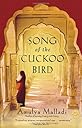
Song of the Cuckoo Bird: A Novel
Product ID: 27094074
A sweeping epic set in southern India, where a group of outcasts create a family while holding tight to their dreams. Barely a month after she is promised in marriage, eleven-year-old orphan Kokila comes to Tella Meda, an ashram by the Bay of Bengal. Once there, she makes a courageous yet foolish choice that alters the fabric of her life: Instead of becoming a wife and mother, youthful passion drives Kokila to remain at the ashram. Through the years, Kokila revisits her decision as she struggles to make her mark in a country where untethered souls like hers merely slip through the cracks. But standing by her conviction, she makes a home in Tella Meda alongside other strong yet deeply flawed women. Sometimes they are her friends, sometimes they are her enemies, but always they are her family. Like Isabel Allende, Amulya Malladi crafts complex characters in deeply atmospheric settings that transport readers through different eras, locales, and sensibilities. Careening from the 1940s to the present day, Song of the Cuckoo Bird chronicles India’s tumultuous history as generations of a makeshift family seek comfort and joy in unlikely places–and from unlikely hearts. Review: "Cuckoo Bird" is a beloved story - Song of the Cuckoo Bird is a fascinating book portraying the different customs in Indian culture and how outcasts live by these customs. Kokilia, a young Indian girl, comes to live in Tella Meda, an ashram, where she must wait to menstruate before she goes to live with her husband. She decides that she doesn't want to leave and lives there for the rest of her life amongst other people who are not accepted anywhere else, whether they are the daughter of a prostitute or a widow whose relatives do not want her. The relationships between the characters are very intriguing, and are slightly similar to the tight-knit environment of a small high school. The people in the ashram all have different morals, values, and beliefs, and this often leads to conflict. However, they all have one thing in common that binds them together; they have no other place to go. It is amazing to read how the characters hurdle obstacle after obstacle and carry on with life despite their numerous problems. The chapters alternate points of view and show the differences between the characters' hopes and fears and how they think of each other. What I like the most about this book is how all of the characters still hold onto their aspirations despite their social situations. Also, I like how the author mentions what is happening politically in India while the residents of Tella Meda are carrying on their everyday lifestyles. Because they are so out of touch with the real world, these things do not affect the characters. It is interesting to see the differences of how the death of a prime minister is handled by an urban city dweller compared to how it is handled by a poor outcast in a small town. What seems like a big deal in the city seems like nothing in Tella Meda. The small sheltered environment is the only home the characters have, so they only care what is happening in that place. The only problem I have with this book is that there are too many characters that have similar names, and it is easy to get them confused with one another. Some of these characters are even unnecessary; the author just eliminates them from the story entirely. All in all however, this book is a great novel. So many different events happen, making the plot exciting and interesting, and with the different points of view on each of these events, it is possible to see all sides of the story. Review: Richly woven tale of changing times and family beyond blood - Beautifully written story of how a cornucopia of characters become a family despite their circumstances, even without love at times. Perfect glimpse of the changing times and how the main characters adapt. It is yet another testament of how, no matter the age and era, the choices we make sometimes stick with us for the rest of our lives.
| Best Sellers Rank | #4,159,350 in Books ( See Top 100 in Books ) #7,762 in Cultural Heritage Fiction #45,192 in Literary Fiction (Books) #55,994 in Contemporary Women Fiction |
| Customer Reviews | 4.4 out of 5 stars 485 Reviews |
S**M
"Cuckoo Bird" is a beloved story
Song of the Cuckoo Bird is a fascinating book portraying the different customs in Indian culture and how outcasts live by these customs. Kokilia, a young Indian girl, comes to live in Tella Meda, an ashram, where she must wait to menstruate before she goes to live with her husband. She decides that she doesn't want to leave and lives there for the rest of her life amongst other people who are not accepted anywhere else, whether they are the daughter of a prostitute or a widow whose relatives do not want her. The relationships between the characters are very intriguing, and are slightly similar to the tight-knit environment of a small high school. The people in the ashram all have different morals, values, and beliefs, and this often leads to conflict. However, they all have one thing in common that binds them together; they have no other place to go. It is amazing to read how the characters hurdle obstacle after obstacle and carry on with life despite their numerous problems. The chapters alternate points of view and show the differences between the characters' hopes and fears and how they think of each other. What I like the most about this book is how all of the characters still hold onto their aspirations despite their social situations. Also, I like how the author mentions what is happening politically in India while the residents of Tella Meda are carrying on their everyday lifestyles. Because they are so out of touch with the real world, these things do not affect the characters. It is interesting to see the differences of how the death of a prime minister is handled by an urban city dweller compared to how it is handled by a poor outcast in a small town. What seems like a big deal in the city seems like nothing in Tella Meda. The small sheltered environment is the only home the characters have, so they only care what is happening in that place. The only problem I have with this book is that there are too many characters that have similar names, and it is easy to get them confused with one another. Some of these characters are even unnecessary; the author just eliminates them from the story entirely. All in all however, this book is a great novel. So many different events happen, making the plot exciting and interesting, and with the different points of view on each of these events, it is possible to see all sides of the story.
S**Z
Richly woven tale of changing times and family beyond blood
Beautifully written story of how a cornucopia of characters become a family despite their circumstances, even without love at times. Perfect glimpse of the changing times and how the main characters adapt. It is yet another testament of how, no matter the age and era, the choices we make sometimes stick with us for the rest of our lives.
S**A
Another great read from Amulya Malladi
I really love the interviews at the end of your books. This one was a bit harder to read than the others for me. The stories intertwining with one another and the different conversations and perspectives. I wasn’t 100% sure where it was going, but that was ok. It wasn’t predictable, and the people and their lives were all very interesting. About half way through reading it, it all clicked together for me and I ended up loving it. I loved the ending and how it all wrapped up.
J**R
Amulyq Malladi is one of my favorite authors but this was my least favorite of her ...
Amulyq Malladi is one of my favorite authors but this was my least favorite of her novels. Still a great read but for some reason or another just didn't appeal to me so much.
C**E
Most Creative and Realistic Novel!
I have read many books of this genre, especially stories taking place in India. This novel wove a multi-hued tapestry of generations, cultures, and complex relationships. The story was both very creative and very believable. I would highly recommend this book for those seeking insight into Indian culture, and for those seeking understanding about what it is to be human.
C**B
Ashram Life
My treasured mother recommended this book!!! There are so many things I love about this book the first of all that it is set in INDIA!!! Generally I find books set in India and written by Indian authors wonderful and this was no exception. What else did I love? It is set in a Ashram with a female guru. The Ashram is run by the bizarre father of the guru and how he impacts each of the inhabitants is fascinating. Each woman is located at the ashram because of less than perfect circumstances and watching them grow as souls is delicious. I loved the depiction of Indian culture and relationships. The rich way the author describes all aspects of this book like feeling a complex fabric tapestry. Oh the depiction of different types of love soul opening!!
C**E
A Must Read!
This book captures your attention and holds it thru to the end. It was so interesting on top of a great story . I was sad when the book was finished because I enjoyed it so much and wanted to read more !
S**R
Excellent
This novel was just awesome. It dealt with so many issues. I just couldn't out if down. No one is perfect.
G**O
Wonderful story and wonderful characters
Another wonderful novel by Amulya Malladi. I loved this book and felt really sad when I finished it, as I just wanted to be with the characters still. You feel you are there with them when you read this - and all Malladi's other novels too. I have read 4 of her novels and loved each one. I have just bought the next one! If you like Jhumpa Lahiri, Isabelle Allende or Amy Tan, you will also love Amulya Malladi.
C**E
Life in an ashram
I finished this book only a few weeks ago but it is already fading from my memory. In “Song of the Cuckoo Bird” we follow the lives of a group of people (mostly women) who have experienced abuse, suffering, tragedy, hardship and heartbreak and have found a home and a surrogate family in a “benign” ashram (benign in comparison with the one in Bapsi Sidhwa’s “Water”) run by a woman who may or may not be a goddess (she is not sure herself). The setting and the characters are well drawn and the writing is quite good but the story didn’t engage me enough to leave a lasting impression.
K**N
Engaging story
Having enjoyed two of her previous novels, I found this another engaging tale from Malladi.
M**Z
Story of a Woman's Experience in a Commune in India
I am interested in any book set in India, but this one was especially good. I liked all the characters in the commune and what they become/becomes of them. It tells of a unique lifestyle and is a good story.
B**G
A 'family' of misfits
With one notable exception, I've enjoyed all the Amulya Malladi books that I've read. A couple are outstanding, one or two slightly formulaic, but they're always worth the effort. Malladi writes families - often dysfunctional families - really well and in 'Song of the Cuckoo Bird' she creates a pseudo-family from a bunch of lost souls and unwanted people. The Cuckoo Bird of the title is Kokila, an 11 year old orphaned 'bride', sent by her in-laws to pass her time in the Ashram at Telia Meda whilst they wait for her to be old enough to consummate her marriage. Whilst Kokila is marginally the 'lead' character, there are plenty more fascinating (mostly) women at the Ashram. Kokila's friend and peer is Chetana, the daughter of a prostitute, constantly fighting the poor karma of her birth. The Ashram is home to people who have run out of other places to live and the group of unwanted children, beaten wives and widows and divorcees live out their time in the orbit of Charvi, the guru/goddess whose father claimed to see the holiness in her at a young age and set up the community to support her. We follow Kokila and the community through her life on joining Telia Meda at 11 years old, through to the eventual closure of the ashram, a scope of about 50 years. Each chapter starts with a couple of facts about what was going on in India at that time - from the 1961 liberation of Goa, conflicts with Pakistan, the Bhopal tragedy, the re-election and subsequent assassination of Indira Gandhi and many other landmarks of history. Only on very rare occasions - most notably the assassination of ex-PM Rajeev Gandhi by the LTTE - does the action in wider India actually encroach on the story. I thought that was a great shame. I would have appreciated more connection between greater India and the tiny isolated world of the Ashram. There's also an irony that will become apparent much later that Charvi predicts a great tragedy that of course occurred just a few years later but not within the scope of the story. Is anybody ever really happy in this book? Yes, there are fleeting moments of calm and contentment in between life seeming to throw more than their share or tragedy and mistreatment on the inhabitants of the ashram. The women reflect frequently on all they don't have - their own homes, a good husband, children, a place in society - but at times they are happy and things aren't all bad. Chetana is the woman who most takes control of her life - despite her tough beginnings - and Kokila finds her own kind of love a couple of times. Most of the men in the book are a pretty rum bunch, filled with prejudices or drinking themselves into oblivion and whoring around the small town. Even then there are a few who aren't completely deplorable. I liked the extended time frame, the slow changes that crept up on the community as time passed and the house fell into decay and history marched on. It's hard not to think that the inhabitants of Telia Meda made something special in the house with the white roof revolving around their not-so-sure-of-herself guru. It's a great read. Local words are shamelessly NOT translated (thank goodness, I've had my fill of indexes at the back of books explaining every non-Anglo word - you don't NEED to know, just go with the flow) and the book is full of the colours, sights and smells of the Southern Indian coastline of Tamil Nadu. It's very different from the setting of many Indian novels and all the better for that. I think I have only one Malladi book left to read. I'm reluctant to find myself with nothing left to look forward to.
Trustpilot
2 months ago
3 days ago