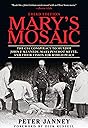
Mary's Mosaic: The CIA Conspiracy to Murder John F. Kennedy, Mary Pinchot Meyer, and Their Vision for World Peace: Third Edition
Product ID: 33611344
Desertcart purchases this item on your behalf and handles shipping, customs, and support to Tunisia.
"Reads like a John Grisham thriller crossed with an Oliver Stone movie."— Boston Globe. "This is a must-read."—Jim Marrs, New York Times bestselling author of Rule by Secrecy. "A fascinating story.”—Oliver Stone The death of Mary Meyer left many Americans with questions. Who really killed her? Why did CIA counterintelligence chief James Angleton rush to find and confiscate her diary? Had she discovered the plan to assassinate her lover, President Kennedy, with the trail of information ending at the steps of the CIA? Was it only coincidence that she was killed less than three weeks after the release of the Warren Commission Report? Fans of The Murder of Mary Russell , JFK: A Vision for America , and other JFK books will love Mary’s Mosaic . Building and relying on years of interviews and painstaking research, author Peter Janney follows the key events and influences in Mary Pinchot Meyer’s life—her first meeting with Jack Kennedy; her support of her secret lover, President Kennedy, as he worked towards the pursuit of world peace and away from the Cold War; and her exploration of psychedelic drugs. Fifty years after the assassinations of President Kennedy and Mary Meyer, this book helps readers understand why both took place. Author Peter Janney fought for two years to obtain documents from the National Personnel Records Center and the US Army to complete this third edition. It includes a final chapter about the mystery man who could be the missing piece to learn the truth behind Meyer’s murder. Review: A Masterpiece of Biography and a Mesmerizing Detective Story - Written by Douglas P. Horne, author of "Inside the Assassination Records Review Board" "Mary's Mosaic" is several things at once: an insightful and sensitive biography of both Mary Meyer and her one-time husband, CIA propaganda specialist Cord Meyer; a murder mystery; a trial drama; an expose of secret knowledge and cover-ups inside the Washington D.C. Beltway during the 1950s and 1960s; and of course, a love story about the late-developing relationship between President John F. Kennedy and Mary Pinchot Meyer, whom he had first met at an Ivy League prep school dance when she was only 15 years old. Their paths had crossed briefly once again in the Spring of 1945, at the founding conference for the United Nations in San Francisco. (Mary, her new husband Cord Meyer, and John F. Kennedy all attended the conference as journalists reporting on the events there, at the birth of the United Nations.) One of the fascinating aspects of this well-researched book is how it traces the evolution and personal development of Mary Pinchot Meyer, Cord Meyer, and John F. Kennedy. As Cord Meyer---a scarred war hero who was once an idealist and a pacifist, and who aggressively lobbied for a united world government following World War II---became a disillusioned cynic and was subverted to the "dark side" by Allen Dulles of the CIA, his all-consuming commitment to the Cold War (and his abandonment of his former idealism) slowly killed his marriage to Mary Pinchot. Mary remained an idealist and an independent thinker, and it was this very independent and unconventional woman whose orbit finally intersected with that of President John F. Kennedy again late in 1961, about two years before his assassination. Janney convincingly documents how their relationship became much more than a series of mere sexual trysts---it became a personal and political alliance of two people who had become thoroughly convinced of the insanity of war between nation states in the Nuclear Age, and who were both determined to do something about it. Jack Kennedy, already sickened by war and skeptical about the wisdom of senior military officers because of his World War II experiences, had become even more skeptical about the desire of many to seek simplistic, military solutions to complex international problems following the bad advice he received from the Joint Chiefs of Staff about the Bay of Pigs and Laos in 1961. After the searing crucible of the Cuban Missile Crisis in the fall of 1962, JFK embarked upon a program of moral action not only in civil rights, but undertook bold efforts to begin to end the Cold War; to commence a withdrawal from Vietnam which would have been completed by the end of 1965; and behind the backs of the Pentagon and the CIA, embarked upon what he thought was a clandestine rapprochment with Fidel Castro's Cuba. Mary Pinchot Meyer, who had ever been critical and distrustful of the CIA, became a natural ally of President Kennedy's throughout 1963 as he moved to curb the unbridled power of the Agency and defuse the Cold War. (She was present at the "Peace Speech" at American University on June 10, 1963, and Jackie Kennedy was not.) One of Janney's most convincing sources about the nature of the relationship between Mary Meyer and Jack Kennedy was an extremely well-placed official with intimate knowledge of JFK's daily activities and thinking: Kennedy's Presidential Appointments Secretary, Kenneth O'Donnell. Janney used O'Donnell's oral history interview with the late author Leo Damore, recorded years ago shortly before O'Donnell's death, as one of the foundations for his book. For those who revel in study of the Cold War culture in Washington in this era, the book is full of well-documented revelations about Phil and Katherine Graham of the Washington Post; James Jesus Angleton (the Head of CIA Counterintelligence), who was godfather to the children of Cord and Mary Meyer; and Ben Bradlee, editor of the Washington Post during the Watergate era (who is exposed in the book as one of the CIA's major media assets). In my view, knowing that Bradlee was in the CIA's pocket helps explain why the Washington Post was so successful in taking down Richard Nixon following the Watergate break-in. Nixon had used his Chief of Staff, Haldemann, to attempt to get the CIA to "warn off" the FBI in its investigation of the Watergate break-in and the "plumbers." Nixon instructed Haldemann to threaten the CIA (Richard Helms) with exposure of its involvement in the JFK assassination, as an incentive for the Agency to cooperate with him. This "hardball" leverage failed, and Bradlee was allowed (and perhaps encouraged) to take down Nixon. He acted as the CIA wished in the Watergate matter. Unaccountably, Bradlee never employed the considerable investigative resources of the Post to look into the Kennedy assassination...well, perhaps that is not so "unaccountable" after all, now that we know he had been a CIA asset since the early 1950s, a part of the Agency's remarkably successful penetration and control of foreign and domestic media. As Janney reveals, Cord Meyer (Mary's husband from 1945 until the late 1950s) was in charge of that CIA program of media penetration and propaganda, and Ben Bradlee was married to Mary Pinchot's sister, Toni. The proximity of these relationships---between Cord Meyer, James Angleton, and Bradlee---make it easy to believe that Bradlee's links with the CIA, that began in the early 1950s, continued into the 1960s and early 1970s, when he was in powerful positions at Newsweek and the Washington Post. Peter Janney's own father, a World War II Naval aviator and a recipient of the Navy Cross, was also a CIA man, and Peter grew up amidst the CIA culture in Washington. Mary Meyer's son Michael was his best childhood friend. He knew Mary Meyer as his best friend's mother. He was therefore perfectly placed to write this book, for his own family had frequent social contacts with Cord and Mary Meyer, James Angleton, Richard Helms, Tracy Barnes, Desmond FitzGerald, and William Colby. Janney's knowledge of the CIA Cold War culture in our nation's capital in the 1950s and 1960s is very well-informed, on a personal level. Janney compellingly relates how the D.C. metropolitan police and the U.S. Justice Department attempted to railroad an innocent black man, Ray Crump, for the mysterious murder of Mary Meyer in October of 1964, just three weeks after the Warren Report was issued. Due to the heroic efforts of African American female attorney Dovey Roundtree, Janney explains how against all odds, Crump was acquitted. Peter Janney reveals the likely motive for her murder---she was about to publicly oppose the sham conclusions of the Warren Report as a fraud. Furthermore, she had kept a private diary which presumably recorded details of her relationship with President Kennedy (and perhaps even of affairs of state). In October of 1964, she was literally "the woman who knew too much." This book reveals the numerous lies and falsehoods told about her diary (and its disposition) by Ben Bradlee, James Jesus Angleton, and others, in a way not adequately covered by previous articles and books. The media in this country, misled by the CIA and by former acquaintances of Meyer's who had much to hide, has consistently distorted the true story of what likely happened to her diary, and Peter Janney lays all of this out in a way that anyone can understand. Peter Janney also solves the mystery of her murder 48 years ago, in as convincing a fashion as one can, so many years later. Many have asked, "If Ray Crump did not kill Mary Meyer, then who did?" This book answers that question. (I will not provide any spoilers here.) So purchase a copy of this book today. Extensively footnoted and persuasively written, it is the best account in print about the life and death of Mary Meyer, easily eclipsing the sole biography previously written about her by Nina Burleigh. Peter Janney has courageously finished the investigative journey into her life and death begun by the late Leo Damore, and briefly resumed (and then abandoned) by John H. Davis. "Mary's Mosaic" is part film noir thriller, part biography, and also provides a remarkably frank view of the Cold War culture in Washington, and the dark side of the national security state. It belongs on the bookshelf of every Cold War historian, and everyone who is interested in President Kennedy's assassination. Review: Complex Story of Intrigue and Murder At The Hand of Government Officials - This book is undoubtedly one of the most interesting books that I have read in the last 5 years. In fact, it is probably the most interesting book I can remember reading. It has all the elements required for an outstanding work of fiction: a complex plot, interesting and often extremely sinister characters, and strange plot twists that just don't seem to curve but actually seem to veer off into the stratosphere at warp speed. The irony of it all is that this isn't fiction. It centers on real life occurrences that have been doctored up and obscured at the highest levels of government. The impetus for writing this book was the author's childhood acquaintance with a woman named Mary Pinchot Meyer who was the mother of the author's childhood friend Michael Meyer. Pinchot Meyer was murdered on a towpath in the Georgetown area of DC, but over the past 30+ years has been identified as having had an affair and ongoing friendship with John F. Kennedy up to the time he was assassinated in November, 1963. Mary Meyer was a descendant of a wealthy and extremely prominent Pennsylvania family who travelled in the rarified world of high society and politics. She married a man named Cord Meyer who became a CIA operative after WWII. The marriage tanked after a decade or so, but not before Mary Meyer had been exposed to the workings of the CIA and the agencies attempts to control public policy and eliminate inconvenient people who got in the agency's way. Kennedy's death by assasination stirred Meyer's suspicions and she started asking questions, too many questions. At this juncture, Meyer quite literally was asking questions that the CIA didn't want asked and became a very inconvenient person given her status and connections. The next thing anyone knew was that Meyer had been murdered and an improbable patsy had been implicated in her murder. Her death might have gone completely unnoticed except for her vocal suspicions that she was being spied on. Adding to the intrigue was her relationships with many high ranking CIA officials and operatives. Elements of her death seemed staged. Too many of her friends gave out conflicting stories which would be revised or completely recanted decades later. If Mary's relationship with Kennedy had remained a secret, it's unlikely that Mary's murder would have seemed like anything but a random act of violence. However, the Kennedy connection and Mary's suspicions linked both their deaths and those of other people who got suspicious. The author really gets to the heart of this story quickly, but more gradually manages to weave a story that is complex and extremely detailed based on eyewitness accounts and missing and/or doctored and fabricated evidence which point to the theory that JFK was assassinated by the CIA and so was Meyer. I could enumerate at length about all the lies, mistruths, and contradictory testimonies that pointed to this conclusion, but the reality is there is so much evidence that refutes the Warren Commission's conclusions and the investigation into Mary Meyers death combined with information about the CIA's methods that this book makes an extremely convincing argument that Kennedy wasn't assassinated by a lone gunman and that Mary Meyers death was not purely a random act of big city violence in one of the toniest areas of DC. As for this book's length, I loaded it on my Kindle before I boarded a plane for a 3+ hour flight. When I landed I had only read the first 8% of this book. I mention this because I am a fairly proficient speed reader and this is an extremely long, detailed and complicated story which was the result of the author's investigation and those of other people who also were on to this story. It was really necessary for me to take notes and bookmark the text to refer to later. The author initially drove me a tad crazy with the often repeated statement that said 'this will be referred to later in the book' or something along that line. As the story progressed it was apparent that many statements made needed to be referenced later on in the text when those statements were contradicted by subsequent information or evidence or were expanded upon. While I definitely buy into the idea that Kennedy was earmarked by the CIA for assassination (for any number of good reasons) as was Mary to a lesser extent mostly because she was causing too much trouble, I don't necessarily buy into the author's representation that Mary was Kennedy's muse for the goal of world peace. I don't know that much about Kennedy's Presidency or his commitment to his relationship with Meyer, but a 'vision of world peace and achieving it' seems a bit lofty after the Bay of Pigs fiasco left most people quaking in their drawers and Kennedy was involved in his postumously reported extracurricular activities with many women other than Mary Pinchot Meyer. If you are considering purchasing the Kindle edition as I did, be aware that the pictures featured in the hard cover version are not present in the digital version. Also, the book is ver heavily footnoted and it is preferable to reference the footnotes as you read. Since I had already seen a couple of pictures of Mary Pinchot Meyer, I knew what the author was talking about regarding her appearance. However, seeing photographs of Meyer and some of the key players in this book really enhances this long and extremely complicated story. Ironically, after I got home I watched a 3 hour program about the Kennedys and saw a lot of the people mentioned in this book talking about JFK and his assasination. I was fascinated yet also repelled after having read this book with so many details still fresh in my mind. Many people were involved in this smoke job and many were high government officials, the socially prominent, and somewhat shockingly Mary's friends and family members. Ultimately, this is a fine book that delves into the inner workings of the CIA and is thoughtful, complex, and revealing. It is also extremely plausible that everything in this book is true, but I doubt that the revelations in this book will go anywhere for the obvious reasons.
| Best Sellers Rank | #217,659 in Books ( See Top 100 in Books ) #90 in Hoaxes & Deceptions #109 in Law Enforcement Biographies #111 in Political Corruption & Misconduct |
| Customer Reviews | 4.5 out of 5 stars 1,761 Reviews |
D**E
A Masterpiece of Biography and a Mesmerizing Detective Story
Written by Douglas P. Horne, author of "Inside the Assassination Records Review Board" "Mary's Mosaic" is several things at once: an insightful and sensitive biography of both Mary Meyer and her one-time husband, CIA propaganda specialist Cord Meyer; a murder mystery; a trial drama; an expose of secret knowledge and cover-ups inside the Washington D.C. Beltway during the 1950s and 1960s; and of course, a love story about the late-developing relationship between President John F. Kennedy and Mary Pinchot Meyer, whom he had first met at an Ivy League prep school dance when she was only 15 years old. Their paths had crossed briefly once again in the Spring of 1945, at the founding conference for the United Nations in San Francisco. (Mary, her new husband Cord Meyer, and John F. Kennedy all attended the conference as journalists reporting on the events there, at the birth of the United Nations.) One of the fascinating aspects of this well-researched book is how it traces the evolution and personal development of Mary Pinchot Meyer, Cord Meyer, and John F. Kennedy. As Cord Meyer---a scarred war hero who was once an idealist and a pacifist, and who aggressively lobbied for a united world government following World War II---became a disillusioned cynic and was subverted to the "dark side" by Allen Dulles of the CIA, his all-consuming commitment to the Cold War (and his abandonment of his former idealism) slowly killed his marriage to Mary Pinchot. Mary remained an idealist and an independent thinker, and it was this very independent and unconventional woman whose orbit finally intersected with that of President John F. Kennedy again late in 1961, about two years before his assassination. Janney convincingly documents how their relationship became much more than a series of mere sexual trysts---it became a personal and political alliance of two people who had become thoroughly convinced of the insanity of war between nation states in the Nuclear Age, and who were both determined to do something about it. Jack Kennedy, already sickened by war and skeptical about the wisdom of senior military officers because of his World War II experiences, had become even more skeptical about the desire of many to seek simplistic, military solutions to complex international problems following the bad advice he received from the Joint Chiefs of Staff about the Bay of Pigs and Laos in 1961. After the searing crucible of the Cuban Missile Crisis in the fall of 1962, JFK embarked upon a program of moral action not only in civil rights, but undertook bold efforts to begin to end the Cold War; to commence a withdrawal from Vietnam which would have been completed by the end of 1965; and behind the backs of the Pentagon and the CIA, embarked upon what he thought was a clandestine rapprochment with Fidel Castro's Cuba. Mary Pinchot Meyer, who had ever been critical and distrustful of the CIA, became a natural ally of President Kennedy's throughout 1963 as he moved to curb the unbridled power of the Agency and defuse the Cold War. (She was present at the "Peace Speech" at American University on June 10, 1963, and Jackie Kennedy was not.) One of Janney's most convincing sources about the nature of the relationship between Mary Meyer and Jack Kennedy was an extremely well-placed official with intimate knowledge of JFK's daily activities and thinking: Kennedy's Presidential Appointments Secretary, Kenneth O'Donnell. Janney used O'Donnell's oral history interview with the late author Leo Damore, recorded years ago shortly before O'Donnell's death, as one of the foundations for his book. For those who revel in study of the Cold War culture in Washington in this era, the book is full of well-documented revelations about Phil and Katherine Graham of the Washington Post; James Jesus Angleton (the Head of CIA Counterintelligence), who was godfather to the children of Cord and Mary Meyer; and Ben Bradlee, editor of the Washington Post during the Watergate era (who is exposed in the book as one of the CIA's major media assets). In my view, knowing that Bradlee was in the CIA's pocket helps explain why the Washington Post was so successful in taking down Richard Nixon following the Watergate break-in. Nixon had used his Chief of Staff, Haldemann, to attempt to get the CIA to "warn off" the FBI in its investigation of the Watergate break-in and the "plumbers." Nixon instructed Haldemann to threaten the CIA (Richard Helms) with exposure of its involvement in the JFK assassination, as an incentive for the Agency to cooperate with him. This "hardball" leverage failed, and Bradlee was allowed (and perhaps encouraged) to take down Nixon. He acted as the CIA wished in the Watergate matter. Unaccountably, Bradlee never employed the considerable investigative resources of the Post to look into the Kennedy assassination...well, perhaps that is not so "unaccountable" after all, now that we know he had been a CIA asset since the early 1950s, a part of the Agency's remarkably successful penetration and control of foreign and domestic media. As Janney reveals, Cord Meyer (Mary's husband from 1945 until the late 1950s) was in charge of that CIA program of media penetration and propaganda, and Ben Bradlee was married to Mary Pinchot's sister, Toni. The proximity of these relationships---between Cord Meyer, James Angleton, and Bradlee---make it easy to believe that Bradlee's links with the CIA, that began in the early 1950s, continued into the 1960s and early 1970s, when he was in powerful positions at Newsweek and the Washington Post. Peter Janney's own father, a World War II Naval aviator and a recipient of the Navy Cross, was also a CIA man, and Peter grew up amidst the CIA culture in Washington. Mary Meyer's son Michael was his best childhood friend. He knew Mary Meyer as his best friend's mother. He was therefore perfectly placed to write this book, for his own family had frequent social contacts with Cord and Mary Meyer, James Angleton, Richard Helms, Tracy Barnes, Desmond FitzGerald, and William Colby. Janney's knowledge of the CIA Cold War culture in our nation's capital in the 1950s and 1960s is very well-informed, on a personal level. Janney compellingly relates how the D.C. metropolitan police and the U.S. Justice Department attempted to railroad an innocent black man, Ray Crump, for the mysterious murder of Mary Meyer in October of 1964, just three weeks after the Warren Report was issued. Due to the heroic efforts of African American female attorney Dovey Roundtree, Janney explains how against all odds, Crump was acquitted. Peter Janney reveals the likely motive for her murder---she was about to publicly oppose the sham conclusions of the Warren Report as a fraud. Furthermore, she had kept a private diary which presumably recorded details of her relationship with President Kennedy (and perhaps even of affairs of state). In October of 1964, she was literally "the woman who knew too much." This book reveals the numerous lies and falsehoods told about her diary (and its disposition) by Ben Bradlee, James Jesus Angleton, and others, in a way not adequately covered by previous articles and books. The media in this country, misled by the CIA and by former acquaintances of Meyer's who had much to hide, has consistently distorted the true story of what likely happened to her diary, and Peter Janney lays all of this out in a way that anyone can understand. Peter Janney also solves the mystery of her murder 48 years ago, in as convincing a fashion as one can, so many years later. Many have asked, "If Ray Crump did not kill Mary Meyer, then who did?" This book answers that question. (I will not provide any spoilers here.) So purchase a copy of this book today. Extensively footnoted and persuasively written, it is the best account in print about the life and death of Mary Meyer, easily eclipsing the sole biography previously written about her by Nina Burleigh. Peter Janney has courageously finished the investigative journey into her life and death begun by the late Leo Damore, and briefly resumed (and then abandoned) by John H. Davis. "Mary's Mosaic" is part film noir thriller, part biography, and also provides a remarkably frank view of the Cold War culture in Washington, and the dark side of the national security state. It belongs on the bookshelf of every Cold War historian, and everyone who is interested in President Kennedy's assassination.
R**S
Complex Story of Intrigue and Murder At The Hand of Government Officials
This book is undoubtedly one of the most interesting books that I have read in the last 5 years. In fact, it is probably the most interesting book I can remember reading. It has all the elements required for an outstanding work of fiction: a complex plot, interesting and often extremely sinister characters, and strange plot twists that just don't seem to curve but actually seem to veer off into the stratosphere at warp speed. The irony of it all is that this isn't fiction. It centers on real life occurrences that have been doctored up and obscured at the highest levels of government. The impetus for writing this book was the author's childhood acquaintance with a woman named Mary Pinchot Meyer who was the mother of the author's childhood friend Michael Meyer. Pinchot Meyer was murdered on a towpath in the Georgetown area of DC, but over the past 30+ years has been identified as having had an affair and ongoing friendship with John F. Kennedy up to the time he was assassinated in November, 1963. Mary Meyer was a descendant of a wealthy and extremely prominent Pennsylvania family who travelled in the rarified world of high society and politics. She married a man named Cord Meyer who became a CIA operative after WWII. The marriage tanked after a decade or so, but not before Mary Meyer had been exposed to the workings of the CIA and the agencies attempts to control public policy and eliminate inconvenient people who got in the agency's way. Kennedy's death by assasination stirred Meyer's suspicions and she started asking questions, too many questions. At this juncture, Meyer quite literally was asking questions that the CIA didn't want asked and became a very inconvenient person given her status and connections. The next thing anyone knew was that Meyer had been murdered and an improbable patsy had been implicated in her murder. Her death might have gone completely unnoticed except for her vocal suspicions that she was being spied on. Adding to the intrigue was her relationships with many high ranking CIA officials and operatives. Elements of her death seemed staged. Too many of her friends gave out conflicting stories which would be revised or completely recanted decades later. If Mary's relationship with Kennedy had remained a secret, it's unlikely that Mary's murder would have seemed like anything but a random act of violence. However, the Kennedy connection and Mary's suspicions linked both their deaths and those of other people who got suspicious. The author really gets to the heart of this story quickly, but more gradually manages to weave a story that is complex and extremely detailed based on eyewitness accounts and missing and/or doctored and fabricated evidence which point to the theory that JFK was assassinated by the CIA and so was Meyer. I could enumerate at length about all the lies, mistruths, and contradictory testimonies that pointed to this conclusion, but the reality is there is so much evidence that refutes the Warren Commission's conclusions and the investigation into Mary Meyers death combined with information about the CIA's methods that this book makes an extremely convincing argument that Kennedy wasn't assassinated by a lone gunman and that Mary Meyers death was not purely a random act of big city violence in one of the toniest areas of DC. As for this book's length, I loaded it on my Kindle before I boarded a plane for a 3+ hour flight. When I landed I had only read the first 8% of this book. I mention this because I am a fairly proficient speed reader and this is an extremely long, detailed and complicated story which was the result of the author's investigation and those of other people who also were on to this story. It was really necessary for me to take notes and bookmark the text to refer to later. The author initially drove me a tad crazy with the often repeated statement that said 'this will be referred to later in the book' or something along that line. As the story progressed it was apparent that many statements made needed to be referenced later on in the text when those statements were contradicted by subsequent information or evidence or were expanded upon. While I definitely buy into the idea that Kennedy was earmarked by the CIA for assassination (for any number of good reasons) as was Mary to a lesser extent mostly because she was causing too much trouble, I don't necessarily buy into the author's representation that Mary was Kennedy's muse for the goal of world peace. I don't know that much about Kennedy's Presidency or his commitment to his relationship with Meyer, but a 'vision of world peace and achieving it' seems a bit lofty after the Bay of Pigs fiasco left most people quaking in their drawers and Kennedy was involved in his postumously reported extracurricular activities with many women other than Mary Pinchot Meyer. If you are considering purchasing the Kindle edition as I did, be aware that the pictures featured in the hard cover version are not present in the digital version. Also, the book is ver heavily footnoted and it is preferable to reference the footnotes as you read. Since I had already seen a couple of pictures of Mary Pinchot Meyer, I knew what the author was talking about regarding her appearance. However, seeing photographs of Meyer and some of the key players in this book really enhances this long and extremely complicated story. Ironically, after I got home I watched a 3 hour program about the Kennedys and saw a lot of the people mentioned in this book talking about JFK and his assasination. I was fascinated yet also repelled after having read this book with so many details still fresh in my mind. Many people were involved in this smoke job and many were high government officials, the socially prominent, and somewhat shockingly Mary's friends and family members. Ultimately, this is a fine book that delves into the inner workings of the CIA and is thoughtful, complex, and revealing. It is also extremely plausible that everything in this book is true, but I doubt that the revelations in this book will go anywhere for the obvious reasons.
K**N
Great information but terrible writing and no editing at all...
Janney's book was my first foray into the history of the JFK saga. While I really appreciated the story and information he offered, his writing was overly emotional in ways which made it hard to bear at times. He tended to gild the lily with many idealizing adjectives and uses of 'National Enquirer' lingo which chafed. And it appeared that nobody had edited the book at all before publication. That said, I respect Janney for his courage to pursue the truth about what had happened to his dear friend's mother, and his own boyhood crush. His admiration brought her to life for me, though I would have valued balancing input from credible sources less fond of her. I remain puzzled about why Mary would have been taking her regular towpath walk if she knew the CIA was afoot. Wouldn't she have surmised she needed to be watched for her reactions to the Warren Commission? She doesn't seem by Janney's portrayal to be naive, so why wouldn't she be more cautious? Much here rang so true, including Bradlee's role in the coverup of Mary's murder (how did he manage his CIA connection when Woodward & Bernstein broke the Watergate crimes, I wonder...); the Phil Graham story; Mary's account (albeit secondhand) of the first time she smoked pot with JFK; the fake JFK autopsy reports (I look forward to reading the ARRB books); his interview at the end with the daughter of (?-I'm forgetting his name). One close look at the photograph on the cover of the book speaks volumes. All told, this book opened doors for me to further inquiry into the details of this tragedy. I believe it's still going on. Perhaps in different ways, but I have no doubt they have their eyes on Obama. Can you imagine his first days in office while being briefed about layers of counterintelligence in the CIA? I now see his choice of Patraeus to head CIA in a new light. Every president must have a trusted team to keep up with the covert activity burning behind his back.
J**R
The Murder of Mary Pinchot Meyer
In early 1976 the National Enquirer published a story that shocked the elite political class in Washington, D.C. The story disclosed that a woman named Mary Pinchot Meyer, who was a divorced spouse of a high CIA official named Cord Meyer, had been engaged in a two-year sexual affair with President John F. Kennedy. By the time the article was published, JFK had been assassinated, and Mary Pinchot Meyer herself was dead, a victim of a murder that took place in Washington on October 12, 1964. The murder of Mary Pinchot Meyer is the subject of a fascinating and gripping new book by Peter Janney, who was childhood friends with Mary Meyer's three sons and whose father himself was a high CIA official. Janney's father and mother socialized in the 1950s with the Meyers and other high-level CIA officials. Janney's book, Mary's Mosaic, is one of those books that you just can't put down once you start reading it. It has everything a reader could ever want in a work of nonfiction -- politics, love, sex, war, intrigue, history, culture, murder, spies, racism, and perhaps the biggest criminal trial in the history of our nation's capital. Just past noon on the day of the murder, Mary Meyer was on her daily walk on the C&O Canal Trail near the Key Bridge in Washington, D.C. Someone grabbed her and shot a .38-caliber bullet into the left side of her head. Meyer continued struggling despite the almost certainly fatal wound, so the murderer shot her again, this time downward through her right shoulder. The second bullet struck directly into her heart, killing her instantly. A 21-year-old black man named Raymond Crump Jr., who lived in one of the poorest sections of D.C., was arrested near the site of the crime and charged with the murder. Crump denied committing the crime. There were two eyewitnesses. One witness, Henry Wiggins Jr., said that he saw a black man standing over the body wearing a beige jacket, a dark cap, dark pants, and dark shoes, and then he identified Crump as the man he had seen. Another witness, William L. Mitchell, said that prior to the murder, he had been jogging on the trail when he saw a black man dressed in the same manner following Meyer a short time before she was killed. When Crump was arrested, he was wearing dark pants and dark shoes. Police later found his beige jacket and dark cap in the water near the trail. It certainly did not look good for Ray Crump, as he himself said to the police. Nonetheless, he steadfastly denied having anything to do with the murder. Crump's family retained one of D.C.'s most renowned and respected attorneys, an African American woman named Dovey Johnson Roundtree, who was around 50 years old at the time. (See Justice Older than the Law: The Life of Dovey Johnson Roundtree, an autobiography co-authored by Katie McCabe.) Roundtree met with Crump and became absolutely convinced of his innocence. She agreed to take the case for a fee of one dollar. When the case came to trial, the prosecution, which was led by one of the Justice Department's top prosecutors, called 27 witnesses and introduced more than 50 exhibits. Dovey Roundtree presented 3 character witnesses and then rested her case, without calling Ray Crump to the stand. The jury returned a verdict of not guilty. As Janney documents slowly and meticulously, the case against Ray Crump had all the makings of a good frame, but not a perfect one. For example, the two eyewitnesses had stated that the black man they saw was about 5 inches taller than Ray Crump and about 40 pounds heavier. Moreover, there wasn't a drop of blood on Ray Crump's clothing. Furthermore, there wasn't a bit of Crump's hair, blood, or bodily fluids on the clothing or body of Mary Meyer. Despite an extensive search of the area, including a draining of the nearby canal and a search of the Potomac, the police never found a gun. After 35 years of researching and investigating the case, Janney pins the murder of Mary Pinchot Meyer on the Central Intelligence Agency. What would have been the CIA's motive? To silence an independent-minded woman who apparently did not accept the official lone-nut explanation for the assassination of John F. Kennedy -- and who had apparently concluded instead that Kennedy was the victim of a high-level conspiracy involving officials of the CIA. Immediately after Kennedy's assassination, Meyer telephoned famed LSD guru Timothy Leary, with whom she had consulted regarding the use of LSD, not only for herself but also for unidentified important men in Washington to whom she wanted to expose the drug. Highly emotional, she exclaimed to Leary, "They couldn't control him anymore. He was changing too fast. They've covered everything up. I gotta come see you. I'm afraid. Be careful." Meyer was referring to the dramatic shift that took place within President Kennedy after the Cuban Missile Crisis, the seminal event that had brought the United States and the Soviet Union to the brink of nuclear war. As James W. Douglass carefully documents in his book JFK and the Unspeakable, a book that Janney mentions with favor, Kennedy was seared by that experience, especially given that his own children might well have been killed in the nuclear holocaust. After the Cuban Missile Crisis, Kennedy began moving America in a dramatically different direction; he intended to end the Cold War through personal negotiations with Soviet premier Nikita Khrushchev, who desired to do the same thing. The idea was that the United States and the Soviet Union would peacefully coexist, much as communist China and the United States do today. Kennedy's dramatic shift was exemplified by his "Peace Speech" at American University, a speech that Soviet officials permitted to be broadcast all across the Soviet Union. That was followed by the Nuclear Test Ban Treaty, which in turn was followed by an executive order signed by Kennedy that began the withdrawal of troops from Vietnam. Perhaps most significant, however, were Kennedy's secret personal communications with Khrushchev and Kennedy's secret personal outreach to Cuban president Fidel Castro, with the aim of ending the Cold War and normalizing relations with Cuba. Those personal communications were kept secret from the American people, but, more significantly, Kennedy also tried to keep them secret from the U.S. military and the CIA. Why would the president do that? Because by that time, Kennedy had lost confidence in both the Pentagon and the CIA. He didn't trust them, and he had no confidence in their counsel or judgment. He believed that they would do whatever was necessary to obstruct his attempts to end the Cold War and normalize relations with Cuba -- which of course could have spelled the end of the U.S. national-security state, including both the enormous military-industrial complex and the CIA. Don't forget, after all, that after the disaster at the Bay of Pigs and after Kennedy had fired CIA director Alan Dulles and two other high CIA officials, he had also promised to "splinter the CIA into a thousand pieces and scatter it to the winds." Janney's book places Meyer's murder within the context of the Kennedy murder, which had taken place 11 months before, in November 1963. The book brilliantly weaves the two cases into an easily readable, easily understandable analysis. In Janney's book, there are two revelations about Mary Meyer's murder that I found especially disturbing: 1. The eyewitness who claimed to be jogging on the trail when he saw a black man following Mary Meyer does not seem to be who he claimed to be. The man told the police that his name was William L. Mitchell and that he was a U.S. Army 2nd lieutenant who was stationed at the Pentagon. Janney relates that according to a contemporaneous "news clip" in the Washington Star, by the time the trial began, Mitchell was no longer in the military and instead was now serving as a math instructor at Georgetown University. Janney's investigation revealed, however, that Georgetown had no record of Mitchell's having taught there. His investigation also revealed that the CIA oftentimes used Georgetown University as a cover for its agents. Janney investigated the personal address that Mitchell gave both to the police and at trial. It turns out that the building served as a CIA "safe house." What was Mitchell, who supposedly was a U.S. Army lieutenant and then a Georgetown math instructor, doing living in a CIA "safe house"? Janney was never able to locate Mitchell. You would think that a man who had testified in one of the most important murder cases in D.C. history would have surfaced, from time to time, to talk about his role in the case. Or that friends or relatives of his would have popped up and said that he had told them about his role in the trial. Nope. It's as if William L. Mitchell just disappeared off the face of the earth -- well, except for some circumstantial evidence that Janney uncovered indicating that Mitchell was actually an agent of the CIA. For example, in 1993 an author named Leo Damore, who had written a book entitled Senatorial Privilege about the Ted Kennedy/Chappaquiddick episode, was conducting his own investigation into Mary Pinchot Meyer's murder, with the aim of writing a book on the case. Damore ended up committing suicide before finishing his book. But in the process of his investigation, he telephoned his lawyer, a former federal judge named Jimmy Smith, telling Smith that after a long, unsuccessful attempt to locate Mitchell, Damore had finally received a telephone call from a man identifying himself as Mitchell. According to Smith's written notes of the conversation, a copy of which are at the back of Janney's book, the man purporting to be Mitchell admitted to having murdered Mary Pinchot Meyer as part of a CIA plot to silence her. In 1998, an author named Nina Burleigh wrote her own book about Meyer's murder, entitled A Very Private Woman, in which she concluded that Crump really had committed the murder despite his acquittal. Just recently, Burleigh published a critical review of Janney's book at The Daily Beast, in which she acknowledges the likelihood that given the large amount of evidence that has been uncovered over the past decade, the CIA did, in fact, play a role in the assassination of President Kennedy. In her review, however, Burleigh ridiculed the notion that the CIA would use its assassin in the Meyer case to also serve as a witness to the murder. It's a fair enough critique, especially given that the information is hearsay on hearsay and Damore isn't alive to relate the details of his purported telephone conversation with Mitchell or to provide a tape recording of the exchange. But what I found fascinating is that Burleigh failed to confront the other half of the problem: even if Mitchell wasn't the assassin, there is still the problem of his possibly having been a fake witness who provided manufactured and perjured testimony in a federal criminal proceeding. I couldn't understand how Burleigh could fail to see how important that point is. I figured I'd go take a look at her book. Imagine my surprise when a search for "Mitchell" in the Kindle edition turned up no results. I asked myself, How is that possible? How could this author totally fail to mention the name of one of the two eyewitnesses in the case? So, I decided to read through her book to see if I could come up with an answer. It turns out that she describes Mitchell simply as a "jogger" (without mentioning his name) who said that he had seen a black man following Meyer and described the clothing the man was wearing. What is bizarre is that while she did point out, repeatedly, the name of the other eyewitness -- Henry Wiggins Jr. -- not once does she mention the name of the "jogger." The omission is conspicuous and almost comical, given sentences such as this: "Wiggins and the jogger both guessed the presumed killer's height at five foot eight" and "The shoes gave Crump the extra inches of height to make him the size described by Wiggins and the jogger." Why this strange treatment of one of the two important eye witnesses in the case? Only Burleigh can answer that one. But given her extensive investigation of the case, I wish she would have included in her critique of Janney's book a detailed account of the efforts, if any, she made to locate "the jogger" and the fruits, if any, of those efforts. Perhaps The Daily Beast would be willing to commission Burleigh to write a supplemental article to that effect. We should keep in mind that a criminal-justice system depends on the integrity of the process. If one side or the other feels free to use fake witnesses and perjured testimony with impunity, knowing that no one within the government will ever investigate or prosecute it, then the entire criminal-justice system becomes worthless or, even worse, tyrannical. Prior to the publication of his book at the beginning of April, Janney issued a press release in which he stated that he planned to mail a request to U.S. Attorney General Eric Holder to reopen the investigation into the murder of Mary Pinchot Meyer based on the evidence that Janney uncovered as part of his research for the book. He need not bother. In 1973, nine years after the murder of Mary Pinchot Meyer, 31-year-old American journalist Charles Horman was murdered in Chile during the U.S.-supported coup that brought military strongman Augusto Pinochet into power. Twenty-six years later -- 1999 -- U.S. officials released a State Department memorandum confessing the CIA's participation in Horman's murder. The CIA's motive? Apparently to silence Horman, who intended to publicly disclose the role of the U.S. military and the CIA in the Chilean coup. Despite the official acknowledgment by the State Department of CIA complicity in the murder of this young American, not one single subpoena has ever been issued by the Justice Department or Congress seeking to find out who the CIA agents who murdered Horman were, why they murdered him, and whether they did so on orders from above. How much trouble would it be for the Justice Department to issue subpoenas to the Pentagon and the CIA for all records relating to William L. Mitchell, including military and CIA service records and last known addresses? Or a subpoena for records relating to the CIA "safe house" in which Mitchell resided? Or a subpoena for records pertaining to the CIA's use of Georgetown University as a cover for CIA agents? Or a subpoena to Georgetown University for records relating to William L. Mitchell and records relating to the CIA's use of Georgetown University as a cover for CIA agents? No trouble at all. But the chances of it occurring are nil. 2. The second especially disturbing part of Janney's book relates to Mary Pinchot Meyer's diary. On either the night of Meyer's murder or the following morning, the CIA's counterintelligence chief, James Jesus Angleton, burglarized Meyer's home and art studio and stole her personal diary, which very likely contained detailed descriptions about her affair with President Kennedy. It also might have contained her suspicions that Kennedy had been the victim of a high-level assassination plot orchestrated by the CIA. Angleton took the diary with the aim of destroying it, but it's still not certain what exactly he did with it. Angleton later claimed that his actions were done at the request of Meyer's close friend, Anne Truitt, whom Meyer had supposedly entrusted with the diary in the event anything happened to her. But Truitt had no legal authority to authorize Angleton or anyone else to break into Meyer's house or studio and take possession of any of her personal belongings. Unless the diary ever shows up, no one will ever know whether Kennedy and Meyer discussed the transformation that Kennedy was undergoing after the Cuban Missile Crisis. But one thing is for sure: given Meyer's deep devotion to peace, which stretched all the way back to her college days, she and Kennedy were certainly on the same wavelength after the crisis. Moreover, given Meyer's fearful statement to Timothy Leary immediately after the assassination, as detailed above, there is little doubt as to what Meyer was thinking with respect to who had killed JFK and why. Angleton also arguably committed obstruction of justice by failing to turn Mary Meyer's diary over to the police, the prosecutor, and the defense in Ray Crump's case. After all, even if the diary didn't point in the direction of the CIA as having orchestrated the assassination of John Kennedy, at the very least it had to have described the sexual affair between Meyer and the president. The police and the defense were both entitled to that information, if for no other reason than to investigate whether Meyer had been killed by someone who didn't want the affair to be disclosed to the public. The fact that Angleton failed to disclose the diary's existence to the judge, the prosecutor, and the defendant in a criminal proceeding in which a man was being prosecuted for a death-penalty offense speaks volumes. One of the eerie aspects of this case is that prior to her murder, Meyer told friends that there was evidence that someone had been breaking into and entering her house. Now, one might say that the CIA is too competent to leave that type of evidence when it breaks into someone's home. I agree. But the evidence might well have been meant to serve as a CIA calling card containing the following message to Mary Pinchot Meyer: "We are watching you, and we know what you are doing. If you know what's good for you, cease and desist and keep your mouth shut." But Mary Pinchot Meyer wasn't that kind of woman. She was independent minded, strong willed, and outspoken. In fact, when she attended CIA parties with her husband, Cord Meyer, she was known to make negative wisecracks about the agency. One of the other CIA wives commented that Mary just didn't know when to keep her mouth shut. If the CIA did, in fact, orchestrate the assassination of John F. Kennedy -- and, as Nina Burleigh observes, the overwhelming weight of the circumstantial evidence certainly points in that direction -- Mary Pinchot Meyer, given her relationship to the CIA, her close contacts within the Kennedy administration, and her penchant for being outspoken, could have proven to be a very dangerous adversary. In his introduction to Mary's Mosaic, Janney places the murders of John Kennedy and Mary Pinchot Meyer in a larger context: The tapestry of President Kennedy's killing is enormous; the tapestry of Mary Meyer's, much smaller. And yet they are connected, one to another, in ways that became increasingly apparent to me as I dug ever more deeply into her relationship with Jack Kennedy and the circumstances surrounding her demise. To understand the complex weave of elements that led to her death is to understand, in a deeper way, one of the most abominable, despicable events of our country's history. Therein lies the cancerous tumor upon the soul of America. The CIA's inception and entrance into the American landscape fundamentally altered not only the functioning of our government, but the entire character of American life. The CIA's reign during the Cold War era has contaminated the pursuit of historical truth. While the dismantling of America's republic didn't begin in Dallas in 1963, that day surely marked an unprecedented acceleration of the erosion of constitutional democracy. America has never recovered. Today in 2012, the ongoing disintegration of our country is ultimately about the corruption of our government, a government that has consistently and intentionally misrepresented and lied about what really took place in Dallas in 1963, as it did about the escalation of the Vietnam War that followed, and which it presently continues to do about so many things. Once revered as a refuge from tyranny, America has become a sponsor and patron of tyrants. Like Rome before it, America is -- in its own way -- burning. Indeed, the Roman goddess Libertas, her embodiment the Statue of Liberty, still stands at the entrance of New York harbor to welcome all newcomers. Her iconic torch of freedom ablaze, her tabula ansata specifically memorializing the rule of law and the American Declaration of Independence, the chains of tyranny are broken at her feet. She wears `peace' sandals -- not war boots. While her presence should be an inescapable reminder that we are all "immigrants," her torch reminds us that the core principles for which she stands require truth telling by each and every one of us. As long as any vestige of our democracy remains, each of us has a solemn duty to defend it, putting our personal and family loyalties aside. "Patriotism" -- real patriotism -- has a most important venue, and it's not always about putting on a uniform to fight some senseless, insane war in order to sustain the meaningless myths about "freedom" or "America's greatness." There is a higher loyalty that real patriotism demands and encompasses, and that loyalty is to the pursuit of truth, no matter how painful or uncomfortable the journey. Buy Peter Janney's book Mary's Mosaic. But be sure to set aside a couple of days for reading it, because once you start, you won't be able to put the book down. --Jacob G. Hornberger, President, The Future of Freedom Foundation [...].
F**Y
Famijoly
Mary Meyer's inclusion in the "Cuban Missiles" episode of "The Kennedys" miniseries was the first I had ever taken note of this particular mistress of Jack Kennedy. I had heard of Judy Campbell and Marilyn Monroe and some of the others, but not Mary. Yet, despite the fast-moving nature of "The Kennedys," Mary Meyer (as played by actress Nahanni Johnstone) was an impact player in her brief appearance in the mini-series. Shortly after watching "The Kennedys," I saw Peter Janney as a guest on a talk show promoting the updated version of his book, "Mary's Mosaic: The CIA Conspiracy to Murder John F. Kennedy, Mary Pinchot Meyer, and Their Vision for World Peace." The same Mary Meyer as in "The Kennedys"? Indeed. And, after finishing "Mary's Mosaic," I went to the DVR on my television and pulled up the "Cuban Missiles" episode of "The Kennedys," and, sure enough, it is Ben and Toni Bradlee who are in conversation with Jackie Kennedy at a reception following a piano recital in the White House when Mary Meyer walks into the scene and gets reintroduced to Jackie as "my sister." That took me back to my original urgency in purchasing "Mary's Mosaic" when I first heard of it: With all the documentation of Jack's philandering, why hasn't his affair with Mary been more noted (alongside Marilyn Monroe, Judy Campbell, the lunch breaks spent skinny-dipping with secretaries in the White House swimming pool, etc.)? Why haven't books on Mary and her murder been more widely known? Peter Janney answers those questions along with making a herculean effort to solve the murders of both John F. Kennedy and Mary Pinchot Meyer. Bringing to bear the skills of his chosen profession of clinical psychologist, Janney humanizes his discussion of the assassination of President Kennedy and the death-dealing coverup and aftermath as no other author has attempted. He succeeds masterfully because his starting point is personal. He knew Mary and her husband Cord Meyer and their children; he was best friends with their son, Michael, who was accidentally killed when run over by a car at age 9. His own father, Wistar Janney, worked in the CIA with Cord Meyer. Yet Peter Janney steps back enough from the evidence and the testimonies he received in interviews to present the case objectively, indeed as he mentions in the book, allowing the truth to set him free. And even when the truth brought about painful revelations about family members and others to whom he was close. In contextualizing the CIA conspiracy to murder John F. Kennedy, Mary Pinchot Meyer, and their plan for world peace, Janney provides a tender-but-not-sugar-coated biography of this woman who had profound influence over the 35th President of the United States in a most dangerous moment in world history. We come to know, for example, how this same Central Intelligence Agency courted her husband Cord away from the vision for world peace he shared most intensively with Mary and then how her relationship with Jack Kennedy being much deeper than a mere tryst contributed toward turning JFK toward a commitment to seeking peace. There are some real pearls in the latter portion of the book that made "Mary's Mosaic" that much more a treasure. While they can't be corroborated because they are statements from now deceased players in the JFK and Mary Meyer assassinations and are relayed from single sources' remembrances of conversations with these CIA men, the "unburdenings" give insight into the minds and hearts and souls of those who drive the works of the CIA. But don't cheat and read ahead. That Janney includes them completes his own mosaic of humanizing all the characters in this drama that unfolded in Cold War America. Indeed, Janney by including these "unburdenings" (I hesitate to refer to them as full-fledged confessions) underscores the line from President Kennedy in his June 10, 1963, commencement address at American University: "We all breathe the same air. We all cherish our children's future. And we are all mortal." In my humble opinon, "Mary's Mosaic" ranks alongside "JFK and the Unspeakable: Why He Died and Why It Matters" by James W. Douglass and "Final Judgment" by Michael Collins Piper as works on the Kennedy assassination that help make sense of the world of today. I recommend all three of those books.
C**S
Mary's Mosaic: A Masterpiece
Peter Janney's new book Mary's Mosaic: the CIA Conspiracy to Murder John F. Kennedy, Mary Pinchot Meyer, and Their Vision for World Peace is a masterpiece. Beautifully written and thoroughly researched, Mary's Mosaic is an essential read for numerous reading lists - not just those on the Kennedy years and the Kennedy assassination but also those that address how America got into the trouble that plagues the world today and why our times are marked by mediocre leaders and meaningless discourse. Mary's Mosaic tells the life story of Mary Pinchot Meyer, a confidant, friend, advisor and lover to President John F. Kennedy who was assassinated in Washington eleven months after Kennedy was assassinated in Dallas - one of an extraordinary number of assassinations and mysterious deaths that haunted those who knew too much about the President's killing and the men who organized it. Janney's masterpiece is extraordinary for a number of reasons. He weaves his story of Mary's life and death through the geopolitical events of this period. His grasp of the events in question is profound - from the Bay of Pigs to Katherine Graham's assumption of control of the Washington Post to Kennedy's efforts to ban nuclear weapons and to withdraw from Vietnam. The reader's time is not wasted on or confused by "the official story." Rather, events and lives flow into and through each other and the interconnectedness of things makes sense. Janey's ultimate conclusions, in part, depend on the true confessions of a hit man who claims to have assassinated Mary for the CIA. I'm a skeptic about the accuracy of and intent behind such a confession. The individual in question is someone Janney documents as a liar. As there is no statute of limitation on murder, even aging hit men tend to be discrete about spilling the beans unless ordered to by their handlers. However, even discounting this evidence, Janey more than successfully makes the case that Mary's death was a contract killing by the US intelligence apparatus. In a quiet, careful and complex way, the competition between two cultures emerges from the pages of Mary's Mosaic. The first was part of Kennedy's Camelot - people who believed in the possibility of peace and who strove to create a vision that inspired our imaginations and ambitions for all mankind. The second was driven by a darker view - one limited to material power that drew pleasure from the control and wealth afforded by war and genocide. Excellence at killing - by poison, by accidents, by high-powered rifles, by mysterious heart attacks, or "suicides" - is what would allow the second group to exercise their jealousy and compete successfully against the stars of Camelot. It is that same capacity that continues to this day and explains so much of the Orwellian behavior and fear that defines life and public discourse in America. Janney's authorship is the hero's journey. As a young man, he personally knew and cared for Mary and her family. He ultimately concludes that his father Wistar Janney, a high-level CIA official, was involved in the conspiracy to kill Mary. Without moralizing, he walks us through the intimate betrayals that define life in Washington. This includes his father's lies to him and his family or Mary's brother-in-law Ben Bradlee's remarkable improvement in employment status at the Washington Post after helping to facilitate the cover up of Mary's death, including the omission of information to help frame an innocent man. It also includes the trumpeting of a preposterous official story by social elites who are terrorized contemplating what can happen even to the rich and powerful who do not toe the party line. Janney's personal knowledge of and concern for the people involved creates an intimacy and humanity that make the story that much more real. He "comes clean" as he faces the threads of corruption that run through his history and family -- as we all ultimately must do if we are to find true solutions to the ills that beset us. This book review comes with my highest recommendation. Buy Mary's Mosaic. Read it. Savor Janney's quietly brilliant insights. Encourage your friends and family to do the same. Pass it on. In Peter Janney's words, "Allow this small but essential piece of history to see the light of day." See: [...]
M**Y
Wow what a book!!!
This book should be required reading for every American, or at the very least this book should replace those so called fairy tale books in school camouflaging as history books (that would be a conflict of interest on the part of gov. schools of course). I look back on the story that we were told in history class in high school about JFK's murder and even at the time it didn't make much sense to me but after reading Mr. Janney's book the contrived narrative as Mr. Janney calls it of Oswald killing JFK sounds like a children's story. JFK's assassination of course is one part of Mary's Mosaic, the book is more about Mary Meyer, who she was, her influence on the President of the U.S. and her murder. Although I found so many different layers of history in Mary's Mosaic that it seems almost unfair to just write that the book is about Mary Meyer and JFK. There is intrigue, evil, corruption, love, hatred, games played by the powerful, highly intelligent individuals who struggle with their own conscious and so much information about gov. institutions and powerful individuals who shaped and continue to shape our lives in negative ways. Ultimately though I think this book is about human beings and their natures (the soulless and the soulful and the ones in between who struggle and ultimately lose their souls). It occurred to me after I finished reading this book and because Mr. Janney supported his propositions with so much research/evidence that I started to wonder when did the government every show any evidence that Oswald killed JFK? Where was the evidence? Sitting in a movie theater doesn't qualify unless he killed the president telepathically (sarcasm). Also I started to wonder why I had never heard of Mary Meyer before, it's always Jackie or Marlyn, two women that were really inconsequential, unlike Mary Meyer that was really trying to better the world, she really epitomized what a woman should be feminine, intelligent, active, spiritual. I know the answer to this question of course but it's interesting to ask of others who are so entrenched in these "contrived narratives". I wish I were better able to articulate how powerful and relevant this book is, but I feel that I am failing, you'll just have to read it for yourself to discover the truth and gain some knowledge. Although there is so much evil in Mary's Mosaic and the truth is often very depressing when you discover it, there is this undercurrent of beauty in Mr. Janney's book. Also it's very well written. Highly recommend it. I hope the author writes another book.
S**N
Mary, Mary quite contrary...
May's Mosaic about the murder of Mary Pinchot Meyer is written by the son of a former CIA Officer Wistar Janney who is implicated in the plot to kill Mary Meyer after the assassination of JFK as she had been having an affair with Kennedy during his years at the White House. Rather like Dr Mary's Monkey about the murder of Dr Mary Sherman in New Orleons on the day of the Warren Commission enquiry into the death of President Kennedy, and a known associate of Lee Harvey Oswald, its also written by an insider, Ed Haslam whose father knew Dr Sherman as a colleague at Tulane Medical Clinic.(If you consider the two M.M.'s you get Marilyn Monroe, a third victim and unsolved murder linked to JFK who was also a former mistress to both the Kennedy brothers.) I can't help get the feeling that both these book are still part of the cover up. They are like pain killers, that ease the pain but don't reach the symptoms. The attempt by the author of Mary's Mosaic Peter Janney to finally lay the blame for the murder on a witness, marine Lieutenant William Mitchell seems like another attempt to find a patsy after the main suspect the African American Ray Crump was acquitted.There is no doubt C.I.A. Chief James Jesus Angleton led the coverup of the murder of Mary Meyer and may have been implicated in the conspiracy to eliminate her after the Warren Report came out. This book is a good read and gives an insight into the Georgetown set by an insider with the background of a mid 1950's suburban military intelligence family similar to the one I grew up in. With its outer bourgeois pretensions and inner secrets, it reminds me of the of the film noir feeling of Revolution Road. It would have got four stars if I thought that it wasn't a made to order book. This idea of Kenedy and Pinchot Meyer as soul mates with a vision for world peace is as convincing as Jack and Jaquie's Camelot. Kennedy was banging a lot of broads and Mary was just one with a brain and the backbone to support him in tough times. If I can send a tribute to Mary Meyer, it would be that she may have supported him through tough times and gave him the courage to mediate with Krushchev and navigate the communication outside the CIA that resulted in the end of the Cold War before the Hawks came to power after his assassination.
A**K
A. Cook, Bedfordshire, UK
I agree this book derserves 5 stars (I am very confused why the review by a Mr Bradley Martin has given 4 stars because he totally does not like the book) My review agrees 100 per cent with a review I spotted on the American Amazon Website. Please read it. Written by Douglas P. Horne, author of "Inside the Assassination Records Review Board" "Mary's Mosaic" is several things at once: an insightful and sensitive biography of both Mary Meyer and her one-time husband, CIA propaganda specialist Cord Meyer; a murder mystery; a trial drama; an expose of secret knowledge and cover-ups inside the Washington D.C. Beltway during the 1950s and 1960s; and of course, a love story about the late-developing relationship between President John F. Kennedy and Mary Pinchot Meyer, whom he had first met at an Ivy League prep school dance when she was only 15 years old. Their paths had crossed briefly once again in the Spring of 1945, at the founding conference for the United Nations in San Francisco. (Mary, her new husband Cord Meyer, and John F. Kennedy all attended the conference as journalists reporting on the events there, at the birth of the United Nations.) One of the fascinating aspects of this well-researched book is how it traces the evolution and personal development of Mary Pinchot Meyer, Cord Meyer, and John F. Kennedy. As Cord Meyer---a scarred war hero who was once an idealist and a pacifist, and who aggressively lobbied for a united world government following World War II---became a disillusioned cynic and was subverted to the "dark side" by Allen Dulles of the CIA, his all-consuming commitment to the Cold War (and his abandonment of his former idealism) slowly killed his marriage to Mary Pinchot. Mary remained an idealist and an independent thinker, and it was this very independent and unconventional woman whose orbit finally intersected with that of President John F. Kennedy again late in 1961, about two years before his assassination. Janney convincingly documents how their relationship became much more than a series of mere sexual trysts---it became a personal and political alliance of two people who had become thoroughly convinced of the insanity of war between nation states in the Nuclear Age, and who were both determined to do something about it. Jack Kennedy, already sickened by war and skeptical about the wisdom of senior military officers because of his World War II experiences, had become even more skeptical about the desire of many to seek simplistic, military solutions to complex international problems following the bad advice he received from the Joint Chiefs of Staff about the Bay of Pigs and Laos in 1961. After the searing crucible of the Cuban Missile Crisis in the fall of 1962, JFK embarked upon a program of moral action not only in civil rights, but undertook bold efforts to begin to end the Cold War; to commence a withdrawal from Vietnam which would have been completed by the end of 1965; and behind the backs of the Pentagon and the CIA, embarked upon what he thought was a clandestine rapprochment with Fidel Castro's Cuba. Mary Pinchot Meyer, who had ever been critical and distrustful of the CIA, became a natural ally of President Kennedy's throughout 1963 as he moved to curb the unbridled power of the Agency and defuse the Cold War. (She was present at the "Peace Speech" at American University on June 10, 1963, and Jackie Kennedy was not.) One of Janney's most convincing sources about the nature of the relationship between Mary Meyer and Jack Kennedy was an extremely well-placed official with intimate knowledge of JFK's daily activities and thinking: Kennedy's Presidential Appointments Secretary, Kenneth O'Donnell. Janney used O'Donnell's oral history interview with the late author Leo Damore, recorded years ago shortly before O'Donnell's death, as one of the foundations for his book. For those who revel in study of the Cold War culture in Washington in this era, the book is full of well-documented revelations about Phil and Katherine Graham of the Washington Post; James Jesus Angleton (the Head of CIA Counterintelligence), who was godfather to the children of Cord and Mary Meyer; and Ben Bradlee, editor of the Washington Post during the Watergate era (who is exposed in the book as one of the CIA's major media assets). In my view, knowing that Bradlee was in the CIA's pocket helps explain why the Washington Post was so successful in taking down Richard Nixon following the Watergate break-in. Nixon had used his Chief of Staff, Haldemann, to attempt to get the CIA to "warn off" the FBI in its investigation of the Watergate break-in and the "plumbers." Nixon instructed Haldemann to threaten the CIA (Richard Helms) with exposure of its involvement in the JFK assassination, as an incentive for the Agency to cooperate with him. This "hardball" leverage failed, and Bradlee was allowed (and perhaps encouraged) to take down Nixon. He acted as the CIA wished in the Watergate matter. Unaccountably, Bradlee never employed the considerable investigative resources of the Post to look into the Kennedy assassination...well, perhaps that is not so "unaccountable" after all, now that we know he had been a CIA asset since the early 1950s, a part of the Agency's remarkably successful penetration and control of foreign and domestic media. As Janney reveals, Cord Meyer (Mary's husband from 1945 until the late 1950s) was in charge of that CIA program of media penetration and propaganda, and Ben Bradlee was married to Mary Pinchot's sister, Toni. The proximity of these relationships---between Cord Meyer, James Angleton, and Bradlee---make it easy to believe that Bradlee's links with the CIA, that began in the early 1950s, continued into the 1960s and early 1970s, when he was in powerful positions at Newsweek and the Washington Post. Peter Janney's own father, a World War II Naval aviator and a recipient of the Navy Cross, was also a CIA man, and Peter grew up amidst the CIA culture in Washington. Mary Meyer's son Michael was his best childhood friend. He knew Mary Meyer as his best friend's mother. He was therefore perfectly placed to write this book, for his own family had frequent social contacts with Cord and Mary Meyer, James Angleton, Richard Helms, Tracy Barnes, Desmond FitzGerald, and William Colby. Janney's knowledge of the CIA Cold War culture in our nation's capital in the 1950s and 1960s is very well-informed, on a personal level. Janney compellingly relates how the D.C. metropolitan police and the U.S. Justice Department attempted to railroad an innocent black man, Ray Crump, for the mysterious murder of Mary Meyer in October of 1964, just three weeks after the Warren Report was issued. Due to the heroic efforts of African American female attorney Dovey Roundtree, Janney explains how against all odds, Crump was acquitted. Peter Janney reveals the likely motive for her murder---she was about to publicly oppose the sham conclusions of the Warren Report as a fraud. Furthermore, she had kept a private diary which presumably recorded details of her relationship with President Kennedy (and perhaps even of affairs of state). In October of 1964, she was literally "the woman who knew too much." This book reveals the numerous lies and falsehoods told about her diary (and its disposition) by Ben Bradlee, James Jesus Angleton, and others, in a way not adequately covered by previous articles and books. The media in this country, misled by the CIA and by former acquaintances of Meyer's who had much to hide, has consistently distorted the true story of what likely happened to her diary, and Peter Janney lays all of this out in a way that anyone can understand. Peter Janney also solves the mystery of her murder 48 years ago, in as convincing a fashion as one can, so many years later. Many have asked, "If Ray Crump did not kill Mary Meyer, then who did?" This book answers that question. (I will not provide any spoilers here.) So purchase a copy of this book today. Extensively footnoted and persuasively written, it is the best account in print about the life and death of Mary Meyer, easily eclipsing the sole biography previously written about her by Nina Burleigh. Peter Janney has courageously finished the investigative journey into her life and death begun by the late Leo Damore, and briefly resumed (and then abandoned) by John H. Davis. "Mary's Mosaic" is part film noir thriller, part biography, and also provides a remarkably frank view of the Cold War culture in Washington, and the dark side of the national security state. It belongs on the bookshelf of every Cold War historian, and everyone who is interested in President Kennedy's assassination.
R**F
Great Book
I’m about halfway through the book. Enjoying it very much. It’s well researched and very well written…I think one of the best written books I’ve read in awhile. The story moves along well. I like the way the writer says you’ll hear more about that later and it doesn’t feel like anything is missing in the moment. And he always delivers. I’ve listened to lots about this subject on YouTube but this is my first book. I was intimidated by such a thick book but it’s easy reading.
J**L
One of the most frightening books I've ever read
This book has been so well researched and constantly updated over the years as new evidence came to light that I don't think anyone could accuse the Author of being a conspiracy nut. I have always believed that the shot that killed JFK came from in front of him not behind. Likewise I never believed Lee Harvey Oswald was the killer. I had also read an article some time ago that claimed LBJ was involved in the conspiracy against JFK but what I was not aware of was, how deeply corrupt this man was. If you only ever read one book about the assassination of President John Fitzgerald Kennedy, make it this one.
S**R
Fantastic
Fantastic …. one of the biggest thrillers in world history ….
A**E
If you love a good crime thriller and at the same time ...
If you love a good crime thriller and at the same time want to know why the world is in the mess it is today (i.e. on the verge of a third world war), then pick up a copy of this book. Janney, a history graduate and practising psychologist, spent 10 years researching and writing the book, the subject matter of which was painfully close to home. As a child, his family were friends with the Meyer family, meaning that he knew Mary Pinchot Meyer personally. In addition, Janney's father was a high-ranking CIA officer, the significance of which will become clear when you read the book. It is this which adds a poignancy to the story Janney narrates. The book tells the story of Mary Pinchot (later Mary Pinchot Meyer), born into a Washington “elite” family (as was Janney), who was murdered just under a year after the murder of JFK. Janney presents compelling evidence that Mary was not only JFK's lover but had an influence over him that was far deeper than romantic. Pinchot Meyer, far from being a JFK “bimbo”, was an accomplished and intelligent woman who, it appears, became a confidant and unofficial “advisor” to Kennedy. Janney makes a conclusive case to show that it may have been Mary's influence that was instrumental in turning JFK away from the Cold War, making secret overtures to the USSR in an attempt to foster world peace and preparing a US de-escalation of the Vietnam War. In writing about the murder of Mary Pinchot Meyer, Janney spends a significant amount of time discussing the assassination of JFK, the prelude to Mary's murder. He makes the best case I've read so far for a US Intelligence (primarily the CIA ) plot to kill Kennedy and then falsely pin the murder on Lee Harvey Oswald. In fact, the book closes by citing a CIA document, a veritable “smoking gun”, pointing to CIA involvement in the killing and signed by Janney's own father. Devastated at the loss of the man she loved and having read the Warren Commission report on the JFK murder, Mary started talking to Washington insiders she knew about the case. She quickly came to the conclusion that the truth was being covered up and was apparently threatening to talk publicly about what she knew. It was this, Janney claims, that prompted the same agencies that had killed JFK to also dispose of Mary Pinchot Meyer. The fact that we still live with the legacy of the murder of JFK, Mary Pinchot Meyer and others, means that this is a must read for anybody wanting to understand the current geopolitical situation. It is also a thoroughly well researched, well written and very entertaining (if ultimately tragic) read.
Trustpilot
3 days ago
3 weeks ago