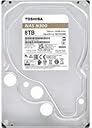
First, an important notice for all buyers of these internal hard drives:These internal drives were really meant for use by OEM manufacturers or for those (e.g., professional builders of custom computers) who know and follow proper ESD-protection procedures when handling these drives. If you handle or touch them improperly, you can cause ESD damage to the internal circuits of these drives, rendering them inoperable immediately or some time later (known as latent damage, which is an important cause of reduced reliability of the drives), depending on the nature of the damage you caused. With latent damage, you can't predict when the drive will fail. It can fail at any point during your use of the drive. It can fail right after you power it up or it can fail a year or two later. Its basic effect is to reduce the reliability of your drive in some way. That is simply the insidious nature of ESD.Because of the risk of ESD, you cannot handle and touch the drives like other consumer electronic devices. You need to follow proper ESD-protection procedures. Since, by default, these drives were intended to be used by those know how to properly handle them, the manufacturers do not typically include ESD warnings other than the anti-static bags that they come packaged in. (You can, of course, google for "antistatic bag" to get more information. In the search results, you will see a link to a Wikipedia article about the bag. As an electrical engineer, I can tell you that it is accurate when it describes the purpose of the bag, how it works, and how to handle objects that are contained in those bags. I am not as familiar about the different types of bags that are available.)The insidious nature of ESD means that the damage can manifest itself in many different ways, so no two ESD-damaged drives will necessarily malfunction in identical ways. When I see people reporting hard drive failures and they are different, especially if there are multiple failures being reported by the same person (especially if that same person reports dead on power-on for multiple drives, whether they were bought at the same or at different times), that is an important clue that ESD damage due to improper handling was the most likely cause of the failures.The fact that ESD does not always cause immediate failures or problems (but, instead, can cause latent damages which can cause the drive to prematurely fail sooner than the manufacturer's expected life expectancy) unfortunately misleads consumers into false beliefs that they are not causing problems when they do not follow proper ESD-protection procedures.The above notice comes from my experience as an engineer working for a company that uses ESD-sensitive devices in our products. The company sells to a major customer that uses the products for life-critical applications, where a failure of our product can kill people. (Our products also have internal self-test and diagnostic functions built in to warn of any possible impending failures of internal components, so that the customer can respond before the product actually fails.) For regular consumers like you, that, of course, does not necessarily apply. So you can choose to do whatever you want with the above ESD warning. And, yes, I do understand that vast majority of the consumers like to feel empowered or do not want to pay extra by installing or using these drives themselves.But do note that if you do not know or follow the proper ESD-protection procedures when handling the hard drives, the drives' MTBF specifications go out the window, which means you can no longer rely on the level of reliability that was designed into them by the manufacturer. The reliability then becomes unknown and most likely will be worse than what they came with before you touched them.Since the general public most likely do not know the proper ESD-protection procedures, it is not surprising for me to see the one and two-star reviews complaining about drive failures. I would however be wary if the number of those poor reviews is very high compared to the number of four and five-star reviews, since, statistically, not all drives will have catastrophic ESD damages after being handled by their owners. If the drives are designed well, most of the drives should be fine during at least the first one or two years, which falls within the timeline of most of the reviews. This, at least, is my personal opinion and guideline on how to assess the online reviews before deciding to purchase a drive.And, yes, in case you're wondering, I do follow proper ESD-protection procedures when I handle internal hard drives.Now, on to my review of the Toshiba hard drive.Unlike most people, my most important criterion for a hard drive is not performance but reliability. I save files that are important and valuable to me for various reasons. So not losing those files is more important to me than other criteria like the read/write speeds. (For those who say that NAS can mitigate failures of individual drives, I agree. But I also care about the reliabilities of individual drives since, if too many of the them fail within a certain amount of time, even a NAS cannot help you. But that's just me. You can of course do whatever you want. It is your money and your data.)I originally used Seagate and WD drives years ago. I discovered that most of them failed much sooner than they should have, based on the manufacturers' claims. It seemed that the drives were not made using proper procedures. (I know what kind of QA shortcuts that managers of manufacturing plants can take if they are under pressure from the HQ.) So I began searching online for hard drive brand reliabilities and discovered that HGST was highly rated. During years of using their internal hard drives, not a single one failed on me. This was refreshing after my experience with the Seagate and WD drives. But after HGST stopped operations as an independent company after WD acquired it, I needed to find a different brand. I was not going to trust WD again.One day I discovered the Toshiba brand of internal hard drives. At that time, there weren't many reviews of those drives. So I decided to take a chance and try them out. I first tried their 4TB drives and now I'm using their 8TB drives. I've been using them for several years now. None has failed on me so far, except for one that came in very badly damaged box (the one that the drive was packaged in; the box itself was shipped in a flimsy plastic bag). That one failed to format and made strange noises, almost as if the internal mechanical moving parts were grinding against themselves. Amazon replaced it very quickly and the replacement has worked flawlessly.