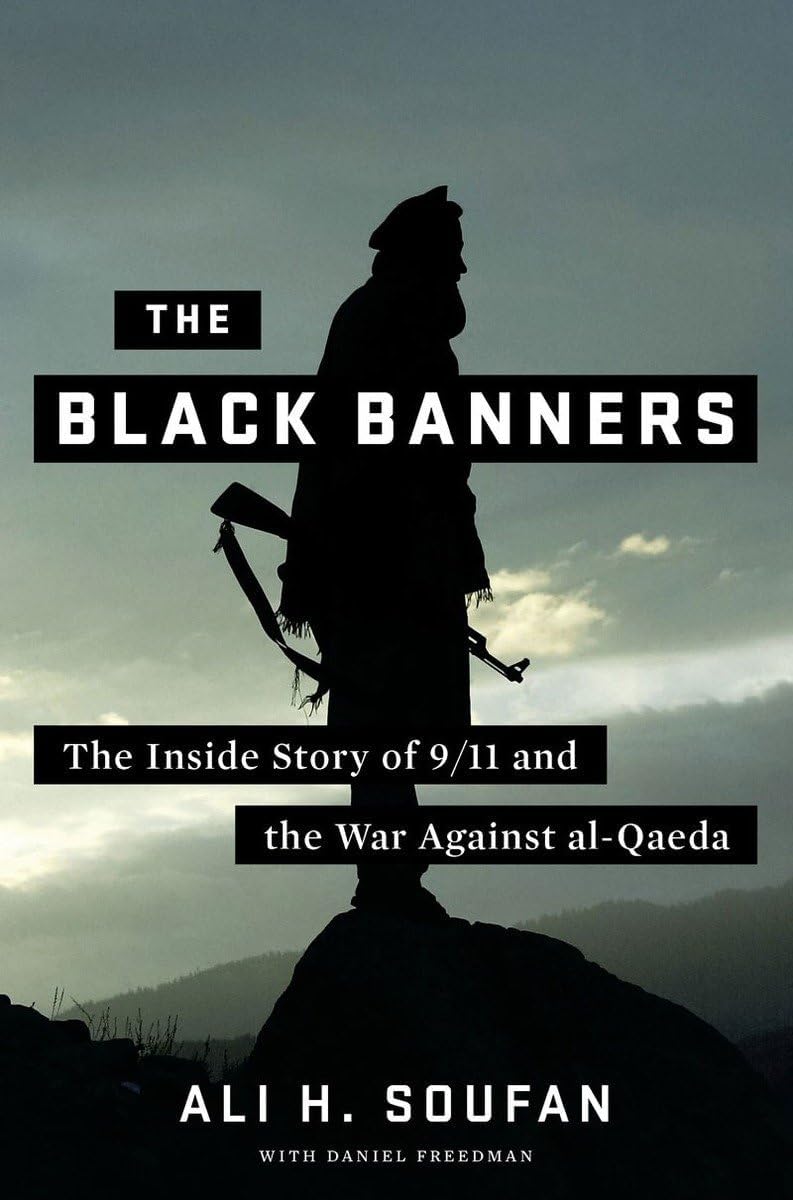
The Black Banners: The Inside Story of 9/11 and the War Against al-Qaeda
Product ID: 3931549
Desertcart purchases this item on your behalf and handles shipping, customs, and support to Tunisia.
A book that will change the way we think about al-Qaeda, intelligence, and the events that forever changed America. On September 11, 2001, FBI Special Agent Ali H. Soufan was handed a secret file. Had he received it months earlier―when it was requested―the attacks on New York and Washington could have been prevented. During his time on the front lines, Soufan helped thwart plots around the world and elicited some of the most important confessions from terrorists in the war against al-Qaeda―without laying so much as a hand on them. Most of these stories have never been reported before, and never by anyone with such intimate firsthand knowledge. This narrative account of America's successes and failures against al-Qaeda is essential to an understanding of the terrorist group. We are taken into hideouts and interrogation rooms. We have a ringside seat at bin Laden's personal celebration of the 9/11 bombings. Such riveting details show us not only how terrorists think and operate but also how they can be beaten and brought to justice. 16 pages of black-and-white illustrations Review: Exceptional View Of History - . Changed My Mind - Update December 2016 With the election of Donald Trump and the incredible spread of ISIS which now extends from Central Africa to the Chinese border and Stockholm to Indonesia to Manila to Los Angeles to Orlando there's bound to be some major shifts in US policy from the top to the bottom. This book should be on every policymakers and commentators must read list in order to more competently interpret both the threats and the potential strategies and policies. ***************************************************************************** This is a must read for every citizen with an interest in this critical subject. Most of us who are interested in the area are subject to the mini specials and talking head babble which imparts no real wisdom or books with a more limited vision. The Black Banners is detailed, visionary and written from the view of someone who really knows the subject but is not trying to defend either himself or some political view. Probably the greatest takeaway is the potential effectiveness of a skilled interrogator working without the "enhanced techniques". The author makes a highly convincing case that skill triumphs over blunt force. I'm also reminded of James Stockdale's writing (In Love and In War) on his years of torture in N Vietnamese prisons. The prisoners came to realize that most anything could be tortured out of them but that the goal was to provide as little as possible in each session and to include some misleading information. Stockdale was also very clear that he would not allow himself to be captured again. The book focuses on the author's participation in many of the investigations and the frustrations of working with the CIA and Whitehouse on many occasions. I think the book fails to cover the many problems within the FBI leading up to 9-11 including he obsession with prosecutions , perhaps at the expense of prevention, the corruption within the FBI where very senior officials were promoted after obstructing investigations and the all too close relationship between the FBI and Clinton whitehouse. The exclusion of these issues from the book appears to be more related to what the author was doing rather than any attempt to cover the events. The memos from field agents pleading for help from HQ to investigate potential terrorist flight training and others asking for assistance in obtaining warrants to search computers document the failures. The first 1/3 of the book is well worth the price of the whole book. If there is a downside it is the heavy hand of the censors and the redacted material. While I chafe at the deletions and such, I appreciate that immense value of what may seem to many to be harmless scraps of information regarding what we knew, how we gather information and how we process information. In retrospect I believe most of us are pained at the emphasis on development of evidence for prosecution rather than collection of intelligence to identify and eliminate threats. The writing is refreshingly clear and focused. Perhaps it reflects the years spent in the preparation of briefing and action memos. The drama comes from the facts presented, not an excess of words. I originally borrowed the book from the Santa Monica library but before I returned it I ordered a copy from desertcart to keep as a reference. Highly recommended Review: The Puzzle Factory - One does not have to get far into this book to realize America owes a great debt of gratitude to Mr. Soufan and his associates at the FBI - and, occassionally, at the CIA. I think the general impression of the "War on Terror" is if only a key member of al-Qaeda could be found who would spill the beans all would be revealed and the network destroyed. Not so as this book demonstrates; penetrating the organization involved a seemingly endless process of reading thousands of documents and viewing endless photographs and from this and subsequent interrogations teasing out a few threads that eventually led to a chain of command. The book starts with the US embassy bombings in Africa and then the Cole incident; while it may now seem obvious that al-Qaeda was behind these operations, at the time this was not the case, and how Soufan and his associates built their case involved tireless work, often in hostile circumstances: Soufan spent quite a bit of time in Yemen where the government and its security aparatus was highly supportive of al-Qaeda for reasons developed in the book, a rather difficult working environment to say the least. Until the invasion of Afgahanistan when a few high level bad guys were snagged, Soufan's group had to deal with lower level operatives who scouted sites, prepared explosives or - prior to an operation - blew themselves up. What is strikng about this group is they are not too bright*; for one reason or another, most often the unquestioning US support of Israel vs the Palestinians, these young men found their way to Afghanisan either during or after the war with Russia, met bin Laden and were captivated by the cause, a lot of which was based on the false premise advanced by OBL that the US was cowardly and wouldn't fight as this appeared to be the case under Reagan with the Lebanese barracks bombing and Black Hawk Down under Clinton. Our invasion of Afghanistan came as rather a shock to the beliefs instilled by OBL, as did the fact he fled along with the leadership elements of al-Qaeda - who were mostly Egyptians, a group that did not sit well with operatives on the ground who were almost universally from other countries, one of the little wedges Soufan used in his interrogations. This lower level human material the FBI had to work with inevitably had three different names (birth name, nomme de guerre, and an al Qaeda nick name) and phony passports, quite easily obtained in Yemen. Just figuring out who these guys were was a mind-bending task; the next step - how to pry information out of them - is where the book is most interesting. *One example: The Cole was the second Navy ship targeted in Yemen. The first (The Sullivans) was to be hit at night with a small craft loaded with explosives. The boat operators discovered their appointed hour coincided with low tide and they couldn't drag the boat into the water. They went home and slept well into the morning the next day, during which time some local kids found the boat and were discovered playing with the explosives packed into the boat. The author's general approach in interrogations was to prove to the captive he already knew all about them, holding out was a waste of everyone's time, so just give it up. Easier said than done and how individual interrogations worked makes most interesting reading, albeit the details get a tad mind numbing at times. Soufan really lays into the CIA (who redacted some large chunks of the book after its contents had been cleared by the FBI), the Bush adminstration, and the military; his is not a blanket condemnation and at times he praises other agencies' work, rather he relates specific instances where he was personally involved with a case and the reader is provided with enough background to decide if his negative appraisals are warranted. I'd say he makes his case(s) very well, the most damning having to do with 9/11. Whilst the details are too lengthy to go into here, repeated requests made over months by Soufan that the CIA monitor an individual and his use of a particular telephone booth in Maylasia were denied. After 9/11 when various agencies decided to become more co-operative, Soufan found out that not only had the CIA watched this individual but had photographs of him using this telephone. Soufan had spent years of work developing this lead and became rather enraged when he found out the CIA had been withholding this information - he actually threw up. Whether 9/11 could have been prevented is up to the reader to decide, but there is plenty of evidence making the case it was quite possible. The list of bone-headed moves by the US government is (unfortunately) rather extensive; perhaps one more: At Gitmo, he had great success with one prisoner after allowing him to talk on the telephone with his wife in Yemen. At a later date he was making good progress with another prisoner who knew about the earlier call permission and he said he would reveal all he knew if he could make a similar call. The base commander at Gitmo said the new policy of enhanced interrogation techniques (ginned up by the likes of Feith, Wolfowitz, Addington, Cheney, Rumsfeld, Bush etc) prohibited any calls unless personally cleared by Rumsfeld - who did not grant permission in this instance. One phone call and this prisoner would tell all; no dice. (That torture is almost universally counter productive was highlighted by another story of a suspect who had been rendered and "revealed" the connection between Saddam and al-Qaeda, a total lie, that provided the Bush administration with additional ammo to invade Iraq. Unfortunately, many of those rendered had a habit of "committing suicide" in jails located in strange counties, like Libya, one offing himself with three bullets to the back of his head.) All-in-all, while at times not an easy read (the cast of bad guy characters is seemingly endless) this book provides a unique insight into what it takes to track down and apprehend terrorist types and get them to talk, a grind that takes total dedication and seemignly a photographic memory, for which I take my hat off to Mr. Soufan.
| Best Sellers Rank | #551,391 in Books ( See Top 100 in Books ) #219 in Afghan War Military History #256 in Terrorism (Books) #363 in Espionage True Accounts |
| Customer Reviews | 4.5 out of 5 stars 581 Reviews |
S**H
Exceptional View Of History - . Changed My Mind
Update December 2016 With the election of Donald Trump and the incredible spread of ISIS which now extends from Central Africa to the Chinese border and Stockholm to Indonesia to Manila to Los Angeles to Orlando there's bound to be some major shifts in US policy from the top to the bottom. This book should be on every policymakers and commentators must read list in order to more competently interpret both the threats and the potential strategies and policies. ***************************************************************************** This is a must read for every citizen with an interest in this critical subject. Most of us who are interested in the area are subject to the mini specials and talking head babble which imparts no real wisdom or books with a more limited vision. The Black Banners is detailed, visionary and written from the view of someone who really knows the subject but is not trying to defend either himself or some political view. Probably the greatest takeaway is the potential effectiveness of a skilled interrogator working without the "enhanced techniques". The author makes a highly convincing case that skill triumphs over blunt force. I'm also reminded of James Stockdale's writing (In Love and In War) on his years of torture in N Vietnamese prisons. The prisoners came to realize that most anything could be tortured out of them but that the goal was to provide as little as possible in each session and to include some misleading information. Stockdale was also very clear that he would not allow himself to be captured again. The book focuses on the author's participation in many of the investigations and the frustrations of working with the CIA and Whitehouse on many occasions. I think the book fails to cover the many problems within the FBI leading up to 9-11 including he obsession with prosecutions , perhaps at the expense of prevention, the corruption within the FBI where very senior officials were promoted after obstructing investigations and the all too close relationship between the FBI and Clinton whitehouse. The exclusion of these issues from the book appears to be more related to what the author was doing rather than any attempt to cover the events. The memos from field agents pleading for help from HQ to investigate potential terrorist flight training and others asking for assistance in obtaining warrants to search computers document the failures. The first 1/3 of the book is well worth the price of the whole book. If there is a downside it is the heavy hand of the censors and the redacted material. While I chafe at the deletions and such, I appreciate that immense value of what may seem to many to be harmless scraps of information regarding what we knew, how we gather information and how we process information. In retrospect I believe most of us are pained at the emphasis on development of evidence for prosecution rather than collection of intelligence to identify and eliminate threats. The writing is refreshingly clear and focused. Perhaps it reflects the years spent in the preparation of briefing and action memos. The drama comes from the facts presented, not an excess of words. I originally borrowed the book from the Santa Monica library but before I returned it I ordered a copy from Amazon to keep as a reference. Highly recommended
E**N
The Puzzle Factory
One does not have to get far into this book to realize America owes a great debt of gratitude to Mr. Soufan and his associates at the FBI - and, occassionally, at the CIA. I think the general impression of the "War on Terror" is if only a key member of al-Qaeda could be found who would spill the beans all would be revealed and the network destroyed. Not so as this book demonstrates; penetrating the organization involved a seemingly endless process of reading thousands of documents and viewing endless photographs and from this and subsequent interrogations teasing out a few threads that eventually led to a chain of command. The book starts with the US embassy bombings in Africa and then the Cole incident; while it may now seem obvious that al-Qaeda was behind these operations, at the time this was not the case, and how Soufan and his associates built their case involved tireless work, often in hostile circumstances: Soufan spent quite a bit of time in Yemen where the government and its security aparatus was highly supportive of al-Qaeda for reasons developed in the book, a rather difficult working environment to say the least. Until the invasion of Afgahanistan when a few high level bad guys were snagged, Soufan's group had to deal with lower level operatives who scouted sites, prepared explosives or - prior to an operation - blew themselves up. What is strikng about this group is they are not too bright*; for one reason or another, most often the unquestioning US support of Israel vs the Palestinians, these young men found their way to Afghanisan either during or after the war with Russia, met bin Laden and were captivated by the cause, a lot of which was based on the false premise advanced by OBL that the US was cowardly and wouldn't fight as this appeared to be the case under Reagan with the Lebanese barracks bombing and Black Hawk Down under Clinton. Our invasion of Afghanistan came as rather a shock to the beliefs instilled by OBL, as did the fact he fled along with the leadership elements of al-Qaeda - who were mostly Egyptians, a group that did not sit well with operatives on the ground who were almost universally from other countries, one of the little wedges Soufan used in his interrogations. This lower level human material the FBI had to work with inevitably had three different names (birth name, nomme de guerre, and an al Qaeda nick name) and phony passports, quite easily obtained in Yemen. Just figuring out who these guys were was a mind-bending task; the next step - how to pry information out of them - is where the book is most interesting. *One example: The Cole was the second Navy ship targeted in Yemen. The first (The Sullivans) was to be hit at night with a small craft loaded with explosives. The boat operators discovered their appointed hour coincided with low tide and they couldn't drag the boat into the water. They went home and slept well into the morning the next day, during which time some local kids found the boat and were discovered playing with the explosives packed into the boat. The author's general approach in interrogations was to prove to the captive he already knew all about them, holding out was a waste of everyone's time, so just give it up. Easier said than done and how individual interrogations worked makes most interesting reading, albeit the details get a tad mind numbing at times. Soufan really lays into the CIA (who redacted some large chunks of the book after its contents had been cleared by the FBI), the Bush adminstration, and the military; his is not a blanket condemnation and at times he praises other agencies' work, rather he relates specific instances where he was personally involved with a case and the reader is provided with enough background to decide if his negative appraisals are warranted. I'd say he makes his case(s) very well, the most damning having to do with 9/11. Whilst the details are too lengthy to go into here, repeated requests made over months by Soufan that the CIA monitor an individual and his use of a particular telephone booth in Maylasia were denied. After 9/11 when various agencies decided to become more co-operative, Soufan found out that not only had the CIA watched this individual but had photographs of him using this telephone. Soufan had spent years of work developing this lead and became rather enraged when he found out the CIA had been withholding this information - he actually threw up. Whether 9/11 could have been prevented is up to the reader to decide, but there is plenty of evidence making the case it was quite possible. The list of bone-headed moves by the US government is (unfortunately) rather extensive; perhaps one more: At Gitmo, he had great success with one prisoner after allowing him to talk on the telephone with his wife in Yemen. At a later date he was making good progress with another prisoner who knew about the earlier call permission and he said he would reveal all he knew if he could make a similar call. The base commander at Gitmo said the new policy of enhanced interrogation techniques (ginned up by the likes of Feith, Wolfowitz, Addington, Cheney, Rumsfeld, Bush etc) prohibited any calls unless personally cleared by Rumsfeld - who did not grant permission in this instance. One phone call and this prisoner would tell all; no dice. (That torture is almost universally counter productive was highlighted by another story of a suspect who had been rendered and "revealed" the connection between Saddam and al-Qaeda, a total lie, that provided the Bush administration with additional ammo to invade Iraq. Unfortunately, many of those rendered had a habit of "committing suicide" in jails located in strange counties, like Libya, one offing himself with three bullets to the back of his head.) All-in-all, while at times not an easy read (the cast of bad guy characters is seemingly endless) this book provides a unique insight into what it takes to track down and apprehend terrorist types and get them to talk, a grind that takes total dedication and seemignly a photographic memory, for which I take my hat off to Mr. Soufan.
N**E
Amazing book, not so amazing digital form
I love the book Black Banners, after checking it out from the library I was so amazed that I instantly decided I needed to own a copy. I find it fascinating, Soufan does a great job portraying the facts as he saw them on the ground at the time. His detail about the factors and history of al-Qaeda provide readers with an in-depth understanding that I have not found in any other book. Black Banners should be a textbook for anyone wishing to study our war on terror or war against al-Qaeda, it is that good. My only problem is that when the book was converted into its digital form some words were lost in the transition between pages, sentences don't make sense and after reading more you feel as if you are missing some information. This occurs only rarely however and does not take away from the purpose or message of the book. Overall, Black Banners is an outstanding book written by a man who has devoted his life to fighting one of the greatest threats our country faces today.
K**E
The Black Banners" the Inside Story of 9/11 and the War Against al-Qaeda
This is a must read book for anyone who wants a clear picture of US encounters with al-Qaeda and the truth about the type of interrogations that really work with members of terriorist cells. Truth is a something that has been sorely missing in all of our dialogues around, terrorist threats, our involvement in the Iraq War, where and how the administration got their talking points to start that war and how the organization of our Intelligent Services contributed to 9/11 becoming a reality. For me it was a must read, being a child of a military officer, where when I was older the torture of our own was perpetrated by the Japanese, the North Koreans and in VIetnam. in POW camps where American and Allied Military were held. I was taught that torture was abhorrent, against all of our principles, if practiced could endanger our own personnel and prevent the prosecution of war crimes, but most of all it is counter productive and produces unreliable and no actionable intelligence. My father discussed how men who had been tortured had maintained their sanity under duress, how they confessed to whatever their torturers wanted them to confirm, even though they had no information to provide. Torture works for show trails when you want confessions to prosecute enemies for acts they didn't commit. A person being tortured figures out quickly what type of answers the perpetrator wants and will eventually give them answers to those questions just to get the torture to stop. As John McCain has testified so often it is absolutely a non productive method of obtaining actionable intelligence. Yet somehow a group of men, who had never served in our military, generally by evading service, had no concept of either honor or the Geneva Conventions, or the Military Code, decided somewhere from their warped minds to institute torture as a method to get the answers they sought, which was mainly a connection between Iraq and al-Qaeda which didn't exist. They for the most part contracted out this work and demanded the participation of the CIA and others, by having people who had never interrogated anyone ever as the lead enforcers of these methods. They hired volunteer psychologists who on the fly developed methods of torture which they imagined would brake people, psychologists who knew nothing about the people they were holding, their only reason for participating was to see if their theories on how to brake the minds and spirits of men played out. Experienced FBI interrogators were blocked, and not given access to detainees, even though they had excellent track records in obtaining actionable intelligence...and by not obtaining actionable intelligence lives were lost. It is painful to me as a citizen to know what these leaders did in my name, it was also doubly painful because there was scattered information in the press that this is what we had sunk to as a nation and this was being done in my name (our names) and neither our representatives or government did anything to stop it: and I had a son on the ground in Afghanistan and Iraq who could have been endangered by their stupidity, and both he and I were aware of the information which was in circulation that indicated what the administration was doing. This is an extremely important read, as we live in a world where terrorist threats will continue, and our actions as a country will either be able to combat it or be used as a recruitment tool by our enemies. Our actions in the past have only lead to easier recruitment of fighters to our enemy. Our knowledge and understanding of the people who are waging a war against the west is crucial, yet we take actions that undermine our chance of success over and over. Truth is sometimes a hard thing to face, but we cannot function as a democratic republic without arming ourselves against the constant lies and fabrications of people who have led us in the past and seek to influence those who may lead us in the future. It takes effort to teach our children the difference between truth and ideological propaganda. Torture will be on someone's agenda in the future, because people who never serve and never risk their lives imagine that real life is like the TV show "24" and war is like a Rambo film, they don't understand that they are fictions that appeal to juvenile desires for revenge and horror. To defeat terrorists we actually have to act as reasoning adults that invest the energy and time to know our enemy and what motivates them. Kudos to the men and women of the FBI who worked to actually obtain actionable intelligence, and dedicated themselves to that end.
A**P
Must read for those interested in understanding 9/11 and beyond
This is a great book, written thoughtfully and carefully from someone who witnessed and participated in efforts to understand and investigate the existing threats before and after 9/11. I both read the book and listened to the audio book. I highly recommend both, it is well written, personal, heartfelt as well as objective and analytical. The "blank" and "redacted" passages, which in some sections of the book are 1) distracting because they are so numerous and 2)humorous at times because the reader/listener can at times figure out some of what (especially when it was a reference to an individual) was removed anyway and some are things that are already part of the public record, are ridiculous but just another example of our important intelligence agencies being obstructionist and petty and not playing well with one another. The author does a good (and diplomatic, in my opinion) job of explaining why, after the manuscript had already been vetted and approved by everyone he was required to have do that, he accepted these requested reductions by an agency that had no right to demand them, but left the blank or blacked out passages there so the reader can SEE how much and what is missing from his original. These also make listening to the audio book a little distracting, the words "blank" and "redacted" repeatedly interrupting the flow in places and making one wish in frustration for the original text. There is not another book that I am aware of that gives the same perspective and detail about many of these events as this one. It at times will make the reader furious at the red tape, bureaucratic hand wringing and lack of cooperation between agencies and government services that should work together and be on the same side. How the author maintained his sanity through some of this is inexplicable, it would drive lesser men to madness. But, I highly recommend the book, it should be required reading for all who want to better understand what lead up to 9/11 and what happened after.
S**S
Intelligence collection in its most visceral form.
Interrogation represents intelligence collection in its most visceral form. Sitting in "the box" with one's enemy, maintaining composure and decorum, all while outwitting them to the point that they provide valuable information against their will requires the skills of a chess master combined with a thespian. It is clear after reading "The Black Banners" that former FBI Agent Ali Soufan embodies this ability and more. A Lebanese-American assigned to the FBI's counterterrorism office in New York City, Soufan was pivotal as an interrogator for many investigations in the war with al Qaeda to include the East Africa Embassy bombings, the attack on USS Cole, and 9/11. In fact, Soufan was in Yemen on 9/11 conducting the Cole investigation, and collected the first intelligence that proved al Qaeda was responsible for 9/11. "The Black Banners" describes many interrogations that are reminiscent of other great books on the subject such as The Interrogators: Task Force 500 and America's Secret War Against Al Qaeda by Chris Mackey and Greg Miller and How to Break a Terrorist: The U.S. Interrogators Who Used Brains, Not Brutality, to Take Down the Deadliest Man in Iraq by Matthew Alexander. Like Alexander, Soufan provides detailed and convincing commentary on Enhanced Interrogation Techniques (read: waterboarding and the like) versus The Informed Interrogation Approach. This alone makes his work an important book for all who work in the intelligence field. Soufan's book is equally valuable for its study of Al Qaeda itself. While it is not as informative as other examples that focus primarily on the terror group, like The Looming Tower 1st (first) edition Text Only by Lawrence Wright, it serves as a great companion to such works. "The Black Banners" is an important study of an American patriot and his invaluable service to our nation. It should serve as an addition to any student of modern history, and of course, military and intelligence enthusiasts. Thank you, Mr. Soufan.
P**N
Behind the curtain
The Black Banners is a great book that lets you peek behind the curtain to see what life was like for FBI agent Ali Soufan. Through the authors eyes, we are able to see the unfortunate consequences of political infighting between various government agencies which hamstrung investigations and ultimately changed the course of history. The author describes in detail what it was like to interrogate captured al-Queda operatives and how valuable intelligence was gained from many of these interrogations. The book also highlights many opportunities that were squandered by red tape, politics and inexperienced investigators from other agencies. The story is told chronologically from the author's first days at The Bureau up through his post 9/11 retirement. In the process, you get a flavor for what it was like to be on the ground in Yemen during the Cole investigation, in Guantanamo Bay post 9/11 and [redacted]. Just kidding about the last bit, although there is a portion of the book which has been redacted at the request of the C.I.A. Fortunately, these redactions do not detract from the overall story being told.
K**A
shocking
This book is a gripping must-read for anyone interested in the war on terror, Islamist extremism, or the ethical issues surrounding the use of torture (or "enhanced interrogation techniques") by our government in its efforts to keep us safe. The book contains fascinating detail about Al Qaeda, both as an organization and as a collection of idiosyncratic individuals, but the main point -- and it is shocking -- is how badly the CIA botched our counter-terrorism program in the lead-up to 9/11. The most egregious instance was the CIA's refusal to share information about terrorist meetings in Malaysia with the FBI which might well have averted the terrorist attacks on 9/11 (memorably recounted by Ali Soufan in an episode where he becomes physically ill -- that is, throws up in the toilet -- when he realizes the missed opportunity resulting from the CIA withholding the info). It's no surprise that the CIA tried to spike the book by having some portions redacted, but the redactions are actually minimal and in no way affect the quality of the book, or the inescapable conclusion about CIA culpability.
A**X
Molto ben scritto
purtroppo non riesco a leggerlo.
A**T
Livre arrivé rapidement et conforme à la description !
Livre arrivé rapidement et conforme à la description !
F**6
An essential research tool but in a way it's impossible to put the book down
Alih Soufan was the key FBI Al Quaeda investigator for the US Emabassy attacks in Nairobi and Dar Es Salaam, plus the attack on the USS Cole. Of all the books written about the events leading up to the 9/11 attack, this has to to be read.
C**K
Totally engaging
After I heard Ali Soufan interviewed on the Rachel Maddow show I ordered the book. I was fascinated at the idea that critical info was available to have thwarted on the 9/11 terrorists' plot prior to the attacks. Even though several paragraphs are redacted in the 2010 book, you can still make out a good portion of what was missing. I found it intriguing that the internal bureaucracy, personality conflicts & turf-wars of the plethora of agencies within the US intelligence & criminal communities stalled the marrying of all known information such that terrorist plots could be successfully completed. Whaaaat? you say. Yes, it was all known...but not all on one playing field. The frustration of the author is most evident. Also, revealing how interrogation methods are so successful without torture! Torture is not given much credence, in fact, it's even counter productive.
C**R
World should know terrorism lurks in every place on the planet. No one is safe from this.
A great first hand expose of how politics and bureaucracy in high places around the world, looking only at the short term, are the main causes for encouraging the spread of such evil acts.
Trustpilot
3 days ago
2 months ago