
Desertcart purchases this item on your behalf and handles shipping, customs, and support to Tunisia.
🥩 Elevate your home charcuterie game — be the sausage maker everyone envies!
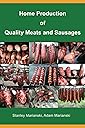
Home Production of Quality Meats and Sausages is a 665-page, expertly crafted manual designed for serious home hobbyists. It demystifies the complex science of curing, smoking, and preserving meats with 172 original recipes and clear, approachable explanations. This book empowers readers to master traditional and modern sausage-making techniques, customize recipes, and confidently produce high-quality meats, from fresh sausages to air-dried delicacies.
| Best Sellers Rank | #61,075 in Books ( See Top 100 in Books ) #55 in Meat Cooking #101 in Outdoor Cooking (Books) #119 in Canning & Preserving (Books) |
| Customer Reviews | 4.7 out of 5 stars 1,415 Reviews |
J**H
Best Useful and Informative Guide
'Home Production of Quality Meats and Sausages' focuses on the preparation of meats for preservation and on techniques for preserving different cuts through brining, curing, smoking and drying and even canning. This definitely is the book to buy if you want to safely make tasty hams, bacon, sausages of beef and/or pork, poultry or fish and air-dried beef or jerky. There is a useful chapter on barbecue techniqes that includes grilling and smoking and it describes and discusses various smoker, smokehouse or backyard smoker equipment and processes. It is not the aim of this book to guide meatcutters in breaking down carcasses or to provide cooks with information on roasting, stewing, frying and sauteeing cuts of meat, fish or poultry. I have been regularly smoking, curing and drying meats and making sausages for about fifteen years. I divide the books I have used into types along a continuum of 'how to do it' step-by-step recipes through 'how-to-and-why' through 'food science and technical guidebooks.' Recipe-based books that described how to make a specific weight of some product as it was done in a restaurant are at one end of my continuum. Perhaps the best popular example is 'Charcuterie--The Craft of Salting, Smoking and Curing' by Michael Ruhlman and Brian Polcyn. In the middle might be the comprehesive work by Rytek Kutas 'Great Sausages and Meat Curing Recipes' (available from Amazon.) His recipes were aimed more at the person wanting to start their own commercial sausage kitchen. Kutas' recipes were as frank as a business needed to be about the practical uses of additives and extenders and commercially available spice blends. I have long wished to find a book that explained the principles of charcuterie and went on to provide more traditional farm-based, 'slow food' recipes for a range of interesting meat products. In 2010, Stanley and Adam Marianski introduced 'Home Production of Meats and Sausages' and this was the book I have been looking for. This book can be used two ways: Using the well-designed Table of Contents, skip ahead to Chapter 11 and later chapters to find self-contained recipes and techniques for making individual products at home...or, begin at the beginning with the very understandable chapters on 'Principles of Meat Science', 'Curing and Nitrates', 'Comminution Process' (dicing, grinding and emulsifying), 'Mixing,(Casings)and Stuffing', 'Smoking Process(es) and Equipment', 'Cooking' and 'Cooling, Freezing and Thawing.' One of the great strengths of this book is its chapters covering the whole process of making and preserving the products it presents. This is a great 'teaching' book of principles and techniques for making quality meat products. The reader comes away with the 'why' and the 'how' of every step of the process. Recipes produce 'family-size' batches and quantities of ingredients are given in both metric and US terms. As examples of recipe size, the one for Bratwurst calls for 1 1/2 pounds of pork and 2/3 pound of veal; the 'city ham' recipe produces 11-17 pounds of bone-in ham. By referring to the chapter on 'Creating Your Own Recipes', one can find weight or volumetric measures from which to develop recipes on a per-pound of meat basis. This chapter is especially useful for adjusting the amount of spicing, salt or sugar to any quantity of mean one might have to work with. There is a chapter on the principles of making your own recipes for meat products, should you want to vary the 'classic' combinations presented in the ample collection of set recipes. There are chapters of recipes for 'Fresh Sausages', 'Cooked Sausages', 'Emulsified Sausages' (for example,'hot dogs'), 'Boiled Sausages', 'Head Cheese and Meat Jellies', 'Blood Sausages', 'Fermented Sausages' 'Hams, Shoulders and Formed Meat Products', 'Bacon, Loins, Butts'--including Corned Beef and Pastrami(!), 'Air Dried Meats', 'Poultry' and 'Fish'. One Chapter addresses 'Special Sausages'--low-salt; low-fat and Kosher Sausage recipes are presented here. One Chapter deals with 'Wild Game' sausage and preservation. In this 665 page soft cover volume we have a comprehensive account of most of what the home sausage, ham and dried meat producer would like to know and needs to know. While the writing can be repetitive at times, the book is filled with enthusiasm, interest and even with contemporary Polish traditions. Buy this book for using and for keeping!
S**Y
Great info!
Great book!
C**Y
My second favorite book after Ruhlman's Ratio - The science behind cured meats freeing you from the constriants of recipes
OK...I admit it...I hate to be bound by recipes. I am an engineer at heart and design and development of new things is a part of my nature. Like many things (shotgun shell reloading comes to mind) , cured meats like sausage, bacon, etc tend to be a domain where one is admonished to follow the recipe to the letter or risk certain death. That just rubs me the wrong way at a fundamental level. Somebody had to have the knowledge to safely develop those recipes and there has to be a science of what makes a recipe safe and what ingredient proportions make for a good, but not overpowering flavor. "They" know how, but aren't sharing.... locking us into repetitively following their bible of recipes with no chance of creativity or change. Enter Stanley Marianski who like a renegade magician has decided to pull back the curtain on meat and sausage science and let us in on information only the priesthood of sausage were privy to before. Now we have the fundamental information to make "parametric" recipes where we can adjust the ingredients to our heart's content as long as we follow some fundamental rules of proportions. With my spreadsheet and my scale I can now explore the boundaries of cured meat science. Recipe following zombie beware. If you are looking for just another recipe book in the endless search for that one "right" recipe for you, keep looking. This is a technical read, but far more rewarding if you just slog through it. Get this and Micheal Ruhlman's "Ratio" and you can toss about half your cookboks.
P**E
Great for Understanding the Theory Behind Home Meat Production
This is more of an academic or teaching-style book than just a recipe book. It explains the theory behind curing, salting, fermentation, equipment, and general home meat production. I like that it helps you understand what you are doing and why, instead of just following steps blindly. There are also recipes included so you can practice the theory, which makes it more useful. The downside is the paperback format. The book is thick and not very practical to use while working in the kitchen. A spiral-bound version or Kindle version would probably be easier. Also, the paperback has black-and-white pictures, which may feel a little boring or disappointing for some people. Overall, I think this is a must-have if you are serious about home production and want to actually understand the process, not just copy recipes.
C**E
Great beginners guide to Meat Curing!
I had a different sausage making book in my cart, and at the last minute I chose this one instead because it had so many more reviews than the other one. This is a great book. Even though it is about "home production" of sausages, the authors have kept in mind USDA regulations the entire time, and come from the point of view of meat science and food safety. They want the reader to understand food safety so they consistently make products of high quality. The meat science sections are easy to read, and broken down into simple terms. The book is a tad repetitive, and with some editing it could be a slimmer volume. They give guidelines to making all sorts of different sausages, but also hams and other cured meat products. Also they breakdown the process so you can make a good sausage with whatever spices you feel like, and don't need to follow a specific recipe. But then they also provide a lot of recipes if you want somewhere to start. I am going to be trying the wild game sausages first, as I have a lot of goose in the freezer. Follow up: I used 50 percent goose, 50 percent pork butt, and these recipes came out fabulous. This book really gives formulas to good sausages, rather than recipes. Thus far have tried: Mexican Chorizo, Italian Sausage, Jadgwurst (German Hunter's Sausage), and Polish Hot Smoked Sausage, which was my favorite. All of the seasonings are spot-on. Check out those little buddies I made-Polish Hot Smoked Sausage- the white is frost from the freezer. Edit: Just tried to follow the instructions on how to wet brine a ham, and the recipe calls for twice the amount of salt, Cure # 1 and brine time (45 days) than the recipe on the back of a LEM cure package. I tried to do some more research online, learned there is very little amount of consistency in recipes for curing hams, but everything was close to the LEM cure than the book. Very confused now.
C**E
great book
This book sat in my saved for later list for a long time. I've been a somewhat accomplished hobbyist sausage maker for a few years now and thought that this book was a bit of a luxury as I had several recipes down pat and am pretty much able to satisfy my taste with quality product. I was given an amazon card from my mother in law for my birthday and finally got off the fence and ordered the book. Man oh man I wish I'd gone ahead and ordered this a while back. It is simply excellent. I had debated between this and his fermented sausage book and I'm glad I got this huge "how to manual" of smoked meats, because, in addition to an 80 page chapter on fermented sausages, 150+ recipes, It has info on everything from hams to pastrami to bresola. I've flipped though the Rulman book and this is a text book in comparison to a coffee table book or cook book. This is one of a kind and well worth the price. When I say text book, I mean that complimentary. In addition to the recipes and formulations, Marianski supplys the reader with the theory behind it all. It is very much geared toward creating your own product and recipes and being secure knowing that you are serving your friends and family a safe and quality product. No color pictures, etc. If you just want to learn how to make some bratwurst, this is probably overkill, but if you want to learn how to smoke meats this is it.
T**Y
DIY must have book.
There is a wealth of information in this book. I knick-named it the 'Meat Bible" because it has easy to follow recipes, very vital procedures to help you get a professional end product, and lists all the safety precautions and steps to keep both you, and your family safe. I look forward to buying his/their other book 1001 Sausage Recipes. A must have book for the DIY home sausage maker.
J**R
Simple. Complete.
As I jump into sausage making, this book makes it simple and complete. Watching YouTube videos and reading blogs about how to make this or how to make that kind of sausage doesn’t really explain it. There are so many variances between the same content creator making the same things. This book explains the bare minimum on what is REQUIRED, not what someone heard from another person. It is a very easy read, broken down to different aspects of the process. It makes it very easy to follow and if you need to refer back to a step then just go to that chapter. I highly recommend this book and there’s a reason why people refer to this as the sausage making bible.
C**E
Excelente
O melhor livro que li até o momento sobre charcutaria. Leitura simples, livro muito bem editado e organizado. Parabéns aos escritores, e obrigado, pelo conteúdo. Esse fica na cabeceira da cama, deveria ter em idioma brasileiro. Mas, conseguir traduzir todo o livro..., demorou más, valeu cada palavra...
C**4
Sausages and Jerky
If you only get one book on sausage making then get this one. I primarily purchased this for fresh sausage recipes, I've made a few and all have been a success. Heaps of detail on preparation and fermenting/drying meats also. All recipes are based on 1kg of meat so they are very scalable and ingredients are simple and widely available and most recipes only have a handful of ingredients which is a plus. As a bonus there are some great jerky recipes in here as well. If you have a question about sausage making the answer is more than likely in the pages of this book. Just watch your salt dosage, maybe start at half the given amount for the fresh sausages and see how you go. Highly recommended!!
P**.
Muy buen libro, aunque pudiera ser muy técnico para algunos.
Es un manual bastante técnico que incluye una gran cantidad de recetas, desde fáciles a complejas, mucho que aprender.
A**V
Great for home/hobby producers
Great book, so many good info and advices.
K**.
Great manual for meat processing
In depth manual for preparation and making all kinds of meat products made at home. Each topic has a dedicated chapter. Highly recommended
Trustpilot
1 month ago
1 month ago