
Desertcart purchases this item on your behalf and handles shipping, customs, and support to Tunisia.
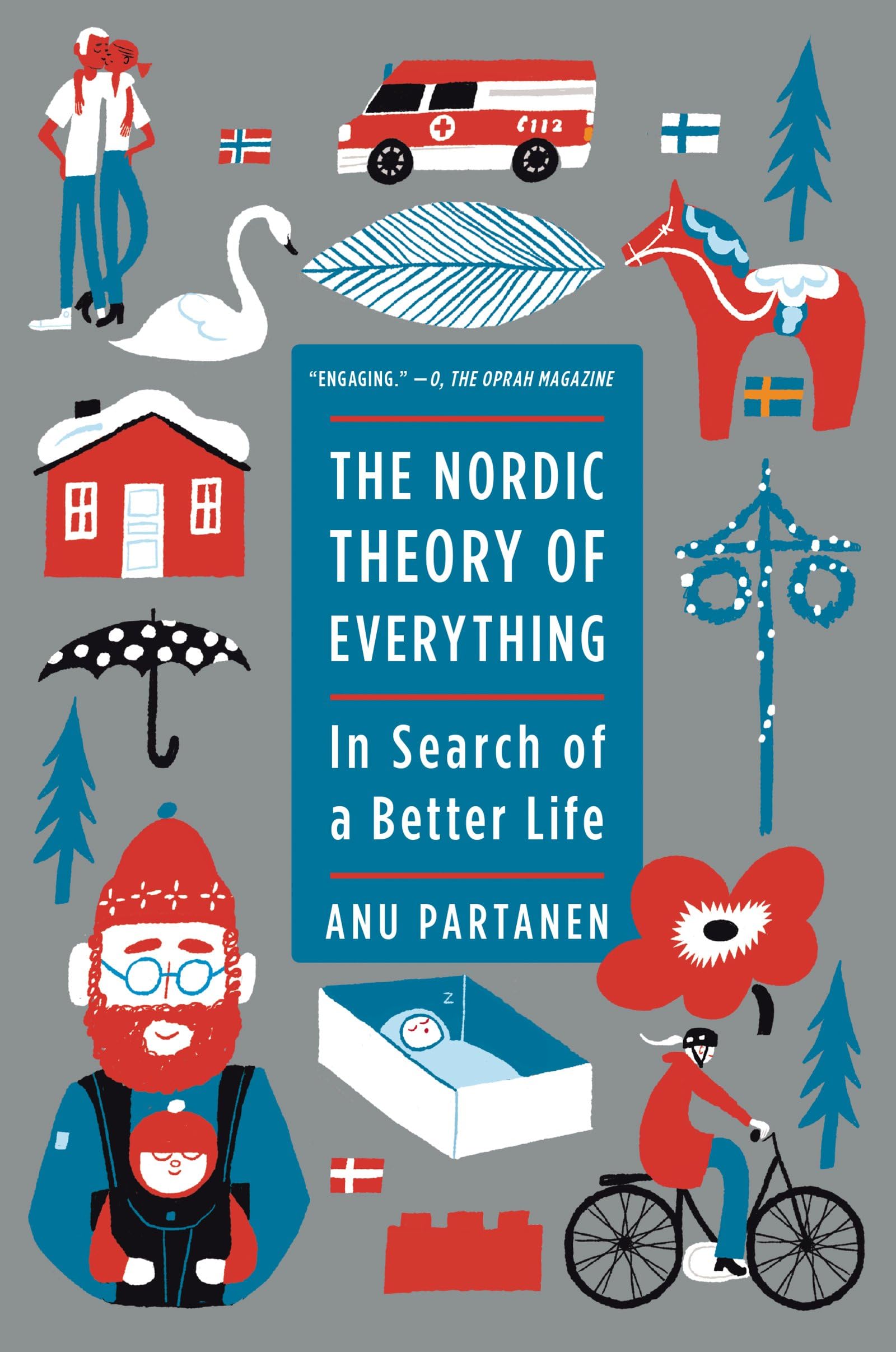
โIn her careful, evenhanded series of thoughtful essays, Partanen, who just became an American citizen, parses the recipe for Nordic success that even the self-congratulatory โexceptionalโ American may want to ponder and adapt. . . . An earnest, well-written work worth heeding, especially in our current toxic political climate.โ โ Kirkus Reviews A Finnish journalist, now a naturalized American citizen, asks Americans to draw on elements of the Nordic way of life to nurture a fairer, happier, more secure, and less stressful society for themselves and their children. Moving to America in 2008, Finnish journalist Anu Partanen quickly went from confident, successful professional to wary, self-doubting mess. She found that navigating the basics of everyday lifeโfrom buying a cell phone and filing taxes to education and childcareโwas much more complicated and stressful than anything she encountered in her homeland. At first, she attributed her crippling anxiety to the difficulty of adapting to a freewheeling new culture. But as she got to know Americans better, she discovered they shared her deep apprehension. To understand why life is so different in the U.S. and Finland, Partanen began to look closely at both. In The Nordic Theory of Everything , Partanen compares and contrasts life in the United States with life in the Nordic region, focusing on four key relationshipsโparents and children, men and women, employees and employers, and government and citizens. She debunks criticism that Nordic countries are socialist โnanny states,โ revealing instead that it is Americans who are far more enmeshed in unhealthy dependencies than we realize. As Partanen explains step by step, the Nordic approach allows citizens to enjoy more individual freedom and independence than we do. Partanen wants to open Americansโ eyes to how much better things can beโto show her beloved new country what it can learn from her homeland to reinvigorate and fulfill the promise of the American dreamโto provide the opportunity to live a healthy, safe, economically secure, upwardly mobile life for everyone. Offering insights, advice, and solutions, The Nordic Theory of Everything makes a convincing argument that we can rebuild our society, rekindle our optimism, and restore true freedom to our relationships and lives. Review: HOPEFUL, POSITIVE POSSIBILITIES - โThe core idea is that authentic love and friendship are possible only between individuals who are independent and equal.โ (p.50) Maybe Itโs personal. After all, my parents were immigrants from Sweden, immersed in a Swedish-American culture that constituted the theme of my own growth experience in the twentieth century. Or maybe itโs just that itโs so sensible. Maybe it was my parentโs encouragement of positive goals in life and utter discouragement of humiliating child training techniques. Maybe it was the belief my neighborhood encouraged in taking responsibility for oneโs own life even while granting the same right to others. Maybe it was believing in a United States where that was possible for everyone. Maybe itโs what I know as a psychologist that the core idea of authentic love as described in the authorโs opening is indeed the way of personal and cultural growth. And maybe itโs what I learned in my mature years that the freedoms I accepted were not so equally available to everyone. Maybe itโs the dream I still hold for a United States where one day the ideal will be reality. Whatever the reason, that opening theme clutched my heart with longing and joyful sadness. Maybe itโs that I believe loving someone or something is open to accepting their imperfections and believing the good can be strengthened even as the bad is corrected. Maybe itโs that genuine love of my country includes the belief that, like an effective parent, I can help correct it for the good. O r maybe itโs just that I have often thought how freeing it would be not to worry about being available to love and care for oneโs child while at the same time being able to pay for sufficient food and housing, or the best possible education for encouraging individual growth and responsibility from toddlerhood through adulthood, or paying for the maintenance of good health, or not losing oneโs home because of a catastrophic accident or illness, or being sure of a good healthy life in old age. How it would make sense to me to pay sixty percent of my income in taxes if all needs were covered so forty percent would be available to me to develop my own creative โ or just plain comfort โ goals. How very practical. How free of unnecessary stress. How very much what the Nordic way has to offer, based on the idea that โauthentic love and friendship are possible only between individuals who are independent and equal.โ (p.50) As for the authorโs personal message and style, it is so clear that she has a fondness both for her native Finland and for her adopted United States. And I love the way chapter by chapter she takes down the objections to the Nordic way. I like the final conclusion: โIndividualism is one of the great foundations of Western culture. But unless society secures personal independence and basic security for the individual, it can lead to disaffection, anxiety, and chaos โฆ While some of the praise heaped on the Nordic nations in the international media and various studies has surely been exaggerated and overpositiveโno place is flawless, as Nordic people themselves will be the first to point outโthe Nordic countries have undeniably created a model for what a high quality of life and a healthy society can look like in the twenty-first century.โ (pp.328-329) Review: Inspired many questions and more research - I learned a great deal about life in Finland from this book. I agree with reviewers who say they would love for our politicians here in the US to read it. Our country is terribly flawed, broken, corrupt, and life here is hard although we are constantly told it is the greatest nation on Earth thanks to our โfreedomโ, which is not real. With that said, simply based on the number of illegal immigrants in this nation, how could we emulate this government structure? There must be people there who do not contribute. What percentage of the population in Finland comprises those who do not contribute? How does that population receive benefits if theyโre undocumented? The author offers a lot of opinions and, I felt, was quite critical of the United States, but what I would like to know is specifically where we stand currently financially with what it costs us as a nation to care for illegal immigrants educationally or medically, for example. Perhaps adopting this structure and eradicating our high insurance or education costs personally would mean we could all chip in for our taxes and take care of everyone medically, in retirement, etc. and not be in such terrible debt? In satisfying the curiosity that was sparked from reading this, I Googled Finlandโs immigration policies. It turns out that this is a growing issue there too and apparently some years ago an offer was made to help illegal immigrants make their way back home if they left voluntarily. That was followed by a comment that here in the US there is a pro-illegal immigrant sector of our population which thinks that is unacceptable. Problem number one is that the people of the US can agree on very little. How could we agree on such a fundamental change to everything we know, even if it is corrupt? Back to immigration, Finland has apparently welcomed some refugees, but from the articles I discovered they are already realizing that not all cultures integrate well. One article I found on BBC.com indicates there is much anti-refugee sentiment and the mostly Lutheran country is highly polarized on the topic. With all the pro-free education the author raves about, how are they educating children who do not speak the languages in the Finnish utopia? Is anyone angry their childrenโs learning is slowed as they sit in classes with children who need more attention because they donโt speak the languages or is it all about the love? I am curious how this will play out over time and whether there will still be an overarching feeling of love for all people when the dreaded resentment Anu discusses arises for those who do not wish to assimilate or contribute. I am curious how this is being handled, and how it will be handled as the immigrant populations, in some cases with such different customs, expectations, and beliefs, grow in the Nordic countries. Quick side note, the author mentions that the US government is able to manage some things well and mentions social security as a success. The book seems well researched, although I always keep in mind data can be interpreted differently, but last I heard Social security is a disaster. So I take all of this with great interest, but wanting more facts. With all this said I must admit this conservative reader who eschews big government is intrigued by how the Nordic countries live and by the concept of love and desire for the good of all. Could smarter government here in the US enhance quality of life for everyone? We have an incredibly long way to go to get there, but this book opened my eyes to what could be.
| Best Sellers Rank | #48,919 in Books ( See Top 100 in Books ) #6 in Non-US Legal Systems (Books) #10 in Comparative Politics #20 in European Politics Books |
| Customer Reviews | 4.5 out of 5 stars 1,686 Reviews |
M**O
HOPEFUL, POSITIVE POSSIBILITIES
โThe core idea is that authentic love and friendship are possible only between individuals who are independent and equal.โ (p.50) Maybe Itโs personal. After all, my parents were immigrants from Sweden, immersed in a Swedish-American culture that constituted the theme of my own growth experience in the twentieth century. Or maybe itโs just that itโs so sensible. Maybe it was my parentโs encouragement of positive goals in life and utter discouragement of humiliating child training techniques. Maybe it was the belief my neighborhood encouraged in taking responsibility for oneโs own life even while granting the same right to others. Maybe it was believing in a United States where that was possible for everyone. Maybe itโs what I know as a psychologist that the core idea of authentic love as described in the authorโs opening is indeed the way of personal and cultural growth. And maybe itโs what I learned in my mature years that the freedoms I accepted were not so equally available to everyone. Maybe itโs the dream I still hold for a United States where one day the ideal will be reality. Whatever the reason, that opening theme clutched my heart with longing and joyful sadness. Maybe itโs that I believe loving someone or something is open to accepting their imperfections and believing the good can be strengthened even as the bad is corrected. Maybe itโs that genuine love of my country includes the belief that, like an effective parent, I can help correct it for the good. O r maybe itโs just that I have often thought how freeing it would be not to worry about being available to love and care for oneโs child while at the same time being able to pay for sufficient food and housing, or the best possible education for encouraging individual growth and responsibility from toddlerhood through adulthood, or paying for the maintenance of good health, or not losing oneโs home because of a catastrophic accident or illness, or being sure of a good healthy life in old age. How it would make sense to me to pay sixty percent of my income in taxes if all needs were covered so forty percent would be available to me to develop my own creative โ or just plain comfort โ goals. How very practical. How free of unnecessary stress. How very much what the Nordic way has to offer, based on the idea that โauthentic love and friendship are possible only between individuals who are independent and equal.โ (p.50) As for the authorโs personal message and style, it is so clear that she has a fondness both for her native Finland and for her adopted United States. And I love the way chapter by chapter she takes down the objections to the Nordic way. I like the final conclusion: โIndividualism is one of the great foundations of Western culture. But unless society secures personal independence and basic security for the individual, it can lead to disaffection, anxiety, and chaos โฆ While some of the praise heaped on the Nordic nations in the international media and various studies has surely been exaggerated and overpositiveโno place is flawless, as Nordic people themselves will be the first to point outโthe Nordic countries have undeniably created a model for what a high quality of life and a healthy society can look like in the twenty-first century.โ (pp.328-329)
L**Y
Inspired many questions and more research
I learned a great deal about life in Finland from this book. I agree with reviewers who say they would love for our politicians here in the US to read it. Our country is terribly flawed, broken, corrupt, and life here is hard although we are constantly told it is the greatest nation on Earth thanks to our โfreedomโ, which is not real. With that said, simply based on the number of illegal immigrants in this nation, how could we emulate this government structure? There must be people there who do not contribute. What percentage of the population in Finland comprises those who do not contribute? How does that population receive benefits if theyโre undocumented? The author offers a lot of opinions and, I felt, was quite critical of the United States, but what I would like to know is specifically where we stand currently financially with what it costs us as a nation to care for illegal immigrants educationally or medically, for example. Perhaps adopting this structure and eradicating our high insurance or education costs personally would mean we could all chip in for our taxes and take care of everyone medically, in retirement, etc. and not be in such terrible debt? In satisfying the curiosity that was sparked from reading this, I Googled Finlandโs immigration policies. It turns out that this is a growing issue there too and apparently some years ago an offer was made to help illegal immigrants make their way back home if they left voluntarily. That was followed by a comment that here in the US there is a pro-illegal immigrant sector of our population which thinks that is unacceptable. Problem number one is that the people of the US can agree on very little. How could we agree on such a fundamental change to everything we know, even if it is corrupt? Back to immigration, Finland has apparently welcomed some refugees, but from the articles I discovered they are already realizing that not all cultures integrate well. One article I found on BBC.com indicates there is much anti-refugee sentiment and the mostly Lutheran country is highly polarized on the topic. With all the pro-free education the author raves about, how are they educating children who do not speak the languages in the Finnish utopia? Is anyone angry their childrenโs learning is slowed as they sit in classes with children who need more attention because they donโt speak the languages or is it all about the love? I am curious how this will play out over time and whether there will still be an overarching feeling of love for all people when the dreaded resentment Anu discusses arises for those who do not wish to assimilate or contribute. I am curious how this is being handled, and how it will be handled as the immigrant populations, in some cases with such different customs, expectations, and beliefs, grow in the Nordic countries. Quick side note, the author mentions that the US government is able to manage some things well and mentions social security as a success. The book seems well researched, although I always keep in mind data can be interpreted differently, but last I heard Social security is a disaster. So I take all of this with great interest, but wanting more facts. With all this said I must admit this conservative reader who eschews big government is intrigued by how the Nordic countries live and by the concept of love and desire for the good of all. Could smarter government here in the US enhance quality of life for everyone? We have an incredibly long way to go to get there, but this book opened my eyes to what could be.
C**E
An Engaging and Enlightening Look at the Nordic Mindset
Absolutely brilliant book! Partanen mingles well-researched statistics with personal anecdotes and journalistic storytelling to craft an engaging and convincing argument for the Nordic mindset. Her cautious but persuasive arguments aren't aimed at demeaning the U.S., but rather at showing us that we have room to grow. She acknowledges that the U.S. did much to move the world forward past monarchies and into democratic societies. However, what many of us fail to see is that the U.S. has stagnated and other nations have moved on ahead of us. We think that we're the land of opportunity and freedom, but unfortunately we have less of each of these than we realize. I particularly loved understanding the Nordic mindset behind their policies: their view of love and what enables people and societies to thrive. It's fascinating. Every U.S. citizen should read this book!
D**A
A "Must-Read" Book
THE NORDIC THEORY OF EVERYTHING: In Search of a Better Life by Anu Partanen . Reviewed by C J Singh (Berkeley, California) . A "Must-Read" Book . Noticing the high praise by Robert Reich, Chancellorโs Professor of Public Policy at UC Berkeley, I purchased a copy last week. Yesterday, at the Books Inc Store, Berkeley, I attended the authorโs lively presentation. She answered audience questions with precise knowledge, concision, and grace. โTHE NORDIC THEORY OF EVERYTHING: In Search of a Better Life," documented with more than 400 research citations and written in highly engaging style is an excellent example of lucid critical analysis. The widely held stereotype in the US of Nordic countries is that they are โnanny statesโ that discourage individuality and impose high taxes. In fact, the Nordic countries foster enhanced adult individuality by minimizing dependencies on family members and employers. And their Nordic countries' taxes are comparable to the US taxes.Just how they accomplish is convincingly detailed in the book. The subtitle โIn Search of a Better Lifeโ accurately describes the authorโs view-point and tone. An immigrant to the US who arrived from Finland eight years ago, now in love with the country of her adoption, she is also proud of her heritage. Rightly so, the Nordic countries have been consistently top-ranked as the happiest. The US is not even in the top ten. Partanen offers suggestions based on the โThe Nordic Theory of Loveโ (Chapter 2): for better โFamily Values for Real" (Chapter 3); for children โAttaining Educational Successโ (Chapter 4); for better health care โHow Universal Health Care Could Set You Freeโ (Chapter 5). The titles and subtitles of the next four chapters are also equally apt: โAsk What Your Country Can Do for Youโ; โBringing Back the American Dreamโ; โBusiness as Unusual: How to Run a Company in the Twenty-First Centuryโ; โThe Pursuit of Happiness: Itโs Time to Rethink Success.โ Recently, I posted an update of my review of the earlier edition of the most widely adopted college textbook in the US: Diane Hacker and Nancy Sumnerโs โA Writerโs Reference: Eighth Edition.โ Anu Partenenโs โTHE NORDIC THEORY OF EVERYTHING: In Search of a Better Lifeโ merits just as wide adoption for all college students.Not only for college students, I whole-heartedly recommend this book to all readers. (May I add that after having posted reviews of more than 120 books on amazon.com, this is the first that I recommend as a "must-read.") -- C J Singh -------------
S**R
Nordics are happier than US citizens
Great source for information on how Nordic countries take better care of their population than the US does. Their systems should be studied.
R**A
Genuine but naive
Nicely written account of a deeply transformative personal journey. I am American and lived for 14 years in Sweden (I'm back in the US again, so I completed the circle), and I recognize many of the author's personal observations. There is a gulf between America and the Nordic countries in terms of social contracts, solidarity, and rational policy. But the author is naive: she thinks she has come to a different yet free village, but has in fact moved from a village to a plantation. Until Americans realize and fight this, there will always be such a gulf.
B**E
Worth reading
Interesting Nordic living theory
J**R
The Nordic Model: The True North Star of Individual Freedom?
This extraordinarily interesting book just published was brought to my attention by a Finnish friend who has lived and worked in the United States for many years, becoming a U.S. citizen in the process. As a retired American Foreign Service Officer for 35 years who in the 1970s and 1980s served twice in the U.S. Embassy in Finland and dealt with Nordic issues in the Department of State in Washington, I had come to admire greatly the Nordic social/political/economic model that to a greater or lesser degree has been followed for several decades by all five of the Nordic countries: Sweden, Finland, Norway Denmark and Iceland. This model has been studied and characterized by social scientists, economists, historians and other academics from many different perspectives and points of view. However, I think the author of this book has performed a unique and extraordinary service by being able to convey the essence and "feel" of what is going on in Nordic societies that those of us who were fortunate to have lived there for some years came to recognize and admire but which is so hard to articulate to an often self-satisfied and self-absorbed American public skeptical of and ill-informed about how foreign countries govern themselves. Perhaps her most important contribution has been to dare to question why most Americans consider that social investment in education, health care and measures to assure decent income opportunities, adequate vacation and leave time and the general "well-being" for all of its citizens should be condemned as "socialism" and as a threat to individual freedom, self-determination and as a disincentive to individual initiative. Indeed she goes on to argue that those very programs encouraging the well-being of all Nordic citizens in fact enhance the freedom of citizens to pursue their individual talents and dreams free from the burden of unequal education, health care and opportunity. This position stands on its head the traditional American sense of freedom drawn from our pioneer days of rugged frontier individualism. Obviously, these concepts deserve and receive in the book far more scrutiny, and the book can appear at times quite strident in its criticisms mostly on the U.S. side of the equation. It is notable, however, how the Nordic countries as a group (and often Finland in particular) rank at or near the top of the entire developed world in so many important disciplines in contrast to a lagging United States. It is a fascinating book which should lead us to compare where we in the United States are as a nation compared to the Nordic countries, which seems to serve as a model toward which other nations appear be trending. By the way I am the author of a book "On the Finland Watch: an American Diplomat in Finland During the Cold War," published in English in 2000 and 2001. The book analyzes the triangular U.S. relations with Finland and the Soviet Union during the Cold War period.
M**A
Comparaison US-FI
L'auteure, journaliste finlandaise รฉmigrรฉ aux US, dresse une comparaison entre les systรจmes amรฉricain et nordique en matiรจre d'รฉducation, santรฉ, vie pro, etc. Elle s'attarde peut รชtre un peu trop sur l'รฉducation et prend surtout le cas de la Finlande. Ce dernier n'รฉtant pas un pays scandinave, les diffรฉrences sont parfois estompรฉes volontairement. Se lit facilement et prรชte ร sourire rรฉguliรจrement.
E**E
easy read and really informative
Really well researched and well written, eye opening. I'm European and although I had some understanding of the american social system, after reading this book I fully appreciated the lunacy of some of the policies and systems over there, and got an even better understanding of the way the Nordic countries consider their children and their people and how the whole system is set to be fair to all. Really enjoyable due to the examples and nice narrating style.
S**R
eye opener for a simple yet progressive approach to education, lifestyle, eating habits and health.
Firstly 5 stars for quick delivery. Back in 2020, 3 months delivery time was estimated. Got my hands on it in Feb and a day's delivery was wonderful. About the book, eye opener for a simple yet progressive approach to education, lifestyle, eating habits and health. Gives us an idea of what we can tweak in our life to work towards a stressfree life. Does emphasize on State's contribution a lot. But people bring the change. Although too much comparison with US isn't fair. US still is miles better than rest of the world if not versus the Nordic countries. Must read .
R**M
ABSOLUTELY EXCELLENT BOOK - SHOULD BE READ BY ALL CANADIANS AND AMERICANS
Absolutely EXCELLENT! The same important lessons for the U.S. also apply to Canada - with certain exceptions, above all medical care. The system of medical care in Canada is FAR better than in the U.S., for reasons that are common knowledge. In Canada, the system for education and the funding for it is also much better than in the U.S., at all levels, and as a result the costs of getting a good education in Canada are far less of a concern than they are in the U.S. . I note also that the book has very good reviews from Americans - in spite of the U.S. not being shown in a favourable light in some respects, notably medical care and the costs of education. Canadians should also pay careful attention to this very important book - because of the lessons it has for them too. In my view the book in also very "well balanced" because its Finnish author Anu Partanen goes to great trouble to describe the good points and the bad points about life in both the U.S. and her native country which is Finland. It is also very well documented, as evidenced by the long list of references cited.
J**H
A must for anyone interested in politics.
The author totally nails a sweet spot between relevance and detail explaining the public policies that make a modern society great. I had read two of the books she mentions and found that she conveys their key ideas better than the originals! Very highly recommended!
Trustpilot
2 weeks ago
2 days ago