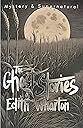
Ghost Stories of Edith Wharton (Tales of Mystery & the Supernatural)
Product ID: 46576687
Desertcart purchases this item on your behalf and handles shipping, customs, and support to Tunisia.
Ghost Stories of Edith Wharton by Edith Wharton. Traumatised by ghost stories in her youth, Pulitzer Prize winning author Edith Wharton (1862 -1937) channelled her fear and obsession into creating a series of spine-tingling tales filled with spirits beyond the grave and other supernatural phenomena. While claiming not to believe in ghosts, paradoxically she did confess that she was frightened of them. Wharton imbues this potent irrational and imaginative fear into her ghostly fiction to great effect. In this unique collection of finely wrought tales Wharton demonstrates her mastery of the ghost story genre. Amongst the many supernatural treats within these pages you will encounter a married farmer bewitched by a dead girl; a ghostly bell which saves a woman's reputation; the weird spectral eyes which terrorise the midnight hours of an elderly aesthete; the haunted man who receives letters from his dead wife; and the frightening power of a doppelganger which foreshadows a terrible tragedy. Compelling, rich and strange, the ghost stories of Edith Wharton, like vintage wine, have matured and grown more potent with the passing years. Review: The Ghost Stories of Edith Wharton - In the preface to the collection, Wharton, like many early 20th century practitioners of the form, bemoans an assumed downfall of the ghost story, collapse of the fantastic imagination, etc., in terms that will probably seem overblown to modern readers aware that the ghost story has not, in fact, died out. But she also offers what I think are sage words on the aesthetics of the ghost story: "The 'moral issue' question must not be allowed to enter into the estimating of a ghost story. It must depend for its effect solely on what one might call its thermometrical quality; if it sends a cold shiver down one's spine, it has done its job and done it well. But there is no fixed rule as to the means of producing this shiver, and many a tale that makes others turn cold leaves me at my normal temperature. The doctor who said there were no diseases but only patients would probably agree that there are no ghosts, but only tellers of ghost stories, since what provides a shudder for one leaves another peacefully tepid. Therefore one ought, I am persuaded, simply to tell one's ghostly adventures in the most unadorned language, and 'leave the rest to Nature.'" That Wharton denies that the "moral issue" is not relevant to the estimation of a ghost story should not lead the reader to conclude that her stories are only light-hearted divertissements. They are, in point of fact, almost always driven by a philosophical concern or a metaphorical connection to actual daily life. "Mr. Jones," for example, is simultaneously a satisfying antiquarian ghost story, with the discovery of a family secret among ancient papers; an ironic reflection on the delicate balance of power between servants and masters in the early 20th century; and a genuinely dark piece of fiction with a mostly absent yet powerful and malevolent ghost. One of Wharton's virtues is her ability to take the plot devices used in stock ghost stories and, by using her gifts for atmospheric descriptions of place and succinct evocations of human psychology, breathe new life into them so that they become terrifying all over again. "Afterward," perhaps the single finest of her ghost stories, takes what could be a trite concept of ghostly revenge and turns it into a disturbing meditation on the nature of guilt and complicity and the sheer mysteriousness of the universe. "The Triumph of Night" uses its ghostly forewarning of disaster to emphasize its narrator's isolation and fear. And "Pomegranate Seed" begins with a ghost so narrowly metaphorical that it could seem like a joke, and treats its psychological effects so seriously that what started in humor ends in genuine despair. There are a couple stories here that are non-supernatural. I won't say too much about them because the absence of ghosts sometimes comes as a surprise, but I will note that both are satisfying in subtly different ways from the stories with "genuine" ghosts; one is almost bitterly satirical, while another is quietly melancholy and rather touching. In narrative terms Edith Wharton's ghost stories, often concerned with the aristocracy, with old, large houses, and with shadowy spectres who have unfinished business, may sound too traditional for the knowing sensibilities of the contemporary reader. But, like her friend Henry James, Wharton was interested in the psychological as well as the literal trappings of the ghost, and it's that interest that makes her ghost stories satisfying, relevant, and perhaps even unsettling to the reader of today. Surely the point being made in the following excellent paragraph is timeless: "No, she would never know what had become of him-- no one would ever know. But the house ~knew~; the library in which she spent her long lonely evenings knew. For it was here that the last scene had been enacted, here that the stranger had come, and spoken the word which had caused Boyne to rise and follow him. The floor she trod had felt his tread; the books on the shelves had seen his face; and there were moments when the intense consciousness of the old dusky walls seemed about to break out into some audible revelation of their secret. But the revelation never came, and she knew it would never come. Lyng was not one of the garrulous old houses that betray the secrets entrusted to them. Its very legend proved that it had always been the mute accomplice, the incorruptible custodian, of the mysteries it had surprised. And Mary Boyne, sitting face to face with its silence, felt the futility of seeking to break it by any human means." Review: Exceedingly Fine and Effective Ghost Stories - I read this anthology on the heels of reading a similar anthology of horror tales by Bram Stoker. I was surprised to find that Wharton easily surpasses Stoker as a writer of gothic tales. I had expected that the author of Dracula would be better at this genre, but no. Some of the stories, like Kerfol, compare well with the best gothic tales of Vernon Lee, using foreign aristocratic settings and historic elements quite deftly. Wharton is equally adroit with stories that use American settings, including those that are quite outside her own native culture of old New York. "The Trimph of Night", for example, is set in upstate NY and deals with what happens when a man shirks his responsibility for stopping an evil man. "Bewitched" is set somewhere in New England, possibly CT like Ethan Fromme because the town of Starkfield is mentioned a few times in the story, as it is also mentioned in Ethan Fromme. "Bewitched" leaves much to the imagination, and after one reading it is not yet clear to me what exactly happened in this one. I know I will have to re-read it soon. "The Eyes" appears to be set in New York, and I was surprised at how full of gay subtext the story was, as if the protagonist in the tale was perhaps inspired by a homosexual man that Wharton knew, but did not quite like...Henry James perhaps, though I am sure she knew others. This little anthology made me feel sorry that Wharton never gave us a gothic novel or two. The book shows that she certainly had an imagination for the disturbing and the macabre, although perhaps not enough interest in such subject matter as to compel the writing of a novel in that vein. Expect very fine, genteel ghost stories, but don't let my descriptors fool you. The tales are frightening and effective, and I believe them to be some of the best American gothic you can find.

| Best Sellers Rank | #265,885 in Books ( See Top 100 in Books ) #337 in Ghost Fiction #870 in Horror Collections & Anthologies (Books) #1,405 in Short Stories (Books) |
| Customer Reviews | 4.4 out of 5 stars 649 Reviews |
B**Y
The Ghost Stories of Edith Wharton
In the preface to the collection, Wharton, like many early 20th century practitioners of the form, bemoans an assumed downfall of the ghost story, collapse of the fantastic imagination, etc., in terms that will probably seem overblown to modern readers aware that the ghost story has not, in fact, died out. But she also offers what I think are sage words on the aesthetics of the ghost story: "The 'moral issue' question must not be allowed to enter into the estimating of a ghost story. It must depend for its effect solely on what one might call its thermometrical quality; if it sends a cold shiver down one's spine, it has done its job and done it well. But there is no fixed rule as to the means of producing this shiver, and many a tale that makes others turn cold leaves me at my normal temperature. The doctor who said there were no diseases but only patients would probably agree that there are no ghosts, but only tellers of ghost stories, since what provides a shudder for one leaves another peacefully tepid. Therefore one ought, I am persuaded, simply to tell one's ghostly adventures in the most unadorned language, and 'leave the rest to Nature.'" That Wharton denies that the "moral issue" is not relevant to the estimation of a ghost story should not lead the reader to conclude that her stories are only light-hearted divertissements. They are, in point of fact, almost always driven by a philosophical concern or a metaphorical connection to actual daily life. "Mr. Jones," for example, is simultaneously a satisfying antiquarian ghost story, with the discovery of a family secret among ancient papers; an ironic reflection on the delicate balance of power between servants and masters in the early 20th century; and a genuinely dark piece of fiction with a mostly absent yet powerful and malevolent ghost. One of Wharton's virtues is her ability to take the plot devices used in stock ghost stories and, by using her gifts for atmospheric descriptions of place and succinct evocations of human psychology, breathe new life into them so that they become terrifying all over again. "Afterward," perhaps the single finest of her ghost stories, takes what could be a trite concept of ghostly revenge and turns it into a disturbing meditation on the nature of guilt and complicity and the sheer mysteriousness of the universe. "The Triumph of Night" uses its ghostly forewarning of disaster to emphasize its narrator's isolation and fear. And "Pomegranate Seed" begins with a ghost so narrowly metaphorical that it could seem like a joke, and treats its psychological effects so seriously that what started in humor ends in genuine despair. There are a couple stories here that are non-supernatural. I won't say too much about them because the absence of ghosts sometimes comes as a surprise, but I will note that both are satisfying in subtly different ways from the stories with "genuine" ghosts; one is almost bitterly satirical, while another is quietly melancholy and rather touching. In narrative terms Edith Wharton's ghost stories, often concerned with the aristocracy, with old, large houses, and with shadowy spectres who have unfinished business, may sound too traditional for the knowing sensibilities of the contemporary reader. But, like her friend Henry James, Wharton was interested in the psychological as well as the literal trappings of the ghost, and it's that interest that makes her ghost stories satisfying, relevant, and perhaps even unsettling to the reader of today. Surely the point being made in the following excellent paragraph is timeless: "No, she would never know what had become of him-- no one would ever know. But the house ~knew~; the library in which she spent her long lonely evenings knew. For it was here that the last scene had been enacted, here that the stranger had come, and spoken the word which had caused Boyne to rise and follow him. The floor she trod had felt his tread; the books on the shelves had seen his face; and there were moments when the intense consciousness of the old dusky walls seemed about to break out into some audible revelation of their secret. But the revelation never came, and she knew it would never come. Lyng was not one of the garrulous old houses that betray the secrets entrusted to them. Its very legend proved that it had always been the mute accomplice, the incorruptible custodian, of the mysteries it had surprised. And Mary Boyne, sitting face to face with its silence, felt the futility of seeking to break it by any human means."
A**S
Exceedingly Fine and Effective Ghost Stories
I read this anthology on the heels of reading a similar anthology of horror tales by Bram Stoker. I was surprised to find that Wharton easily surpasses Stoker as a writer of gothic tales. I had expected that the author of Dracula would be better at this genre, but no. Some of the stories, like Kerfol, compare well with the best gothic tales of Vernon Lee, using foreign aristocratic settings and historic elements quite deftly. Wharton is equally adroit with stories that use American settings, including those that are quite outside her own native culture of old New York. "The Trimph of Night", for example, is set in upstate NY and deals with what happens when a man shirks his responsibility for stopping an evil man. "Bewitched" is set somewhere in New England, possibly CT like Ethan Fromme because the town of Starkfield is mentioned a few times in the story, as it is also mentioned in Ethan Fromme. "Bewitched" leaves much to the imagination, and after one reading it is not yet clear to me what exactly happened in this one. I know I will have to re-read it soon. "The Eyes" appears to be set in New York, and I was surprised at how full of gay subtext the story was, as if the protagonist in the tale was perhaps inspired by a homosexual man that Wharton knew, but did not quite like...Henry James perhaps, though I am sure she knew others. This little anthology made me feel sorry that Wharton never gave us a gothic novel or two. The book shows that she certainly had an imagination for the disturbing and the macabre, although perhaps not enough interest in such subject matter as to compel the writing of a novel in that vein. Expect very fine, genteel ghost stories, but don't let my descriptors fool you. The tales are frightening and effective, and I believe them to be some of the best American gothic you can find.
N**P
Edith always treats us to fine writing
"After all, I thought, these people don't know what real trouble is; but they've manufactured something so like it that it's about as bad as the genuine thing." This great compilation of 15 ghost stories by Edith Wharton are more paranormal and dread-ful than 'scary.' I read them mostly out of order across 1.5 years and found most memorable. Even with recurring tropes of a competing woman (echoing her own troubled marriage), the sense of a malevolent invisible presence, along with instances of vanished individuals, the tales delightfully vary thanks to her perceptiveness and creative range. At times the appropriate biting humor also reminds that what's often scariest are people's actions and self-justification. My favorites were Miss Mary Pask, The Fulness of Life, Mr Jones, and The Looking Glass, with Bewitched as the most unusual. But I was most pleasantly surprised by A Bottle of Perrier, set in a crumbling Middle Eastern Crusader castle in the desert, with some fitting tension of 'Westerners abroad.' As for Edith, she admitted that until she was 27-28, she couldn't sleep in a room with books of ghost stories and even had to burn several out of fear. To me this entirely contradicts her claim that she 'didn't believe in them.' Although at the time ghost stories were considered inferior types of writing, her unfailingly gifted pen makes me wish she'd written more of them. I also had no idea that her estate The Mount in Lenox, MA is rumored to be haunted.
M**S
Edith Wharton is an amazing author
I loved "The House of Mirth". That was how I was introduced to Edith Wharton's writings. I loved this book! I love ghost stories of all kinds. Glad that I stumbled upon this treasure.
A**S
Not Scary
I get that Edith Wharton is a great writer, and I loved her book (and movie) The Age of Innocence. But this book was disappointing. It wasn't creepy at all; just the barest hint of something supernatural. I couldn't even finish it.
G**E
Artistic suspence
These are wonderful stories that truly live up to the title, "Ghost Stories". They are very easy reading for the most part. They are very atmospheric and don't depend on gore to shock the reader. Most of them take place before the invention of electricity and the reader can imagine the darkly lit, gloomy environs. This book would make a great gift for ghost story lovers to add to their collection although some may find them too subtle. This collection of Wharton's is a classic.
C**H
Obscure interesting and somewhat spooky.
I like many of these classic ghostly tales. Traditional spooky stories. These are not like modern day ghost stories .
T**Y
Well written pieces that resonate deeply
Well written pieces that resonate deeply. Many of them start with realist settings. The supernatural is slowly introduced, through hard-to-explain events but also through the growing psychological disquiet of the main characters. Often it’s hard to pick the point where we left the natural world behind. The classic setting of an old manor house appears frequently, but is varied with other, diverse settings. Along the way there is sharp social commentary, particularly in relation to the place of women, but these stories are open-ended in terms of their impact, and will stir up different things in each reader. The lady maid’s bell – 8/10. A lady’s maid is caught in the murky interplay between two men, and the women in their lives. The Eyes - 5/10. Well written like all of these pieces but I found this rather light weight and predictable, though other readers seem to have got more from it. Afterward - 8/10. A subtle tale that combines social comment with some themes from supernatural writing. Kerfol - 7.5/10. A melancholy story with sharp observations of how values have changed over the centuries. The triumph of night – 6/10. I was riveted at first but disappointed by the end. Miss Mary Pask – 7.5/10. The different ways that you can become a ghost. Bewitched - 8/10. Perhaps the most sinister and bitter piece in the collection. Mr Jones – 6/10. Didn’t grab me as much as most of the others. It felt to me like she was writing a pot boiler. The pomegranate seed - 10/10. A perfectly composed story. The setting is early last century, a wealthy household in the USA. The happiness of a marriage is eroded over the years by the intermittent appearance of letters left for the husband,. The writing on the envelope is in a strong hand but is so pale as to be almost illegible. After each one he becomes withdrawn and this gradually eats away at his wife, yet she is unwilling to open the letters herself, and he is evasive about them. The story takes up the themes of marital distance, male barriers, female rivalry. The title seems to refer to the myth of Persephone in which pomegranates are the fruit of the dead, and eating them condemns you to stay in the otherworld. The looking glass - 7/10. Another commentary on the position of women. All souls - 8/10. The psychological impact of the supernatural.
S**R
Unbelievably great and dark dead serious stories by a lady.
Unbelievably great and dark dead serious stories by a lady.
D**9
Fascinating & beautiful
Firstly....WOW! That cover is an absolute stunner! It did it's job and caught my eye, it looks fab on my bookcase. And it's not just a pretty face, it's backed up with substance. For the last couple of years now, I've been really enjoying the vintage books. Those from the time of the 1850's to mid 1900's (or there abouts). I find them fascinating. Not only are they brilliant stories, but I find them a window to our social history. The different sayings, speech, dialect etc .. different day to day lives and how relationships over the years have changed. This one is no exception. It's brilliant. I could go on with comparisons and telling you how much I love it, so I'll finish this the way I started. Just ... WOW!
ヤ**ダ
面白かった。 何故邦訳がないんでしょう。
この作者は欧米の怪奇小説の世界では有名ですが、本当にセンシティブな作品が多く、何故邦訳がまとめてでないのか不思議です。 センスがいいです。 この夏も、怪奇小説の邦訳の文庫が短編集で市場に出ましたが、駄作も多く入っていて、欧米の怪奇小説の秀作はもはや無いのかとお思いの方、是非一読をお勧めします。恐怖と違和感、失われた時代と文化をいっぺんに楽しむ事が出来ます。戦前の話なのに時差がありません。
D**I
An interesting book
Who would have known that Wharton wrote about ghosts. Some of the stories in this book are quite intriging others just let you wonder if they are ghost stories at all. Very entertaining for Wharton's fans.
M**E
Intéressant
Des nouvelles, pour les admirateurs d'Edith Wharton. Une lecture très intéressante, en complément de ses grands romans. Peut-être pas une priorité.
Trustpilot
3 weeks ago
2 weeks ago