
Desertcart purchases this item on your behalf and handles shipping, customs, and support to Tunisia.
📖 Own the classic that defines justice and courage — don’t miss out on this cultural touchstone!
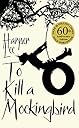
To Kill A Mockingbird is Harper Lee’s Pulitzer Prize-winning novel, a bestselling modern classic that explores racial injustice and moral growth in the 1930s American South through the eyes of young Scout Finch. Celebrated for its profound social commentary and unforgettable characters, this book remains a must-read for anyone seeking to understand the complexities of human nature and justice.
| Best Sellers Rank | 569 in Books ( See Top 100 in Books ) 15 in Cultural Heritage Fiction 15 in Fiction Classics (Books) 114 in Literary Fiction (Books) |
| Customer Reviews | 4.5 out of 5 stars 145,329 Reviews |
P**M
Literary Classic
Harper Lee created an amazing literary classic with To Kill A Mockingbird. To write a book that educates, inspires but is also an enjoyable read is no mean feat and Lee pulls it off with extraordinary aplomb. We see the world through the eyes of a grown up Scout who is relating the events she witnessed during her childhood as a little girl being raised with her brother Jem by her lawyer father Atticus, ably assisted by Calpurnia the family's housekeeper. The story takes us on a journey through some significant events in the Finch family life and we witness in the small community of Maycomb racial prejudice, injustice, domestic abuse, poverty and violence. This is no sweet tale of childhood friendships and memories of perfect summers. There is a great deal simmering under the surface of Maycomb's serenity and we see many instances of the darker side of human nature. However, through Atticus Finch, Calpurnia and Miss Maudie we see that all is not lost. The children learn great moral lessons from these characters, lessons for the reader as well. In this novel, we see the ugly side of human nature and the beauty in life that helps us cope with and overcome it. We see the children warmly welcomed into Calpurnia's community, into her church and onto the 'coloured balcony' in the court. They feel at home with people who are shunned and mistreated everyday by the injustice of segregation and they are stung by the prejudice displayed towards people who have been kind to them and who are made to suffer simply because of the colour of their skin. We, like them, feel our faith in justice shaken by Tom Robinson's trial. Atticus Finch sets a good example for his children. He stands up for Tom Robinson, the black man accused unjustly of sexually assaulting a young white woman even though he had to face down threats from a lynch mob and the possibility that his career and standing in society would suffer from accepting the case. He and the very small band of characters who think like him help provide the moral compass of the novel. However, perhaps the most important character in the book is the one we do not meet until the very end. It is the reclusive and ultimately heroic Boo Radley that brings our three children together (Scout, Jem and their friend Dill) and he is an enigmatic presence throughout the novel until his eventual unveiling at the story's close. If we had to live in Maycomb and had a sensitive personality, would we choose the same life that Boo did? This is a masterclass in how to create a morality tale that does not preach but educates and inspires in equal measure. Rightly described as a book every adult should read before they die, this is definitely one that should be on your bookshelf or your Kindle.
A**E
Be wary of the language in this classic
Each book I read and review starts off with the full 5 stars and I'm always hopeful that they will all still be stuck firmly in place by the time I close the back cover. I'm not shy about removing stars but I always give my reasons for doing so within the review. I've never read a classic book in my life but this was recommended by a friend and I've got a few more classics to try reading as well, but this is my first ever classic so I'll go into it with an open mind and try and remember that it was written a looong time ago. Let's get going with the reading and reviewing shall we? Well, I've read 6 pages so far and I'm starting to see how much books have changed over the decades. Most of the paragraphs are way longer than they are now, but maybe that was the thing to do at the time this book was written? I'm enjoying this book more than I thought I would, but the extra-long chapters and the rare speech is a bit off-putting. I'm up to chapter 7 so far. Up to chapter 9 now and it's time for a warming drink methinks. There's a bit more speech now, but still barely any compared to today's books. Up to Part Two now and I'm gonna stop for a breather after reading pretty much constantly all morning. It's a good book, but some of the language that's used is horrific! I guess it must have been common in the time that it was written though so the star is safe, but only because it's a classic instead of modern. I've just finished reading my first ever classic book and while I didn't like some of the language, it was a different era back when it was written and published. I doubt I'll read it again, but I'm glad I've got my first one under my belt now.
I**K
Dead-shot Finch ....Greatest hero of morality .... EVER!
This review is for anyone who is reading american literature for the first time, I dont usually read classic literature, let alone american literature. But since I had seen and heard all the rave reviews about this book I thought I would give it a chance and read it. The first 30 to 40 pages are very boring I have to say. It focuses on the daily life of the two children Scout and Jem, and their attempts at meeting boo radley with their friend Dill. It is all very childish and boring But it drives home one fact. That both children look upto their father with awe and admiration, and both (espeacially Scout) would do anything to defend their father. We see through the childrens eyes later in book the surrounding social prejudices that existed at the time and the economic standing of all the characters. The book definately gets more interesting after 40 pages and after the court room scene. And we see that even though the children may see Atticus as "an old man who cant do much", That in his younger days he was in a class of his own. You can sense the tension between the lines of the text and the characters (if that is possible). And you can see the struggle that Atticus has in doing what is right and trying to teach his children that doing the right thing is not always agreed with with those around you. Atticus is definately one of the redeeming features of the book and the fact that he epitomises the sense of justice and morality, in both his fatherhood method and within in social standing, shines through like a beacon! The ending is great, it was not expected and fits in with the background history given in the book. All in all. A great book. Just need to give it a chance.
C**H
superb book - all time favourite
This is the fourth time I have read To Kill a Mockingbird over the years, Iit is one of my all time favourite books. Both my children have recently read it and say the same. I wanted to refresh my memory to chat with them about it, with such a shared appreciation we have really enjoyed talking about it.
P**E
Such a classic
Brilliantly written and so many thought provoking and wonderful messages. Thankfully times are changing but the lessons learned will never be outdated.
P**L
It's a classic for a reason.
Can't believe I waited until my fifties to read this. We never read it at school and it just passed me by. I knew it was considered a classic. I knew - from knowing of the film (which I also have never seen) - what the subject matter was, but I always looked for contemporary literature. I am trying to get back into reading. Work life means that I find it very difficult to concentrate long enough to get submerged into the plot of any book. I thought I'd try again. I had just finished A Month in the Country. A wonderful tale of a man heading to Yorkshire to spend a month restoring a fresco in a Church, following his return from the Great War. I realised that what I am looking for in a book is a slice of life. A story emerging from a situation. No twists and whodunnits. Just a story, plainly told. I Googled 'best slice of life books' and was surprised to see this come up. Knowing it's reputation, I went for it. I am so glad I did. Told from the point of view of 'Scout', the young daughter of Atticus Finch - defence lawyer for young black man accused of attacking a white woman in her home - it largely concerns itself with the childhood adventures that Scout, her brother Jem and their friend Dill get up to - all while observing the adult world around them and trying to make sense of that as well as navigating childhood and its own particular and peculiar set of rules. Using a child's view of the proceedings in relation to the trial is a clever way of asking questions and making points about the situation and the wider world at that time (although insanely, it's still very relevant in 2025!!). I am so glad I read this book. Lee's writing style is so easy. She paints vivid pictures that just roll off the page. It didn't feel dated at all. Wonderful!
H**Y
Must Read
I first read this book when I was about thirteen, and I'm twenty two now, so it's been a while since I picked it up. I loved it the first time I read it, and I've seen it as a play as well, and it's one of my all time favorites books, so I've been meaning to reread it for quite some time. Recently, I started working on my final essay for University before I graduatate with a Bachelor of Arts Honors Degree. As part of this final essay, I had to pick one book from the course set texts, and one book which wasn't assigned reading, but was from the twentieth century. My mind immedietly went to this book, because, like I've mentioned, it's one of my all time favorites. Going into this, I was worried that maybe it wouldn't be as good as I remembered. I'm older now, and I've read a lot, and I mean a lot, more books, so I have more to judge it against. I shouldn't have worried. This book is a classic for a reason. It stands the test of time, it stands up against other works, and it only gets better with each read. There were things that I picked up on reading it again now as an adult, which I hadn't really paid attention to before. The writing style, the voice of the narrative, the flow and pacing. Things I never thought about while I was reading as a kid, are all parts of my normal appraisal of books now, and To Kill a Mockingbird was fantastic in all of those areas. Harper Lee creates a narrative which is perfect for this book. Scout's innocence is the perfect canvas to build upon, to really show things how they were from a interesting and unbiased point of view. The characters in this novel are fantastic, all of them, and I loved the way they were used. There's so much in this novel about the things which shape us into adults, and I loved that about this book. This is, and probably always will be, one of all time favorite books. If you haven't read it yet, you really should, because this book is phenomenal!
R**!
I WANTED AND EXPECTED SO MUCH MORE!!!
The story is told through the eyes of an 8 year old white girl, named Scout, while growing up during the 1930's in a small community, where everyone knows each other and their business, within the deep south of America. She has an older brother of 12, called Jem, who she spends much of her time with. Her father is a lawyer trying to single handily bring up his family. As we know, black people in America in that time were treated as second class citizens and segregation was rife. When Scout's father takes upon the case to defend a black man that has allegedly raped a white woman, controversy ensues and there is back lash for him and his children. The peak of the plot is the court case, where Scout's father has to prove the innocence of a black man's word over that of a white man and woman in the presence of a white jury. Considering this was the lynch pin of the story it was unfortunately short. The novel highlights the racial inequality of the time. And Scout's father does a great job of teaching his children that we should all behave the same towards one another regardless of colour. After the trial, there is a burst of tension towards the end of the novel as the father of the woman who was allegedly raped, felt he was humiliated in the court room and goes about trying to exact his revenge on those involved in the case. I really am loathe to say this, especially as this book has won the Pulitzer Prize, sold over 400 million copies, is regarded as one of the great literary works of the 20th century and is a much loved story by an incredible amount of people, but I have to say I found it merely average. I expected so much more. For starter's the first HALF of the novel is concerned with Scout and Jem's childish antics, which I found neither particularly entertaining nor humorous. Although I did like Scout's tomboyish feisty character who was always up for a fight. But I didn't find the dynamics between her and her brother captivating as he always remained emotionally distant and just tolerated her company. Whereas I think if there'd been a powerful bond between them, where he took on a more protective, informative role towards Scout, considering their mother had died, would have made for a far more compelling read. This first half of the book should easily have been edited down to a third of it's length. So, half way into the book we finally get to the crux of the story line. The court case. This segment of the story I genuinely found interesting and especially how Scout's father cleverly spot light's the holes and flaws in the allegedly raped woman's and her father's case against the accused black man. However, this being the 1930's, and knowing the absolute intolerance from white people towards black people, I found the outcome to be highly predictable. A black man tried before a white jury having allegedly committed a crime towards a white woman? It doesn't take an Einstein to foresee the conclusion of this. I did have hope at one point, that the case might take a turn and there would be hope for the accused as Scout's father put's forward an appeal after his client is sentenced. To my disappointment, the author decided to do away with that further plot line with the sudden demise of the now prisoner. I thought there could have been so much more to this novel. The first half of the novel was too lengthy and unnecessary. I felt the court case was too rushed. The court appeal should have been retained. I didn't feel enlightened by the book. I knew of the plight of the awful racism during the era the story is set in. I wasn't moved by any of the relationships and yet I really wanted to be, especially between Scout and Jem. I believe this is definitely a good book for GCSE students to read (although the book was banned in all school libraries in America on its publication in 1960). It teaches the importance of equality and the horrendous racism the black community experienced during that time. But in this age of multi cultural society, its highly likely that today's youth regardless of colour, creed, and religion perceive most people as equal due to the fact they have never known anything different. The book conveys the message of upbringing your children with the understanding of the meaning of equality. Which is to be applauded, but for me, the facile first half of the novel, combined with it's easily foreseeable end and thin plot, I'm sad to say gave me nothing to get excited about.
M**E
Génies book
A genius book, to read at least once. Buy it or at least give it to someone you like.
P**E
Eine außergewöhnliche Geschichte in einem faszinierenden Stil geschrieben
Harper Lee hat eine bemerkenswerte Gabe des Geschichtenerzählens. Ihre Kunst ist visuell, voller taktiler Brillanz und mit kinematografischer Fluidität und Subtilität ausgestattet: wir sehen vor unserem geistigen Auge, wie eine Szene mit einer anderen verschmilzt, ohne dass es dabei zu holprigen Übergängen kommt. Die Schicksale der Protagonisten sind im Kopf, im Herzen und in der Seele des Lesers emotional und moralisch miteinander verbunden. ***** Setup Anfang Der Schauplatz dieses Buches (erschienen 1960) ist die fiktive Stadt Macomb (Alabama) Mitte der 1930er Jahre. Dort lebt der Rechtsanwalt Atticus Finch (50 Jahre alt) mit seinen Sohn Jem (Jeremy) und seiner Tochter Scout (Jean Louise) – die auch die Erzählerin der Geschichte ist. Die Geschwister sind zu Beginn des Romans, der etwa eine Zeitspanne von 3 Jahren abdeckt, 10 bzw. 6 Jahre. Die Mutter der beiden starb einige Jahre zuvor. Atticus verteidigt einen schwarzen Mann (Tom Robinson), der der Vergewaltigung einer weißen Frau beschuldigt wird. Die Wahrscheinlichkeit, dass ein solcher in den 1930er Jahren in den Südstaaten einen fairen Prozess bekommt, liegt bei etwa 1 zu einer Million... optimistisch betrachtet. UND: Der Leser sieht die Welt durch die Augen eines jungen Mädchens, das noch versucht, seinen Platz in ihr zu finden (genau wie ihr Bruder), und dem ganzen Trubel um sie herum einen Sinn zu geben. Ein größerer Teil des Buches (und seiner „Faszination“) besteht eben auch aus einem Bericht über das „Aufwachsen“ / „Erwachsen werden“ zweier Kinder, ihren Fragen, Freundschaften zu anderen Kindern & Erwachsenen, ihren Erlebnissen und wie sie diese verarbeiten. ***** Setup Ende Das Buch behandelt eine breite Palette von kontroversen Themen, das Verhüllen von Klassensystemen, Geschlechterrollen, Südstaatenmanieren und Tabus sowie einige Botschaften wie Freundlichkeit, Liebe und Überzeugung - alles in einem skurrilen Bilderroman enthalten, den kein Leser, der je von seinen Seiten beglückt wurde, je vergessen wird. Ich habe TKAM zum ersten Mal vor 40 Jahren in der Schule gelesen und es hat mich tief berührt. Und als ich das Buch im Jahr 2017 noch einmal las, war ich genauso ergriffen, erschüttert, betroffen und überwältigt. Harper Lee brachte uns dazu, Vorurteilen und Ungerechtigkeiten ins Gesicht zu blicken, und danach zu streben, ein Atticus-Fink zu werden. Fähnchen schwingend gibt es 5-Sterne! ***** Einordnung *** Die Weigerung der Afroamerikanerin damals 42-jährigen Rosa Park (1913 - 2005), ihren Sitzplatz in einem Stadtbus einer weißen Person zu überlassen, führt nicht nur zu ihrer Verhaftung und Verurteilung (wegen Störung der öffentlichen Ruhe), sondern löste auch den Montgomery-Bus-Boykott von 1955 aus. *** Die US-amerikanische Professorin für Literatur und Theater-Geschichte, Claudia Durst Johnson, schrieb 1994 in ihrem Buch „To Kill a Mockingbird: Threatening Boundaries“: „In den 33 Jahren seit seiner Veröffentlichung stand das Buch noch nie im Mittelpunkt einer Dissertation, und es war nur Gegenstand von 6 literarischen Studien, von denen einige nicht mehr als ein paar Seiten lang waren.“ *** Harper Lee (1926 - 2016) wuchs in der Stadt Monroeville (Alabama), auf, wo sie sich mit dem später berühmten Schriftsteller Truman Capote anfreundete. Capote war ziemlich sicher Vorbild für den Nachbarjungen Dill (Charles Baker Harris) im Roman. *** Es gab auch zahlreiche Gerüchte, habe Capote habe in Wahrheit den Roman geschrieben oder zumindest stark redigiert. Diese wurden 2006 durch den Fund eines privaten Briefs Capotes an eine Verwandte zu Fall gebracht. *** Originaltitel: „To Kill a Mockingbird“; auf Deutsch: „Wer die Nachtigall stört“. Der „Mockingbird“ ist aber eigentlich die sogenannte Spottdrossel (Mimus polyglottos). Das Gesangsrepertoire des Männchens besteht aus 50 bis 200 Liedern. *** Harper Lee veröffentlichte ein Jahr vor ihrem Tod ihr zweites Buch „Gehe hin, stelle einen Wächter“ (im Original Go Set a Watchman; 2015). Der Titel spielt auf die Rolle von Atticus Finch als den moralischen Kompass ("Wächter") von Maycomb an. Jean Louise "Scout" Finch, mittlerweile 26 Jahre alt und Jurastudentin, kommt aus New York City zu Besuch nach Maycomb und trifft viele der Figuren aus TKAM. ***** Zitate „Aber bevor ich mit anderen leben kann, muss ich mit mir selber leben.“ (Atticus (11. Kapitel)) „Vorurteile, ein schmutziges Wort, und Glaube, ein sauberes, haben etwas gemein: Sie fangen beide da an, wo die Vernunft endet.“ (Onkel Jack Finch; jüngerer Bruder von Atticus) „Dill hatte einen großartigen Plan ausgeheckt, um Boo Radley ohne jede Gefahr für uns herauszulocken. (Man nehme Zitronenbonbons, lege sie als Köder auf den Weg zwischen Radleys Hintertür und dem Vorplatz, und schon wird Boo wie eine Ameise der Spur nachgehen).“ „Man versteht einen Menschen erst dann wirklich, wenn man die Dinge aus seiner Sicht betrachtet - wenn man in seine Haut steigt und darin herumläuft.“ (Atticus (3. Kapitel)) „Wenn ein Kind Sie etwas fragt, antworten Sie, um Himmels willen. Aber machen Sie keine Inszenierung daraus. Kinder sind Kinder, doch sie erkennen ein Ausweichen schneller als Erwachsene, und es bringt sie einfach durcheinander.“ (Atticus)
S**R
Captivating
Enjoyed the development of the children, especially young Scout, who seemed so much older than her years. The book kept me wondering what was going to happen, suspense and surprise. Well written!
W**H
A Timeless Classic
To Kill a Mockingbird by Harper Lee is, without a doubt, one of the most powerful and thought-provoking books I’ve ever read. The story is gripping, with unforgettable characters like Scout, Atticus, and Boo Radley, who stay with you long after you finish the book. The themes of racial injustice, empathy, and moral growth are just as relevant today as they were when the book was first published. Harper Lee’s writing is beautiful yet straightforward, making complex ideas accessible and emotional. This is a novel that not only tells an incredible story but also challenges you to think deeply about the world around you. Highly recommended for anyone looking for a book that is as enriching as it is captivating.
K**S
Must read
Great read, good quality
Trustpilot
3 days ago
1 week ago