Desertcart purchases this item on your behalf and handles shipping, customs, and support to Tunisia.
🔋 Power up smarter, not harder — the YC4000 keeps you charged and ahead of the curve!
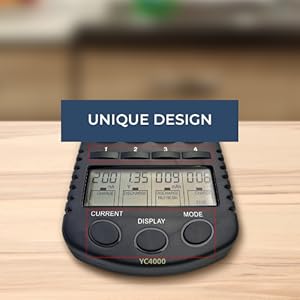
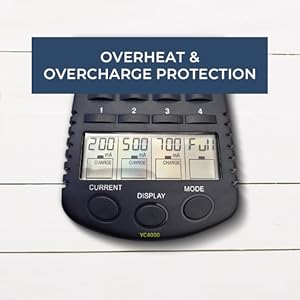
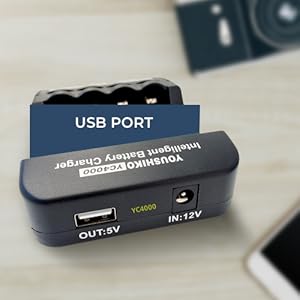
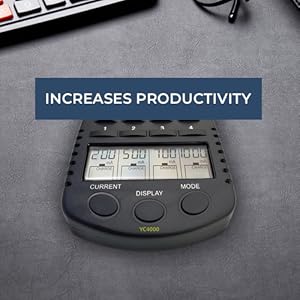
The Youshiko YC4000 (UK 2026 version) is a professional-grade intelligent battery charger featuring four independent charging circuits and four versatile modes—Charge, Discharge, Refresh, and Test. It supports AA and AAA NiMH/NiCd batteries from any manufacturer, offers selectable charge currents up to 1000mA, and includes a USB port for charging mobile devices. Designed for precision and convenience, it ensures maximum battery lifespan and performance with UK warranty and customer support.


| Amperage | 1 Amps |
| Asin | B00N7GHUH0 |
| Best Sellers Rank | 14,968 in Electronics & Photo (See Top 100 in Electronics & Photo) 132 in Household Battery Chargers |
| Brand Name | Youshiko |
| Colour | Black |
| Compatible Devices | Rechargeable Battery; Rechargeable Battery AA NIMH NICD; Rechargeable Battery AAA NIMH NICD; Universal Ni-MH/Ni-Cd Rechargeable batteries; rechargeable cells aa aaa; Universal Ni-MH/Ni-Cd Rechargeable Cells; aa/aaa Ni-MH/Ni-Cd Batteries; For Eneloop AA AAA rechargeable Batteries; Nickel-cadmium/Nickel Metal Hydride AA AAA Batteries |
| Connector Types | USB |
| Country Of Origin | China |
| Current Rating | 1000 Milliamps |
| Customer Reviews | 4.4 4.4 out of 5 stars (1,408) 4.4 out of 5 stars |
| Eu Spare Part Availability Duration | 1 Years |
| Global Trade Identification Number | 06944151750039 |
| Input Voltage | 240 Volts |
| Item Weight | 0.31 Kilograms |
| Manufacturer | Youshiko |
| Manufacturer Part Number | YC4000 |
| Model Number | YC4000 |
| Number Of Ports | 1 |
| Output Voltage | 5 Volts (DC) |
| Product Warranty | One Year |
User
Best intelligent battery charger
I have bought many chargers in past like Maha, Technoline, AccuPower, Energizer etc as I charge batteries every other day, I rely on them heavily for my work.But I must say, this New UK Model Youshiko YC4000 to be overall better intelligent battery charger and value of money, probably best intelligent battery charger I ever bought.I have learnt from my own experience with one of my old charger ( Don’t like to name the brand ), lose connections may not charge at all or charge slow or some time make you charge again, total waste of time.But in Youshiko YC4000, inserting the batteries in charger, Gently need to tuck in the negative end under a lip in first and then push the positive end down and when taking the batteries out , Gently you need to push back from the positive end towards negative end and then pull out the batteries. Which I think it’s a clever and neat design, as batteries connections in each slot with charger are very secure. As it should, secure connection to achieve accurate charging.Youshiko YC4000 refresh function is 100% better than other chargers; I have charged nearly 3 years old batteries which my other chargers refused to charge. I have already saved money and I am sure, I will save more in coming days and weeks, as I have more old batteries.I have used this charger for around or over 30 hours constantly with no problems at all.I have used Charge /Discharge / Refresh function, I have not used the test function yet. I have charged my phone with the USB Port, All functions works very well.It does exactly, what it says in the description of the product.Power Supply is a UK Plug but it is 110v to 240v, so this can be use worldwide with a simple travel adapter. Also there is option to buy car adapter but not included.This YC4000 is very similar to Technoline BC700 ( with max 700mA ) but this Youshiko YC4000 have more powerful charge with 1000mA and offers more options, like USB output and car adapter option on much cheaper price than other brand chargers.It is Professional standard, high quality, you will get more for your money, highly recommended.I emailed Youshiko (email address found in instruction book) and asked for a PDF file of the instruction book so I can have it in large print and I received it, with in 2 hours, Instruction book found to be quiet good.Very good customer services.I must say again, probably one of the best intelligent battery charger, I ever bought .
User
Excellent range of features
Compact complete with a dedicated external power adapter.Contents were the charger , power adapter and user manual.The user manual is a miniature version with print so small that is barely legible so I first had to scan and copy the pages to enlarge from 100x150mm (open book size) to A4 to give myself an A5 booklet that could be read! That is a zoom of 195%The website for Youshiko is not in the manual but I found it at www.youshiko.co.uk. It has been under construction for over a year with no supporting manual downloads. So if you have any problems it does not inspire confidence that the company will be able to help you. Don't lose your manual!Take care inserting the battery. You need to tuck the negative end under a lip first, then you can push the positive end down into place. With the battery's so close to each other, removal of the middle two (when four in place) is difficult. So although you have independent controls for each battery physical access is limitedClaimed to charge each cell independently, that does seem to be the case. I inserted two nearly full and good AA rechargeable batteries and set it to discharge. After just over an hour draining at 100ma I inserted an additional pair of old rechargeable batteries and while discharging the other two still it set about recharging the old batteries at default settings. On initially inserting a new battery(s) you have eight seconds to alter the setting for it before it starts at default settings. So it would seem you could insert each battery and have it doing one of the four functions - Charge, Discharge, Refresh or Test. Each one at custom rates if you want to.There is a further facility to charge USB devices as it has a USB socket for you to plug your specific USB lead into. Note this is purely for charging and not supported with any LCD display or data exchange. - I have not tested it yet.I found the manual to be good once I had it at a size I could read.Overall this is very similar to the Technoline BL-700 but with the added support of a USB charging port.Very useful for reviving older batteries into better condition. Dispalys of voltage etc. will allow you to identify the old duff ones!I will update after some more use. - At the present time I really like the functions it offers. Reliability is as yet unknown.UPDATEI have now been using mine almost constantly for three weeks and have to say I am very pleased with it. It has allowed me to sort out various bad rechargeable batteries that you can't identify with more basic chargers. The individual battery settings mean that you can mix in AA and AAA sizes as well during charging so it performs as if 4 individual cell chargers! I have also used the USB output to charge my wireless keyboard and this simple addition over the competition was why I chose to get this charger - It has turned out to be the right decision. I have been able to recover some old batteries by setting the charger to fully discharge and then re-charge them. Then using the test setting to find out what the capacity of the battery is - The test is essentially a measured output from fully charged to fully discharged and the battery is then fully recharged after the test.I requested from Youshiko and was sent a ".pdf" file of the manual which allowed me to print a full size A4 copy for easy reading without my glass's or magnifying lens. If they get around to putting it on their website it will be even better. So pleased that the company offers a degree of service.
User
Seems as good as the Techline BL700!
I purchased this unit as a replacement for my failed BL700. That one never worked properly with regard to the buttons but thankfully this charger by Youshiko has worked flawlessly so far.It has all the functions of the BL700 and although it has slight differences regarding the styling and feel of the buttons it works just as well.You can discharge, test and exercise the batteries as well as charge them of course and all independently in their own channels. You can charge AA in one channel and a AAA in the next of course.You can discharge another whilst also charging the next.All combinations are supported.I have already gone through my entire stock of 20+ batteries and given this unit a thorough test and I am happy to report no weird issues or bugs.All batteries were charged up without a fuss. You can really ramp up the charging current but this can heat up the batteries somewhat. I used a cooling fan to aid bringing the temps down when charging at the full 1000 mA rate.I did read a review where someone had tested this unit for high over temp cut off and it didn't work but I have not replicated this due to not wanting to cook my batteries. They did get very hot so I would not want to leave this unattended for any length of time without checking how hot each cell gets.Other than that, I have noticed a small mark on the LCD which is a shame. The mark is under the plastic display on the actual LCD panel so would have been damaged during manufacture. It loses a star for this.Thankfully everything else works ok and overall I do like the unit for charging and conditioning my batteries.
User
The best charger I've used
I've used several intelligent NiMH chargers over the years - the first was the venerable Maha 204, and more recently I've been using one of the chargers designed for Eneloop batteries. But the range of options and controls on the YC4000 looked intriguing, so I bought one to see how well it worked.The answer - impressively well. For example, I have an AA battery pack from a Garmin GPS; this is made up of two very poor quality NiMH AA cells which invariably die if it is left in a drawer for more than a few weeks. I took it out of the drawer a few days ago after sitting idle for 6 months, and one cell was completely dead. It wouldn't charge in the GPS itself, it wouldn't charge or recondition in my Maha, and neither the Eneloop charger or either of two other "dumb" chargers I tried would do anything; I assumed the cell was completely dead. I then put it into the YC4000 and selected "charge" mode - at which point the cell immediately started to charge up. I tried one of the discharge / recharge cycles, and it worked perfectly. The cell is clearly still faulty, as it has a very low capacity, but the YC4000 is the only thing I have tried which was able to persuade it to charge at all.The YC4000 allows you to select charge and discharge current for each cell, and offers straight charging, discharge before charge, refresh (repeated charge / discharge cycles until the capacity doesn't increase) and testing of capacity; each charge cycle is monitored to show time, voltage, current and mAh supplied. If you are a battery geek, this is everything you want to know. Equally, if you are not a battery geek, if you just stick a cell in, it will automatically be charged with a safe current if you choose no options at all.If you look online, the most commonly recommended intelligent chargers are the Technoline BC1000 or the La Crosse BC1000 - as far as I can tell, the YC4000 is the UK equivalent and is identical in appearance and specifications, lacking only the ultra-fast 1800 mA charge mode which is probably not too good for batteries anyway. Thoroughly recommended.
User
Brilliant little device, a little confusing to use, but well worth the effort
Just great. This is an almost identical but improved version of the well regarded Technoline BL/BC-700 (or Lacrosse BC900) - improved by the addition of an extra 1000ma charge setting for very fast charging and a 5V/1A usb output for phone/tablet charging. Note that it is not recommended to do fast charging often as it apparently reduces the life of the battery, the charger defaults to the minimum 200ma charge rate,which is very safe, you can also select 500ma and 700ma (the corresponding discharge rates are always half of the charge rate.This is one of the best chargers you can buy, see these two youtube reviews (of the virtually identical BC700) to see why it might be a better choice than an even more sophisticated model.https://www.youtube.com/watch?v=C3SBjrhANSshttps://www.youtube.com/watch?v=JslHWoXpnEwBe warned that it is not a simple device, and the instruction manual is very concise, but once you get used to the controls it is brilliant. You can select individual batteries at any time and change the charge/discharge current or mode (charge, discharge, refresh or test) - to do this you press 1,2,3 or 4 to select a battery and then you MUST press the mode button, even if you are just changing the current (in which case you have to cycle through the modes to get back to the original mode - a little design fault there). Alternatively you can remove the individual battery and reinsert - then you have 8 seconds to select the new current/mode.It displays, for each battery individually, charge/discharge rate (in mA), the battery voltage (which should be 1.4v - 1.5v for a fully charged battery), amount of power (in mAh) charged or discharged in the current cycle (this resets to 0 mAh if you change mode or current) - and the time each battery has been charging/discharging in the current cycle (which resets to 0:00 (h:mm) if you change the mode or current). You can even change the display setting individually for each battery.Test mode is genius, it first fully charges the battery, then completely discharges to measure the capacity, and finally fully recharges again! The final display shows the voltage of each battery, the measured capacity during the discharge AND the time taken for the full discharge (this was confusing at first as I thought it would show the time taken for the last charge cycle) - which is great info - you can put the batteries in at night time, set to test mode with 500mA current, and the next day you have fully charged batteries and precise info on their capacity. Note that the capacity will display "---" until the full discharge cycle completes, and if the capacity is greater than 1999mAh the display switches to Ah units (eg 2.50Ah = 2500mAh). Refresh mode repeats this discharge/recharge cycle until no improvement is detected in the discharge capacity (up to a maximum of 20 cycles) - beware that this can take several days for large capacity batteries on a low current charge.Some small cons1. It failed to detect that one battery was fully charged and started to overheat - it stops charging once temperature gets to 55ºC - but it's a little bit annoying to see a battery stuck at 1.46v for over an hour (it should switch to trickle charge once full). This may be a dud battery, it's an old high capacity 2700mAh one that now only holds half that charge.2. Batteries are almost (but not quite) touching, so some heat does pass to neighbouring batteries.3. There is no simple discharge cycle - the mode named discharge - does discharge the battery but then fully charges it (to remove memory effect in NiCD batteries) - you have to keep an eye on the LCD display and remove the battery if you want to store it discharged (even the test mode, which fully charges and discharges to test the capacity, does a final full charge cycle)4. No backlight on the lcd screen so cannot adjust settings in a dark room (UPDATE: you can plug a usb light in the usb port!)5. No cover or case to keep dust out of the charger.But, these are minor issues - the individual voltage and current measurements and settings are great for a device at this price. At first I was a bit worried because it looked a bit cheap and was confusing to use - but after playing with it for a few days and charging a few sets of batteries I'm really happy - my simple uniross fast charger was really not fully charging my batteries - now I have full controlNB as an above reviewer wrote, insert the batteries properly - push back on the negative contact and then push down the postive end of the battery to fit it firmly in the slot.edit: One more plus point - uses a standard 12v power connector, so can be operated from solar power easily (if that's an option)edit: you can use the superior manual for the Lacrosse bc700, which is a bit easier to read, also tells you that when the capacity exceeds 1999mAh the display changes to Ah, so that 2500mAh will read as 2.50 Ah on the display.http://www.lacrossetechnology.com/bc700/manual.pdf[UPDATE 8/4/2015: The charger is working well and I am very happy but just want to mention that on the lowest current setting of 200mA it sometimes fails to detect a delta-V drop in voltage at full charge and stop charging. I have only noticed this with uniross hybrios and only at 200mA, it may be a characteristic of that particular battery model. It happens less than 10% of the time and I mostly use the 500ma current in any case, so it's not a big issue for me. EDIT 23/4/2015: Apparently I just to need to be patient and wait a lttle longer, about one and a half times the rated charge may need to be supplied sometimes - it DOES eventually reach full charge - my mistake]
User
Saved the life of my rechargeable batteries.
A few years ago, I decided to stop buying single use alcaline batteries for remote controls, clocks and other devices and switch entirely to rechargeable batteries. Whilst this seemed like a good idea at the time (as I'd be reducing waste), I soon discovered that the new batteries' charge levels were decreasing over time. I tried a couple of different chargers, to see if that helped, but alas no.So, for the past few months the rechargeables got relagated to the kitchen drawer and I started to use alcalines again (even though this didn't sit well with my conscience).Just last week, I decided to try and address the issue and bought this charger. I figured it would either work (and I'd keep it), or it wouldn't (and I'd return it). I'm glad to report that so far it seems to be revitalising the majority of batteries that I'm putting into the device.There are a whole variety of different settings depending on whether you want to charge a good battery, or remove battery memory (the description for what had happened to my batteries), so it's worth a read of the manual before you dive in. Despite obviously being a device manufactured in China, the manual is surprisingly well written and easy to understand. It is a bit technical though, so beware. The device itself feels well enough put together too.Anyway, I'm very pleased with the results so far and would recommend wholeheartedly if you're accumulating faulty rechargeable batteries. The repair/recharge process takes quite a lot of time, maybe 24 hours, but I've had an 80+ percent success rate so far.My advice, only buy if you're technically competent (basic understanding of electronics, I suppose) and read the manual thoroughly before you start. This will inform you as to which "program" to select to suit your needs.Overall, I'm very impressed.
User
Works for me
Bought this to replace a (significantly more expensive) old charger, which seemed to be over-charging cells. The YC4000 has been great in really letting me understand the state of the various cells I had lying around. Have tested this over the past couple of weeks and I'm reporting my findings here.First off were a bunch of old NiCd AA and AAA's. Through years of abuse and neglect, these had discharged completely for a long period of time. This charger indicated they were duds. Even if I could have refreshed them to half of their original capacity using the widely-published "paperclip trick", who wants a 500mAh AA these days? Binned them.Next were some Uniross Hybrio AAs (Eneloop equivalents). Originally, all eight of them were reported by this charger as having a capacity of 1400-1500mAh. Put them all on a full refresh cycle over the next few days and I've now got a great set, with capacities from 1950mAh to 2050mAh (rated at 2100mAh). Other fast chargers would have just continued to toast them before they became completely worthless.Final test was for a pair of AAA NiMH. The refresh cycle completed successfully, although it did claim a final capacity of 650mAh for a product labelled as 550mAh. Will try again in the future and see what happens after a few more discharge-charge cycles.Operation? Well the user manual looks a little complicated, having multiple modes and display settings, but really it isn't. Just shove the cells into the charger and provided you've got them the right way around then this compact unit will happily recharge them, albeit a little slowly. Want to charge a little faster? Provided you do it within 8 seconds (which is easier than it sounds), then just press the Current button. Easy.Exploring more of the functions, I've had a play with all of the modes."Charge" is a bog-standard traditional charger approach - top up whatever capacity the cell has right now until it is full."Discharge" is a bit slower, but kinder to the cells by completely discharging and then charging from empty, thus avoiding the "memory effect"."Test" is slower again, having to fully charge the cell before doing exactly the same as the "Discharge" cycle. This one is to see exactly how much capacity you really have available to you."Refresh" is even slower still, but does the best job it can of restoring your cells back to full operation (see above) by continually cycling through a discharge-charge loop until the measured capacity does not increase further. As I found out in my first test, if you select a charge current of 200mA and have 2100mAh cells, then this can take days to complete.Other things: while the display looks a little primitive, it actually tells you everything you need to know. Getting the cells out after charging can be a little fiddly (especially from the middle slots with cells either side) but isn't worth losing sleep over. I don't know exactly how heavy I was expecting the unit to be, but it's very light - possibly feeling a little too light and flimsy on first inspection, but it doesn't seem to flex at all, so I guess it's well-built, but just not very heavy.In summary - a great product that does the job nicely. If you have 8-10 old rechargeables lying around, the extra cost of buying one of these over a cheap charger will probably pay for itself by refreshing the cells you already have back into life. Recommended.
User
Good but flawed. Don’t buy if you expect stuff to “just work”.
Spent a long time looking for an upgrade on my basic Duracell charger this seemed to be the best option.Charging is great batteries that took a full day to charge previously are charged in under 4 hours on the 700 charge rate. They don’t even get as hot as they did in the basic Duracell charger. Charging individual batteries is a real positive as everything seems to take 3 batteries so we always seemed to have one awaiting charge.Negatives are it defaults to 200 charge rate so you have to be quick and change it.My partner doesn’t want to use it because it “doesn’t just work” and “you shouldn’t have to mess around with it every time” so if you agree with those points don’t buy it. I’m keeping it but I will end up being the one to charge the battery’s with it.Edited and added a star. One fault I found with it wasn’t a fault. If you put a completely discharged battery in the charger it seems to take a while to find it and start charging. I was taking it out and charging with a different charger rather than letting it find it.
User
Chargeur à la norme UK!
Pour charger des batteries au Royaume Uni, ce doit être parfait car l'unique chargeur est à la norme britannique. Mais pour la France et la Belgique c'est impossible car il n'y a pas d'adaptateur de prise prévu.
Trustpilot
2 days ago
1 month ago