![DIE NIBELUNGEN (Masters of Cinema) (BLU-RAY) [1924]](https://m.media-amazon.com/images/I/71lIPm-YqGL._AC_SL3840_.jpg)


Desertcart purchases this item on your behalf and handles shipping, customs, and support to Tunisia.
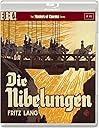
Perhaps the most stately of Fritz Lang's two-part epics, the five-hour Die Nibelungen is a courageous and hallucinatory work. Its extraordinary set-pieces, archetypal themes, and unrestrained ambition have proved an inspiration for nearly every fantasy cycle that has emerged on-screen since - from Star Wars to The Lord of the Rings . In Part One, Siegfried, the film's eponymous hero acquires the power of invincibility after slaying a dragon and bathing in the creature's blood. Later, an alliance through marriage between the hero and the royal clan of the Nibelungen turns treacherous, with Siegfried's sole weakness exploited. In Part Two, Kriemhilds Rache [Kriemhild's Revenge], Siegfried's widow travels to the remote land of the Huns to wed the monstrous Attila, and thereby enlist his forces in an act of vengeance that culminates in massacre, conflagration, and, under the auspices of Lang, one of the most exhilarating and terrifying end-sequences in all of cinema. Adapted from the myth that was also the basis for Wagner's Ring cycle of operas, Lang's epic offers its own startling expressionistic power - a summit of the director's artistry. The Masters of Cinema Series is proud to present Die Nibelungen in a spectacular new HD restoration, released as a 2 x DVD set & a 2 x Blu-ray set in the UK. SPECIAL FEATURES Review: An astounding achievement from Fritz Lang - This is a simply wonderful release of Fritz Lang's stunning 1924 silent epic, Die Nibelungen which all lovers of cinema urgently need to buy. Masters of Cinema's transfer of this Friedrich Wilhelm Murnau Stiftung HD restoration is absolutely immaculate, featuring the original frame rate and the original 35mm aspect ratio of 1.37:1 to produce images which are pin-sharp and do full justice to Carl Hoffman and Gunter Rittau's ground-breaking cinematography, Otto Hunte's spectacular set designs, Paul Gerd Guderian's extraordinary costumes and Lang's exceptional sense of framing and composition. The film has been tinted orange as per the original and looks stunning as a consequence. I am especially pleased to note the original Gottfried Huppertz orchestral score has been found and re-recorded for this release and it propels the narrative compulsively. If anything, the quality of the music is even better than Huppertz's later Metropolis score. The film is presented as fully as possible on two very well-filled DVDs, the print taken from a variety of sources, but unfortunately with Part 2 slightly truncated due to cuts made at source by Ufa due to its lack of popularity at the box office on its first run. MoC's presentation is well up to their usual high standards. Included with the film is the 72 minute documentary 'Das Erbe der Nibelungen' (The Heritage of the Nibelungen) which explains how the current restoration evolved through several previous prints that have done the rounds over the years, the way the Nazis used and abused it making for particularly fascinating viewing. Then there's the 52-page booklet which features articles by Lotte H. Eisner and Tom Gunning (two of the very best writers on Lang), a note by Michael Powell, a Geoffrey O'Brien poem and notes on the tinting of the restoration by Anke Wilkening. It would have been nice to have had a commentary on the stunning effects, the extraordinary visual designs, the exceptional circumstances of the film's production (I recommend reading Patrick McGilligan's biography Fritz Lang: The Nature of the Beast to get a flavor of this), and the astounding precision of the story telling in a script by Lang and his wife Thea von Harbou which astounds by it's simplicity, stunning symmetrical balance and avoidance of the kind of pretentious idea-referencing which mars so much of Metropolis. In short, Die Nibelungen represents the benchmark for epic film-making which nobody, not even David Lean with his wonderful Lawrence of Arabia, has ever measured up to. Dedicated to the German people, Die Nibelungen represented several things to Fritz Lang. On one level it is a celebration of his new-found citizenship as a naturalized German (he was an Austrian, Vienna born and bred). On another it is a reaction to the pessimistic, gloomy Weimar culture that prevailed in Germany at the time. The years 1919-1923 were tough years for many Germans as the economy lay in a ruinous state. The fact that an expensive epic like Die Nibelungen could be made at all was miraculous under the circumstances. Lang meant the film to lift the spirit and make Germans feel proud of their country and their culture. He wasn't to know that his film would eventually be hi-jacked by the Nazis for their own purposes, or that Siegfried Kracauer would later say (in his seminal study of Weimar cinema, From Caligari to Hitler) that the monumental designs and the 'stab in the back' way of thinking looked forward to the rise of Hitler. Here is Lang in his last interview given to The Village Voice in 1976: "To counteract the pessimistic spirit of the time, I wanted to film the great legend of Siegfried so that Germany could draw inspiration from her epic past, and not, as Mr Kracauer suggests, as a looking forward to the rise of a political figure like Hitler. I was dealing with Germany's legendary heritage - just as in Metropolis, I was looking at Germany in the future". Arch-mythologizer of his own reputation as Fritz Lang was, we must take what he said in interview with a pinch of salt. He may well have been anti-fascist, but his wife Thea von Harbou certainly wasn't. She remained in Germany throughout the war (as did many of the cast and crew of the film) and became a great admirer of the fuhrer. The fact that she wrote the script means the film isn't quite as politically innocent as Lang would later have us believe. It must be said however, that even though the Munich Putsch had taken place in 1923 (contemporaneous with the writing of the script) the Nazi movement was still in its infancy and in Berlin (where the film was made) their power was still negligible. A third inspiration for Die Nibelungen was simply, a sheer love of Germany's epic mythological past and a burning desire to put it on the screen. Lang said, "Above all in the Nibelungen film, I hoped to make the world of myth live again for the twentieth century, to live again and be believable". In this Lang/Harbou were united and the end result is the most gorgeous realization of the distant past ever created for the cinema. Based on the Nibelunglied of the 12th or 13th century (which itself was taken from oral tradition), Wagner's interpretation of it in his operatic tetralogy, Der Ring des Nibelungen, and on Friedrich Hebbel's 19th century play Die Nibelungen (in which Harbou had played the role of Kriemhild on stage!), Fritz Lang's film tells the story of Siegfried and his dealings with the Burgundian court in two parts. Part One is entitled Siegfried (sometimes known as The Death of Siegfried) and charts the childhood of our hero (Paul Richter) in the cave of the Nibelung dwarf Mime (Georg John), buried deep in the forest. He hears of a beautiful princess living in the Burgundian court at Worms named Kriemhild (Margarete Schon) and journeys there, on the way meeting and killing the dragon Fafner and the Nibelung king Alberich (also played by Georg John), going on to claim the Nibelung treasure, from which he extracts the sword named 'Balmung' and a magic helmet (the tarnhelm) which can change one's appearance. Upon arrival at Worms he meets Kriemhild, her brother King Gunther (Theodor Loos) and their brothers, most importantly Volker (Bernard Goetzke) and Hagen Tronje (Hans Adalbert Schlettow). Hagen is the villain of the piece and quickly a dark deal is reached where Kriemhild will be promised to Siegfried in return for Siegfried winning Brunhild (Hanna Ralph), an Icelandic princess (actually a Valkyrie) for Gunther. The Nibelung treasure is brought to Worms as part of the deal. Brunhild is won through trickery, Siegfried making himself invisable by using the tarnhelm to aid Gunther in the contest. Brunhild later learns of this as well as Siegfried having stood in for Gunther on their wedding night. As a result of this humiliation she schemes with Hagen to persuade Gunther to revoke his blood-brotherhood and kill Siegfried to save his wife's honor. A hunt is arranged, during which Hagen stabs Siegfried in the back (actually in the shoulder). Siegfried dies with Hagen claiming (and hiding) the Nibelung treasure for himself. Kriemhild later learns about how her husband has been tricked and murdered, swearing vengeance on Hagen while Siegfried and Brunhild lie dead at her feet. All the plot lies in Part One for Part Two: Kriemhilds Rache (Kriemhild's Revenge) is precisely what the title says. Kriemhild marries King Etzel, aka Attila the Hun (Rudolf Klein-Rogge) to get away from her poisonous Burgundian brothers, sets up home with Etzel on the great east European plain and invites her breathren into a trap. The battle between the Huns and the Burgundians takes up the rest of the film, ending in a giant conflagration. The film finishes with everyone dead, Kriemhild's revenge accomplished. The brilliance of the way Die Nibelungen is translated to the screen by Lang lies in the way the splendid mise-en-scene so closely supports and amplifies the arguments made in the equally splendid script. Hoffman and Rittau's special effects were quite extraordinary for the time and still look pretty amazing - the rainbow bridge introduction to Worms, the design of the dragon, the revealing of the giant crown in Alberich's cave, the petrifying of the Nibelungs holding up the giant shield containing the treasure, the introduction to Brunhild's castle through mist and magic fire, the superimposition of Siegfried over Gunther in the duel to win Brunhild, Walter Ruttman's 'Dream of the Falcon' animation sequence, the hedge turning into a deaths-head when Siegfried leaves Kriemhild for the hunt, the final cataclysm of the burning hall - nothing like any of this had ever been seen in cinema before. Then there are Hunte's stunning set designs influenced by the Romantic painters Caspar David Friedrich, Arnold Bocklin and the jugendstil idylls of Heinrich Vogeler - the oppressive forest with shafts of diagonal light piercing through huge vertical concrete trees, the extraordinary symmetry of the Burgundian court at Worms with squares and Gothic arches dominating compositions which are heavily influenced by Wilhelm Worrington's book, Form in Gothic, the other-worldly atmosphere of Brunhild's Icelandic castle, the wild abandon of Etzel's hall set in the middle of a vast barbaric plain. A wonderful mythical landscape is laid out before our eyes in the most sumptuous terms, and yet, if the film were famous only for these achievements then it would still amount to an empty spectacle not dissimilar to any of the superior 1960s Hollywood historical epics (Ben Hur, Spartacus, El Cid, Lawrence of Arabia, etc). The fact that Die Nibelungen is not just a mere historical footnote comes down to the ferocious intellectual acuity with which Lang/Harbou approach their material. Within the general scheme of the film every special effect and complex set design is dripping with meaning. Nothing is ever there merely to gratify the senses. To understand this we must examine the film's complex narrative structure. Die Nibelungen is split into two parts, each part made from seven cantos and each canto making up two reels of 35mm film. Each canto is given a title which refers back to the Nibelunglied original and each canto tells its own self-contained story. And yet watch closely and we realize that each canto refers to the one before and the one about to come up with the action of each part deliberately arranged to climax in a reference to Lang/Harbou's main theme, namely the film as an allegory on the decay of myth - the way mythological characters (in this context clearly Siegfried and Brunhild) are corrupted by treacherous Man. I refer all Lang devotees to Tom Gunning's marvelous book, Fritz Lang: Allegories of Vision and Modernity. Gunning makes reference to what he calls the Destiny machine. What he means by this is that in a Lang picture characters are rarely free. Instead they are trapped, framed, caged by the circumstances that be. This is the way all men in reality are as Lang saw it. Every one of us is controlled by a Destiny machine which drives us forward without us being aware of it. We may think we are in control of our destiny, but in reality our fate is subject to all manner of outside forces which Gunning sums up in the term 'Destiny machine'. Part One of Die Nibelungen shows perhaps the clearest example of this in all of Lang's output. The key moment is the final scene of the first canto after Siegfried has just killed Fafner, the dragon. A woodbird tells him that if he bathes in the dragon's blood he will be rendered indestructible. Our hero does what he's told, but the dragon's tail twitches, knocks into a linden tree and loosens a single leaf which falls onto Siegfried's shoulder stopping the blood from touching him at that point. A direct reference to the ancient Greek myth of Achilles, from this point on we know Siegfried is doomed, his weak point having been exposed. Each canto after this reaffirms the narrative's advance toward's his fate, Siegfried gradually being suffocated by the complex abstraction of the Burgundian court and the film's claustrophobic narrative structure. Canto two finishes on Gunther and Siegfried making their pact (Siegfried can have Kriemhild after he has won Brunhild for Gunther) - a happy occasion tempered by the grim presence of Hagen glowering into the camera from the center of the frame. Canto three climaxes with the celebrations of Gunther and Hagen as Brunhild sinks crushed to the ground. Brunhild is the other mythological character whose fate is bound up with that of her soul-mate, Siegfried. Canto four contrasts two bed chamber scenes which dialectically temper each other. The first scene has Siegfried and Kriemhild happily united in the perfect symmetry of their room (outstanding mise-en-scene suggesting contentment as well as entrapment), while the second scene has Gunther and Brunhild expressing despair and disgust for each other in their (anything but symmetrical) gloomy room. Canto five ends on an extreme close up of Gunther as he is forced to give in to Brunhild and Hagen's entreaty to betray Siegfried, with Hagen walking off to start preparations for the fateful hunt. Canto six ends with Siegfried's death and Hagen's dramatic straight to camera declaration, "the hunt is over!", and of course canto seven and Part One of the film finishes with Kriemhild vowing vengeance on her husband's murderer in another completely symmetrical castle chamber. Siegfried's body is laid out horizontally under a window light and Brunhild is huddled dead on the floor before it. She has killed herself having realized at last her love for Siegfried and her gullibility in having been tricked into taking part in the conspiracy to kill him. Both mythological characters have been tricked and destroyed by the machinations of the hard cruel world of Man. Part Two of the film will be left to Kriemhild to hold these men accountable for their evil deeds. So Die Nibelungen is broken up into important blocks of narrative to emphasize the Destiny machine which drives myth to decay, but Lang/Harbou's extraordinary narrative structure doesn't just finish there. There is also the question of who controls the narration of the film. The act of narration is foregrounded in order to show the film existing on two levels. The first is the one I have just described with the characters shown in the traditional manner enacting a story which we react to. The second level is evidenced by the way this story is narrated from outside the control of the protagonists. Siegfried is told about Kriemhild by the Nibelungs outside Mime's cave and is in effect sent to Worms to woo her. Kriemhild is also told that Siegfried is on his way to woo her by the court singer Volker and that she must prepare herself for (in effect) an arranged marriage. Volker in fact narrates the whole of the second canto and it's assumed that he has just finished narrating the first as well. The third canto begins with an old woman playing with runes and predicting the arrival of the Burgundians so that in effect Brunhild has also to prepare herself for a violent change in her fate. This complex narrative schema refers back to the Nibelunglied's oral tradition, but it also places Siegfried and Brunhild squarely in the roles of puppets manipulated in a narrative which has already been written down and in which they are helpless victims, pure and simple. The Destiny machine pushing these characters towards their own doom couldn't be made clearer. Astonishingly, Lang/Harbou don't stop there, for they add a third dimension to the narrative structure. As the film progresses all the characters (apart from the mythological victims) attempt to wrest narrative control for themselves. Mime through his henchmen kicks off the narrative by sending Siegfried to Worms. On his way Alberich (Mime's brother) attempts to steal the narrative by showing Siegfried in effect a film in the cave, pictures of a giant crown and treasures beyond anyone's dreams. The lantern Alberich holds deliberately acts as a kind of film projector as he tries to guide Siegfried's progress. At Worms it is Hagen who repeatedly tries to seize hold of the narrative. He at first doesn't even want Siegfried admitted to the hall, he manipulates the shady deal which sends them to Iceland to win Brunhild, he insists Siegfried takes Gunther's place in bed on the latter's wedding night, he tricks Kriemhild into sewing a cross on the back of Siegfried's tunic to show his weak spot, he kills Siegfried and declares the sixth canto over, looking (significantly) directly into the camera. Even the weakling Gunther attempts to wrest away control of the narrative when he stares into the camera and agrees to enter into the conspiracy to kill Siegfried. This continual wrestling over who controls the narrative places the fate of Siegfried and Brunhild way out of their own control - a most emphatic statement of the Destiny machine which ultimately crushes them. Part One of the film finishes with the narrative very much in the control of Kriemhild and it is significant that the whole of Part Two, entitled Kriemhild's Revenge never shows her letting go control of it. Her husband Etzel is the only character who looks directly into the camera and attempts to wrest narrative control away, but his wife's fury brushes him aside - her Destiny machine driving her to her unstoppable fate. Part One shows the decay of myth and Part Two shows the consequences for Mankind of this decay in apocalyptic annihilation. I can't think of another epic film where the grasp of narrative is so astute, so complex and so effective in the realization of it's subject. The fact that the film's mise-en-scene matches this narrative complexity literally shot by shot throughout puts Die Nibelungen in a very special class all of its own. Canto one has been much criticized for it's artificiality with it's concrete trees and stiff dragon, but this misses the point, for the artificiality is very deliberate. Lang/Harbou are saying that their mythological subject is trapped by the very images that depict him. These are, of course, images on celluloid which Lang makes very clear are artificial in themselves. The geometric structures of the forest scenes give way to an absolutely astounding control-freak grasp on the images of the castle at Worms. Every shot is calculated to perfection - symmetrical frames within frames of squares, rectangles and Gothic arches suggesting an extended dialectic between mendacious claustrophobic entrapment and domestic harmony. Even the choreographed manipulation of crowd scenes is deployed to underline again and again the mendacity of the world of the Burgundians which ensnares it's mythological victims. Lang's superb sense of crowd control really comes into its own in the later superbly choreographed battlescenes of Part Two. The mise-en-scene in this film is a Destiny machine within itself which closely matches the action as it unfolds. Even Guderian's costumes are made precisely to parallel this point with all those squares, rectangles and circles suggesting (to me at least) the psychological complexity of Gustav Klimt. Note how Kriemhild's geometrically designed dress designs turn gradually from white to black during the film as she takes over the narrative. Most important here is the cross that Kriemhild sews into Siegfried's tunic. It is an item of clothing that shows the ultimate consequence of the Destiny machine driving Siegfried towards his doom. In sewing the cross Kriemhild also kick starts her own Destiny machine which will drive her towards her end. She realizes Hagen has tricked her into telling him where Siegfried's weak point is and this sends her diving into the desire for retribution which will play out in Part Two of the film. Great film consists of strong original narrative told with innovative pictures. Die Nibelungen is a wonderful example of both, standing out as it does for it's sophisticated narrative structure and its eye-popping mise-en-scene. These are Lang trademarks which mark out all his best work, but this is only the beginning of the plethora of other Langian tropes that roll through this film and the rest of his oeuvre. The familiar litany of love, hate, murder and revenge resounds strongly through all of Lang's work, particularly his American films. The inbred stench of nobility and the suffocating embrace of family also resonate forcefully. Then there is the basic incompatibility between love and marriage which Lang emphasizes time and again. Finally though we always return to the idea of human existence lying under the hand of fate. As Harbou said about Die Nibelungen, "the inexorability with which the first guilt entails the last atonement" is the mantra that Lang would follow closely throughout the rest of his career. Die Nibelungen is a staggering achievement whichever way you look at it. It stands next to Spione, Dr. Mabuse: The Gambler and M as one of Lang's four greatest films. All of them were written by Harbou and used the same cameramen, production designers and many of the same actors. This gave Lang a basic high quality consistency which is sadly lacking from his American films*. Of his German pictures Metropolis and the inexplicably dull Woman in the Moon fail to match the above outstanding quartet of masterpieces. The mise-en-scene of Metropolis certainly does match that of Die Nibelungen, but its script is a pretentious melange of too many ideas sabotaged by the film's naive central moral. Though interesting in some ways (which Lang film isn't?) Woman in the Moon is (in Tony Rayns' words) "badly acted melodrama". I applaud MoC for making Lang's German films available and strongly recommend that film-lovers investigate them. I wonder if we can expect the release of Die Spinnen and Der mude Tod as well? * Exceptions to this would be You Only Live Once (1937), The Woman in the Window (1944), Scarlet Street (1945) and The Big Heat (1953). Review: Spectacular release of a bonafide epic - Die Nibelungen was a blind-buy for me after just seeing a few stills and a trailer and I am happy to state here that it proved extremely fortunate. Like the recent LoTR films by Peter Jackson, DN represents an epic story in two installments: Siegfried & Kriemhild's Revenge. The first shows the rise and eventual fall of a hero to forces that betray him for their own reasons. The second shows the savage retribution extracted by his beloved on the people responsible for his demise. The difference of DN from other fantasy films is that the supporting characters are nicely etched and all their actions, even those of betrayal and murder, are justified from their point of view. The films have some great drama. The second installment especially dives into the darkest regions of the human heart, challenging our perceptions of the characters. This is grand storytelling. And the film is a feast for the eyes and ears. The production design is sumptuous and the screen is filled with constantly arresting visual patterns and motifs. The score has been resurrected respectfully from composer Gottfried Huppertz original notations and is an inseparable component of the film, marvelous in its own right. It is not fair to expect a film of this vintage to have pristine and eye-popping HD visuals. The Murnau-Stiftung foundation have done a fantastic job of meticulously restoring the film from the original negatives and tinting it a lovely golden shade as per the original intent (This adds to the mythical feel of the story). Of course, there are scratches and damage marks, but they are in most instances minor and not distracting. Some shots, taken from a different print, have lower quality, but these are momentary. The bulk of the presentation is remarkable. The score of course is newly recorded and sounds wonderful. Eureka have given region B cinema fans a fantastic package with each installment of the saga occupying a separate blu-ray. On the second disc there is also an interesting documentary on the history of the film's production, the perversion of its intent by the Nazi party and the fate of its nitrate elements eventually leading to a description of the arduous restoration undertaken to give us the wonderful experience we have now. Please do not hesitate to add this to your collection ASAP.


| Colour | Black & White |
| Contributor | Fritz LANG |
| Customer Reviews | 4.5 out of 5 stars 189 Reviews |
| Format | Blu-ray |
| Genre | World Cinema |
| Global Trade Identification Number | 05060000700268 |
| Language | German |
| Manufacturer | Eureka Entertainment Limited |
| Number of discs | 2 |
| Runtime | 4 hours and 41 minutes |
F**F
An astounding achievement from Fritz Lang
This is a simply wonderful release of Fritz Lang's stunning 1924 silent epic, Die Nibelungen which all lovers of cinema urgently need to buy. Masters of Cinema's transfer of this Friedrich Wilhelm Murnau Stiftung HD restoration is absolutely immaculate, featuring the original frame rate and the original 35mm aspect ratio of 1.37:1 to produce images which are pin-sharp and do full justice to Carl Hoffman and Gunter Rittau's ground-breaking cinematography, Otto Hunte's spectacular set designs, Paul Gerd Guderian's extraordinary costumes and Lang's exceptional sense of framing and composition. The film has been tinted orange as per the original and looks stunning as a consequence. I am especially pleased to note the original Gottfried Huppertz orchestral score has been found and re-recorded for this release and it propels the narrative compulsively. If anything, the quality of the music is even better than Huppertz's later Metropolis score. The film is presented as fully as possible on two very well-filled DVDs, the print taken from a variety of sources, but unfortunately with Part 2 slightly truncated due to cuts made at source by Ufa due to its lack of popularity at the box office on its first run. MoC's presentation is well up to their usual high standards. Included with the film is the 72 minute documentary 'Das Erbe der Nibelungen' (The Heritage of the Nibelungen) which explains how the current restoration evolved through several previous prints that have done the rounds over the years, the way the Nazis used and abused it making for particularly fascinating viewing. Then there's the 52-page booklet which features articles by Lotte H. Eisner and Tom Gunning (two of the very best writers on Lang), a note by Michael Powell, a Geoffrey O'Brien poem and notes on the tinting of the restoration by Anke Wilkening. It would have been nice to have had a commentary on the stunning effects, the extraordinary visual designs, the exceptional circumstances of the film's production (I recommend reading Patrick McGilligan's biography Fritz Lang: The Nature of the Beast to get a flavor of this), and the astounding precision of the story telling in a script by Lang and his wife Thea von Harbou which astounds by it's simplicity, stunning symmetrical balance and avoidance of the kind of pretentious idea-referencing which mars so much of Metropolis. In short, Die Nibelungen represents the benchmark for epic film-making which nobody, not even David Lean with his wonderful Lawrence of Arabia, has ever measured up to. Dedicated to the German people, Die Nibelungen represented several things to Fritz Lang. On one level it is a celebration of his new-found citizenship as a naturalized German (he was an Austrian, Vienna born and bred). On another it is a reaction to the pessimistic, gloomy Weimar culture that prevailed in Germany at the time. The years 1919-1923 were tough years for many Germans as the economy lay in a ruinous state. The fact that an expensive epic like Die Nibelungen could be made at all was miraculous under the circumstances. Lang meant the film to lift the spirit and make Germans feel proud of their country and their culture. He wasn't to know that his film would eventually be hi-jacked by the Nazis for their own purposes, or that Siegfried Kracauer would later say (in his seminal study of Weimar cinema, From Caligari to Hitler) that the monumental designs and the 'stab in the back' way of thinking looked forward to the rise of Hitler. Here is Lang in his last interview given to The Village Voice in 1976: "To counteract the pessimistic spirit of the time, I wanted to film the great legend of Siegfried so that Germany could draw inspiration from her epic past, and not, as Mr Kracauer suggests, as a looking forward to the rise of a political figure like Hitler. I was dealing with Germany's legendary heritage - just as in Metropolis, I was looking at Germany in the future". Arch-mythologizer of his own reputation as Fritz Lang was, we must take what he said in interview with a pinch of salt. He may well have been anti-fascist, but his wife Thea von Harbou certainly wasn't. She remained in Germany throughout the war (as did many of the cast and crew of the film) and became a great admirer of the fuhrer. The fact that she wrote the script means the film isn't quite as politically innocent as Lang would later have us believe. It must be said however, that even though the Munich Putsch had taken place in 1923 (contemporaneous with the writing of the script) the Nazi movement was still in its infancy and in Berlin (where the film was made) their power was still negligible. A third inspiration for Die Nibelungen was simply, a sheer love of Germany's epic mythological past and a burning desire to put it on the screen. Lang said, "Above all in the Nibelungen film, I hoped to make the world of myth live again for the twentieth century, to live again and be believable". In this Lang/Harbou were united and the end result is the most gorgeous realization of the distant past ever created for the cinema. Based on the Nibelunglied of the 12th or 13th century (which itself was taken from oral tradition), Wagner's interpretation of it in his operatic tetralogy, Der Ring des Nibelungen, and on Friedrich Hebbel's 19th century play Die Nibelungen (in which Harbou had played the role of Kriemhild on stage!), Fritz Lang's film tells the story of Siegfried and his dealings with the Burgundian court in two parts. Part One is entitled Siegfried (sometimes known as The Death of Siegfried) and charts the childhood of our hero (Paul Richter) in the cave of the Nibelung dwarf Mime (Georg John), buried deep in the forest. He hears of a beautiful princess living in the Burgundian court at Worms named Kriemhild (Margarete Schon) and journeys there, on the way meeting and killing the dragon Fafner and the Nibelung king Alberich (also played by Georg John), going on to claim the Nibelung treasure, from which he extracts the sword named 'Balmung' and a magic helmet (the tarnhelm) which can change one's appearance. Upon arrival at Worms he meets Kriemhild, her brother King Gunther (Theodor Loos) and their brothers, most importantly Volker (Bernard Goetzke) and Hagen Tronje (Hans Adalbert Schlettow). Hagen is the villain of the piece and quickly a dark deal is reached where Kriemhild will be promised to Siegfried in return for Siegfried winning Brunhild (Hanna Ralph), an Icelandic princess (actually a Valkyrie) for Gunther. The Nibelung treasure is brought to Worms as part of the deal. Brunhild is won through trickery, Siegfried making himself invisable by using the tarnhelm to aid Gunther in the contest. Brunhild later learns of this as well as Siegfried having stood in for Gunther on their wedding night. As a result of this humiliation she schemes with Hagen to persuade Gunther to revoke his blood-brotherhood and kill Siegfried to save his wife's honor. A hunt is arranged, during which Hagen stabs Siegfried in the back (actually in the shoulder). Siegfried dies with Hagen claiming (and hiding) the Nibelung treasure for himself. Kriemhild later learns about how her husband has been tricked and murdered, swearing vengeance on Hagen while Siegfried and Brunhild lie dead at her feet. All the plot lies in Part One for Part Two: Kriemhilds Rache (Kriemhild's Revenge) is precisely what the title says. Kriemhild marries King Etzel, aka Attila the Hun (Rudolf Klein-Rogge) to get away from her poisonous Burgundian brothers, sets up home with Etzel on the great east European plain and invites her breathren into a trap. The battle between the Huns and the Burgundians takes up the rest of the film, ending in a giant conflagration. The film finishes with everyone dead, Kriemhild's revenge accomplished. The brilliance of the way Die Nibelungen is translated to the screen by Lang lies in the way the splendid mise-en-scene so closely supports and amplifies the arguments made in the equally splendid script. Hoffman and Rittau's special effects were quite extraordinary for the time and still look pretty amazing - the rainbow bridge introduction to Worms, the design of the dragon, the revealing of the giant crown in Alberich's cave, the petrifying of the Nibelungs holding up the giant shield containing the treasure, the introduction to Brunhild's castle through mist and magic fire, the superimposition of Siegfried over Gunther in the duel to win Brunhild, Walter Ruttman's 'Dream of the Falcon' animation sequence, the hedge turning into a deaths-head when Siegfried leaves Kriemhild for the hunt, the final cataclysm of the burning hall - nothing like any of this had ever been seen in cinema before. Then there are Hunte's stunning set designs influenced by the Romantic painters Caspar David Friedrich, Arnold Bocklin and the jugendstil idylls of Heinrich Vogeler - the oppressive forest with shafts of diagonal light piercing through huge vertical concrete trees, the extraordinary symmetry of the Burgundian court at Worms with squares and Gothic arches dominating compositions which are heavily influenced by Wilhelm Worrington's book, Form in Gothic, the other-worldly atmosphere of Brunhild's Icelandic castle, the wild abandon of Etzel's hall set in the middle of a vast barbaric plain. A wonderful mythical landscape is laid out before our eyes in the most sumptuous terms, and yet, if the film were famous only for these achievements then it would still amount to an empty spectacle not dissimilar to any of the superior 1960s Hollywood historical epics (Ben Hur, Spartacus, El Cid, Lawrence of Arabia, etc). The fact that Die Nibelungen is not just a mere historical footnote comes down to the ferocious intellectual acuity with which Lang/Harbou approach their material. Within the general scheme of the film every special effect and complex set design is dripping with meaning. Nothing is ever there merely to gratify the senses. To understand this we must examine the film's complex narrative structure. Die Nibelungen is split into two parts, each part made from seven cantos and each canto making up two reels of 35mm film. Each canto is given a title which refers back to the Nibelunglied original and each canto tells its own self-contained story. And yet watch closely and we realize that each canto refers to the one before and the one about to come up with the action of each part deliberately arranged to climax in a reference to Lang/Harbou's main theme, namely the film as an allegory on the decay of myth - the way mythological characters (in this context clearly Siegfried and Brunhild) are corrupted by treacherous Man. I refer all Lang devotees to Tom Gunning's marvelous book, Fritz Lang: Allegories of Vision and Modernity. Gunning makes reference to what he calls the Destiny machine. What he means by this is that in a Lang picture characters are rarely free. Instead they are trapped, framed, caged by the circumstances that be. This is the way all men in reality are as Lang saw it. Every one of us is controlled by a Destiny machine which drives us forward without us being aware of it. We may think we are in control of our destiny, but in reality our fate is subject to all manner of outside forces which Gunning sums up in the term 'Destiny machine'. Part One of Die Nibelungen shows perhaps the clearest example of this in all of Lang's output. The key moment is the final scene of the first canto after Siegfried has just killed Fafner, the dragon. A woodbird tells him that if he bathes in the dragon's blood he will be rendered indestructible. Our hero does what he's told, but the dragon's tail twitches, knocks into a linden tree and loosens a single leaf which falls onto Siegfried's shoulder stopping the blood from touching him at that point. A direct reference to the ancient Greek myth of Achilles, from this point on we know Siegfried is doomed, his weak point having been exposed. Each canto after this reaffirms the narrative's advance toward's his fate, Siegfried gradually being suffocated by the complex abstraction of the Burgundian court and the film's claustrophobic narrative structure. Canto two finishes on Gunther and Siegfried making their pact (Siegfried can have Kriemhild after he has won Brunhild for Gunther) - a happy occasion tempered by the grim presence of Hagen glowering into the camera from the center of the frame. Canto three climaxes with the celebrations of Gunther and Hagen as Brunhild sinks crushed to the ground. Brunhild is the other mythological character whose fate is bound up with that of her soul-mate, Siegfried. Canto four contrasts two bed chamber scenes which dialectically temper each other. The first scene has Siegfried and Kriemhild happily united in the perfect symmetry of their room (outstanding mise-en-scene suggesting contentment as well as entrapment), while the second scene has Gunther and Brunhild expressing despair and disgust for each other in their (anything but symmetrical) gloomy room. Canto five ends on an extreme close up of Gunther as he is forced to give in to Brunhild and Hagen's entreaty to betray Siegfried, with Hagen walking off to start preparations for the fateful hunt. Canto six ends with Siegfried's death and Hagen's dramatic straight to camera declaration, "the hunt is over!", and of course canto seven and Part One of the film finishes with Kriemhild vowing vengeance on her husband's murderer in another completely symmetrical castle chamber. Siegfried's body is laid out horizontally under a window light and Brunhild is huddled dead on the floor before it. She has killed herself having realized at last her love for Siegfried and her gullibility in having been tricked into taking part in the conspiracy to kill him. Both mythological characters have been tricked and destroyed by the machinations of the hard cruel world of Man. Part Two of the film will be left to Kriemhild to hold these men accountable for their evil deeds. So Die Nibelungen is broken up into important blocks of narrative to emphasize the Destiny machine which drives myth to decay, but Lang/Harbou's extraordinary narrative structure doesn't just finish there. There is also the question of who controls the narration of the film. The act of narration is foregrounded in order to show the film existing on two levels. The first is the one I have just described with the characters shown in the traditional manner enacting a story which we react to. The second level is evidenced by the way this story is narrated from outside the control of the protagonists. Siegfried is told about Kriemhild by the Nibelungs outside Mime's cave and is in effect sent to Worms to woo her. Kriemhild is also told that Siegfried is on his way to woo her by the court singer Volker and that she must prepare herself for (in effect) an arranged marriage. Volker in fact narrates the whole of the second canto and it's assumed that he has just finished narrating the first as well. The third canto begins with an old woman playing with runes and predicting the arrival of the Burgundians so that in effect Brunhild has also to prepare herself for a violent change in her fate. This complex narrative schema refers back to the Nibelunglied's oral tradition, but it also places Siegfried and Brunhild squarely in the roles of puppets manipulated in a narrative which has already been written down and in which they are helpless victims, pure and simple. The Destiny machine pushing these characters towards their own doom couldn't be made clearer. Astonishingly, Lang/Harbou don't stop there, for they add a third dimension to the narrative structure. As the film progresses all the characters (apart from the mythological victims) attempt to wrest narrative control for themselves. Mime through his henchmen kicks off the narrative by sending Siegfried to Worms. On his way Alberich (Mime's brother) attempts to steal the narrative by showing Siegfried in effect a film in the cave, pictures of a giant crown and treasures beyond anyone's dreams. The lantern Alberich holds deliberately acts as a kind of film projector as he tries to guide Siegfried's progress. At Worms it is Hagen who repeatedly tries to seize hold of the narrative. He at first doesn't even want Siegfried admitted to the hall, he manipulates the shady deal which sends them to Iceland to win Brunhild, he insists Siegfried takes Gunther's place in bed on the latter's wedding night, he tricks Kriemhild into sewing a cross on the back of Siegfried's tunic to show his weak spot, he kills Siegfried and declares the sixth canto over, looking (significantly) directly into the camera. Even the weakling Gunther attempts to wrest away control of the narrative when he stares into the camera and agrees to enter into the conspiracy to kill Siegfried. This continual wrestling over who controls the narrative places the fate of Siegfried and Brunhild way out of their own control - a most emphatic statement of the Destiny machine which ultimately crushes them. Part One of the film finishes with the narrative very much in the control of Kriemhild and it is significant that the whole of Part Two, entitled Kriemhild's Revenge never shows her letting go control of it. Her husband Etzel is the only character who looks directly into the camera and attempts to wrest narrative control away, but his wife's fury brushes him aside - her Destiny machine driving her to her unstoppable fate. Part One shows the decay of myth and Part Two shows the consequences for Mankind of this decay in apocalyptic annihilation. I can't think of another epic film where the grasp of narrative is so astute, so complex and so effective in the realization of it's subject. The fact that the film's mise-en-scene matches this narrative complexity literally shot by shot throughout puts Die Nibelungen in a very special class all of its own. Canto one has been much criticized for it's artificiality with it's concrete trees and stiff dragon, but this misses the point, for the artificiality is very deliberate. Lang/Harbou are saying that their mythological subject is trapped by the very images that depict him. These are, of course, images on celluloid which Lang makes very clear are artificial in themselves. The geometric structures of the forest scenes give way to an absolutely astounding control-freak grasp on the images of the castle at Worms. Every shot is calculated to perfection - symmetrical frames within frames of squares, rectangles and Gothic arches suggesting an extended dialectic between mendacious claustrophobic entrapment and domestic harmony. Even the choreographed manipulation of crowd scenes is deployed to underline again and again the mendacity of the world of the Burgundians which ensnares it's mythological victims. Lang's superb sense of crowd control really comes into its own in the later superbly choreographed battlescenes of Part Two. The mise-en-scene in this film is a Destiny machine within itself which closely matches the action as it unfolds. Even Guderian's costumes are made precisely to parallel this point with all those squares, rectangles and circles suggesting (to me at least) the psychological complexity of Gustav Klimt. Note how Kriemhild's geometrically designed dress designs turn gradually from white to black during the film as she takes over the narrative. Most important here is the cross that Kriemhild sews into Siegfried's tunic. It is an item of clothing that shows the ultimate consequence of the Destiny machine driving Siegfried towards his doom. In sewing the cross Kriemhild also kick starts her own Destiny machine which will drive her towards her end. She realizes Hagen has tricked her into telling him where Siegfried's weak point is and this sends her diving into the desire for retribution which will play out in Part Two of the film. Great film consists of strong original narrative told with innovative pictures. Die Nibelungen is a wonderful example of both, standing out as it does for it's sophisticated narrative structure and its eye-popping mise-en-scene. These are Lang trademarks which mark out all his best work, but this is only the beginning of the plethora of other Langian tropes that roll through this film and the rest of his oeuvre. The familiar litany of love, hate, murder and revenge resounds strongly through all of Lang's work, particularly his American films. The inbred stench of nobility and the suffocating embrace of family also resonate forcefully. Then there is the basic incompatibility between love and marriage which Lang emphasizes time and again. Finally though we always return to the idea of human existence lying under the hand of fate. As Harbou said about Die Nibelungen, "the inexorability with which the first guilt entails the last atonement" is the mantra that Lang would follow closely throughout the rest of his career. Die Nibelungen is a staggering achievement whichever way you look at it. It stands next to Spione, Dr. Mabuse: The Gambler and M as one of Lang's four greatest films. All of them were written by Harbou and used the same cameramen, production designers and many of the same actors. This gave Lang a basic high quality consistency which is sadly lacking from his American films*. Of his German pictures Metropolis and the inexplicably dull Woman in the Moon fail to match the above outstanding quartet of masterpieces. The mise-en-scene of Metropolis certainly does match that of Die Nibelungen, but its script is a pretentious melange of too many ideas sabotaged by the film's naive central moral. Though interesting in some ways (which Lang film isn't?) Woman in the Moon is (in Tony Rayns' words) "badly acted melodrama". I applaud MoC for making Lang's German films available and strongly recommend that film-lovers investigate them. I wonder if we can expect the release of Die Spinnen and Der mude Tod as well? * Exceptions to this would be You Only Live Once (1937), The Woman in the Window (1944), Scarlet Street (1945) and The Big Heat (1953).
S**U
Spectacular release of a bonafide epic
Die Nibelungen was a blind-buy for me after just seeing a few stills and a trailer and I am happy to state here that it proved extremely fortunate. Like the recent LoTR films by Peter Jackson, DN represents an epic story in two installments: Siegfried & Kriemhild's Revenge. The first shows the rise and eventual fall of a hero to forces that betray him for their own reasons. The second shows the savage retribution extracted by his beloved on the people responsible for his demise. The difference of DN from other fantasy films is that the supporting characters are nicely etched and all their actions, even those of betrayal and murder, are justified from their point of view. The films have some great drama. The second installment especially dives into the darkest regions of the human heart, challenging our perceptions of the characters. This is grand storytelling. And the film is a feast for the eyes and ears. The production design is sumptuous and the screen is filled with constantly arresting visual patterns and motifs. The score has been resurrected respectfully from composer Gottfried Huppertz original notations and is an inseparable component of the film, marvelous in its own right. It is not fair to expect a film of this vintage to have pristine and eye-popping HD visuals. The Murnau-Stiftung foundation have done a fantastic job of meticulously restoring the film from the original negatives and tinting it a lovely golden shade as per the original intent (This adds to the mythical feel of the story). Of course, there are scratches and damage marks, but they are in most instances minor and not distracting. Some shots, taken from a different print, have lower quality, but these are momentary. The bulk of the presentation is remarkable. The score of course is newly recorded and sounds wonderful. Eureka have given region B cinema fans a fantastic package with each installment of the saga occupying a separate blu-ray. On the second disc there is also an interesting documentary on the history of the film's production, the perversion of its intent by the Nazi party and the fate of its nitrate elements eventually leading to a description of the arduous restoration undertaken to give us the wonderful experience we have now. Please do not hesitate to add this to your collection ASAP.
J**H
The Song of the Nibelungs
This is a review for DIE NIBELUNGEN [1924] on Blu-Ray, released by Masters of Cinema. If you're interested in some of the technical aspects of the film, this review is for you. Disc 1 features the first part of the film, entitled "Siegfried". This film is complete. Most of the film is taken from one of the original negatives (there were three.) These scenes are, for the most part, excellent. Some scenes that didn't survive in the original negative were taken from secondary sources, i.e. international prints. These scenes didn't hold up as well, and there is a noticeable difference in quality. Not an appalling difference, mind you, but still worth mentioning. Disc 2 features the second part of the film, entitled "Kriemhild's Revenge". The story is complete, but the film is only around 95% complete. Two scenes that are definitely missing are one where the musician Volker says the strings on his lute break every time he has touched them, since the death of... [No spoilers here, watch the movie to find out.] Another issue is the penultimate scene involving Kriemhild and Hildebrand at the end of the film. The scene isn't missing, but it was edited [more on that later], and some of the cut material hasn't been restored. None of these missing scenes impact the narrative in any way, but for completists it might be worth mentioning. *"Kriemhild's Revenge" apparently suffered massive cuts and editing right up until its premiere by none other than Fritz Lang himself. No one knows why. A lot of the film he cut is still lying around in a film vault somewhere, but no one is sure what goes where. Thus you have the presentation we are left with today. Still a great film nevertheless. The soundtrack for much of the two films (about 75-80%) comes from Gottfried Huppertz's original score, re-recorded (I don't remember by which German symphony, my apologies). Nearly all of Huppertz's original work appears in "Siegfried." It's "Kriemhild's Revenge", again, that proves more problematic. Some of Huppertz's work, whether lost or undiscovered, remain missing from the film. The symphony (my apologies again) who adapted Huppertz's work for the film were forced to infer what Huppertz might have done on those scenes, and then do it. It works. By that, I mean it isn't really distracting or jolting. You can't really tell where Huppertz ends and they begin. The film is tinted orange throughout, as it was originally shown in most theaters. For the films themselves, I give an unequivocal 5 stars. The restoration I give a strong 4. There are scratches, dirt, dust, and flickering in several places of the film. I understand this is the result of time and degradation, but it isn't an excuse. Universal did an outstanding job with their recent restoration of Dracula, and they had no negatives to work with, only sub-par copies struck from the original. Masters of Cinema have done these films justice, but my honest criticism is that I think even more work could be done. Don't let that dissuade you from picking this film up, however. It is certainly worth every penny.
S**E
Magnificent!
I admittedly don't normally review movies for the simple fact that I am not that technically minded enough to talk about them. However I have picked up a few movies that to my eye were absolutely stunning and worth reviewing. One of those was Die Nibelungen. The first thing that caught my attention with this film is how lovely it looked. The forest scenes looked beautiful, the indoor sets were quite convincing and the outfits were top quality stuff. Despite its obviously advanced age, this movie visually has aged better than films that were released 15 yrs ago. I liked the fact that they tell you about the effort that has been put into restoring the movie and it looks great for it. Naturally the film is going to be grainy and scratched in places. However the film that has the less damage look as clear as day and sharper than some of the newer films I have purchased. The plot itself has some nice twists and turns which I will not spoil for you but they did a great job of keeping the momentum going. Just when things settle down something happens that makes the story pick up. This whole thing is made that much sweeter with a fantastic bombastic score that really never lets down. The music is huge in scope and sounds absolutely magnificent through my stereo system. What happened to days when movies had good music? The only thing that I can see putting people off is the fact it is silent (can't say it bothered me) and the fact that it is nearly five hours long. But don't let it put you off because this is actually two movies in one box and they work very well in separate viewings. You don't have to blast through the entire movie in one go, you can take your time and you will likely find a more comfortable experience by doing so. I am new to this silent movie thing and I couldn't be more pleased with my purchase. This movie (without going into detail) is easily one of the finest films I have ever seen and those looking for a medieval drama to sink your teeth into should buy this without question. You have some light humour, some deceit, lies, back stabbing, endless battles and even a battle with a (very cute) dragon. The movie delivers a lot and the end result is very satisfying.
F**X
The German Soul
This movie is stunning in its restored version, with symphonic score and rich colour tinting, so that one sees the legendary action as through golden afternoon light coming through a stained-glass window. Sharp detail and sparkling notes give the image depth, definition and brilliance. It makes one wonder why colour film was ever invented. And what costumes! Well done Herrs Guderian and Willkomm. Hagen (Hans Adalbert Schlettow) has black armour and an eagle-wing helmet; a kind of exploded and deconstructed version of elite-regiment Wilhelmine military uniforms. The super-civilised Burgundians and the nomadic Huns are given opposite costuming and gestural codes. The former, in geometric patterned clothes like Byzantine frescos, move slowly and in straight lines, and live in a modernistic Bauhaus styled square-towered castle. The skin-clad Huns favour scampering animalistically on all fours and build their huts and palaces of straw (warning - fire hazard!). The Burgundians' lofty bard Volker sings their heroic exploits to doubtless monotonously tasteful music, while the Huns also have their bards whose energetic folk songs cause everyone to dance joyously, and probably to better tunes too. The values of these two groups do not easily fall into opposites. 'You don't understand the German Soul!', a Burgundian tells the Hun king Etzel. Me neither, mate! King Gunther (Theodor Loos) is weak and shifty, and it takes a lot of Hagen's ruthlessness and 'Nordic Guile' (lying to most of us) and Siegfried's over-cooked valour to shore him up. The German Soul in this version seems to consist of swearing blood oaths and then standing by them to the very death, even in extreme and morally ambiguous situations when most people would have stopped to rethink. Hence, Hagen in his death-glamour kit is protected to the very end by the deaths of far worthier men. He even gloats to Kreimhild that, while her innocent brothers and court have all fallen, so what, he has survived, and managed to protect to the end his weak-kneed and erratic king. I couldn't help but think of the recent war when 'national honour' was felt so important that at the end, young boys and old men were sent out to defend the military's self-image as magically undefeatable. Meanwhile the Huns, who one might expect to be barbarous, prove upon further acquaintance a reasonable and honest lot, lacking the ruthless Byzantine plotting and lofty honour codes which so fatally combine in the Burgundians. King Etzel (Klein-Rogge), to whom soap is clearly a stranger, could certainly do with a good cleaning-up (as could his court generally) yet he turns out to be both a loyal husband and doting dad. Compare him with Brunhild, who doesn't care who she destroys or even why. Yet she is the idealised bride whom Gunther yearns for and cheats to obtain, another of his fatal choices. It is one of the film's interesting complexities that the two most sympathetic characters (for my money) are the passionate and fundamentally decent King Etzel, who puts his emotions on show, and the ill-fated and rather likeable dragon who wasn't bothering anybody until Siegfried came along. It being a Lang-von Harbou show, the women are equally strong and they propel the plot along, more so than the self-aggrandising quest of the hero Siegfried. Brunhild (Hanna Ralph) is the ice princess in her wonderful Arctic-lights castle (she shares with Hagen a taste in extravagant fetish headgear, which is a bit of an indication that they are both basically destructive). The principal character is statuesque Kriemhild (Margarete Schon) who creates a wonderful presence by just standing still and looking, her luminous eyes and subtle gestures suggesting the boiling passions and grief beneath. She too is one of the German-Soul absolutists. The final conflagration is magnificent, and the extra documentary features on the disc show this scene being filmed one dark night in the presence of the delighted locals. What can one add about the brilliance of the visuals in a film where every frame is composed as a work of art. The moral? Don't blab out secrets, and be very careful about taking blood oaths. Either can bring the whole thing crashing down to catastrophe.
A**R
Reccomended
Absolutely astounding film from 2924 by Fritz Lang. German mythology adapted for film for the German people. Two disc set, first disc is 5 hours, second disc is 2.5 hours. Throughout it contains visual inspiration for Star Wars episodes 1V - V11, Raiders of the Lost Ark, Temple of Doom and Lord of the rings to name but a few.
G**R
5 Hours...
... is really hard going in its original form. The sets are fantastic, design and makeup astonishing, photography fine, German women Beryl Cook at her best, Siegfried camp as Kenneth Williams, considering done in 1924 dragon isn't bad. Needs: removing German text for English, use a modern recording of Wagner's Ring chronologically?, even with its Nazi association as it will show them up for their Germanic beliefs in such ludicrous legends, as does British stiff upper lip, American democracy.
D**S
Epic in every sense -- and the suspense never lets up!
I wish I had more time to praise this sensational restoration of Fritz Lang's two-part epic Die Nibelugen (1924). It might be nearly five hours in duration, but it is absolutely gripping and keeps you constantly on the edge of your seat. I was already familiar with the Nibelungenlied as well as the somewhat different version presented in Wagner's Der Ring des Nibelungen. It's a credit to Gottfried Huppertz, whose magnificent original score features on these two discs, that you don't find yourself longing to hear some Wagner instead. The music heightens the emotion considerably without distracting from the acting and camera work. The set and costume design is wonderful – the consistent use of geometric patterns gives coherence to this epic as a whole, even if one of its main characters dies half way through. The scene of Siegfried's murder is very moving, because Paul Richter has built up his character as likeable and naïve, if not overly bright. It's Kriemhild, however, who really makes this film unforgettable. Anyone expecting find some sort of resemblance to Gutrune in Wagner's Götterdämmerung needs to prepare for a shock. Margarete Schön has an amazing ability to dominate the screen, and I cannot imagine anyone playing this character with her swinging moods to greater effect. I don't want to introduce any 'spoilers' into my brief review, but I think the two biggest shocks to a Wagner enthusiast will be the characters of Brunhild (i.e. Brünnhilde) and Kriemhild. Lang is much closer to the medieval epic poem.
A**E
Delightful!
If you love Wagner and the era when this movie was made, you're in for a treat. But take your time and divide the large amount of information in parts to really appreciate its quality.
M**S
Klassieker
Eén van de eerste grote films binnen het genre van de "Fantastische" film. Een waar genoegen om naar te kijken.
A**Z
What can I say? This is vintage Fritz Lang ...
What can I say? This is vintage Fritz Lang, with hundreds of extras and a (still) modern appearance to the costumes and decor. Not a fast paced movie, but if you are patient you will certainly be rewarded.
C**N
DIE NIBELUNGEN - DVD edizione Eureka
Finalmente disponibile uno dei titoli più importanti di Lang, nonché uno dei muti più interessanti mai girati, vuoi per l'impiego dei mezzi, per la fotografia, e per le innovazioni tecniche. Disponibile in Italia solo in VHS per Mondadori Video in una versione notevolmente più corta, il film è qui presentato in una veste che si avvicina il più possibile a quella girata dal regista all'epoca, visto che fino agli anni '60 era conosciuta per lo più la prima parte, sonorizzata e scorciata. L'edizione Eureka ripristina il viraggio seppiato voluto da Lang e si avvale anche di un bel documentario. Come al solito la brochure interna completa quella che si può considerare la migliore edizione in circolazione di questo kolossal.
I**I
capolavoro assoluto
Ogni commento è superfluo davanti ad un tale capolavoro
Trustpilot
2 weeks ago
1 month ago