The Country House Library (York Manuscript and Early Print Studies)
Product ID: 52740490
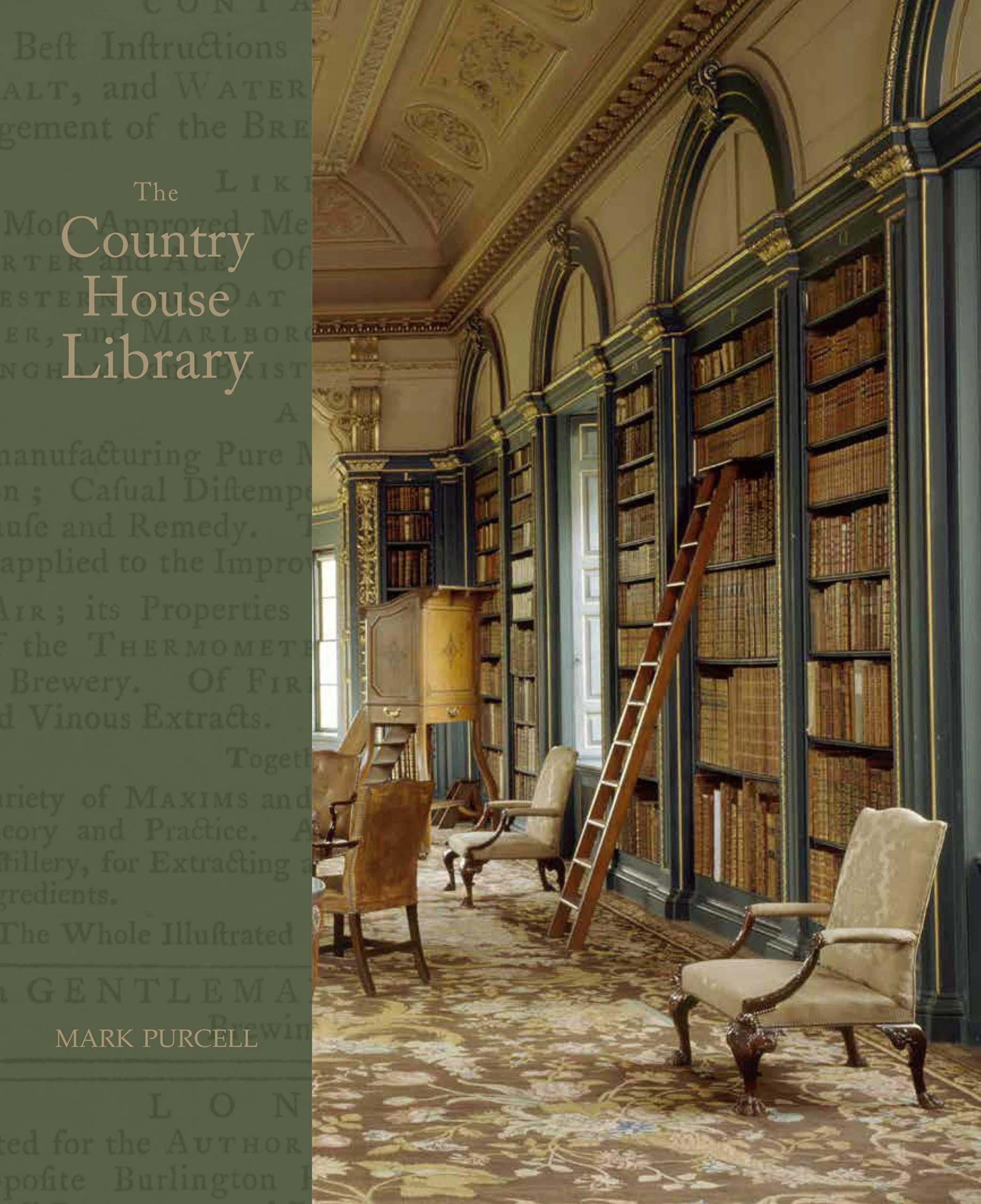
Beginning with new evidence that cites the presence of books in Roman villas and concluding with present day vicissitudes of collecting, this generously illustrated book presents a complete survey of British and Irish country house libraries. Replete with engaging anecdotes about owners and librarians, the book features fascinating information on acquisition bordering on obsession, the process of designing library architecture, and the care (and neglect) of collections. The author also disputes the notion that these libraries were merely for show, arguing that many of them were profoundly scholarly, assembled with meticulous care, and frequently used for intellectual pursuits. For those who love books and the libraries in which they are collected and stored, The Country House Library is an essential volume to own. Published in association with the National Trust Review: Detailed and well illustrated book on country libraries. - It can be used either as reference or as an interesting read. Excellent details of how country libraries were developed and owned with details of the houses where they are sited. Review: Country House Libraries - Wonderful book. Eminently readable and beautifully produced.
| Best Sellers Rank | 1,718,771 in Books ( See Top 100 in Books ) 316 in Professional Interior Design |
| Customer Reviews | 4.5 out of 5 stars 79 Reviews |
P**T
Detailed and well illustrated book on country libraries.
It can be used either as reference or as an interesting read. Excellent details of how country libraries were developed and owned with details of the houses where they are sited.
D**G
Country House Libraries
Wonderful book. Eminently readable and beautifully produced.
S**A
Five Stars
This is a beautiful book and a fascinating read; I am loving it. Perfect for any serious booklover
A**A
A beautiful, interesting read
Wonderful photos and design inspiration, probably more suited to top-end budgets unless you know a very reasonable and skilled carpenter/joiner. A pleasure to read.
B**G
Very readable
Comprehensive and readable.
M**T
This is not a book for you if you want detailed or good quality pictures
A note for buyers: this is not a book for you if you want detailed or good quality pictures There are probably quite a few people who might consider buying this book: those interested in history and the academic background of the aristocratic interest in books, book collecting and stately home libraries, or also those who want to look at gorgeous pictures of libraries and the interiors in which they are set: either because they like escapism or because they are a craftsman looking to replicate details and borrow ideas. This book is only for the first category of reader! This book is overwhelming text (three quarters to four fifths is text), whilst the pictures that are used are generally small (rarely being largest than one page) and of low quality resolution (many look like stock National Trust photos - not the much better resolution you'd be used to if you bought interiors books). There is also very little to no pictures of the libraries architectural details - like architraves, cornices or shelving. A carpenter could strain their eyes, but not be much the wiser!
M**R
Five Stars
very colourful, and an interesting read.
M**Y
Five Stars
Riveting
K**.
Good Experience
Item was as expected and arrived quickly and in good condition. Great read, if a bit dense and rambling in places. thanks!
M**N
Fascinating Book!
It’s no wonder that it’s in a third printing! So much information, History & pictures. I was lucky enough to get a used hardback copy that arrived very carefully & professionally packed! Speedy service & delivery. Many thanks!
X**R
les bibliothèques dans les demeures aisées à la campagne
le livre se situe en dehors des grandes collections connues en angleterre, il couvre un champ relativement nouveau car peu traité, il est clair et parfaitement illustré.
M**O
Libraries Great and Small, but Mostly Great
This is a sumptuous book, lavishly illustrated, double-columned, to be recommended unreservedly to anyone interested in the history of private libraries housed in some of the most beautiful houses in Britain. It is also a learned book: the bibliography runs to 862 items (fourteen of them earlier publications by Purcell himself), and an additional seventy-five sales catalogues; the endnotes run to 1187. The volume would be equally at home on the coffee table or the bookshelf. No one is better qualified to write on this topic than Mark Purcell, who for over fifteen years (1999-2015) was the National Trust Libraries Curator. More than anyone else he was responsible, through implementing digital cataloguing and facilitating public access, for bringing the NT’s extraordinary and widely scattered collection of books (over 300,000 of them) into the light of day and the esteem they deserve. His knowledge goes well beyond NT libraries: where private libraries were willing to own up to their contents, he has included them in his survey. His historical sweep takes us from Roman Britain into the present century. Determined, perhaps, to talk of round two thousand years of collecting, the section on Roman Britain has to work hard, over hard, on coming up with validating evidence. The evidence for libraries, collections and collectors then gradually become increasingly dense and rich, until we enter the 18th century which crests with the extravagance and competitiveness of bibliomania at the beginning of the 19th century. The supply of books to wealthy collectors at that period was fed by the effects of the French Revolution: huge quantities of books were released into the market place from the collections of the French aristocracy and religious houses. But within a century the tables were being turned, as for a host of reasons (among them the fall in landed income from agriculture, the spread of democratic representation, two world wars, increasing taxation, and Irish independence), British and Irish collectors saw their books sold up and dispersed, most dramatically to a new set of American collectors. However, much still remains today within the gracious settings of historic country houses. Purcell burrows into his subject from many angles. He not only tracks major and minor collectors, and collections large and small over many centuries, he traces the historical changes in practices associated with libraries and books: how, for examples, books were actually places on shelves; the introduction of labelling; the evolving differences between a closet, a study and a library; the appearance of bookshelves; the difference between collecting and mere consumption; and the distinction between a town and a country library, to name only some of his topics. The evidence and illustrations he adduces for his story (all those endnotes) can sometimes approach the tedious, so many platoons of examples and citations in endless march pasts. They call on his skill in verbal transition to get the platoons to wheel in a new direction, but often the stylistic pivots within the text are merely verbal rather than substantive. A transitional phrase like “Not far away” (p. 275) inclines one to ask whether it would have made much difference if the new site about to be mentioned has been a long way away; or whether the argument about a site being “Many miles to the north” (p. 276) would have been materially altered if the phrase had read “Not many miles to the north.” These moments of intellectual slackness are rare and probably unimportant. The prevailing texture of Purcell’s writing is concise, lucid, and with touches of wry humor (Dibdin is “librarian and bibliographical fixer“ to Earl Spencer, p. 166; the nouveaux riches felt they needed “a slice of the country house cake” p. 232). The scholarship is impeccable, with only one slight wobble of indecision which occurs over the date of the first privately printed library catalogue of a private library: on page p. 110 it is given as 1727, on p. 185 as 1726, and then, as if acknowledging the doubts, as [?1727] on p. 290, Figure 232. Three questions suggest themselves from Purcell’s arguments, the first on the shelving of books. In most historic country houses broken shelving conforms to the architectural and decorative style of the rooms, and by extension the houses, in which they find themselves, so we have the elegance of the neo-classic and Palladian, the pointed arches of the neo-Gothic, the massive load of the neo-Norman, and so forth. The attention is on the shelving as furniture, the books acting as space-fillers. But there are plenty of examples, especially more recently, of books lined up on undecorated, unbroken running shelving. Running shelving is simply functional: it is there for the sake of the books, not the other way around; it does not distract attention away from what it is carrying. Why keep all these valuable books in situ? Why not put hm all into well staffed, well protected, professional libraries where the general public might have far easier ad more comfortable access to them? Purcell puts a good deal of energy into arguing for the books in the houses he surveys being kept where they are. He argues that the aggregate body of books in an historic collection can embody distinct structures of knowledge and sensibility, reveal the manner in which such knowledge circulated, and together with all else in their setting constitute an integral cultural phenomenon. Any counter argument leads to a slippery slope: if you moved the books, why not, for example, the paintings? Best to keep everything as it was and is. These arguments can seem attenuated and, at heart, an argument for the maintenance of fossilized cultural privilege. What exactly is gained, one might ask, by studying books in an historic library in a country house where they might have lain for hundreds of years? If one sits studying a book, for example, in the magnificent library at Tatton Park, wrapped in extra clothing (it is winter and there is no heating), amidst the splendid Gillow furniture, the imposing brass grilled bookcases (containing 8000 books), on top of which sits rare Delft china, near to the antique globes and the stands for over-sized books, by walls hung with family portraits, with a view through the windows of the expansive estate domain beyond, perhaps whimsically fancying oneself a member of the noble Egerton family, is one’s engagement with the book enhanced or undermined? There is a good reason modern libraries are plain, simple and climate controlled. The question Mark Purcell received most often from visitors to NT libraries was along the lines of “Did they really read all these books?” Working with a paucity of evidence (annotating books, common in early modern Europe, went out of fashion; later collectors washed their books to remove all traces of annotation), Purcell conveys his own impression that more often than not books in historic libraries were indeed read by their owners. It would, of course, be embarrassing to admit that most books were merely expensive library dressing, so many consumer items playing a role in the purchaser’s self-aggrandizement. Further, one can hardly expect someone who buys books to admit that they do not read them. But why not? A recent article in Inc. gives a new twist to the old argument that the true proof of wisdom is the admission of one‘s ignorance. What greater display of intellectual modesty and truth could there be than admitting one has not read all the books in one’s collection, that one’s collection is more aspiration than achievement? But this piece of modern moral whimsy comes too late for most of the collectors in Purcell’s book. Meanwhile, Purcell’s book certainly deserves to be read, whether kept on a coffee-table or a book shelf.
G**S
Disappoint.
If you want to get nice photos about beautiful libraries in pretty country houses, this book is not for you.
Trustpilot
3 days ago
2 months ago