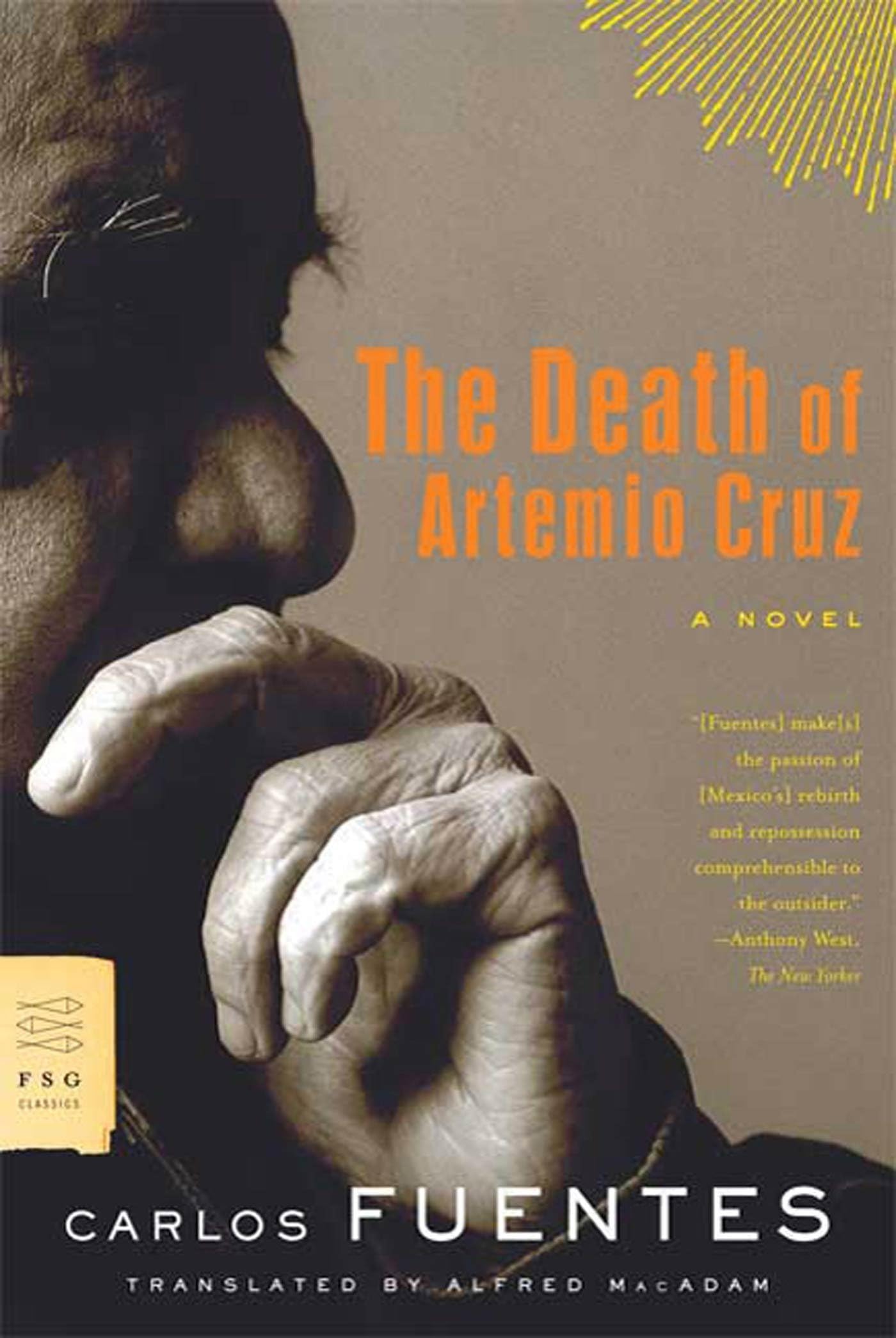
The Death of Artemio Cruz: A Novel (FSG Classics)
Product ID: 5283894
Desertcart purchases this item on your behalf and handles shipping, customs, and support to Tunisia.
As the novel opens, Artemio Cruz, the all-powerful newspaper magnate and land baron, lies confined to his bed and, in dreamlike flashes, recalls the pivotal episodes of his life. Carlos Fuentes manipulates the ensuing kaleidoscope of images with dazzling inventiveness, layering memory upon memory, from Cruz's heroic campaigns during the Mexican Revolution, through his relentless climb from poverty to wealth, to his uneasy death. Perhaps Fuentes's masterpiece, The Death of Artemio Cruz is a haunting voyage into the soul of modern Mexico. Review: Brilliant, innovative and powerful narrative - Artemio Cruz is a man whose impending death compels him to look back over the span of his life to re-live its peak experiences. In a real sense Cruz was more than a man living in Mexico during a time of revolution: he is a microcosm of Mexico itself. I deeply respect and admire the inventive, narrative technique, which in some respects is revolutionary. The switch of narrative voice in its person is daring and works brilliantly to make the narrative come alive. The story line becomes personal and engaging in the first person and yet more objective in the second and third persons. One really gets to know Artemio in the first person narrative segments. The flashbacks intrigued me in the way that Fuentes used changes in time to serve the narrative as they take the reader to high-points and low points of this man's rise from abject poverty and military adventures to his love affairs and rise to power with its attendant material wealth. Cruz is a fascinating literary figure whose human weaknesses are legion but he is roundly and credibly drawn and leaps off the page by virtue of the narrative technique of Fuentes. The translation by Alfred Mac Adam is elegant, poetic, lyrically rich and does justice to this literary novel: I highly recommend this great translation. This is a great book by a supremely gifted writer and translator: I hope you decide to read Artemio Cruz. Review: THE BEAUTY OF THE LONG NARRATIVE - What happens when an old man contemplates the life he lived when at the foot of death's door? Carlos Fuentes provides a sharp insight into the mind of the dying patriarch of the Cruz family. The novel is at once a triumph for Latin American writing, and adheres to the fidelity of romance, passion and beautiful use of language writers from that part of the world are known for. The book opens with Artemio Cruz's reminiscences on past lives and old loves, friends, foes, successes and failures. This make for some beautiful reading. The long narrative technique works very well here, as Fuentes effortlessly shifts between the past and present, like water embracing the sides of a continuously tilting glass. Artemio Cruz is depicted as a no-nonsense, strong man, shaped by the circumstances of his sordid birth (he was the bastard child of a mulatto slave brought to work in the hacienda), and although we are not given a full historical account, one can only assume that this, and other unpleasant circumstances ,morphed him into the man he eventually became. Whilst he may be seen as crass and unfeeling, one cannot help but have some pity for him. This is a man who has experienced loss, in different guises, and the only way he can protect himself from further deprivation is to be develop a cold heart. The result of this is then is an inability to trust wholeheartedly, and to view every relationship, personal or otherwise, for the gain it provides, and not the camaraderie or love it can bring. Other characters depicted in the novel assume a slightly nebulous presence throughout. Indeed, this may be seen as a form of weakness in the writing, as some readers may like to see characters fully fleshed out. However, the focus is on Artemio Cruz, and the dream-like nature of his reminiscences would not work well in a realistic medium. The dream is a by-product of his aging brain, and interweaving of sequences, articulating gestures, time past, present and future, is what makes this book successful. It would not do any other way. This is also an exercise in the psychology of the mind, as the main protagonists shifts between the first, second and third person narrative. The triune nature of his dialogue (I, you, he) is brought to a magnificent denouement when Cruz's last words are: "We shall die.....You are dying....have died....I shall die". This sums up the inevitable end we shall all face. Artemio knows this; we know this. In the end it is how we live our life that determines what narratives we will remember, and what others will remember us by, when we eventually go.
| Best Sellers Rank | #267,489 in Books ( See Top 100 in Books ) #101 in Caribbean & Latin American Literature #872 in Magical Realism #3,745 in Contemporary Literature & Fiction |
| Customer Reviews | 4.3 out of 5 stars 248 Reviews |
W**H
Brilliant, innovative and powerful narrative
Artemio Cruz is a man whose impending death compels him to look back over the span of his life to re-live its peak experiences. In a real sense Cruz was more than a man living in Mexico during a time of revolution: he is a microcosm of Mexico itself. I deeply respect and admire the inventive, narrative technique, which in some respects is revolutionary. The switch of narrative voice in its person is daring and works brilliantly to make the narrative come alive. The story line becomes personal and engaging in the first person and yet more objective in the second and third persons. One really gets to know Artemio in the first person narrative segments. The flashbacks intrigued me in the way that Fuentes used changes in time to serve the narrative as they take the reader to high-points and low points of this man's rise from abject poverty and military adventures to his love affairs and rise to power with its attendant material wealth. Cruz is a fascinating literary figure whose human weaknesses are legion but he is roundly and credibly drawn and leaps off the page by virtue of the narrative technique of Fuentes. The translation by Alfred Mac Adam is elegant, poetic, lyrically rich and does justice to this literary novel: I highly recommend this great translation. This is a great book by a supremely gifted writer and translator: I hope you decide to read Artemio Cruz.
U**A
THE BEAUTY OF THE LONG NARRATIVE
What happens when an old man contemplates the life he lived when at the foot of death's door? Carlos Fuentes provides a sharp insight into the mind of the dying patriarch of the Cruz family. The novel is at once a triumph for Latin American writing, and adheres to the fidelity of romance, passion and beautiful use of language writers from that part of the world are known for. The book opens with Artemio Cruz's reminiscences on past lives and old loves, friends, foes, successes and failures. This make for some beautiful reading. The long narrative technique works very well here, as Fuentes effortlessly shifts between the past and present, like water embracing the sides of a continuously tilting glass. Artemio Cruz is depicted as a no-nonsense, strong man, shaped by the circumstances of his sordid birth (he was the bastard child of a mulatto slave brought to work in the hacienda), and although we are not given a full historical account, one can only assume that this, and other unpleasant circumstances ,morphed him into the man he eventually became. Whilst he may be seen as crass and unfeeling, one cannot help but have some pity for him. This is a man who has experienced loss, in different guises, and the only way he can protect himself from further deprivation is to be develop a cold heart. The result of this is then is an inability to trust wholeheartedly, and to view every relationship, personal or otherwise, for the gain it provides, and not the camaraderie or love it can bring. Other characters depicted in the novel assume a slightly nebulous presence throughout. Indeed, this may be seen as a form of weakness in the writing, as some readers may like to see characters fully fleshed out. However, the focus is on Artemio Cruz, and the dream-like nature of his reminiscences would not work well in a realistic medium. The dream is a by-product of his aging brain, and interweaving of sequences, articulating gestures, time past, present and future, is what makes this book successful. It would not do any other way. This is also an exercise in the psychology of the mind, as the main protagonists shifts between the first, second and third person narrative. The triune nature of his dialogue (I, you, he) is brought to a magnificent denouement when Cruz's last words are: "We shall die.....You are dying....have died....I shall die". This sums up the inevitable end we shall all face. Artemio knows this; we know this. In the end it is how we live our life that determines what narratives we will remember, and what others will remember us by, when we eventually go.
T**E
A tour de force of Mexican life and the story-telling art
I was first attracted to this novel because of the author's reputation as the premier man of of Mexican letters, and Carlos Fuentes' accomplishment with this novel alone is monumental. How could Fuentes have known enough about life to have written it at the age of about 34? Wow! The novel should be read and reread--perhaps in different translations, as one reviewer has recommended. Other reviewers of this novel, The Death of Artemio Cruz, have summarized the plot and action for you; I want to say something about "who" Artemio Cruz is and why we should still care 47 years after the original publication date. Another way of saying it is this: The Death of Artemio Cruz is also the life of Artemio Cruz--and we've got to care because there is so much in this novel about Mexico that the U.S. government should learn, which we cannot learn from a documentary or statistics. I can't pretend to be an expert on Latin American Literature, (and I've never traveled south of the border), but it seems to me that Artemio Cruz is Mexico--of course, it's more complicated than that metaphor--but you have to read all the way to at least page 267 to understand that Mexico is "a thousand countries with a single name." In other words, if Mexico is like Artemio's life then both are powerful and powerless, a success and a failure, extremely poor and extremely rich, loving and hateful, courageous and cowardly, dazzling and dizzying, quiet and explosive. For Artemio is all of those--and by analogy, so is Mexico, or Latin America. Fuentes had to develop a narrative structure and voice that would show us Mexico (and Artemio) in a comprehensible way. But how do you show chaos as logical and tragedy as a sign of hope? Fuentes does it here. One reviewer of this novel didn't like the narration switching back and forth between 1st, 2nd, and 3rd person, and another cited "wordy lyricism," but, Readers, this novel attempts to create order out the astoundingly beauty of all of Mexico. This novel comes forth like the Aztecs and the Mayans, Cortez and Maximilian, Frida Kahlo, Diego Rivera, Emiliano Zapata, and Pancho Villa all rolled into one. From this mix, a terrible beauty is born. No wonder we Puritan Americans--raised on Nathaniel Hawthorne and Emily Dickinson--can't understand Latin American literature. A key line to understanding this novel can be found early: "Who is he? How did he rise out of himself?" (97) These questions come from inside his wife Catalina's consciousness; she's wondering how Mexico came to produce someone like Artemio because he's not at all like her fine aristocratic father. Catalina desires Artemio but is disgusted by his origins and suppresses her natural love. My question is: How did the world come to the surface in Artemio? What is Mexico that it brought the Artemios into existence? Cruz has been corrupt in his career, but Fuentes is showing us the points at which a man goes either one way or the other. The author shows us that the sheer naked will to survive horrible life circumstances can drive a boy to become this type of man, to do almost anything to survive, and that men are born into circumstances not of their own making, and they make history while trying to overcome these terrible circumstances. Another reviewer says that though Cruz was corrupt, he is not a monster. True; I don't think that a monster would have enough of a consciousness to think of other people on his death bed. Cruz seems to be dying of a bilious stomach disease which has eaten him from the inside out all his life. As a man, he is aching for love; he's sad and lonely in his triumph. His dying wishes might not be fulfilled, but he will perish with one thought on his mind, a tragic accident early in his life which resulted in a loss that haunts him to his death.
T**N
A book best read over a short period of time
The last third of the book finally had me interested enough to keep reading to find out what happened next. Perhaps keeping track of dates, person whose story was being told, and what transpired when, would have made the story easier to follow from the outset.
M**S
The Death of Artemio Cruz by Carlos Fuentes
I read this book, many a many (1972) in Spanish class at the Uni. and even then I liked it even though I did not understand much of what it said. Have recently read it again (in both languages, which is to say Spanish and English and enjoyed it IMMENSELY! I have always liked Spanish-American lit. as compared to just Spanish lit (that is to say, in Castilian). I had this same reaction in the Univ. Suppose it has to do with the freshness, presentness (sp?), etc. of Spanish-American Lit. The same thing happens to me with the latter's music. Maybe it just a personal reaction but I have NO doubt that the novels by C. Fuentes should be read by all. Of course, his style changed (doesn't that happen to all of us, in life or other things?) and of course he is no longer with us. I'm a TOTALLY unpolitical person, so don't misinterpreted me!
J**D
Fuentes's Masterpiece
This book is complex, difficult, and ambiguous, but well worth the trouble. The style owes a lot to Wlliam Faulkner. The central character quite resembles Citizen Kane of Orson Welles's classic film. The only difference is that Artemio Cruz is a corrupt Mexican journalist, not an American one. The story consists of a series of flashbacks as Cruz remembers his quite violent, corrupt life. It reveals a great deal about the bloodbath that was the Mexican Revolution of 1910-1920 and also captures the corruption of Mexico's one-party system, which governed from 1929 until 2000. This party, the PRI, is back with the current president. I think this book captures the paradoxical nature of modern Mexico. It IS difficult, but rewarding.
G**O
Rogue in a troubled land
Fuentes has placed a protagonist/antagonist in a country that seems in constant war with itself. His novel is in a sense a portrait of modern Mexico in turmoil. The influence of others is notable in Fuentes' story-telling, notably the internal monologues and changing points of view in the work of Faulkner and others. I found the novel perplexing on a first reading but much more understandable after an Internet review of Mexican history in the twentieth century.
B**0
A classic
A short, quick read that reads strongly like a modern Edgar Allen Poe, if maybe a bit deeper. If you're looking for Faulkner, ie beautiful sentences you'll read over and over, this is probably not the book for you. But it's one of those works that basically fulfills its promises--it's a page turner at first about an erie kind of love, which then turns into...(no spoilers) As I said, definitely echoes of Poe, and something of a page turner, but imagine that Poe had gone a little deeper, and wrote thoughtful and somewhat existential commentaries on life, death, and the nature of love.
A**R
Four Stars
Worthy
P**M
A classic
I've read much by other reviewers on this book and a lot seems to focus on it's changes of person, tense and sense. I enjoyed the book immensely, not just for what it is but also for what it represents and also for the debate that it always raises. I have no problem with the change in viewpoint - from 'I' to 'You' to 'He' - in fact I really enjoyed this chimerical form of being able to say 'look, this is a different viewpoint'. I found this to be really Joycean - or possibly even more like Joyce's compatriot Beckett. I love that sense of dislocation whereby you have to read the novel like stream of consciousness. But Fuentes is neither Joyce nor Beckett (maybe more Beckett-like as he is really trying to make people think without resorting to the tell-mode). There are so many debates within this book. Debates about 'the revolution', debate between young and old Mexico without even going into the narrative that makes up this book. Fuentes is a master of conveying things without the reader being aware that he is being worked on. I would sincerely urge those that failed to make it with this book to give it another try, to loosen up your mind and let the book flow over you. It is an excellent piece of work and probably the best example I have read of new Latin American magical. Please read the book. Apart from Pedro Paramo it is probably the most enjoyable book I have read from Mexico and certainly the deepest within the new Latin American mystical realism group. Onward to Arltt.
L**S
Very good read
I liked first-person insights and reflections closely combined with a wider narrative. His moral dilemmas, failings, and regrets are masterfully contextualized and embedded within the larger historical and cultural background. One word of caution - it's not an easy read. It uses modernists literary style (apparently influenced by Joyce) where times and perspectives are deliberately mixed and confused. Importantly, first and third persons are deliberately mixed and correspondingly represent the present (I), and the past (he).
S**N
Waste of money
WTF has this author written?!! Now there is a new trend in writing novels which is to make the plot appear complex and the story will be a blast. But even that should have some sense. It is a complete nonsensical book. I couldn't get anything from it. Ridiculous style of writing and while appearing to be mature the author has written in the most immature way. Waste of money. I was about to throw away this book. But now decided to donate it so that the sacrifices made by the trees don't go in vain.
S**O
Brilliant novel of Mexico but a little dated perhaps?
A great work of literature. Some elements really gripping and even in translation the prose is marvellous. However, I find elements a little dates in their desire to be modernist and it’s impossible not to compare the work with Marquez’ superior novels. But a window into Mexico that’s well worth reading.
Trustpilot
3 days ago
4 days ago