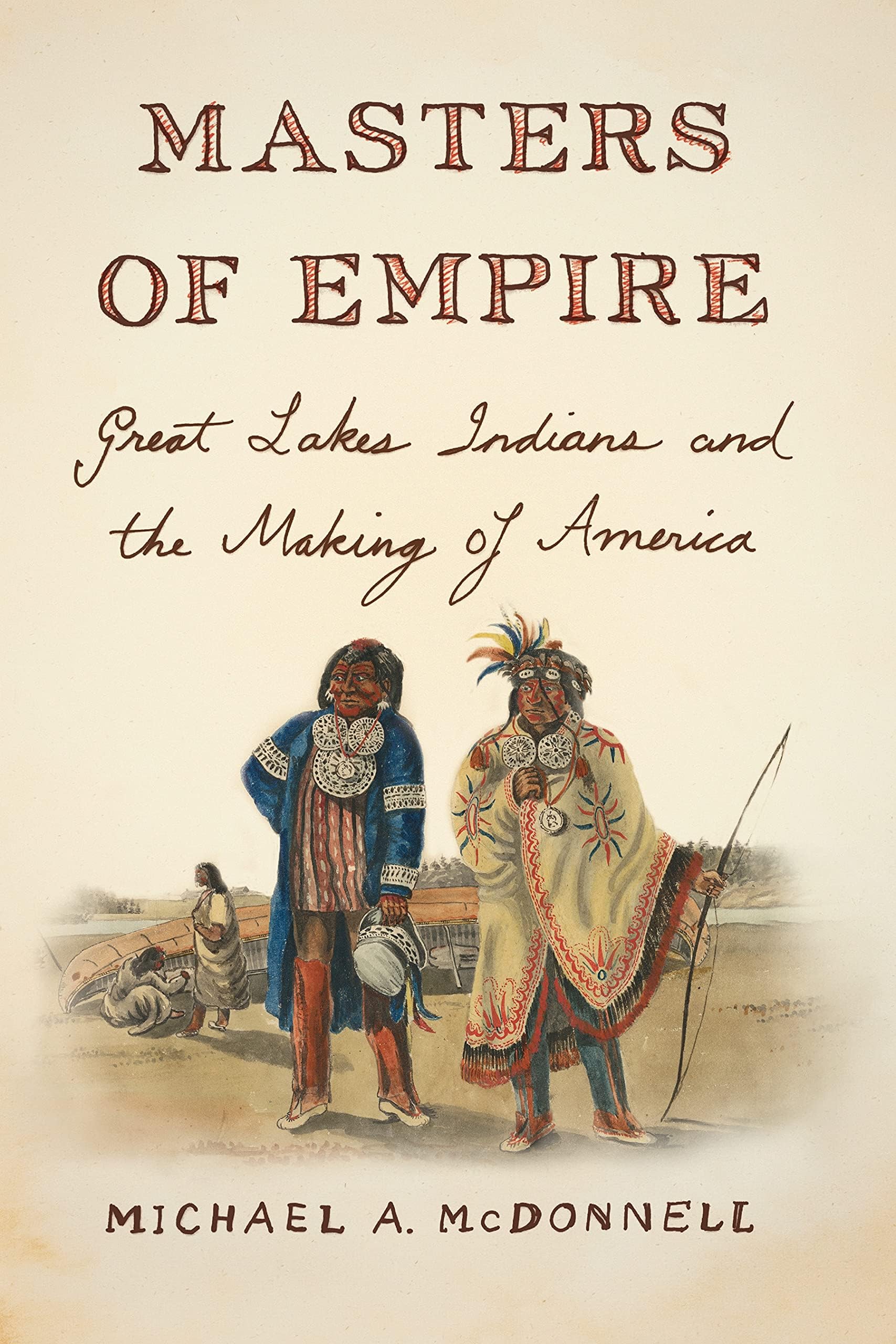
Masters of Empire: Great Lakes Indians and the Making of America
Product ID: 54062931
Desertcart purchases this item on your behalf and handles shipping, customs, and support to Tunisia.
A radical reinterpretation of early American history from a native point of view In Masters of Empire , the historian Michael A. McDonnell reveals the vital role played by the native peoples of the Great Lakes in the history of North America. Though less well known than the Iroquois or Sioux, the Anishinaabeg, who lived across Lakes Michigan and Huron, were equally influential. Masters of Empire charts the story of one group, the Odawa, who settled at the straits between those two lakes, a hub for trade and diplomacy throughout the vast country west of Montreal known as the pays d’en haut . Highlighting the long-standing rivalries and relationships among the great Indian nations of North America, McDonnell shows how Europeans often played only a minor role in this history, and reminds us that it was native peoples who possessed intricate and far-reaching networks of commerce and kinship. As empire encroached upon their domain, the Anishinaabeg were often the ones doing the exploiting. By dictating terms at trading posts and frontier forts, they played a crucial part in the making of early America. Through vivid depictions--all from a native perspective--of early skirmishes, the French and Indian War, and the American Revolution, Masters of Empire overturns our assumptions about colonial America. By calling attention to the Great Lakes as a crucible of culture and conflict, McDonnell reimagines the landscape of American history. Review: An unacknowledged Indian Empire next door to Early America. - This is an excellent and important piece of American history, thoroughly researched and written by our cousin from the English speaking world, Professor McDonnell, from that outsider vantage point, a clear-eyed depiction of a major piece of 17th Century pre-revolutionary America. It will “adjust” your view of how the Revolution started, and will introduce you to an American native empire not well known and critical knowledge for serious scholars of US history. A breathtaking insight. Gary Sydow Review: brilliant and thought provoking - This book should be required reading in all American history classes. Instead of trading on the stereotypes of the “ poor drunk Indians, abused and tricked by the whites”, this history explains in a thorough, well- documented manner the brilliant contributions to world history made by the Odawa race. It provides an engrossing explanation of the early history of the northern Great Lakes, as well as the significance of the seven years war, known in the past as the French and Indian war.
| Best Sellers Rank | #127,044 in Books ( See Top 100 in Books ) #108 in Native American Demographic Studies #175 in U.S. Colonial Period History #233 in Indigenous History |
| Customer Reviews | 4.5 out of 5 stars 201 Reviews |
G**W
An unacknowledged Indian Empire next door to Early America.
This is an excellent and important piece of American history, thoroughly researched and written by our cousin from the English speaking world, Professor McDonnell, from that outsider vantage point, a clear-eyed depiction of a major piece of 17th Century pre-revolutionary America. It will “adjust” your view of how the Revolution started, and will introduce you to an American native empire not well known and critical knowledge for serious scholars of US history. A breathtaking insight. Gary Sydow
I**N
brilliant and thought provoking
This book should be required reading in all American history classes. Instead of trading on the stereotypes of the “ poor drunk Indians, abused and tricked by the whites”, this history explains in a thorough, well- documented manner the brilliant contributions to world history made by the Odawa race. It provides an engrossing explanation of the early history of the northern Great Lakes, as well as the significance of the seven years war, known in the past as the French and Indian war.
C**I
Interesting read on a lesser-discussed aspect of American history
I bought this book without truly understanding what it was about but I'm glad I read it. I have read countless books on colonial American history and this book provided a view of a Native American group I had learned only little about in previous books. It was interesting to see how a group of peoples influenced American history when the standard narrative is to dismiss them as pawns of the French or English. The book was a bit repetitive in some places but overall was an interesting read.
M**N
Revisionist history at its best -- a great read
This book rocked my summer. This is based on a lot of scholarly research but the prose is very accessible, and the heavy emphasis on narrative makes it move along very briskly. McDonnell's argument is entirely convincing, and as a result I have a whole new way of thinking about the American Revolution. It was also incredibly interesting to read about a group of Native Americans (the Odawa) who usually aren't part of the master narrative of Native American history (usually more the Iroquois, the Sioux, etc.) and who in fact had a much different experience of the 17th and 18th centuries than did many other tribes because the whites actually depended on them and they had leverage -- at least until after the British defeat in the Revolutionary War. This book is a real eye-opener. It is revisionist history in the very best sense of the term.
A**I
which is never good for reading books
This book was... okay? I read it over a very spread out amount of time, which is never good for reading books, but also in part speaks to how this book just didn't grab me. I was convinced by the end that McDonnell was right to identify how the Odawa had been left out of narratives, and I generally believed the power they held over the region. I just got caught up in the details and it made it hard to follow things that were happening. That might be part of the point, but it made for a really difficult read, and the months it took me to read it made it even more difficult. Overall, not a terrible read, and interesting to consider, but not my favorite thing.
T**R
An exciting journey
A wonderful trip into the real world of the Native Americans and their life and politics in the early days of the fight for control of the land in late 1700s. Well researched and well written. Most interesting too was how powerful countries attempted to negotiate with people of a culture they knew nothing about, felt superior to, and never really understood. Great read.
R**S
Masters of Empire a must read for historians!
Dr. Michael McDonnell's Masters of Empire (Great Lakes Indians and the Making of America) is a must read by all American history enthusiasts, whether in academia, or not! His explanation of the importance of the Upper Great Lakes Woodland Indian Canoe Culture in the development of the North American continent is stunning. It is an extremely important fact unexplored by earlier historians. Michilimackinac, and Mackinac Island, at one time were the centers of the North American continent's commerce. Both before the arrival of Europeans, and soon after their arrival.Dr. Charles Cleland in his book, Rites of Conquest, discusses this same area's center for commerce involving "chert" (for stone tools) as beginning 8,000 years prior to the life of Jesus Christ. It was later replaced by the fur trade, and after that commercial fishing in the 17th-18th and 19th centuries. All of which, was under the control of local Woodland Indian Canoe Culture-the Anishinaabe!
W**K
Well researched, but a little pretentious
The author is a professor in Australia, so it is hard to understand why he wrote this book in the first place. His repeated use of the French term "pays d'en haut" for the Great Lakes region, and his frequent use of the word "Odawa" instead of the commonly used "Ottawa," seem like an affectation, as if he were trying to be different for its own sake. However, the book has a good deal of information and many sources, well documented.
D**C
VERY happy with my order
FAST delivery; VERY happy with my order!
Trustpilot
2 days ago
1 month ago