
Desertcart purchases this item on your behalf and handles shipping, customs, and support to Tunisia.
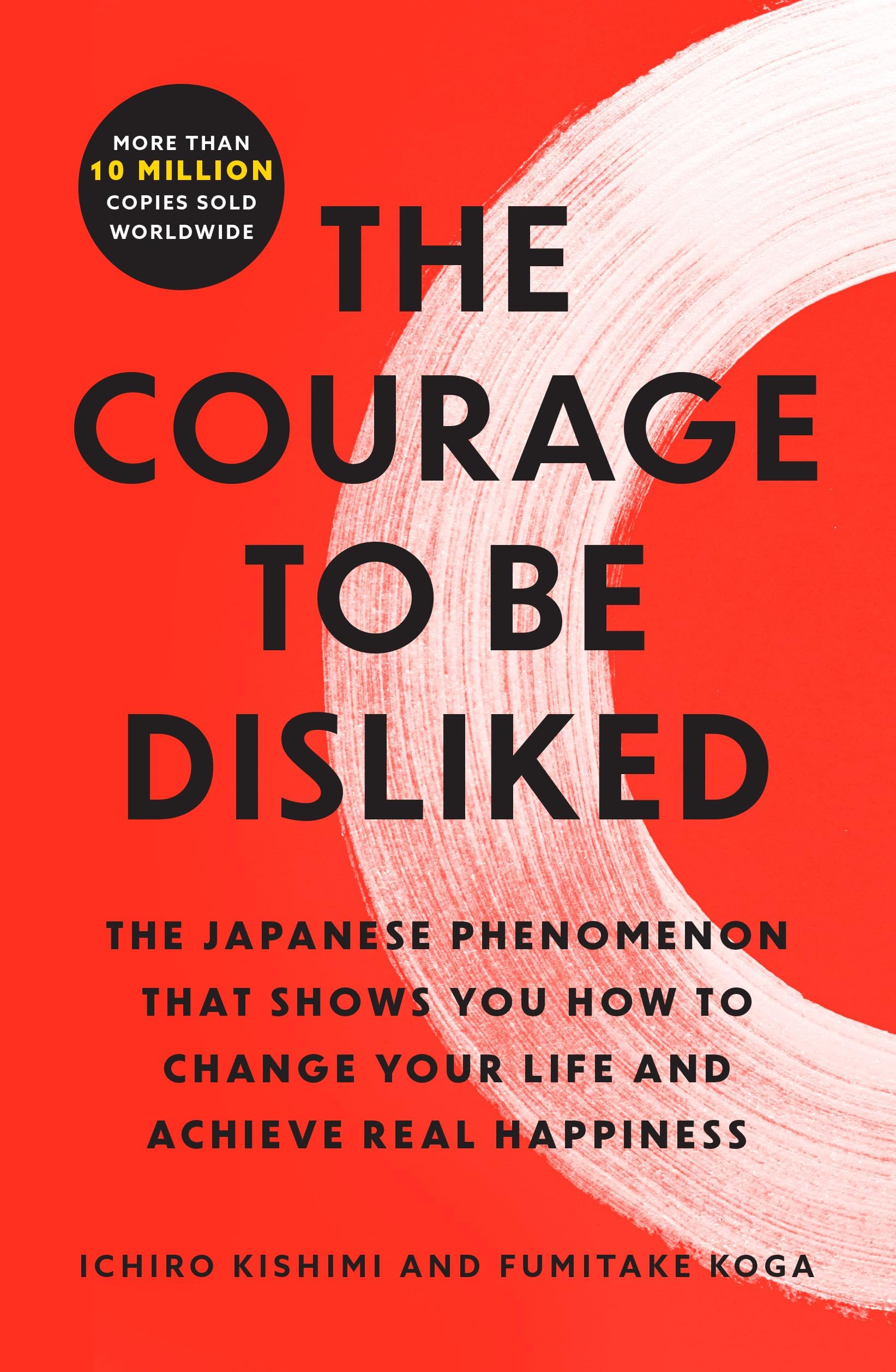
The New York Times bestselling TikTok sensation with more than 13 million copies sold worldwide, The Courage to Be Disliked is a transformative and practical guide to personal happiness and self-fulfillment. Now you can unlock your full potential and free yourself from the shackles of past traumas and societal expectations to find true personal happiness. Based on the theories of renowned psychologist Alfred Adler, this book guides you through the principles of self-forgiveness, self-care, and mind decluttering in a straightforward, easy-to-digest style that’s accessible to all. The Courage to Be Disliked unfolds as a dialogue between a philosopher and a young man, who, over the course of five enriching conversations, realizes that each of us is in control of our life’s direction, independent of past burdens and expectations of others. Wise, empowering, and profoundly liberating, this book is a life-changing experience that shows you a path to lasting happiness and how to finally be the person you truly want to be. Millions are already benefiting from its teachings—and you can be next. Review: Really Great - I really enjoyed this book. It is well worth the read if you are curious. It gives you lots to chew on and great points of view. It was great to learn a thing or two from it. Great writing and overall I would highly recommend it. Review: Embracing Divine Freedom: The Courage to Be Disliked in the "Christian" Journey - In “The Courage to Be Disliked,” authors Ichiro Kishimi and Fumitake Koga present a compelling dialogue that bridges the gap between psychology and philosophy, drawing on the principles of Alfred Adler, a founding figure of individual psychology. The book is structured as a conversation between a philosopher and a young man, providing a unique narrative style that engages readers on both intellectual and emotional levels. One of the most significant contributions of this work is its exploration of the human desire for approval versus the necessity of self-acceptance. Kishimi and Koga argue that the need for recognition from others often leads to a life dictated by external expectations, thereby stifling personal growth. They challenge readers to cultivate the courage to be disliked, a radical notion in a society that often prioritizes conformity and seeks validation through social acceptance. The authors delve into the importance of embracing one’s individuality and the role of community in fostering personal development. They advocate for accountability to oneself and the value of authentic relationships over superficial connections. This perspective is particularly relevant in today’s hyper-connected world, where social media often blurs the lines between genuine interactions and performative relationships. Moreover, the book resonates with biblical principles, emphasizing themes of personal responsibility and the transformative power of self-acceptance. Readers familiar with spiritual teachings will find profound connections between Adlerian psychology and scriptures that promote love, understanding, and community engagement. The dialogue format maintains a refreshing pace, inviting readers into a philosophical inquiry that prompts introspection. With each turn of the page, Kishimi and Koga’s insights provoke thought and reflection, offering practical guidance that readers can apply to their own lives. While some may find the ideas challenging or even counterintuitive, “The Courage to Be Disliked” ultimately serves as an empowering manifesto for anyone seeking to break free from the shackles of societal expectations. It encourages a shift in mindset, proposing that true happiness lies in the acceptance of oneself rather than the pursuit of external approval. In conclusion, “The Courage to Be Disliked” is not merely a self-help book; it is a philosophical treatise that compels readers to rethink their understanding of self-worth, relationships, and personal freedom. Whether you are a seasoned scholar or a curious newcomer to these concepts, this book is a valuable addition to your library—an enlightening read that promises to foster growth and enhance one’s journey towards self-discovery.
| Best Sellers Rank | #350 in Books ( See Top 100 in Books ) #1 in Happiness Self-Help #1 in Free Will & Determinism Philosophy #1 in Mood Disorders (Books) |
| Customer Reviews | 4.5 out of 5 stars 27,337 Reviews |
B**P
Really Great
I really enjoyed this book. It is well worth the read if you are curious. It gives you lots to chew on and great points of view. It was great to learn a thing or two from it. Great writing and overall I would highly recommend it.
S**O
Embracing Divine Freedom: The Courage to Be Disliked in the "Christian" Journey
In “The Courage to Be Disliked,” authors Ichiro Kishimi and Fumitake Koga present a compelling dialogue that bridges the gap between psychology and philosophy, drawing on the principles of Alfred Adler, a founding figure of individual psychology. The book is structured as a conversation between a philosopher and a young man, providing a unique narrative style that engages readers on both intellectual and emotional levels. One of the most significant contributions of this work is its exploration of the human desire for approval versus the necessity of self-acceptance. Kishimi and Koga argue that the need for recognition from others often leads to a life dictated by external expectations, thereby stifling personal growth. They challenge readers to cultivate the courage to be disliked, a radical notion in a society that often prioritizes conformity and seeks validation through social acceptance. The authors delve into the importance of embracing one’s individuality and the role of community in fostering personal development. They advocate for accountability to oneself and the value of authentic relationships over superficial connections. This perspective is particularly relevant in today’s hyper-connected world, where social media often blurs the lines between genuine interactions and performative relationships. Moreover, the book resonates with biblical principles, emphasizing themes of personal responsibility and the transformative power of self-acceptance. Readers familiar with spiritual teachings will find profound connections between Adlerian psychology and scriptures that promote love, understanding, and community engagement. The dialogue format maintains a refreshing pace, inviting readers into a philosophical inquiry that prompts introspection. With each turn of the page, Kishimi and Koga’s insights provoke thought and reflection, offering practical guidance that readers can apply to their own lives. While some may find the ideas challenging or even counterintuitive, “The Courage to Be Disliked” ultimately serves as an empowering manifesto for anyone seeking to break free from the shackles of societal expectations. It encourages a shift in mindset, proposing that true happiness lies in the acceptance of oneself rather than the pursuit of external approval. In conclusion, “The Courage to Be Disliked” is not merely a self-help book; it is a philosophical treatise that compels readers to rethink their understanding of self-worth, relationships, and personal freedom. Whether you are a seasoned scholar or a curious newcomer to these concepts, this book is a valuable addition to your library—an enlightening read that promises to foster growth and enhance one’s journey towards self-discovery.
K**R
Great Read and Gripping Ideas
I loved how it utilized devils advocate throughout the entirety to show how it’s misunderstood and misrepresented. I wish it was longer and explained some parts more in depth.
C**Y
One of the very few self-help books that may actually change your life.
Wow. How is Sigmund Freud a household name but Alfred Adler a mere afterthought, a footnote? Even as a pretty serious psychology autodidact and after taking numerous college classes (intro, child, adolescent, personality psychology) I must admit I didn't even recognize his name let alone his research or theories. But the Japanese are onto something, ahead of the rest of the world as it seems they tend to be (I just recently read about topics such as shinrin-yoku and nano-hydroxyapatite), ahead of the rest of the world. Adlerian psychology AKA individual psychology is hopefully here to stay. You can see evidence of the culture shifting to corroborate its views—evidence of the coming to fruition of Alder's own prophecy on why he'd be forgotten: "The implication being that if his [ideas] were forgotten, it would be because [they] had outgrown the bounds of a single area of [philosophy], and become commonplace, and a feeling shared by everyone." Take for example the recent publication by bestselling author David Brooks; if you've read The Courage to Be Disliked, you'll immediately recognize the parallels to Adlerian psychology in the cover flap summary of The Second Mountain. Really this isn't a self-help or personal growth book as much as it is an introductory philosophy book with the power to direct and transform your life. And it sets a new bar for me on which self help books are worth reading (some, not many) and which are garbage (most of them). Not to mention that using the format of Socratic dialogue in and of itself is just a brilliant choice by the authors. How this book can be rated anything below 5 stars is unfathomable by me, and makes me question my faith in humanity, the good judgment of the common person. I hope the tides of history turn, that in 50 years it's not Fraud (oops I mean Freud) who will be revered as the father of modern psychology but that Alfred Adler will rightly take his place with that title. I think it's high time we start to reject the pitifully ineffective disease/disorder paradigm of mental health which has been corrupted by the vices of allopathic medicine (which does have its virtues in other contexts) and start to embrace the more humanistic, holistic, positive growth, teleological (wink wink) approaches to psychology and mental health. Look at the world: current events, mental health statistics, etc. Our current way of doing things (especially in America) is not working. Adlerian psychology is right here under our noses, a beacon of hope waiting to be shone and shown to others. Which is what I implore you to do once you've finished reading this book: show it to others! Buy it for them if you have to! I have already bought 3 other copies as gifts to people in my life....you can trust my review because I'm already putting my money where my mouth is. READ THIS BOOK especially if you have not already scaled your "second mountain"
D**R
Amazing book.
Socratic method to help one understand this unique but powerful philosophy. I highly recommend reading it to anyone who wants to expand their toolkit for the pursuit of happiness.
S**Y
Somewhat Inciteful
This book does encourage one to see things from a different perspective and I do like the fact that many of the book's topics are based on taking personal accountability, but in my opinion, it's not the groundbreaking, life changing book that it's touted to be. It's worth a read, but not a re-read.
K**R
Life changing read
I cannot express how influential this book has been in my leadership philosophy and relationships. Although a simplistic view of “happiness” the book highlights the nuances of everyday interactions, bringing life to its practice. Highly recommend.
T**A
Great read!
This is a very well written book and it gives you alot to consider :) i highly recommend if youre struggling with acceptance
G**O
Got me Thinking
I found this book deeply provocative. It made me reflect on my own actions, or lack thereof. I could work more often on NOT pleasing others so much. You know, saying 'no', even when it hurts. Fascinating and eye-opening book. I recommend this read to all you champions out there.
J**0
Very Insightful
I've read many spiritual, philosophical, self-help books, and for me, this is one of the best. When I first started reading it, I was very disappointed at the format - purely conversational style. After advancing a bit, I found that the ideas shared were so thought-provoking that they completely compensated for the format. The book revolves around Adlerian psychology, which I hadn't heard before. I found it extremely surprising how a theory that is close to 100 years old can offer so many ideas that feel so fresh, reasonable, and yet, so vastly counterintuitive from today’s beliefs regarding human behaviour. I would not recommend to people who dislike challenging traditional beliefs of human behaviour (their own included)
M**L
Great
Haven’t read it yet but everyone has been talking about it so want to give it ago. Great value for money, would definitely recommend
A**9
The Courage to Be Disliked: A Profound and Liberating Perspective on Personal Growth
"The Courage to Be Disliked" by Ichiro Kishimi and Fumitake Koga is a thought-provoking and transformative book that challenges conventional wisdom about happiness, interpersonal relationships, and personal growth. Drawing on the principles of Alfred Adler, a renowned psychologist, this book presents a refreshing and liberating perspective on life. The authors introduce the Socratic dialogue format, where a young man engages in conversations with a philosopher, challenging his beliefs and assumptions. Through this dialogue, readers are invited to explore their own deeply ingrained beliefs and societal expectations that hinder personal growth and hinder their ability to live a fulfilling life. One of the most significant takeaways from this book is the concept of "separation of tasks." It teaches that individuals have the power to choose their own thoughts, attitudes, and actions independently of the past or the expectations of others. This notion empowers readers to take responsibility for their own happiness and break free from the victim mentality. It encourages personal agency and self-acceptance, emphasizing that it is possible to live authentically, regardless of external circumstances. Another valuable aspect of "The Courage to Be Disliked" is its exploration of interpersonal relationships. The book challenges the common belief that our past experiences and the behavior of others determine our present relationships. Instead, it argues that we have the ability to form new connections and choose how we interact with others, enabling us to foster healthier and more fulfilling relationships. This emphasis on individual responsibility and mutual respect provides a fresh perspective on the dynamics of human interaction. Furthermore, the book delves into the nature of happiness. It suggests that happiness is not dependent on external achievements or validation from others but stems from an internal sense of purpose and contentment. By embracing one's true self and pursuing one's own goals and desires, readers are encouraged to find a profound sense of fulfillment and joy. One of the strengths of this book is its accessibility. The Socratic dialogue format makes complex psychological concepts easily understandable and relatable. The conversations between the young man and the philosopher are engaging, thought-provoking, and provide practical examples that readers can apply to their own lives. However, it is important to note that "The Courage to Be Disliked" is not a quick fix or a step-by-step guide to happiness. It challenges deeply ingrained beliefs and requires introspection and personal reflection. Readers may need to revisit certain passages or concepts to fully grasp their meaning and integrate them into their lives. In comparison to other self-help and personal development books, "The Courage to Be Disliked" stands out due to its unique approach and philosophical foundation. It encourages readers to question societal norms, overcome their fears of social disapproval, and embrace their own uniqueness. While the book may not resonate with everyone, those willing to explore unconventional ideas will find it a transformative and empowering read. In conclusion, "The Courage to Be Disliked" is a remarkable book that challenges readers to rethink their beliefs about happiness, relationships, and personal growth. Its profound insights, presented through engaging dialogues, offer a liberating perspective on life. If you are open to exploring new ideas and are ready to take responsibility for your own happiness, this book can be a catalyst for personal transformation.
B**R
Great book, important perspectives
Doesn't make sense, and there's no real logic to it, but it gives you a certain constructive perspective on how to approach life. If you choose one self-help book, this is the one.
Trustpilot
5 days ago
1 month ago