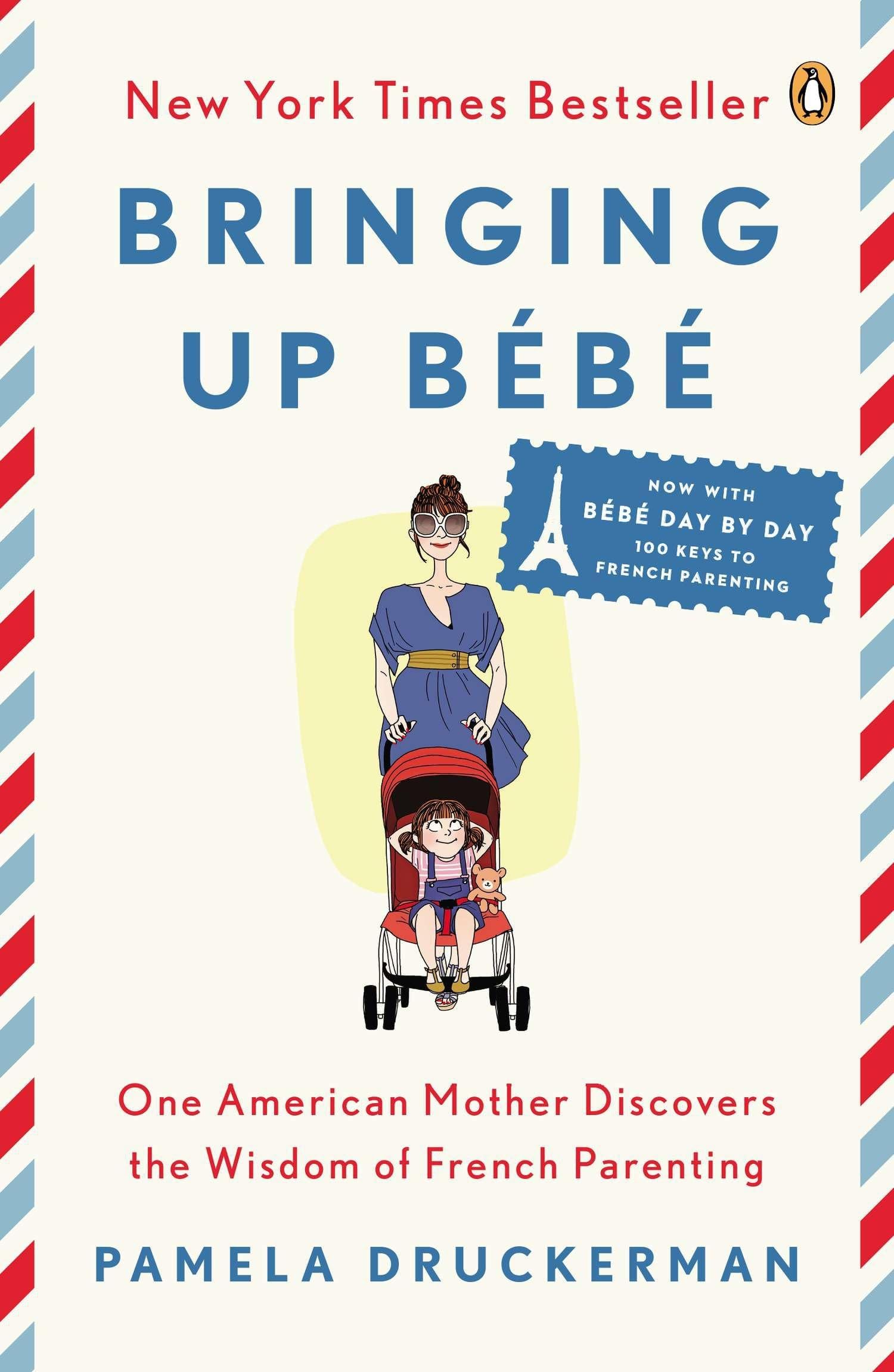
Bringing Up Bébé: One American Mother Discovers the Wisdom of French Parenting
Product ID: 6604789
Desertcart purchases this item on your behalf and handles shipping, customs, and support to Tunisia.
The runaway New York Times bestseller that shows American parents the secrets behind France's amazingly well-behaved children. *This edition also includes Bébé Day by Day: 100 Keys to French Parenting “On questions of how to live, the French never disappoint. . . . Maybe it all starts with childhood. That is the conclusion that readers may draw from Bringing Up Bébé .” — The Wall Street Journal “I’ve been a parent now for more than eight years, and—confession—I’ve never actually made it all the way through a parenting book. But I found Bringing Up Bébé to be irresistible. ” — Slate When American journalist Pamela Druckerman had a baby in Paris, she didn't aspire to become a “French parent.” But she noticed that French children slept through the night by two or three months old. They ate braised leeks. They played by themselves while their parents sipped coffee. And yet French kids were still boisterous, curious, and creative. Why? How? With a notebook stashed in her diaper bag, Druckerman set out to investigate—and wound up sparking a national debate on parenting. Researched over three years and written in her warm, funny voice, Bringing Up Bébé is deeply wise, charmingly told, and destined to become a classic resource for American parents. Review: The Skinny on French Parenting - The other day, someone shared a "tweet" with me, tagged "DadsTalking," in which a father remarks, "I love my son's curiosity & spirit, ...but he always comments and talks back. How do I get him to stop without stifling him?" This simple tweet, marked by its earnestness, angst and apprehension, concisely encapsulates American attitudes toward parenting today. In her book Bringing up Bebe: One American Mother Discovers the Wisdom of French Parenting, Pamela Druckerman, a former journalist and American expatriate living in Paris, seeks to juxtapose American and French parenting methods. Druckerman argues that while American parents often admit that kids need limits, "...in practice, we're often unsure where these limits should be or we're uncomfortable policing them" (224). Part memoir, part cultural analysis, part childrearing manual, this book argues that while American parenting methods are likely to produce entitled, disobedient, and impetuous "Dylans" and "Isabellas," French parenting methods are likely to produce respectful, well-behaved and disciplined "Pierres" and "Paulettes." And on top of this, French mothers are less haggard, less sleep-deprived and more confident than American mothers. Bringing Up Bebe explores the reasons behind this discrepancy and presents a French alternative to the neurotic, guilt-ridden and vacillating American way. It shouldn't come as a surprise, then, that more than a few American mothers dislike this book. (Elaine Sciolino's review in The New York Times is less than glowing). Some reviewers criticize Druckerman for what they perceive to be an over-generalized misrepresentation of American mothers. Druckerman is clear about the fact that she is comparing college-educated, white, middle-to-upper-middle class American parents, particularly those who are also urban, to college-educated, white, middle-to-upper-middle class Parisian parents. Of course we all know American parents in this demographic who don't quite fit the mold she describes, but, based on my own personal reading, as well as my teaching and parenting experiences, I found her assessments to be quite accurate and very often convicting. I'm giving this book five stars, not because I felt a great affinity for the author while reading (especially not after I learned from a different source what she got her husband for his fortieth birthday!) and not because I agreed with every French parenting precept I found in the book. I'm giving it five stars because I loved every second of reading it, I couldn't stop talking about it over dinner with my husband, I felt compelled to write in the margins of pretty much every page, I'm already seeing the fruit of its application to my life, I want to share it with my friends - and not just those who are moms, and, most importantly, because this is the first secular resource on parenting that has not made me feel plagued with anxiety. It didn't make me feel guilty for preferring sleep schedules to co-sleeping, infant seats and playpens to habitual baby-wearing and the "cry-it-out" method to long, sleepless nights, perforated by several nursing sessions. This book confirmed what I've always believed to be true about wise parenting and served as a corrective against the areas in which I am too insecure to follow through on my resolves. And it made me laugh and feel good while I was at it. That being said, the ideas presented in the book are not exactly novel. I often associate Parisian women with French feminism, student protests, casual sex and aversion to religion - certainly not with traditional family structures and parenting methods. And yet, French parenting is at odds with contemporary American parenting because it rejects our progressive, child-centered, self-esteem-enhancing methods. French parenting is relatively traditional, parent-centered and authoritative. In fact, much of what I read in Bringing Up Bebe sounded very similar to what I've read from evangelical Christian author Gary Ezzo, creator of the infamous and widely disputed Babywise series. Both insist that the home be parent-and not child- centered, meaning that parents, not children, establish the family's rhythm. Both see prolonged "nursing on demand," as entirely untenable, and advocate, instead, regular feeding schedules. Both promise to have an infant sleeping through the night by two months of age, even if it involves resorting to the much maligned "cry it out" method. (Although, Druckeman euphemistically calls the French version of the CIO method "Le Pause," the two are essentially the same: don't pick the baby up the instant he cries, but instead assess the situation and see if he might simply be trying to settle himself down to rest; be willing to let a toddler cry at night in his crib for longer periods of time if he is refusing to sleep.) Both stress that the mother and father's relationship to one another not be sacrificed, willingly or unwillingly, to the demands of childrearing but, instead, be nourished and tended to, even if this involves setting early bedtimes for kids, establishing clear rules for mealtimes and encouraging more independent play. Both view firm and consistent discipline in a child's life as something that makes him ultimately content in his own skin and prepared for real-life challenges; it's okay for a parent to say "no" and "it's me who decides." Both encourage parents to be sensitive to a child's needs. And both promise that these principles not only make life easier for the parents, but serve a child's best interests as well. Of course these methods will sound a lot more attractive to the world coming from a sophisticated, svelte Parisian woman in designer jeans than from Evangelical Ezzo. Anti-Ezzo message boards are peppered with comments like "dangerous and manipulative," and "this book should be burned" and (my favorite), "It makes me SICK that they are there convincing innocent new parents how to 'raise' their children, when their own children do not even talk to them!" It's hard to imagine anyone saying such uncharitable things about the lovely Monique, Samine and Laurence. It's also worth noting that the values and presuppositions driving these strategies are undoubtedly different for Ezzo than I would imagine they are for most French parents. (The desire to eat smelly cheese sans interruptions from whining children probably propels much of the traditional parenting styles in France - not a firm conviction in the doctrine of original sin...) But, regardless of motivation, the parenting techniques outlined by conservative, evangelical-types share striking similarities with those of the Parisians Druckerman profiles- much to my surprise! It's not every day that "evangelical" and "French" go in the same sentence! While I was astonished by these similarities, Bringing Up Bebe outlines a number of distinctly French approaches to parenting, most of which are an absolute pleasure to read about. (According to Druckerman, Rousseau and French psychoanalyst Francoise Dolto are responsible for indelibly shaping French attitudes toward childrearing.) Where Gary Ezzo tends to be overly dogmatic and rigid, the French parents Druckenman observes are wonderfully nuanced, strategic and sensitive, all while maintaining their high expectations for behavior. For example, I very much prefer the French method of refining a child's palette ("You may be excused after you try at least one bite of every dish on your plate") to Ezzo's legalistic one ("You will stay in your highchair until that plate is licked clean!"). I loved the French idea of cadre - that is, building a firm framework of boundaries for a child's behavior and then giving him the freedom to move about unrestricted within those boundaries. French parents also have a wonderful category for behaviors that are perhaps mildly annoying and naughty but not worth fighting battles over. These minor infractions, over which both parents and children are meant to chuckle, are called les betises by both parents and children. (Druckerman considers a betise to be something akin to saying caca boudin, that is, "poop sausage." ) And lastly, I love that French parents tell their children to "be wise," instead of knocking them over the head with the overused "be good," and I love that they give children a firm attend! (wait) when they want them to be quiet or be patient. It's this concept of attend! that I have found difficult to enforce as the mother of a toddler. While I've accepted that my daughter go through a brief stage of crying in her crib at night so we can all benefit from consistent sleep, I find that my resolve is a lot weaker in the face of daytime crying, which typically occurs about thirty minutes before dinner. As a result, I often find myself bouncing a toddler on my hip while trying to dodge splatterings of oil from whatever I am cooking on stovetop. The French mothers in Bringing Up Bebe and their conviction that a mother must not capitulate to the whims and fancies of a child when she has pressing domestic duties to accomplish, both for the mother's sanity and the child's good, have inspired me to reevaluate my current approach to pre-dinner mayhem. The French way is as simple as this: When I'm cooking and my daughter beckons for me to pick her up, I bend down, calmly explain that she has to wait, confident that she understands every word I am saying, and then resume dinner preparation, without feeling guilty. She usually clamors at my legs for a moment, and then toddles off to find something else to do, and within minutes, I usually hear her happily singing or babbling to herself. Upon observing this the other day, my husband exclaims, "I like the new French you!" while giving me a side-hug. His expression sobers as he considers the French predilection for extramarital affairs, and he adds, "Now, just don't become all French in our marriage." Review: Employ "The Pause" before judging this book too harshly. - I am a first-time parent preparing for the arrival of our son in mid-June. I have often found myself at odds with what all the "popular" websites, books, experts, and even close friends recommend as being the "right" way to parent. Reading the various parenting websites and books regarding how I need to handle my pregnancy, birth, and the care of my infant it is quite clear that I should to expect our lives to revolve solely around my son and his every whim. Therefore, I have spent the last 6 and half months agonizing that I am going to be a terrible parent because I find that even though I am excited to meet our little boy and be a mother, I would still enjoy time to myself and time with my husband where we are still inherently ourselves and not just parents. Enter Druckerman and the French. I came across this gem while browsing on my Kindle and spent the entire evening regaling my husband with, "WAIT! Just listen to THIS!" Suddenly, I was not crazy and my own mother's voice was not the only voice of reason- I had an entire COUNTRY chock full of parents who believed some of the same things! Her easy to read narrative combines personal experience with solid facts, figures, and expert anecdotes. She does not champion the French as being the ultimate parent figures; she merely highlights the differences she sees as a foreigner and her observations as to why these differences occur. She does not agree with everything the French do and is quick to admit which practices made her uncomfortable and the adjustments she and her husband made to fit their lifestyle and values. This unbiased view of how parenthood can be approached is refreshing and is not singular to the French. It echoed my own upbringing and my parents' heritage is a delightful combination of Polish/Lithuanian and English/Scotch-Irish. French, we are not. In selecting this book, I was never led to believe this is a "how-to" manual on how to raise a child, but I did find sound advice and resources to go to if I wanted to find out more. Druckerman is able to laugh at herself and her own parenting adventures. This is by no means a condemnation of all American parents and should not be taken as such. She kept an open mind and offers her account for others who would like to do the same. An excellent read, an intriguing insight, and cleverly written book that ought to spark an intelligent debate regarding our values of late and what we expect and believe our children are capable of doing.


| Best Sellers Rank | #5,300 in Books ( See Top 100 in Books ) #19 in Motherhood (Books) #81 in Parenting (Books) #82 in Women's Biographies |
| Customer Reviews | 4.6 out of 5 stars 7,229 Reviews |
B**S
The Skinny on French Parenting
The other day, someone shared a "tweet" with me, tagged "DadsTalking," in which a father remarks, "I love my son's curiosity & spirit, ...but he always comments and talks back. How do I get him to stop without stifling him?" This simple tweet, marked by its earnestness, angst and apprehension, concisely encapsulates American attitudes toward parenting today. In her book Bringing up Bebe: One American Mother Discovers the Wisdom of French Parenting, Pamela Druckerman, a former journalist and American expatriate living in Paris, seeks to juxtapose American and French parenting methods. Druckerman argues that while American parents often admit that kids need limits, "...in practice, we're often unsure where these limits should be or we're uncomfortable policing them" (224). Part memoir, part cultural analysis, part childrearing manual, this book argues that while American parenting methods are likely to produce entitled, disobedient, and impetuous "Dylans" and "Isabellas," French parenting methods are likely to produce respectful, well-behaved and disciplined "Pierres" and "Paulettes." And on top of this, French mothers are less haggard, less sleep-deprived and more confident than American mothers. Bringing Up Bebe explores the reasons behind this discrepancy and presents a French alternative to the neurotic, guilt-ridden and vacillating American way. It shouldn't come as a surprise, then, that more than a few American mothers dislike this book. (Elaine Sciolino's review in The New York Times is less than glowing). Some reviewers criticize Druckerman for what they perceive to be an over-generalized misrepresentation of American mothers. Druckerman is clear about the fact that she is comparing college-educated, white, middle-to-upper-middle class American parents, particularly those who are also urban, to college-educated, white, middle-to-upper-middle class Parisian parents. Of course we all know American parents in this demographic who don't quite fit the mold she describes, but, based on my own personal reading, as well as my teaching and parenting experiences, I found her assessments to be quite accurate and very often convicting. I'm giving this book five stars, not because I felt a great affinity for the author while reading (especially not after I learned from a different source what she got her husband for his fortieth birthday!) and not because I agreed with every French parenting precept I found in the book. I'm giving it five stars because I loved every second of reading it, I couldn't stop talking about it over dinner with my husband, I felt compelled to write in the margins of pretty much every page, I'm already seeing the fruit of its application to my life, I want to share it with my friends - and not just those who are moms, and, most importantly, because this is the first secular resource on parenting that has not made me feel plagued with anxiety. It didn't make me feel guilty for preferring sleep schedules to co-sleeping, infant seats and playpens to habitual baby-wearing and the "cry-it-out" method to long, sleepless nights, perforated by several nursing sessions. This book confirmed what I've always believed to be true about wise parenting and served as a corrective against the areas in which I am too insecure to follow through on my resolves. And it made me laugh and feel good while I was at it. That being said, the ideas presented in the book are not exactly novel. I often associate Parisian women with French feminism, student protests, casual sex and aversion to religion - certainly not with traditional family structures and parenting methods. And yet, French parenting is at odds with contemporary American parenting because it rejects our progressive, child-centered, self-esteem-enhancing methods. French parenting is relatively traditional, parent-centered and authoritative. In fact, much of what I read in Bringing Up Bebe sounded very similar to what I've read from evangelical Christian author Gary Ezzo, creator of the infamous and widely disputed Babywise series. Both insist that the home be parent-and not child- centered, meaning that parents, not children, establish the family's rhythm. Both see prolonged "nursing on demand," as entirely untenable, and advocate, instead, regular feeding schedules. Both promise to have an infant sleeping through the night by two months of age, even if it involves resorting to the much maligned "cry it out" method. (Although, Druckeman euphemistically calls the French version of the CIO method "Le Pause," the two are essentially the same: don't pick the baby up the instant he cries, but instead assess the situation and see if he might simply be trying to settle himself down to rest; be willing to let a toddler cry at night in his crib for longer periods of time if he is refusing to sleep.) Both stress that the mother and father's relationship to one another not be sacrificed, willingly or unwillingly, to the demands of childrearing but, instead, be nourished and tended to, even if this involves setting early bedtimes for kids, establishing clear rules for mealtimes and encouraging more independent play. Both view firm and consistent discipline in a child's life as something that makes him ultimately content in his own skin and prepared for real-life challenges; it's okay for a parent to say "no" and "it's me who decides." Both encourage parents to be sensitive to a child's needs. And both promise that these principles not only make life easier for the parents, but serve a child's best interests as well. Of course these methods will sound a lot more attractive to the world coming from a sophisticated, svelte Parisian woman in designer jeans than from Evangelical Ezzo. Anti-Ezzo message boards are peppered with comments like "dangerous and manipulative," and "this book should be burned" and (my favorite), "It makes me SICK that they are there convincing innocent new parents how to 'raise' their children, when their own children do not even talk to them!" It's hard to imagine anyone saying such uncharitable things about the lovely Monique, Samine and Laurence. It's also worth noting that the values and presuppositions driving these strategies are undoubtedly different for Ezzo than I would imagine they are for most French parents. (The desire to eat smelly cheese sans interruptions from whining children probably propels much of the traditional parenting styles in France - not a firm conviction in the doctrine of original sin...) But, regardless of motivation, the parenting techniques outlined by conservative, evangelical-types share striking similarities with those of the Parisians Druckerman profiles- much to my surprise! It's not every day that "evangelical" and "French" go in the same sentence! While I was astonished by these similarities, Bringing Up Bebe outlines a number of distinctly French approaches to parenting, most of which are an absolute pleasure to read about. (According to Druckerman, Rousseau and French psychoanalyst Francoise Dolto are responsible for indelibly shaping French attitudes toward childrearing.) Where Gary Ezzo tends to be overly dogmatic and rigid, the French parents Druckenman observes are wonderfully nuanced, strategic and sensitive, all while maintaining their high expectations for behavior. For example, I very much prefer the French method of refining a child's palette ("You may be excused after you try at least one bite of every dish on your plate") to Ezzo's legalistic one ("You will stay in your highchair until that plate is licked clean!"). I loved the French idea of cadre - that is, building a firm framework of boundaries for a child's behavior and then giving him the freedom to move about unrestricted within those boundaries. French parents also have a wonderful category for behaviors that are perhaps mildly annoying and naughty but not worth fighting battles over. These minor infractions, over which both parents and children are meant to chuckle, are called les betises by both parents and children. (Druckerman considers a betise to be something akin to saying caca boudin, that is, "poop sausage." ) And lastly, I love that French parents tell their children to "be wise," instead of knocking them over the head with the overused "be good," and I love that they give children a firm attend! (wait) when they want them to be quiet or be patient. It's this concept of attend! that I have found difficult to enforce as the mother of a toddler. While I've accepted that my daughter go through a brief stage of crying in her crib at night so we can all benefit from consistent sleep, I find that my resolve is a lot weaker in the face of daytime crying, which typically occurs about thirty minutes before dinner. As a result, I often find myself bouncing a toddler on my hip while trying to dodge splatterings of oil from whatever I am cooking on stovetop. The French mothers in Bringing Up Bebe and their conviction that a mother must not capitulate to the whims and fancies of a child when she has pressing domestic duties to accomplish, both for the mother's sanity and the child's good, have inspired me to reevaluate my current approach to pre-dinner mayhem. The French way is as simple as this: When I'm cooking and my daughter beckons for me to pick her up, I bend down, calmly explain that she has to wait, confident that she understands every word I am saying, and then resume dinner preparation, without feeling guilty. She usually clamors at my legs for a moment, and then toddles off to find something else to do, and within minutes, I usually hear her happily singing or babbling to herself. Upon observing this the other day, my husband exclaims, "I like the new French you!" while giving me a side-hug. His expression sobers as he considers the French predilection for extramarital affairs, and he adds, "Now, just don't become all French in our marriage."
W**6
Employ "The Pause" before judging this book too harshly.
I am a first-time parent preparing for the arrival of our son in mid-June. I have often found myself at odds with what all the "popular" websites, books, experts, and even close friends recommend as being the "right" way to parent. Reading the various parenting websites and books regarding how I need to handle my pregnancy, birth, and the care of my infant it is quite clear that I should to expect our lives to revolve solely around my son and his every whim. Therefore, I have spent the last 6 and half months agonizing that I am going to be a terrible parent because I find that even though I am excited to meet our little boy and be a mother, I would still enjoy time to myself and time with my husband where we are still inherently ourselves and not just parents. Enter Druckerman and the French. I came across this gem while browsing on my Kindle and spent the entire evening regaling my husband with, "WAIT! Just listen to THIS!" Suddenly, I was not crazy and my own mother's voice was not the only voice of reason- I had an entire COUNTRY chock full of parents who believed some of the same things! Her easy to read narrative combines personal experience with solid facts, figures, and expert anecdotes. She does not champion the French as being the ultimate parent figures; she merely highlights the differences she sees as a foreigner and her observations as to why these differences occur. She does not agree with everything the French do and is quick to admit which practices made her uncomfortable and the adjustments she and her husband made to fit their lifestyle and values. This unbiased view of how parenthood can be approached is refreshing and is not singular to the French. It echoed my own upbringing and my parents' heritage is a delightful combination of Polish/Lithuanian and English/Scotch-Irish. French, we are not. In selecting this book, I was never led to believe this is a "how-to" manual on how to raise a child, but I did find sound advice and resources to go to if I wanted to find out more. Druckerman is able to laugh at herself and her own parenting adventures. This is by no means a condemnation of all American parents and should not be taken as such. She kept an open mind and offers her account for others who would like to do the same. An excellent read, an intriguing insight, and cleverly written book that ought to spark an intelligent debate regarding our values of late and what we expect and believe our children are capable of doing.
M**5
A Fresh Perspective which is very helpful!
I heard the author being interviewed on the radio and was intrigued by her ideas. I downloaded this book for my Kindle and thought, "OK, I'll just read the first few pages and come back to it later." Three chapters later I realized I was still sitting there reading! The whole book was like that. The author's conversational style makes for easy and pleasurable reading. Her honesty and humility about her own parenting skills give this book a real "sitting around dishing with your girlfriend" feel. Many of the techniques she describes are techniques that I, an American, have used with my 4 children but I am in the minority. I appreciated how she put a name to things that I have done but, like the French women she interviewed, did not know how to explain to someone else. I don't think the author is trying to say that the French are the only ones who know these techniques, that is just where SHE found them, but I have seen some of these same parenting ideas in other countries as well. I have very rarely seen them used in the US and I've lived in 8 states. Having lived in Europe, I have found her observations about their children being better behaved, more patient and more respectful IN GENERAL to be quite true. Yes, they have bratty kids but not the PLAGUE of them that we have in the US. There is clearly something that we can learn from their approach. The quality of the food aside, eating in a restaurant in Europe is an entirely different experience. Seeing a five year old speaking quietly and using impeccable table manners is a daily occurrence in France, England or Germany. Most Americans I know would not even believe such a thing was POSSIBLE. I think one of the most useful things this book does is to give Americans insight into what children are capable of if properly trained. I honestly think that most Americans believe that being snotty brats is "normal" childhood behavior! What the author calls "The Pause" is something that I have always done and had results exactly as she described (all 4 of my children "did their nights" by 3 months) but I have observed, as the author did, that that is not common among American parents. I am not one of those Americans who worships the French, but when they have a method that consistently WORKS, obviously better than what most of us are doing, why not look into it?
T**Z
Fresh, tried and true methods for parents finally written down - not just french culture necessarily. Highly recommend
After reading and thoroughly enjoying Karen Le Billion's 'French Kids Eat Everything' purely catching my attention from Amazon reviews, I decided to read the other one along same lines also highly reviewed. I wasn't sure if I was getting much of the same thing but I was pleasantly surprised to discover this was quite different and for me, the two go very well hand in hand. Each author's experience of French culture, while obviously things in common as it's the same culture, it was still very different and very interesting. I could not put this book down! I felt like I was feeding off every word - it all just makes so much sense to me! I guess in a lot of it I saw also things I experienced as a child in New Zealand in how we were raised which had quite a lot of similarities, so for me this book and Le Billion's reminded me of systems that really do work! These days mothers and fathers, often older - like myself, and having long forgotten the ways I was raised, you just feel like you have to figure it out for yourself. I read all the usual books every parent reads but after reading these two books, I wish these were the only two I had read. These practices are not someone's new theory, or some trendy idea, they are tried and true and still in practice by many around the world (this isn't just French - the book's are about french culture but like I mentioned above, my culture as a New Zealander had a lot of this). That is what gets me, it works. For generations it has worked on any and every child and produces strong, secure, happy children - isn't that what we all want? It's not about rules as much as it's about providing good boundaries that your children can flourish under. This book was written more as a personal almost journal, telling the story of how Pamela and her husband got to be living in France as well as sharing about their relationship and other personable experiences along the way. It is well written and very easy to read. Here's some of my take-away notes from this book: - Evenings are for parents - it's adult time. If the children are still awake and around then they understand this. Important for parents to have time to talk together uninterrupted by children.Adult time is a basic human need and kids must understand parents have their own pleasures. - From birth, don't jump every time baby makes a noise, give them a chance to self soothe - this is key because if they learn it young they will sleep through the night faster. (We're not talking cry it out method here - sometimes babies make little noises as they stir and the parents fly in and pick them up, just hesitate and wait first and go in if necessary) - Children and Babies need to play by themselves in the day and not always be entertained. If they are used to their own company and finding things to do, then things like going to bed by themselves isn't an issue. When children are playing alone, don't interrupt them unless you need to. - Give children opportunities to learn the skill of waiting rather than instant gratification. They then learn to occupy themselves and deal with delayed gratification which leads to better concentration and reasoning later on and better dealing with stress. Children learning patience is also a way of respecting them. - Allowing children to face up to their limitations and deal with frustration and showing them how to deal with it makes more happy, resilient people - With food - expose children to as much variety, taste, color and sight to give them pleasure! Pleasure is the motivator of life. - There are actually 4 magic words: Please, Thank you, Hello and Goodbye. Need to learn to say Hello with confidence as it's the first part of a relationship. It recognizes someone as a person and avoids selfishness, learning its not just about their feelings but about others feelings too. A greeting shows they are capable of behaving well and sets the tone for the connection. - There's no such thing as kids food. Talk to them about how it feels in their mouth, is it crunchy? Create interest in food, stress visual and textural variety i.e. not two purees in one meal. Educate your children to appreciate all food. They have to taste everything and its ok if they don't like it, they haven't tasted it enough times yet.Make the meal fun. Don't make a big deal if they refuse food, just try again next time. - Eating means sitting at the table with others taking time together and no one is doing anything else. There is so much more I could note from this book. It is a wealth of wisdom for parents. There are so many things I was grey on that this has brought clarity for me and I've adopted these things into our routines. I would highly recommend this book. It is not a book of do's and don't, it is a fresh way to look at parenting and life - even for those not parents! I'm excited because someone has finally written these things now that have been around for years and that work. Don't think of it as French so much as just a guideline, because I'm sure there are families from many cultures who have followed this kind of guideline for years. I bought this book from Amazon.
M**B
Confirmed What I Already Do
I loved this book. I already use many of these parenting techniques with my own bebe (before even reading this book) because they seemed like common sense to me. They work every time. My girl was "doing her nights" at 2 1/2 months. She is now 6 months old and she sleeps 12 hours a night before waking up, and she naps 3 or 4 times a day. Even when I used to babysit other people's kids I used many of these techniques, especially "the big eyes". I have always firmly believed in the cadre, and also that kids will eat foods that they are introduced to, if parents go about it the right way. I also believe that America has been taken over by enfant rois that need to be coddled and told how amazing they are for the most mediocre achievements, and they end up never doing anything with their lives that is worthwhile. Aside from the parenting techniques to teach children how to be sage, I also found helpful the parts about how almost guilt-free the moms are. I have found myself feeling guilty about a lot of things, especially the things that are beyond my control. Now I realize that I don't have to feel guilty for needing time apart from my little one, because she probably needs time apart from me too! And I don't have to feel guilty about wanting to combine my roles as wife, mother, and worker into one whole person: a woman with needs and feelings. I like that the French believe that children should learn their place in the home, and that its not all about them all the time. I think this teaches children responsibility and empathy for others. ----------- I am editing my review to include some info now that my bebe is almost 18 months old. I've since read Karen Lebillion's book, French Kids Eat Everything and started using that to help me teach my daughter to appreciate meals and foods. So far everything is going great and I regret nothing. I only wish that these books had been available when I was pregnant since I didn't get to read them until my bebe was an infant and I had less time to read each day. For these books, I MADE the time. Even if it meant less sleep at night. My personal parenting style includes some Attachment Parenting ideals, and a lot of what is in BUB and FKEE. It is working for me and my family and we are happy. My husband is happy to have a sweet and cheerful toddler who is a joy to be around. I am happy to feel good about being woman with a family, not just a mom and a wife. My daughter is happy because she gets the attention she needs and deserves, the sleep and nutrition she requires, and is learning and enjoying life in all its lovely variety. Here's how things have changed since my initial review: Implementing a "French" parenting style is much different with a toddler than it is with an infant. Its harder because sometimes during tantrums you just want to give in and let them have whatever they want, especially if you are in a public place and getting nasty looks. But 99% of the time I am able to stay strong. I remind myself that when she is throwing a fit, she may want a snack or a new toy. But what she needs is to learn patience and good manners. If I don't teach her, how will she learn? If she doesn't learn by practice, then how? I won't say my daughter is the best behaved child of all time. She goes to a daycare which is a lot like a creche in some ways, but that is where the similarities end. There is only one teacher per 7-8 children. Not nearly enough to prevent all the biting, hitting, kicking, etc that goes on among toddlers. My daughter has learned some pretty awful words and aggressive behaviors from other kids that she would never have learned in our home. This is natural and would have happened eventually once she reached school age, but I was not ready for this from a toddler. Luckily at home we are able to stop these behaviors quickly. She has a lot of toys, thanks to her relatives. She doesn't play with most of them because she prefers "real" things and we believe in unstructured play. She uses her toys in creative ways I would never have thought of. We try to only give her toys which will encourage creativity. We also like to take her places that she can explore on her own. Out to fields, to museums, parks, nature paths, etc. Not just places that are themed for children. We like to just let her play on her own as much as she wants. When she wants us to play with her she comes to us and asks, but we stay out of her way until she asks us to join her. Her favorite thing to do is read. She likes us to read to her and she also likes to "read" to her animals and dolls. She basically turns the pages and babbles and points to the pictures. Thanks to teaching her to be patient she is happy to sit still and read several books at one time. Her favorite book is almost 70 pages long. She also likes to "give speeches" where she lines up her toys and she stands in front of them and talks to them and gestures wildly like she's giving a passionate speech about something super important. I have no idea where she learned that. Her pediatrician says her vocabulary, behaviors, and level of self control is far beyond her age group. I don't know how much of that is due to my parenting or what but I'm proud. As a result of using BUB and FKEE to drastically alter our eating habits, my daughter eats a ton of different foods that most of the kids I know would gag on. Her favorite foods include black olives and raw broccoli. She also is more well behaved in restaurants than she is at home. She sits and waits for her food, and she at least tries everything on her plate. She doesn't always eat everything but she doesn't throw her food (anymore...) and she doesn't have fits at the table. She sits still and talks to me and her dad while we finish eating and pay. At home she gets a little restless since she knows her toys are in another room and she wants to get up from the table and go play instead of waiting for me and my husband to finish eating. She hasn't learned to politely excuse herself from the meal yet, so until she does we make her sit with us until everyone has finished. We get compliments all the time from people in public who see her on her best behavior. Some of her first words were please and thank you. She is friendly and says hello and goodbye to everyone we meet. She says thank you to anyone who gives her anything and rarely has to be reminded to say please. She usually does not freak out in public unless I've kept her out too long and she's tired or hungry. I can pretty much take her anywhere with me without any problems. BUB is perfect for me because I don't believe in spanking. I don't think there is any reason to spank ever. I give my child the tools she needs to learn to behave herself. Spanking teaches nothing except to do what the parent says in order to not get spankings. I want to teach her to have good manners and follow instructions because its the right thing to do. I feel that I have the ability to teach her right from wrong, and the reasons why she should behave a certain way. I feel that she is intelligent enough to understand these concepts. Spanking her would represent a lack of confidence in my ability to teach her and in her ability to learn. With the things I've learned in BUB, I won't ever feel like I need to spank her. I do believe in short time outs and in taking away privileges and things, because those are real consequences and they have meanings behind them. Spanking is just senseless violence and teaches nothing but more violence in the place of knowledge. So far we've never spanked and we don't think she is old enough for time out, and we also haven't needed it. She knows what's allowed and what's not. Toys that are kicked, thrown, or otherwise abused are temporarily taken away. Food that is thrown is taken away. When crayons are used to color things that are not paper, they are taken away. When she demonstrates the ability to follow rules and control herself again, she has earned back whatever was taken away. So simple, easy, and effective. Our relatives thought I was nuts in the beginning, but now after having seen the effects BUB and FKEE have had on our family they are recommending them to everyone with kids. I couldn't be happier with this book and how its impacted us.
M**N
This book might've actually changed my life
This is not a how-to book, and yet, after reading it, I feel suddenly equipped to face all the many daily challenges my 20-month-old daughter throws at me. The thing this book made me realize was that I am already equipped with the necessary tools. I was just too afraid/confused/exhausted/frustrated/hopeless to use them. What caught my attention about this book was Druckerman's assertion that Americans tend to blame a child's good or bad behavior on temperament, whereas the French assume patience can be taught to anyone. I often say, "My child has been this way since she was two weeks old." She's always been a very alert, active, charming, rebellious, impatient child. I believed it was my fate to never be able to take her in a store without enduring a temper tantrum. I was mostly hopeless that I would ever be able to control the force of nature that is my child. Then I found Druckerman's book. I stayed up until 3 a.m. reading it because the middle of the night is the only time my child lets me get anything done. Aside from the parenting stuff, it was a fun read, an expatriate memoir (which I always enjoy) with a sense of humor and a gossipy inside look at the lives of other parents of toddlers from the U.S. and France. But what makes me rate this book five stars is the parenting information. The French (or the segment of the French population Druckerman is describing) all share one philosophy on parenting, which boils down to teaching patience, not hovering, not feeling guilt over every little thing, and having confidence. Something about the idea of ONE philosophy made me feel so relieved. I've read about every kind of parenting philosophy there is, to the point that I almost never had confidence I was doing the right thing. I had too many questions, too much conflicting advice in my head. If I don't give her a snack when she wants one, am I creating an issue with food? If I stop her from tearing around the store like a maniac, am I crushing her will? The French would say no - teaching limits and not giving in IS a way of respecting your child. I know my child could tell I lacked conviction all this time. Now she can tell I don't anymore. I woke up the morning after reading this book, feeling for the first time that I actually had the power to improve my child's behavior and make life easier for us all. Already, my daughter's behavior is remarkably better, after implementing a few of the philosophies in this book (and the breakfast-lunch-snack-dinner schedule) for only a few days. There is much less whining, no full-blown tantrums, no begging for sweets constantly, and she enthusiastically ate her brown rice and broccoli lunch today! I haven't yelled once or had to put her in time out, which makes me happier and less stressed out. The best part is SHE seems happier, too. We even went to the grocery store tonight without a single meltdown! Edited to add a follow-up! My daughter I talked about in this review is now 2.5 years old, and I have a new 2-month-old daughter. I had big plans to follow the French rules for getting the baby to sleep through the night - so far unsuccessful, but it's early yet! My older daughter is still a "very alert, active, charming, rebellious, impatient child," and she still throws a tantrum or two every day. But I do still feel better, calmer, less out of control of the situation, and I think this book helped with that. When I re-read this review just now for the first time in months, I was surprised to read how hopeless and out of control I felt back then. I don't feel that way anymore. That's probably some of my own doing, and some my child growing up a bit, but I do think this book helped me get started on a better path. I think the key thing I gleaned from this book is to relaaaaax and not put so much pressure on myself to be perfect. I feel more like one of the French moms in this book, not consumed by guilt all the time (though of course I still feel it sometimes!).
H**K
A Fun, Refreshing, and Entertaining Read
I enjoyed this book. For one, I actually thought the author's writing style was enjoyable, entertaining and easy to read (as my title pretty much states). I also enjoyed her analyses of HER observations of middle/upper class French parenting compared to middle/upper class American parenting. She's very clear about who she's comparing: middle/upper class Americans in cities (mainly, NY) to middle/upper class French parents in Paris. 1. She SIMPLY compares parenting styles. Yes, she applauds French parents' ability to raise kids who aren't picky eaters. She also applauds the French parenting idea which teaches children to be patient from birth; she calls it, The Pause. For example, from her experience, French parents don't instantly pick up a crying baby (regardless of age) and instead "wait" to see if baby actually needs assistance or if baby is "simply adjusting his/her sleeping position." Or, if a toddler verbalizes the need for something while his/her parent is in the middle of a conversation, a French parent is more likely to instruct the child to wait than an American parent. This is purely based on her observation. The author DOES NOT applaud a French mother's likelihood of NOT breastfeeding her child. In fact, according to this author, 90-something-percent of mothers in Paris DO NOT NURSE. The author, despite what some bad reviews state, DISLIKES and QUESTIONS this aspect of French parenting and continues to nurse her children. 2. Her anecdotes are fun and entertaining, but they never make me feel like I'm a bad parent. For example, as an American mother, I value the importance of playing with my child at the park. I believe being an active parent (playing on the slide, for example) and using a lot of language with my child enhances her development. I also dress very casually for park play. I would never wear stilettos to a park. Ever. Well, this author notes that some Parisienne mothers are less involved in park play and more likely to relax (wearing stilettos, if that's possible) on the sidelines. According to the French aspect on park play, a child's ability to play independently is important. There is no need to play with your child at the park. That's fine with me. I'm not changing my park play because of the French. The French, apparently, also don't believe in teaching young kids to swim until they are roughly SIX. I whole-heartedly disagree with this because I have a swimming pool. And I doubt any of you readers need convincing on the importance of teaching a young child to swim when there's a pool at the house. Is this book based on science? No. Should you go out and buy this book to give you all the parenting tips you need? Not necessarily. But, some of aspects of French parenting are mighty appealing! Government subsidized nannies, anyone? Local creches for kids that are regarded as wonderful, safe and educational? Having children who practically eat anything placed in front of them? All those things sound fantastic to me! So give it a shot, even if you're reading it for entertainment.
D**A
A bit common sense, a bit anecdotal
I thoroughly enjoyed reading this book from someone who proclaimed that they weren't even sure they liked living in France. That tells me immediately that this wasn't written by a Francophile expat who thinks all things American are evil and all things French are amazing. She spends each chapter sharing some anecdotes about her life with her children and how it compared to observations she made about her French friends (or, in some instances, lack thereof). She then follows it with advice and then actual research. Each chapter is clearly structured in that manner. What surprised me more than anything is how on-spot many of these observations were with my own upbringing, a holdover from my notoriously strict Lithuanian grandmother, and what I see my own friends going through. Bedtime was bedtime; we ate what was served for dinner, no special meals; there was no children's table -- we were expected to sit at the table like adults and converse like adults; I spend plenty of time playing in my own imaginary world, or riding my bike down the street to play with friends. Sometimes I am shocked to hear about the mainstream "American" way of raising children because I'm American, after all, but as my friends have children, I'm astounded. One commenter said that she thinks the American parents in this book are a "strawman," and while I agree with the overall sentiment (that it is a bit exaggerated), I also see it all the time. I work in the military, and her comparison of the military CDC compared to the French creche is accurate, and so is the result. The children who go there because both parents work are calmer and more socially acclimated, and I won't even begin to pretend that the CDC is as good as the creche is described in the book. I frequently work with moms who are frustrated because they got a call from the CDC that their child fell down and bumped their head. The usual response is, "Are they in the hospital? No? Then they're fine, don't call me." I wonder for whose benefit they feel the need to make those calls... The children who do not end up at the CDC are frequently less social and spend more time hiding behind their parents. Some people may be offended that she does emphasize how French women lose their baby weight in about three months, and if they don't, the social pressure is on. I won't say anything about this either way, but when a friend of mine posted a picture of an Eggo waffle with ice cream, topped with peanut butter and jelly, hashtag babygetswhatbabywants, I couldn't help but think, baby doesn't want that monstrosity you call food. I was also surprised that, for all that the author extolled the virtues of breastfeeding, even saying that the French are coming around to it, she was quick to dismiss it in her observations and recommendations based on how the French raise their kids. I do agree, though, that if constantly breastfeeding your child means sitting in the back of a government van on a road trip pumping away in full sight of everyone you work with, maybe you should consider formula, if just occasionally. I'm sure I offended someone by saying that. The best part about this book, in my opinion, is that it essentially gives women permission to be in charge of their children and their lives. It supports being the boss, being the authority, and being a woman with your own life, interests, and career. People may disagree on the exact details, but the broad lesson that the marriage and the child will both be happier if the mother continues to be her own fabulous self even after having a baby is something that each mother can take and make her own. This book doesn't give a laundry list of "do things exactly like this and life will be wonderful." The 100 days of bebe, or bebe day by day, section tries to do that, but even then it's very flexible. If you're not happy with your child's behavior, just try something here. It won't hurt the kid.
I**L
It is a must!
This book made me company in lonely nights feeding my baby and holding my mouth to not laugh too loud! I wish this book never ended.
G**E
Davvero un bel libro
Davvero un bel libro. Interessante e pieno di spunti
F**A
Good
It arrived faster than expected
L**K
Un livre drôle et instructif sur les bienfaits de l'éducation à la française
Ayant élevé mes enfants aux Etats-Unis et en France, ce livre (conseillé par des amies américaines) m'a forcément parlé... mais parlera aussi à tous les parents qui peuvent parfois douter de leurs intuitions en termes d'éducation, ou pas convaincus par le système éducatif français ! Finalement, on se plaint souvent mais on n'est pas si mal lotis, en tant que parents français. Grossesse sereine, qualité des crèches et des écoles, bébés qui font vite leurs nuits, enfants fins gourmets... sans trop tomber dans les clichés, Pamela Druckerman décrit son expérience de la maternité "à la française" avec son oeil venu d'ailleurs (son étonnement devant des choses qui nous paraissent aller de soi en tant que français fait toujours sourire), et apporte au débat ses recherches sur l'éducation et le développement de l'enfant.
A**A
Great book
It's a funny book (novel style), and let's face it, spot on: whether or not french parents are the amazing creatures therein described, we should all aspire, at the very least, to be those type of disciplined parents.
Trustpilot
2 weeks ago
2 months ago