


Desertcart purchases this item on your behalf and handles shipping, customs, and support to Tunisia.
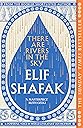
The new novel from the Booker-shortlisted, internationally bestselling author of The Island of Missing Trees and 10 Minutes 38 Seconds in This Strange World ***** There Are Rivers in the Sky is a rich, sweeping novel set between the 19th century and modern times, about love and loss, memory and erasure, hurt and healing, centred around three enchanting characters living on the banks of the River Thames and the River Tigris – their lives all curiously touched by the epic of Gilgamesh. ***** ‘ Elif Shafak is a unique and powerful voice in world literature’ Ian McEwan 'Shafak makes a new home for us in words' Colum McCann 'One of the best writers in the world today' Hanif Kureishi


| Country Of Origin | India |
| Dimensions | 12.9 x 3.1 x 19.8 cm |
| Generic Name | Book |
| Importer | Penguin Random House India Pvt Ltd |
| Isbn 10 | 0241988748 |
| Isbn 13 | 978-0241988749 |
| Item Weight | 346 g |
| Language | English |
| Net Quantity | 1.0 Count |
| Packer | Penguin Random House India Pvt Ltd |
| Print Length | 496 pages |
| Publication Date | 3 April 2025 |
| Publisher | Penguin |
User
Highly, highly recommended
Some books tell stories and some books become experiences—There Are Rivers in the Sky is the latter. It doesn’t just unfold in time; it moves like a river, bending, circling back, carrying fragments of history, memory and melancholy in its current. From the very first page, I found myself immersed in a world where history isn’t just something that happened—it lingers, shifts, and seeps into the present like water through cracks in ancient stone. The novel follows Arthur, a man whose life is shaped by absence, loss and a relentless pursuit of the forgotten. His story is intertwined with lost civilizations, fragile memories and people who exist in the liminal space between belonging and exile.What truly makes this book remarkable is its emotional undercurrent. It doesn’t just describe sorrow—it lets you feel the weight of histories erased, cultures displaced and identities fractured. And yet, it never feels overwhelming. Like a river, the novel carries its melancholy gently, making it something beautiful rather than burdensome. Few books use water as a narrative device as powerfully as this one. Water preserves, erases, heals and destroys. It is a metaphor for time itself, a force that both remembers and forgets.The novel’s nonlinear structure mirrors how memory actually works—it drifts, loops and resurfaces, never truly leaving us. Its characters feel like echoes of lost civilizations, people caught in history’s tide, never fully anchored and always searching. One of the thing which resonated with me very much is how this book treats melancholy—not as something to escape, but as something that connects us—to history, to memory and to one another. It soothed me in ways I didn’t expect and it lingers in my mind like the remnants of a dream.Some books are written in ink—this one feels written in water, flowing through you long after you’ve finished reading. If you are drawn to stories about lost knowledge, human fragility and the way time shapes us, then There Are Rivers in the Sky will stay with you long after you’ve closed its pages.
User
In Awe!
This was the second book I read of Elif Shafak after “The forty Rules of Love” and it is so perfectly written that I am in short of words. Elif Shafak is no doubt a master in this field.
User
Must read
Elif shafak always delights you... This one is truly thrilling and enticing.
User
Water, the common thread across time
"Water remembers. It is humans who forget."Even a single raindrop.Thus begins the master storyteller, Elif Shafak's , "There are Rivers in the Sky".When one writes about history, it's a narration of what has been told many times over. The approach of a writer, is what, sets it apart. Here, Elif deploys the journey of a drop of water, to illustrate the times, from the ancient ruins of Nineveh in Mesopotamia to the birth and life of Arthur in Victorian London, to Narin of the Yezdi community, by the river Tigris in Turkey, to Zaleekhah, a hydrologist in London, in 2018.The extensively researched account of each period is an attention holder. The Epic of Gilgamesh, an iconic poem in the Cuneiform script holds centrestage.Woven around them are stories of antiquities, mysticism, cultural appropriation, war, immigration, race conflicts and genocide.Elif Shafak holds one spellbound with her expertise - interspersed are lyrical quotes and elaborate, vivid descriptions of the prevailing atmosphere and settings. A departure from her previous books, this acclaimed top lister, reinforces her stature as a commanding writer.A life philosophy embedded, in her lines from the book -"Go like water, come back like water-freely and easily."Highly recommended.
User
The book is good but looks old and used
The book is good in itself but looks used and old. The pages too look old.
User
Beautiful
A beautiful book I have to say!
User
Water the most important element
Elif shafak my favourite author. I devour whatever she writes ❤️
User
Okayish product
Its is a second hand book but in good condition
User
This book is intoxicating.
There Are Rivers in the Sky by Elif Shafak is a beautifully layered novel that flows across time, memory, and geography like the rivers it evokes. Shafak gently weaves history, mythology, and the human longing for belonging, offering a rich glimpse into Middle Eastern culture, spirituality, and storytelling traditions. The characters feel deeply human, carrying the weight of history and identity.By the end, it leaves a quiet book hangover—that lingering feeling where the story stays with you, like an echo of distant waters and ancient lands. Poetic, thoughtful, and deeply immersive. 🌊📚
User
Rich and thought provoking
This book is beautifully crafted combining water, history and the lives of its characters in illuminating prose. The author draws us deep into history, ancient and modern, while setting a descriptive stage at every turn. Highly recommend this book!
User
Stunningly beautiful and powerful novel!
This is a marvelous book! The writing is just beautiful, and the storyline (after about page 80) is intense. I loved how the stories wove together…However, it is not for everyone! It is a long read, and not at all one you can whip through. In my 20 person book club, about 3 of us adored it, 3 hated it. Several did not finish it, and several want to finish it, but just didn’t have time.So - if you love deep, moving, heart touching novels and have a lot of time to read - go for it!
User
Imperdibile!!!
Imperdibile!!!!
User
Over-researched and boring
Evidently, the author conducted extensive research while writing this book, and that is undeniably impressive. However, the result feels like an overwhelming regurgitation of all that research—every fact, note, and piece of knowledge the author gathered seems to have been crammed into the book. This approach makes the reading experience, firstly, quite dull, and secondly, detrimental to the storytelling and character development.The book suffers from a lack of good editing. Much of the content on Mesopotamian history is repetitive and, frankly, boring. By the end, I found myself increasingly irritated by yet another story about water this, goddess that, Gilgamesh this, and Gilgamesh that, all lacking depth or purpose. The same artifacts—clay tablets, Lamassu, book on Nineveh etc.—pop up relentlessly in nearly every paragraph. I get it: clay tablets and Lamassu are significant. But must every character encounter them, dream about them, love them, own them, dig them up, or draw them? By the book’s conclusion, I half expected a Lamassu to be served at Uncle Malik’s dinner on a clay tablet.The characters are underdeveloped and feel two-dimensional, serving primarily as placeholders for the barrage of research, facts, and stories crammed into the pages. There’s little room for the characters to breathe or come alive. Only Arthur offers any meaningful insight into his life, his experiences, and his motivations. The rest are bland and, at times, outright annoying (which feels harsh to say, given the tragedy of Narim’s life). They offer little in terms of thoughts, dialogue, or purpose. Zalikah gets up, eats breakfast, looks out the window, runs, and is depressed. Narim watches flies and eats food lovingly prepared by her grandmother while we’re reminded for the hundredth time that they are healers despised by others. I understood that the first time—no need for endless repetition.The King of Nineveh makes a fleeting, meaningless appearance with no insight into his story. Most characters are impossibly virtuous, so saintly and tragic that it becomes grating. There’s also little connection between them. The shared elements—the drop of water, the Lamassu, clay tablets, lapis lazuli, and the recurring book—feel contrived and, frankly, unbelievable.Then there’s the book’s central premise—the drop of water—which is absurd. A single drop of water doesn’t travel through space and time. A drop contains about 1,670,000,000,000,000,000,000 molecules, which will never come together again in the same way. The concept tying the characters with a drop of water is, quite honestly, nonsense.Other inconsistencies should have been caught by a good editor. For example, milk dripping from newborn Arthur is biologically implausible—he would have drunk a few drops of colostrum at most. Baking biscuits in the oven for 40 minutes? That suggests the author hasn’t baked anything herself. And an infant remembering their own birth? Not possible, no matter how genius or savant the baby might be.The book is chaotic. The extensive research would have been better left in the background, allowing more focus on the characters and their stories. Narim’s tragic history takes 200 pages of flower-smelling and water-pondering to unfold, but the actual tragedy is presented in just a few pages. What a lost opportunity. Zalikah and her friend contribute little beyond drinking lavender coffee (mentioned at least five times), drawing Lamassu, tatooing ancient symbols and baking cakes—not enough to sustain good literature. Malik’s family is barely fleshed out, and we learn nothing meaningful about the King or the everyday lives of Nineveh’s people. Leila seems erratic and one-dimensional, defined only by sleepwalking and divining.What truly binds these characters together? The answer, it seems, is nothing substantial.In summary, this book felt like an over-researched, sprawling collection of facts that ultimately amounted to very little.
Trustpilot
2 weeks ago
2 months ago
2 weeks ago
5 days ago