Desertcart purchases this item on your behalf and handles shipping, customs, and support to Tunisia.
🌈 Elevate your craft with colors that captivate and last!
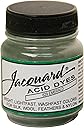
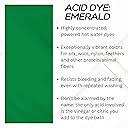
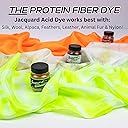
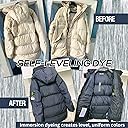
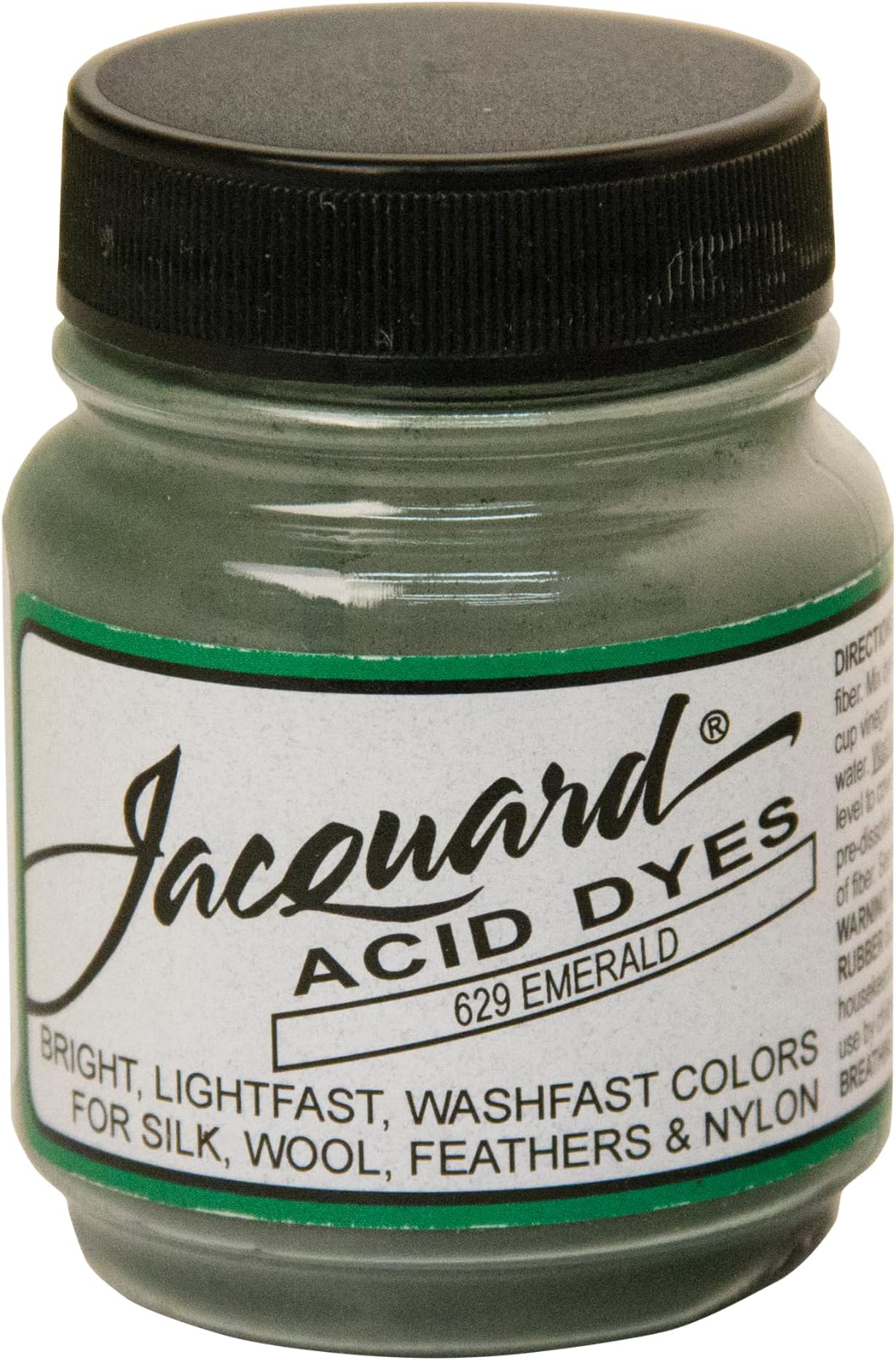
Jacquard Acid Dye Emerald 629 is a concentrated powder dye designed for protein fibers and nylon, delivering vibrant, uniform colors with a self-leveling formula. Ideal for wool, silk, alpaca, and feathers, it permanently bonds to fabrics through steam setting, offering reusable dye baths and easy clean-up. Trusted by creatives for intense, long-lasting hues in a compact 1/2 ounce jar.
| ASIN | B003IG9UWW |
| Best Sellers Rank | #7,915 in Arts, Crafts & Sewing ( See Top 100 in Arts, Crafts & Sewing ) #42 in Fabric Dyes |
| Brand | Jacquard |
| Brand Name | Jacquard |
| Color | Emerald |
| Compatible Material | Wool, Silk, Alpaca, Nylon, Feathers |
| Customer Reviews | 4.4 out of 5 stars 1,220 Reviews |
| Global Trade Identification Number | 00743772162902 |
| Item Form | Powder |
| Item Type Name | Dye |
| Item Weight | 22.68 g |
| Manufacturer | Jacquard |
| Manufacturer Part Number | F-JAC1629 |
| Model Number | F-JAC1629 |
| Number of Items | 1 |
| UPC | 743772162902 |
| Warranty Description | None. |
S**D
Works great for lava lamps!
Ok ok so not what it was made for, but this stuff is actually some of the best dye for lava lamps since it’s known for being lightfast, potent, and bright! It also doesn’t affect the surfactant or the densities of the lamp contents much. This wonderful green on the right (with the silver base and cap) was the result of the chartreuse powder. It took very little to get it this bright! I cannot attest to how it reacts with fabrics but with lava lamps? 10/10!
M**A
Good prep, follow instructions, and maybe a little research
I don't have experience in dyeing, but I followed the instructions as exactly as I could in dyeing a 40-year-old cream-colored aran with a few small stains. I had a large canning pot (an even larger one would've been better but I'm not sure they're made any larger), and I was careful about gradual heating and cooling. It was in adding the vinegar that the true color popped out -- a rich brown, just what I wanted. However, I think that this sweater had "background" discoloration that I didn't see, or perhaps something else going on, as the dye took unevenly, and there are darker brown and redder sections in places. The sweater was large, so maybe the pot was too small (sweater weighed 1.15 lbs dry) and didn't allow for enough stirring, but I sure made an attempt at it (even while being careful not to over-agitate). As I washed it afterward in Synthrapol to remove extra dye, I read on the label that one could add it to the dyepot to encourage even uptake -- wish I'd read that first. I see that another reviewer has mentioned soda ash or urea, and one of those might also have helped. So I don't know whether the issue was not enough stirring or background discoloration in the wool that led to uneven take-up, but the end product isn't great. I can and will wear it at home but probably not to the office. These issues aren't the fault of the product but rather of my inexperience and/or the item I was dyeing. The product was fine, the color a really nice true-brown. So: do as much prep as you can. This activity took several hours (not at all once), so allow for that as well. I'm uploading a picture but it doesn't do the brown justice -- a brown like a dried oak leaf, or tobacco and there are also shadows across it.
P**S
Worked beautifully!
Review for Jacquard Acid Dye 1/2oz Jar Navy Blue - Acid Dye. Worked beautifully! I used 4 liters of water, 200 ml of vinegar, and 2 tablespoons of dry color powder for a weight of 350 g (dry fabric of a dust white 100% linen dress). Using gloves, I wetted the dress in warm water and immersed it in the pan, brought the water to 180F, added the vinegar and stirred for 30 minutes. Put a stone on top of the fabric to keep it submerged. Let it cool. Rinsed the dress with cold water till the color stopped bleeding out. See the pictures for details. I turned a bit lighter than expected, but I am pleased with the color. It dyed evenly, and it also stained the buttons, changing them from brown to a dark blue as a bonus. It did not smell. I hand-washed the dress once in cold water, and it did not bleed. I am very pleased. Kept the blue solution to dye a white natural wool, and I will see if it will still work, as stated.
E**A
Beautiful and consistent color
Update: Dyed another piece but added more dye, maintained temperature between 160-180 for approximately 30 minutes and results yielded a more saturated hot pink. Comparison of the two fabrics is shown. As advertised; container was new, sealed, and delivered as promised. This was my first time dying silk velvet. Despite not having a large enough quality pot, not getting the water temp between 160-180 to lock in the color, not submerging up to 40 minutes, and not measuring out the color or the vinegar, the fabric turned out beautifully 😃. If I want more saturated color, then I can take another pass. Overall, I am very happy with the product and plan to buy more colors.
A**R
Worked great, good color.
This worked wonderfully on my father-in-law's old wool slacks. The color was rich. I'm very happy with this product.
L**A
It didn't dye my fabric black.
I was trying to make linen napkins for a friend. I had never used this product before but the directions seemed simple. However it doesn't tell you how much to use per gallon of water. It simply says put some dye in water with some citric acid and cook your fabric for 30 minutes. Well.... THAT DIDN'T WORK. I made some fabric testers, 12 pieces of 12x12 inch linen. I used a big enamalled pot, about 5 gallons of water, 2-3 ounces of the 8 ounces total of dye (almost 1/2 the container), a few ounces of powdered citric acid I had in my other dyeing supplies. Got the water hot, nearly boiling, like the directions say, then turned it down to simmering. LEFT IT ON THE STOVE A FULL 8 HOURS while I was at work. I ended up with BROWN linen napkin testers. CHOCOLATE BROWN. NOT EVEN CLOSE TO BLACK, even though the wooden spoon I used to mix the dye was dyed a very nice black. So why wasn't the fabric dyed black???? I'll never know, but I certainly won't trust this dye again. I don't use cotton, pretty much all of my white/beige fabric is linen. They're both cellulose fibers, shouldn't make that big a difference. bottom line: IT DIDN'T DYE THE FABRIC BLACK. Not even after EIGHT HOURS SIMMERING IN DYE.
A**R
Gorgeous Dye for Protein Fibers with Some Caveats
If you want an electric pink on steroids--this is it! I love it. It's the color of a pink highlighter. I don't know if it actually fluoresces, but it's bright. It's exactly the shade I wanted to dye wool with. However. I dyed some raw farm wool last night with this. The pH was 4 and the dye pot was held at just under a simmer for over an hour and the dye did not exhaust. I let it cool completely in the pot overnight. And today, when rinsing, there was a lot of bleeding. Now, the wool is not oversaturated because I used this dye very dilute. I wasn't going for a deep dark pink--I was going for a very light color. So I'm worried about fading for two reasons: 1) it's fluorescent which means it's fugitive (fades quickly with time, exposure to sunlight etc) and 2) The dye bath did not exhaust and the dye is running during rinsing which means it may run every time I wash this wool. So. This is quite the dilemna. I'm contemplating overdying it with a different brand in a ho-hum magenta just so I can be sure that it will actually stay pink. I'm not sure I want to mess with this anymore because dying wool is such a big production. BUT. Despite manufacturers stating that acid dyes need a pH of 4.5 to effectively strike, some dyes seem to need a much lower pH to fully take up. pH is on a logarithmic scale--so 4 should have done the trick, but I'll try going a bit lower to see what happens with this. One more chance Jacquard. I'll report back later if I come to any distinct conclusions about this. Every dye is different. I wish the manufacturers would give us all the info on each individual dyes quirks so we can make informed decisions instead of having to find out on our own after paying for the dye. Harumph.
A**S
This is a more difficult route but is probably worth it for something delicate and special.
They do not provide ANY information with the item on how to use their dye or even quantity of dye to use. You must go online and do a search for it. Once you find it be aware there are ONLY instructions are for the washing machine method, NO QUANTITY OF DYE to use doing the stovetop method. Mind you, one MUST use the stovetop method when dying wool or cashmere. After figuring out a method of translating their weight & percentage formula to ounces, and then to teaspoons, I used the dye to very slowly and carefully dye my cashmere. The result was spectacular. It's worth it to go with a true acid dye for protein fiber... which is something I didn't know a thing about prior to researching dying cashmere.
J**H
Kürbisorange
Sieht nach Kürbis aus. Ein klein bisschen matter als erwartet. Das Material ist naturfarbener Kaschmir. Verwendet habe ich fast die ganze Packung.
K**T
Disappointed
Not happy with this dye at all.Followed instructions. But came out more peach coloured then all washed out in first hand wash
L**C
Green Dye
I bought this to dye nylon cord as it said it's for nylon. Didn't work. Might be better on cloths.
D**2
useless
this product has to be used when washing fabric at 90°C! how can you use it on wool/cotton/silk...clothes? their size will decrease. I have bought another brand that can be used ato 40°C
J**R
Good
Found this good
Trustpilot
2 weeks ago
4 days ago