
DOWNLOAD THE APP


Customer Services
Copyright © 2025 Desertcart Holdings Limited
DOWNLOAD THE APP

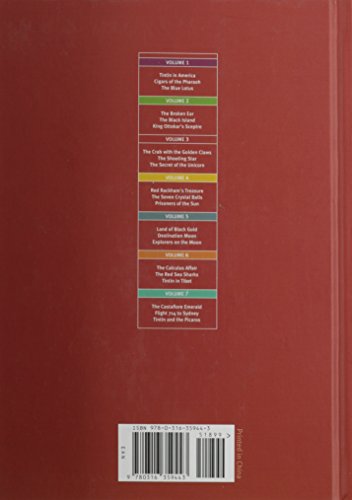
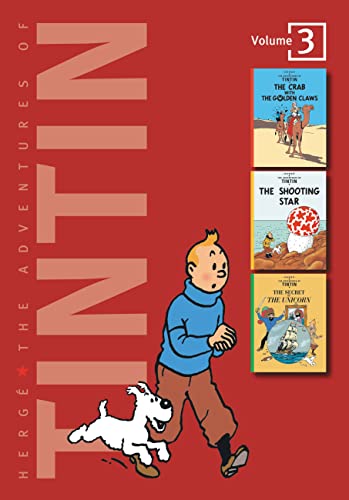


Buy WITH The Shooting Star AND The Secret of the Unicorn by Herge online on desertcart.ae at best prices. ✓ Fast and free shipping ✓ free returns ✓ cash on delivery available on eligible purchase. Review: Be forewarned that the final adventure of Tintin collected in Volume 3 of Hergé is the first half of a two-part tale. However, this should not be a problem because by the time you get to Volume 3 of "The Adventures of Tintin" you should be committed to getting all seven books (and probably to tracking down the two earlier Hergé stories of the intrepid young reporter and his faithful canine companion Snowy): "The Crab with the Golden Claws" has a simple beginning, when Snowy goes scavenging in the rubbish and gets his muzzle stuck in a can of crabmeat, which quickly leads our hero on a new adventure. Tintin is knocked unconscious aboard a mysterious ship and taken out to sea where the bad guys intend to send him to the bottom. Of course, but then he comes across the ship's drunken captain, who introduces himself as Captain Haddock. The rest, as they say is history, because this is the first of many adventures for Tintin and the person who, along with Snowy, becomes his almost constant companion in the years to come. Even though this is the good captain in his rawest form, Hergé knew he was onto something with the emotional, blustering, cursing (in his way) Haddock, while Snowy, he does manage to find some of the biggest bones in his long career. "The Crab with the Golden Claws" takes Tintin and his companions from the perils of the high sea to the burning sands of the desert. Of course, all those cans of crab are not actually filled with crab. This 1941 story is a traditional exotic adventure for the Tintin, filled with slapstick and narrow escapes in equal measure, which might indicate Hergé's desire to forget about what was happening in Europe at that point in history. In 1942 the continent of Europe was totally embroiled in World War II, which may well explain why Hergé offers up the most fanciful of Tintin's adventures. In fact, nothing else comes as close to "The Shooting Star," which begins with the world about to end because of a collision with a giant comet and ends with Tintin dealing with giant mushrooms. In between there is a race to find a meteorite that contains a new element of great scientific importance (another case of Hergé's remarkable premonitions based on meticulous research no doubt). Tintin is aided and abetted in this adventure by Captain Haddock, who we first met in the previous tale, "The Crab with the Golden Claws." But I must say the supporting character who caught my attention was the seaplane pilot who helps our hero in the throughout the episode and in the thrilling climax. You do not usually see such as a realistic, levelheaded, intelligent person helping out Tintin. I find it to believe Hergé did not even give this fellow a name, who more than makes up for the eccentric college of eggheads whom Tintin is trying to help. "The Shooting Stars" is one of the best Tintin straightforward adventures and his adversary is more often the elements than the bad guys trying to beat the good ship "Aurora" to the meteorite. The contrast of Hergé's simple drawing of characters against more realistic backgrounds finds several excellent sequences in this story, the first to be originally printed in color. As The Secret of Unicorn" opens, the Thom(p)sons are trying to solve a rash of pockets being picked and Tintin decides to buy on impulse a model of an old galliard ship. But suddenly two other gentleman want to buy the model from Tintin, who refuses because he intends the model to be a gift to his friend, Captain Haddock. Then Tintin finds a small piece of parchment that was hidden in one of the masts talking about a treasure and a ship called the Unicorn. The mystery deepens when it turns out that Sir Francis Haddock, an ancestor of Tintin's good friend, was the captain of the Unicorn. After the captain tells the exciting story of Sir Francis and his glorious victory over the dreaded Barbary buccaneers, Tintin races off to track down the final pieces of the puzzle that will tell where the treasure of the Unicorn can be found. By now Captain Haddock is as important to the story as Snowy. Nestor and Marlinspike Hall make their first appearance in "The Secret of the Unicorn" with Professor Calculus making his unforgettable first appearance in the second half of the tale, "Red Rackham's Treasure." Hergé is obviously staying as far away as he can from what is happening in Europe during World War II, but that does not take away from the fact this is a first rate tale of detective work by our intrepid hero and the second half is an equally fun adventure as Tintin and company race for "Red Rackham's Treasure." No wonder "The Adventures of Tintin" are one of the great comic book series in the history of the entire world. Review: 全世界で幅広く読まれているタンタンシリーズの英訳本です。一度日本語訳を読んでから読まれるとより一層面白くなります。 ハドック船長初登場する話など3話で一冊になっています。英語は大学受験レベルくらいで話の流れは分かりますよ!オススメ!

| ASIN | 0316359440 |
| Best Sellers Rank | #131,894 in Books ( See Top 100 in Books ) #2,286 in Classics for Children #2,775 in Comics & Graphic Novels for Children #4,990 in Comic Books & Graphic Novels |
| Customer reviews | 4.7 4.7 out of 5 stars (292) |
| Dimensions | 14.92 x 1.59 x 21.27 cm |
| Edition | Illustrated |
| Grade level | 3 and up |
| ISBN-10 | 9780316359443 |
| ISBN-13 | 978-0316359443 |
| Item weight | 210 g |
| Language | English |
| Print length | 192 pages |
| Publication date | 2 May 1994 |
| Publisher | Little, Brown and Company |
| Reading age | 8 - 12 years |
L**O
Be forewarned that the final adventure of Tintin collected in Volume 3 of Hergé is the first half of a two-part tale. However, this should not be a problem because by the time you get to Volume 3 of "The Adventures of Tintin" you should be committed to getting all seven books (and probably to tracking down the two earlier Hergé stories of the intrepid young reporter and his faithful canine companion Snowy): "The Crab with the Golden Claws" has a simple beginning, when Snowy goes scavenging in the rubbish and gets his muzzle stuck in a can of crabmeat, which quickly leads our hero on a new adventure. Tintin is knocked unconscious aboard a mysterious ship and taken out to sea where the bad guys intend to send him to the bottom. Of course, but then he comes across the ship's drunken captain, who introduces himself as Captain Haddock. The rest, as they say is history, because this is the first of many adventures for Tintin and the person who, along with Snowy, becomes his almost constant companion in the years to come. Even though this is the good captain in his rawest form, Hergé knew he was onto something with the emotional, blustering, cursing (in his way) Haddock, while Snowy, he does manage to find some of the biggest bones in his long career. "The Crab with the Golden Claws" takes Tintin and his companions from the perils of the high sea to the burning sands of the desert. Of course, all those cans of crab are not actually filled with crab. This 1941 story is a traditional exotic adventure for the Tintin, filled with slapstick and narrow escapes in equal measure, which might indicate Hergé's desire to forget about what was happening in Europe at that point in history. In 1942 the continent of Europe was totally embroiled in World War II, which may well explain why Hergé offers up the most fanciful of Tintin's adventures. In fact, nothing else comes as close to "The Shooting Star," which begins with the world about to end because of a collision with a giant comet and ends with Tintin dealing with giant mushrooms. In between there is a race to find a meteorite that contains a new element of great scientific importance (another case of Hergé's remarkable premonitions based on meticulous research no doubt). Tintin is aided and abetted in this adventure by Captain Haddock, who we first met in the previous tale, "The Crab with the Golden Claws." But I must say the supporting character who caught my attention was the seaplane pilot who helps our hero in the throughout the episode and in the thrilling climax. You do not usually see such as a realistic, levelheaded, intelligent person helping out Tintin. I find it to believe Hergé did not even give this fellow a name, who more than makes up for the eccentric college of eggheads whom Tintin is trying to help. "The Shooting Stars" is one of the best Tintin straightforward adventures and his adversary is more often the elements than the bad guys trying to beat the good ship "Aurora" to the meteorite. The contrast of Hergé's simple drawing of characters against more realistic backgrounds finds several excellent sequences in this story, the first to be originally printed in color. As The Secret of Unicorn" opens, the Thom(p)sons are trying to solve a rash of pockets being picked and Tintin decides to buy on impulse a model of an old galliard ship. But suddenly two other gentleman want to buy the model from Tintin, who refuses because he intends the model to be a gift to his friend, Captain Haddock. Then Tintin finds a small piece of parchment that was hidden in one of the masts talking about a treasure and a ship called the Unicorn. The mystery deepens when it turns out that Sir Francis Haddock, an ancestor of Tintin's good friend, was the captain of the Unicorn. After the captain tells the exciting story of Sir Francis and his glorious victory over the dreaded Barbary buccaneers, Tintin races off to track down the final pieces of the puzzle that will tell where the treasure of the Unicorn can be found. By now Captain Haddock is as important to the story as Snowy. Nestor and Marlinspike Hall make their first appearance in "The Secret of the Unicorn" with Professor Calculus making his unforgettable first appearance in the second half of the tale, "Red Rackham's Treasure." Hergé is obviously staying as far away as he can from what is happening in Europe during World War II, but that does not take away from the fact this is a first rate tale of detective work by our intrepid hero and the second half is an equally fun adventure as Tintin and company race for "Red Rackham's Treasure." No wonder "The Adventures of Tintin" are one of the great comic book series in the history of the entire world.
邯**夢
全世界で幅広く読まれているタンタンシリーズの英訳本です。一度日本語訳を読んでから読まれるとより一層面白くなります。 ハドック船長初登場する話など3話で一冊になっています。英語は大学受験レベルくらいで話の流れは分かりますよ!オススメ!
A**N
It is great to have 3 of Tintin's adventures in 1 book. I used to read Tintin as a kid and always loved it. I bought these for my 7 year old son and he reads them constantly, a testimony of the quality in these times when the younger generation does not read much. The only problem I've found with these books is that the format is smaller tan the original which detracts a bit of the image quality at times. Still, comfortable to read in a smaller size. I also get to read them sometimes, still find them entertaining after 40 years!
K**L
Excellent book! Kids loved all the stories!
R**!
I intentionally got this book for my young niece and nephew. But before I gave it to them, I decided to take a look for myself and see what Tintin's all about. I was amazed by this book! It had me hooked to such an extent that I went and bought another few Tintin books! This book is for anyone - kids, teens, adults, grandmas! Tintin books are loaded with action and humor on every page. A great idea for a gift!
Trustpilot
5 days ago
1 day ago