We remain fully operational. Our teams are working around the clock to ensure your deliveries continue safely.

DOWNLOAD THE APP


Customer Services
Copyright © 2025 Desertcart Holdings Limited
DOWNLOAD THE APP
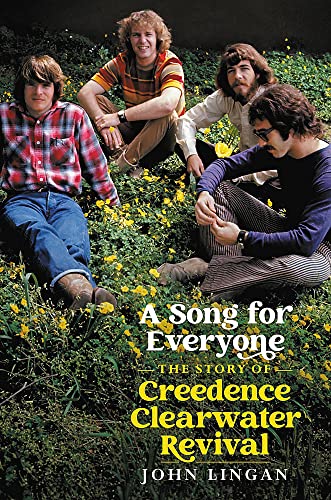
Full description not available
A**T
Well researched
Well researched book although sometimes drifts too far away from the band and becomes a social commentary on the band. This is important to the backstory of CCR but the balance is not quite right
I**T
A candid, perfectly pitched portrait of a timeless American band
Loved the author's tight, no frills prose style - perfectly apt for these no nonsense American roots rockers.In my Top 5 music books of 2022.
C**L
A HISTÓRIA DA MAIOR BANDA DE ROCK DE TODOS OS TEMPOS
Creedence Clearwater Revival foi a maior banda de rock do final dos anos 60 e início dos anos 70, tendo inclusive ser mais aclamada que o Beatles em 1970. Sua história é extremamente interessante, pois tiveram dificuldades imensas com sua gravadora, com seu proprietário, principalmente o lider John Fogerty. Uma história que vale a pena ser conhecidda.
D**S
Disappointing
Just watch the Netflix doco and you'll glean just as much, if not more, from it.Perhaps that's what the author did to save himself time and trouble!
K**G
Don't buy it for the photos - or the text
As a long-time CCR fan, I thought the hardcover book would be worth getting - surely there would be some good photos of the band inside. Having followed Fogerty et al since I was 11 years old, I figured I knew most of the facts but having some pics would be nice.But no.There are very few photos of the band itself in its heyday, despite the fact that there must be hundreds of them out there. Photos of the boys from high school are interesting but they needed supplementation. There are, however, photos in this book that are real head scratchers. Pictures of Bill Graham, of a poster advertising a Creedence show, a photo of the critic Ellen Willis, sitting on the floor, typing. A student protest at Berkeley, which has nothing to do with CCR.. "Here's Jack Nicholson in 'Five Easy Pieces,'' dressed in the same workingman clothes as John Fogerty." I wish I was kidding. The author actually thought these were relevant?? It's such an obvious padding of the book, but the padding applies to the text as well.True enough that the author places CCR in the social context that gave rise to them, but there's a bit too much of that. I didn't really need a rundown of the news and the various societal happenings of the time. Perhaps for those who didn't live through it, maybe this might be helpful, but I don't think it should be the main thrust of the book, except as these incidents specifically relate to some of the song lyrics or decisions the band made. And while there is some of that, there just isn't enough. The author seems content to simply discuss current events side by side with whatever the band was doing, and leave it there for the reader to draw the threads together. There's an entire chapter about some guy we don't even know, who went to Vietnam and listened to CCR. OK, big deal. Lots of guys listened to CCR in Nam, but honestly, you included an entire chapter about this one guy, who has nothing else to do with Creedence other than he listened to their records??There also seems to be a definite bias against John - Stu and Doug participated in interviews with the author, so they told their side. John apparently was asked to participate and refused, so I guess it's his own fault that he comes across so badly in this book. OK, sure, the author has to acknowledge his genius, b/c without him there really is no Creedence, but basically, according to the author, everything bad that happened was John's fault. And that's really just not possible. The story is more complex than that. The author claims, for instance, that John got them into the bad contract deal, and that's partly so, but my understanding has always been that they ran the contract past Stu's dad (a lawyer) first. It wasn't as if John was cowboying it - though he was quite young and inexperienced at the time, and the fact is, many bands of that era were taken advantage of with similar contracts (though this is never acknowledged by the author). The author makes little snide comments like "despite the fact that he didn't have a college degree ..." - well, a LOT of people didn't go to college at that time, and a college degree likely wouldn't have helped anyway, since Saul Zaentz was hellbent on screwing Creedence. And why isn't there more about Saul's relationship with the band members, particularly since Stu and Doug sided with Saul against John? Why did they do that? It's one of the things that fueled the animosity between John and the other two, but there's just no explanation or any attempt at one - there's just no discussion of it. The author says he consulted John's autobiography, but he doesn't ever quote it in juxtaposition to comments made by Doug and Stu. John's voice is not evident in this work at all, and it should be, particularly since there has been such bad blood among the members. The author's viewpoint appears to be "John is the reason they made millions but he's also the reason they broke up, and John is a jerk. The end." John's version of events is not the same as what the author presents here, and the author should have done the hard work of presenting both sides, but he didn't.There was a lot I wanted to know more about, even though I've followed the band closely for decades - but there was no detail at all about, for instance, the lawsuit that CCR filed against Fantasy to get their earnings back. Barely a sentence about it, in fact! And in that instance, if memory serves, Fogerty allowed Doug and Stu to join his lawsuit, b/c the statute of limitations had run out on their ability to file lawsuits themselves - so in that sense, he made things right, though you'll never hear that from this author. There are points of contention in the Creedence story where Stu and Doug's version disagrees with John's, but those instances are never acknowledged either. And there seems to be precious little in the way of actual quotes from new interviews with Stu and Doug, only quotes from interviews done at the time, which are often accompanied by remarks from the author criticizing what John said (no real criticism of Doug or Stu or Tom - ever). He seems to have cherry-picked particularly bad interviews to quote, as opposed to, say, interviews with Rolling Stone or other publications that are better known and where intelligent questioning led to a better interview with John. I've read plenty of interviews where John doesn't come off as a self-serving prick, but you won't find them in this book. There's also next to nothing about Saul Zaentz suing John for plagiarizing himself, when it was actually quite a big case that ended up going to the Supreme Court - but again, only about a sentence about it. There's just no excuse in this. The Supreme Court decision is available on the internet for anyone to read - did the author fail to discuss it b/c it made John look better? And it *is* relevant to Creedence, b/c Zaentz was accusing John specifically of plagiarizing "Run Through the Jungle."This book costs too much money to be such a big disappointment. The author needed to dig deeper and make more of an effort to be fair to all sides and all versions of events, and he needed to spend more time on the two lawsuits involving Saul Zaentz, as well as the contention surrounding CCRevisited and John's efforts to stop that band from playing songs that John wrote without providing royalties to John. Once again, there's only a couple of sentences about the latter, and while the author notes that CCRevisited won back the right to the band name, he doesn't say how, or what the courts decided. These are public details he should have taken the time to track down.If you don't know anything about CCR, you'll get a decent, if biased, overview from this book (which I would recommend supplementing with a reading of John's autobiography), but if you're a fan of the band, you probably already know everything that's between the covers. Nothing new here, move along.
Trustpilot
2 months ago
2 weeks ago
1 day ago
1 month ago