

Desert Online General Trading LLC
Dubai, United Arab Emirates
Desert Online General Trading LLC
Dubai, United Arab Emirates
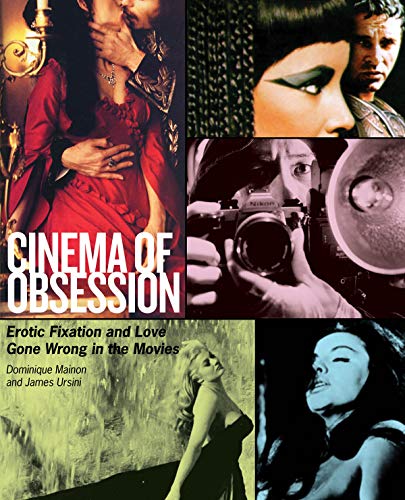
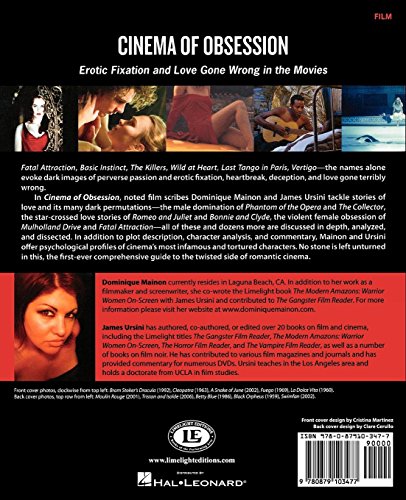
Full description not available
S**S
only useful if you need a list of movies ostensibly about "obsession"
Cinema of Obsession is little more than a series of short summaries of films, padded out with obvious and unnecessary statements, extraneous information, and quotes culled from other sources. There is very little by way of original thought, and what is original often starts with weaselly qualifiers such as "it seems."The padding is tedious and is usually found within parentheses, which makes this book unbearably tiresome to read. Nearly every person, character, and author mentioned in this book gets a parenthetical note after their name listing some extraneous information, even if it was mentioned before or has no bearing on the topic at hand. There are many qualifying phrases such as "to name only a few" that are placed in parentheses for absolutely no reason. It's already an unnecessary qualifying phrase, made more unnecessary by slapping it into a parenthetical aside.All the descriptions of the films are basic without even a hint of insight, and the writing style is clumsy and boring. Example: "Nancy seems more attracted to Sid for his celebrity status and generosity (she uses his money to buy drugs)." The section on Broken Blossoms (1919) has another laughable example, also written in a parenthetical aside: "The title of the movie is redolent with several meanings." Unbelievable. Telling us that the title of a film has more than one meaning doesn't merit even a mention in a film book that promises analysis and critique as this one does. The section on Lolita, which should have been one of the most in-depth sections in a book on sexual obsession, is nothing but a shallow checklist comparison between the Kubrick and Adrian Lyne versions.Even when information is important, it's placed in those horrible parentheses. In the section on Mizoguchi's Dolls, 50 of the 400 words are in parenthetical asides. That's 12% of the entire content, and that is not including the parenthetical additions of translations or years of release.The book is organized (their word, not mine) into five sections, the first being the "seminal films" on obsessive love. The second chapter is on "amour fou" in post-war cinema, the third on fugitive couples, and the fourth and fifth on male and female gaze respectively. Each chapter begins with a very brief introduction then immediately goes into the summaries. The summaries begin with the title and a quote from the film, and each section is anywhere from three to eight paragraphs long. The summaries in each chapter are placed mostly chronologically.The photos are sub-par. In the previously-mentioned Lolita section, a photo of Sue Lyons has lines through the bottom third. The full-page photo of Dominique Swain was blown up so much that the lines of her hair and the blades of grass are all jagged and pixelated. The iconic Sue Lyons heart-shaped sunglasses photo was cropped so poorly that the left side has a black border while the other sides do not.This book is only helpful if you happen to need something with summaries to refresh your memory. The entire book feels all the world like a rough draft that was gussied up with some photos and a quick glance-through by a bored editor. This is advertised as "tracing the history" and "defining and surveying examples" of obsessive love in cinema -- it does not. It simply lists, and as a reference goes, its formatting is so poor that it's not even a good list. I lay the blame entirely on the publisher and will be avoiding Limelight Editions in the future.
Trustpilot
1 week ago
4 days ago