
DOWNLOAD THE APP


Customer Services
Copyright © 2025 Desertcart Holdings Limited
DOWNLOAD THE APP
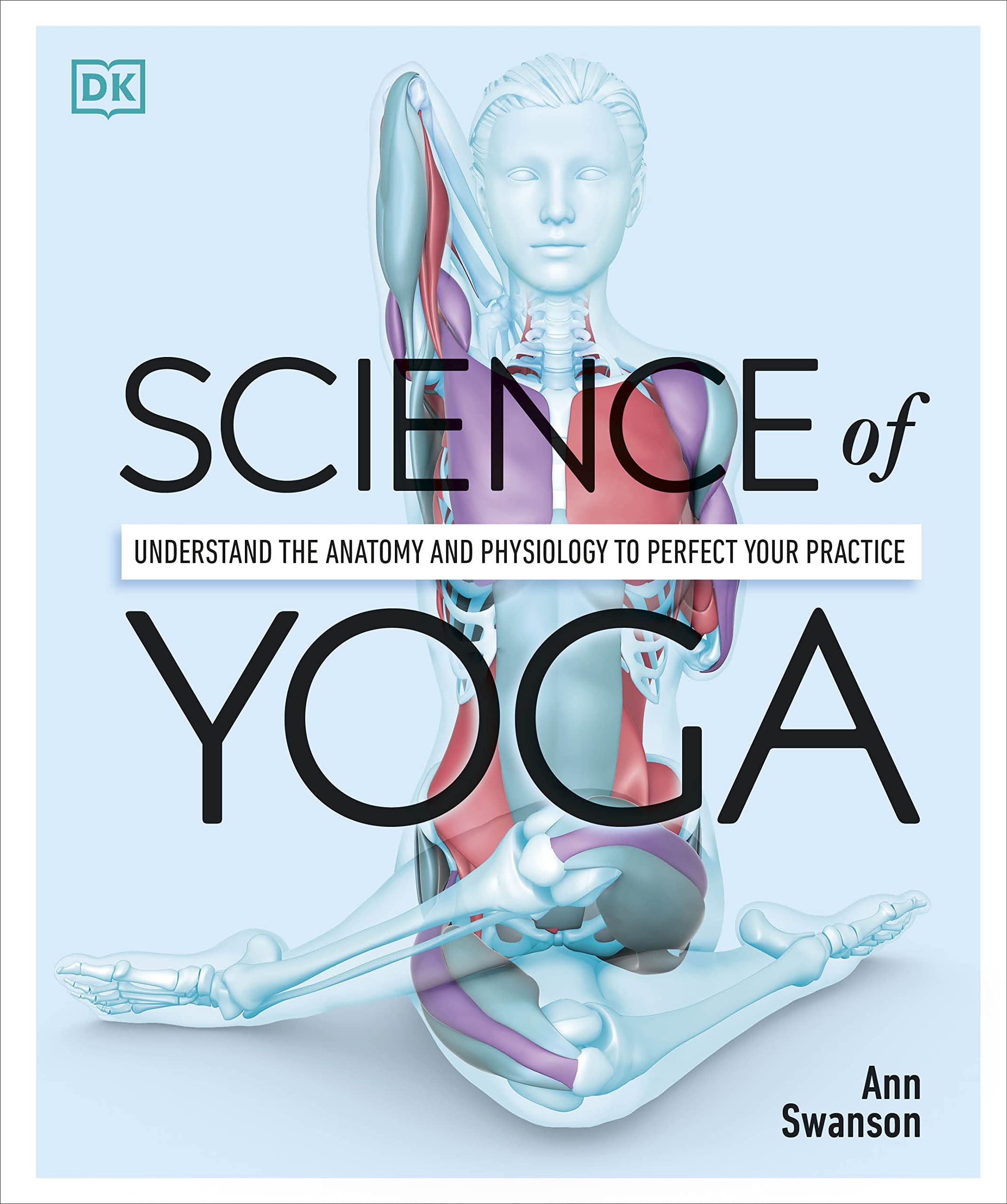
Science of Yoga: Understand the Anatomy and Physiology to Perfect Your Practice [Swanson, Ann] on desertcart.com. *FREE* shipping on qualifying offers. Science of Yoga: Understand the Anatomy and Physiology to Perfect Your Practice Review: Elegant explanations, beautiful illustrations, and in-depth research! - This fascinating book combines impressively simple explanations of how yoga impacts your body and how to perform each yoga pose with the in-depth illustrations for which DK books are known. I say “impressively simple” because the author, Ann Swanson, managed to condense a large amount of yoga research and anatomical information into a compact, highly readable format. The book begins with a primer on human anatomy and physiology – there’s a two-page spread on each of the major systems of the body, such as the digestive system and the skeletal system, along with details about how yoga can impact each system. As someone who hasn’t taken an anatomy class in about 18 years, I really appreciated this refresher! Next, there are two-page spreads on each yoga pose, or asana – the asanas are organized into the seated asanas, standing asanas, inversion asanas, and floor asanas. The incredible full-body illustrations of each pose show which muscles are engaged and/or stretched by each pose. As a newcomer to yoga, I especially appreciate the alignment diagram for each pose, which provides detailed instructions on exactly how you should position your body to perform the pose safely and effectively (i.e. forearms should be rotated inward). Speaking of safety, there are variations suggested for most poses to accommodate injuries and preferences. The third part of the book, the Q&A section, covers topics from “Stress,” to “Cautions” (poses to avoid if you have certain medical conditions), to “On the frontiers of science” (a lovely summary of the process of health research and how to evaluate any yoga studies you hear about in the news). Finally, I love that the author included a bibliography, which is organized by chapter – Ann Swanson provides the full citations to the scientific studies she references in the text, so you can easily look up the study yourself if you want more information. Overall, this is a beautifully done book, which I recommend highly to everyone from yoga newbies to yoga teachers! Review: Excellent for wellness seekers, yoga practitioners, anatomy enthusiasts, health pro's & human bodies - I just received this book, The Science of Yoga, yesterday and have already read it (at least initially) cover-to-cover-- it's incredible! I have been a student of yoga my whole life (40+ years-- my mom did yoga, so I did it with her as a kid) and am also an anatomy enthusiast, as well as a social psychologist and educator by trade. I have never found a book that so elegantly integrates the wisdom of yoga with western scientific understanding of the human body and in such a beautiful and accessible manner. I love the way that it illustrates each asana (pose) from multiple perspectives offering deep insight into the ways in which each ansana supports whole body well being and giving clues to how to modify poses when people's bodies don't act the way that human bodies typically act. I have hypermobile joints which have become significantly misaligned recently; I find that my yoga practice (I include meditation as part of practice-- not separate from) is really the only thing that helps to heal my body. Seeing how each asana is meant to engage one's muscles (and body, by extension) helps me conceptualize how to modify the asana depending on how my joints are engaging that day and offers better "signposts" to help me sense my own alignment, adjust accordingly, and ultimately deepens my self-awareness on multiple levels. I also love the Q&A section and particularly admire the way that it seamlessly synthesizes western research and yoga philosophy in such a thorough and accessible manner-- the section on yoga therapy and transformation are two of my favorites! It is not only your gift for explaining complex ideas but your use of visuals (impressive!) and layout that make this work so accessible and engaging for so many people. I have already convinced both my dad and my partner to develop their own practice using evidence from the book-- they both really need it! Thank you for @AnnSwanson for creating such a helpful guide-- I am looking forward to spending many hours pouring over it!





































| Best Sellers Rank | #64,398 in Books ( See Top 100 in Books ) #6 in Yoga (Books) #19 in Anatomy (Books) #365 in Meditation (Books) |
| Customer Reviews | 4.8 out of 5 stars 5,007 Reviews |
M**G
Elegant explanations, beautiful illustrations, and in-depth research!
This fascinating book combines impressively simple explanations of how yoga impacts your body and how to perform each yoga pose with the in-depth illustrations for which DK books are known. I say “impressively simple” because the author, Ann Swanson, managed to condense a large amount of yoga research and anatomical information into a compact, highly readable format. The book begins with a primer on human anatomy and physiology – there’s a two-page spread on each of the major systems of the body, such as the digestive system and the skeletal system, along with details about how yoga can impact each system. As someone who hasn’t taken an anatomy class in about 18 years, I really appreciated this refresher! Next, there are two-page spreads on each yoga pose, or asana – the asanas are organized into the seated asanas, standing asanas, inversion asanas, and floor asanas. The incredible full-body illustrations of each pose show which muscles are engaged and/or stretched by each pose. As a newcomer to yoga, I especially appreciate the alignment diagram for each pose, which provides detailed instructions on exactly how you should position your body to perform the pose safely and effectively (i.e. forearms should be rotated inward). Speaking of safety, there are variations suggested for most poses to accommodate injuries and preferences. The third part of the book, the Q&A section, covers topics from “Stress,” to “Cautions” (poses to avoid if you have certain medical conditions), to “On the frontiers of science” (a lovely summary of the process of health research and how to evaluate any yoga studies you hear about in the news). Finally, I love that the author included a bibliography, which is organized by chapter – Ann Swanson provides the full citations to the scientific studies she references in the text, so you can easily look up the study yourself if you want more information. Overall, this is a beautifully done book, which I recommend highly to everyone from yoga newbies to yoga teachers!
A**F
Excellent for wellness seekers, yoga practitioners, anatomy enthusiasts, health pro's & human bodies
I just received this book, The Science of Yoga, yesterday and have already read it (at least initially) cover-to-cover-- it's incredible! I have been a student of yoga my whole life (40+ years-- my mom did yoga, so I did it with her as a kid) and am also an anatomy enthusiast, as well as a social psychologist and educator by trade. I have never found a book that so elegantly integrates the wisdom of yoga with western scientific understanding of the human body and in such a beautiful and accessible manner. I love the way that it illustrates each asana (pose) from multiple perspectives offering deep insight into the ways in which each ansana supports whole body well being and giving clues to how to modify poses when people's bodies don't act the way that human bodies typically act. I have hypermobile joints which have become significantly misaligned recently; I find that my yoga practice (I include meditation as part of practice-- not separate from) is really the only thing that helps to heal my body. Seeing how each asana is meant to engage one's muscles (and body, by extension) helps me conceptualize how to modify the asana depending on how my joints are engaging that day and offers better "signposts" to help me sense my own alignment, adjust accordingly, and ultimately deepens my self-awareness on multiple levels. I also love the Q&A section and particularly admire the way that it seamlessly synthesizes western research and yoga philosophy in such a thorough and accessible manner-- the section on yoga therapy and transformation are two of my favorites! It is not only your gift for explaining complex ideas but your use of visuals (impressive!) and layout that make this work so accessible and engaging for so many people. I have already convinced both my dad and my partner to develop their own practice using evidence from the book-- they both really need it! Thank you for @AnnSwanson for creating such a helpful guide-- I am looking forward to spending many hours pouring over it!
B**O
Yogis of all levels of experience will benefit from this book
With little scientific background (I majored English/writing in college), I have studied yoga anatomy and physiology in a number of teacher trainings and workshops and am always interested in learning more, but it does not come easily to me. I have found I learn this stuff better in a practical way, in person with a teacher or through videos, and in the context of actually practicing the asana and pranayama, where I can experience the lessons in my own body. Until now, books have been of little help. When I saw this new book recommended on Amazon, I was immediately struck by the illustrations, and ordered it right away. I was not disappointed. The illustrations deliver with a simple color-coding system that highlights muscles that are stretching, engaging and stretching, and engaging in each asana that the author chose to include. The names of the muscles and joints and their anatomical positions are explained, and alignment and modification tips are given. I hope the author decides to expand on the number of asanas illustrated online or with a follow up book, though there are plenty to work with already. While I found the Q&A in the back of the book to be a bit basic, I'm sure it would be a wonderful guide to yoga beyond asana for readers new to the practice. What I didn't expect and found very valuable was the first part of the book which was an introduction to many of the systems (adrenal, skeletal, muscular, digestive, etc.) of the body. Again, the illustrations are top notch and the descriptions are clear and concise. The author drops in the benefits of yoga, pranayama, and meditation practices here and there with a fresh approach: she uses the most current research, not old yoga myths. In fact here and there she busts some of those myths. Scientists are finding everyday that there are proven reasons to engage these practices, we don't need to perpetuate ancient myths, fun as they are, anymore. Yogis of all levels of experience will benefit from this book, I believe. Great Book Ann!
G**L
This book puts it all together!
Science of Yoga is the best book of yoga anatomy and physiology that I have seen. I ordered this book after reading an article by the author in a yoga magazine. Within a month of receiving my copy, I purchased copies for three teachers and a long-time practitioner. Everyone has been very impressed with it. Most yoga anatomy books focus primarily on muscles and skeleton in the various poses. Science of Yoga does that better than most, with excellent illustrations and detailed call outs. But it goes deeper and wider than what other books cover. Each pose begins with a two-page "Big Picture" overview, which is followed by another two pages called "Closer Look." For Cat-Cow, there are two pages focused on Cat, two pages on Cow, and another two pages on the movement from Cat to Cow; not only spinal flexion and extension, but how the movement facilitates breathing, body awareness, and the mind-body connection. Beyond bones, joints, and muscles, I appreciate how author Ann Swanson covers all the systems of the body (circulatory, nervous, lymphatic, endocrine, digestive). Having taught yoga for ten years, I knew little or nothing about these systems. Science of Yoga attempts to cover everything that science can tell us about each system of the body in relation to yoga. I appreciate how the author encourages a shift “to a yogic perspective...of unity” (all of the systems functioning together). The main focus of my teaching is wellness, and Science of Yoga serves that focus very well. Science of Yoga also meets my needs because I am generally agnostic about the traditional Indian-based claims of yoga benefits. Since we have the benefit of modern science, I want science-based evidence before I pass a claim like "shoulder stand stimulates the thyroid" on to my students. The final section of the book (Q&As) is a series of two-page articles on how science informs us about joints and flexibility, spinal care, meditation, Savasana, stress, the brain and mental well-being, chronic pain, and other topics). For teacher or practitioner, this is a book to study and, over time, increase one's mastery of yoga.
T**�
The Science Behind Every Stretch
As a yoga practitioner and yoga teacher training (YTT) graduate, I appreciate how The Science of Yoga Anatomy and Physiology (1st edition) by Ann Swanson bridges the gap between movement and biomechanics. The aesthetics of the book cover are captivating, drawing attention to the vivid colors that match the 3D depictions of the human body performing various yoga poses. The paperback edition feels comfortable to hold, making it easy to flip through pages during study sessions. The design of the chapter organization ensures that each section builds upon the next, and the visual content simplifies complex anatomical concepts. The economics of this book make it a valuable investment for yoga professionals seeking deeper anatomical understanding. A study published in The Journal of Sports Science & Medicine reveal how integrating anatomical awareness into yoga practice can improve flexibility and muscle coordination by 47 percent. This book has strengthened my appreciation for the science behind each pose. 📘🧘♀️💡
M**Y
An advanced study of yoga
This is not just a book to warmly encourage yogi’s and instruct in postures. It’s more to finely tune physiological connections, to learn about human anatomy, and be able to teach yoga to others with safety and knowledge.
S**T
Yoga Anatomy, Physiology and Science - together in one book!
Ann Swanson's book was required reading in my recent In-Depth Anatomy of Asana class at the Kripalu Center for Yoga and Health. Did I need another anatomy book? Apparently, because I am more pleased than ever with this book! The first thumb-thru (full disclosure: I'm a fine quality printing nerd) I was struck by the rich illustrations, nice-to-read matte paper, and the multiple call-outs in the "big picture" and "closer look" information boxes that accompany the text. Beautifully indexed and color coded, the content is SUPER organized and covers both systems anatomy and asana anatomy. It makes yoga anatomy accessible and clear, and brings the latest science of yoga to the fore. As I am a teacher of Advanced Yoga Therapy, I know this book will quickly show signs of much use. In my recent training class, I was able to dive right in to many concepts by using the diagrams and detailed close ups. It helped with discussions on the latest Science of Yoga topics, such as Polyvagal Theory, the effects of yoga on the autonomic nervous system, proprioception, and even some of the physiological reasons we should change some of our cues in yoga! So happy to see SCIENCE and YOGA taken together so seriously in this book. Highly recommend to yogis wanting to understand more, yoga teachers wanting to teach more, and yoga teacher training programs wanting to inform yoga students on the advancing science behind yoga.
K**N
That one book on your bookshelf you will reach for again and again...
My bookshelves are filled with beautifully written and wonderfully informative books on everything yoga. Some would think I have all the books I could ever possibly need or want on the subject of yoga. Not so. I am pretty excited about this new book - Science of Yoga - by Ann Swanson. It's the kind of book that those new to yoga and those who have practiced for years will want to have as a resource - a book they will refer to again and again. The book is brilliantly laid out and very impressive in its scope. Anatomy and physiology has been simplified and broken down to make it user friendly and understandable for virtually anyone. It's fact filled and food for the curious mind. It's the kind of book that can be consumed in bits and pieces but I recommend reading the whole book first so you don't miss any of the great information that this author shares. Anatomy and physiology is just the beginning of this book. It offer's so much more. Pictures clearly showing various asanas/poses in seated, standing, inversions and floor that depict joints, the muscles engaged, muscles engaging while stretching, and the muscles stretching. There's more - there's tips, variations and benefits to each pose...and still again, there's more. A question's and answer's section to guide you into deeper understandings and how to utilize and access the information and research out there. Another section goes over precautions and suggestions for specific health issues. The glossary included is a wonderful addition to this book. Like the rest of the book, it is clear and concise. This will be the book on your bookshelf that you will go back to again and again and again...
Trustpilot
3 weeks ago
1 month ago