Desert Online General Trading LLC
Dubai, United Arab Emirates
Desert Online General Trading LLC
Dubai, United Arab Emirates

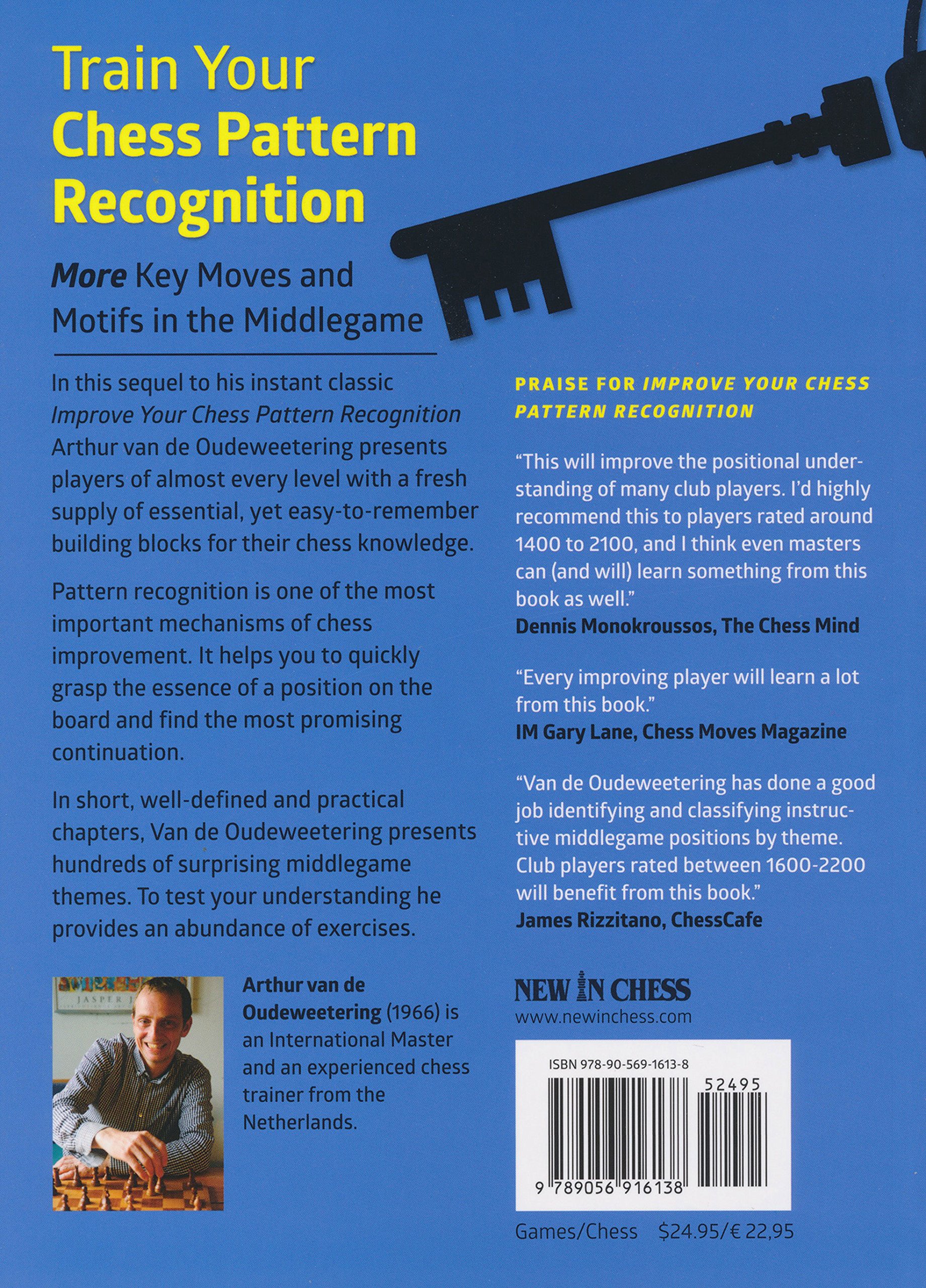
Train Your Chess Pattern Recognition : More Key Moves & Motifs in the Middlegame
P**Z
Not really pattern recognition, but an outstanding text
This is a follow up to the Outstanding Improve your Chess Pattern Recognition. First, neither text really is about Pattern Recognition, in the actual sense of the term, which today is reading visual cues, particularly in machine learning. So if you're expecting a VISUAL shortcut to deep analysis with frequent and different structural board layouts, this is not that. The analysis is deep, and the board representations are standard and no more or less frequent than other good analysis texts or articles.What stands out about this text, and it's predecessor (which has completely different middle games and is not just a first edition of this, so should be purchased separately if you like this one), is that it DOES shorten analysis for quicker move selection, but by focusing strategic choices in the middle game to their connective tissue in the endgame, a VERY unusual and important viewpoint that can immediately supercharge your play and rating. Let's be honest, there are hundreds of books on openings, and lots of endgame databases, but hardly any that really focus on making choices in mid to late middlegame TARGETED at a specific endgame strategy and piece combination.The unrelated (but coincidentally also from New in Chess) and outstanding 100 Endgames You Must Know has an up to date statistical summary of the best endgame combinations (Lower draws with Rooks, higher with pawns, etc. including the startling stat of 20% draws with a King alone!). These two books uniquely and wonderfully demonstrate how to target those winning structures consciously in the middle game.Perhaps the best, most exhaustive analysis book ever written was Storming the Citadel, which shows ALL possible lines for just one move: Bh7, in a single, 300 page book! The opposite of this exhaustive, brute force calculation with alpha beta trees would be heuristics: shortening analysis not through pattern recognition or tree pruning, but by focusing on the middle to end game lines most likely to save half a point or win outright via piece combinations targeted in mid game BEFORE focusing on checkmate options.One example from this text is Arthur's outstanding chapter on another "citadel storm" -- Qd2!! early, with an objective of Qh4 (violating the rule of too early Q development (yes this IS technically early mid or late open as the rooks are not yet connected)) but surprisingly showing that black doesn't have the punitive/retreat forcing options we might imagine.Highly recommended for its many unique ways to plan our endgame from early to late in our middle game.
T**M
Really consider this
The book is broken into six parts dealing with a specific aspect of the middle game. There are 37 chapters. Each part contains a random number of chapters dealing with specific tactics for the middle game. Some start you from the first move while others begin at different locations in the play. The book I believe is relevant to learning certain aspects of the middle game. I do recommend this book if you have no idea about how to play a middle game.
A**R
Five Stars
This is a useful book. Glad to have it. It arrived quickly and in perfection. Thanks.
J**J
Four Stars
A lot to absorb. Using an interactive video would help.
A**R
Five Stars
Best by test...... all about middlegame, The best way to improve your chess.....
A**R
Great knowledge
Great knowledge for inspiring chess players
G**R
Five Stars
Excellent service and quality book
B**3
good book
good book
Trustpilot
2 weeks ago
5 days ago